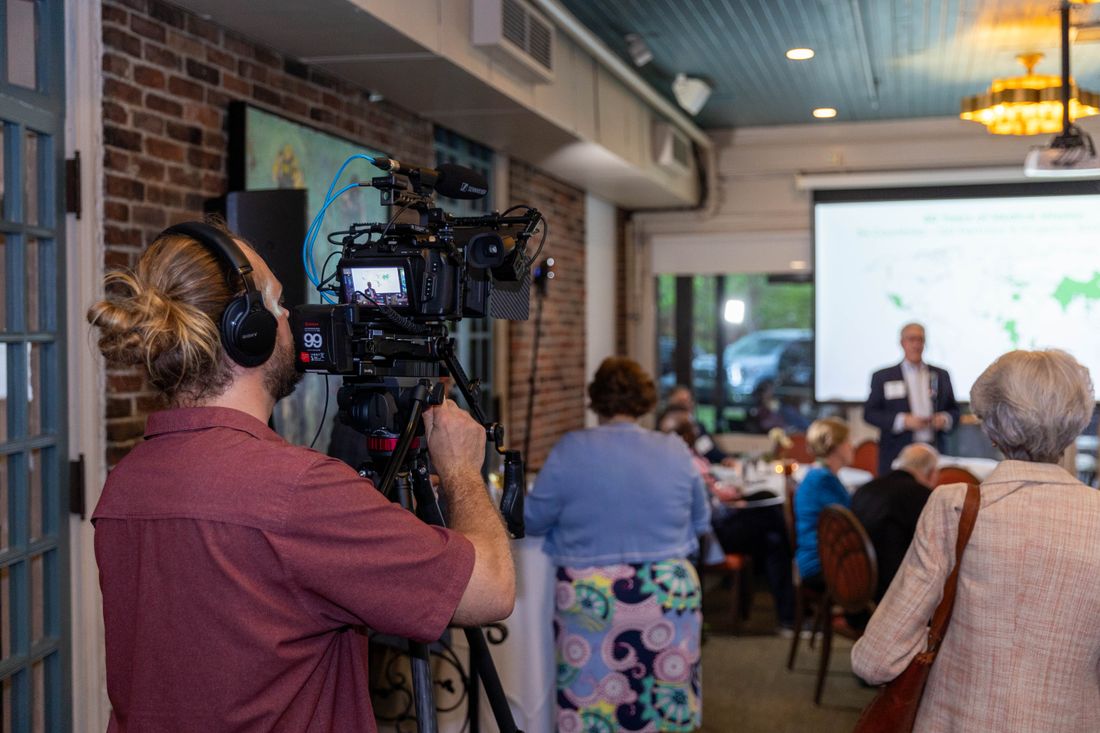
Photo by BEIGE MEDIA via Pexels.
Ask five event planners what a second shooter is for and four will say "more photos." That's the wrong mental model, and it's why the add-on gets cut from budgets more often than it should. A second shooter isn't there to double your gallery. It's there to cover the things a single camera physically cannot, because they happen in two places, or from two angles, at the exact same moment.
A second shooter earns its cost by covering what happens simultaneously and can't be restaged: a second room running programming at the same time, a stage that has to stay locked off while someone works the crowd, or a one-time award moment worth catching from two angles. It is not a way to buy more photos from the same event.
Table of Contents
- Why do buyers price a second shooter wrong?
- What gaps does a second camera actually close?
- What happens if the first camera fails?
- Why does video specifically need a second angle?
- When is a second shooter genuinely unnecessary?
- Does event size or simultaneity decide the answer?
- What changes in the edit when two cameras feed one gallery?
- What's the honest downside of adding a second shooter?
Why do buyers price a second shooter wrong?
A second shooter isn't a way to get more photos from the same event. It's coverage for everything that happens at the same time as the thing your main photographer is already pointed at. Buyers who price it as "photo count divided by two" are pricing the wrong problem entirely.
The instinct makes sense on paper. Two people shooting for four hours feels like it should produce roughly twice the gallery. In practice, a solo photographer at a well-run event is already capturing the room efficiently (the stage, the crowd reactions, the room details, the candid moments between agenda items). Adding a second body doesn't multiply that output so much as it changes what's possible to capture at all. One camera can only be in one place. The moment your event has two things worth documenting happening in different rooms, or a single moment worth documenting from two angles at once, a second camera stops being a volume upgrade and starts being the only way to get the shot.
What gaps does a second camera actually close?
A second camera closes gaps a single shooter physically cannot: two rooms running programming at once, a stage that needs to stay locked off while someone works the crowd for reaction shots, an award or ribbon moment that reads better from two angles, and audience reactions that only exist from the opposite side of the room.
These aren't hypotheticals dressed up as marketing language. They're mechanical limits of having one person and one camera. If your cocktail hour and your general session overlap for even fifteen minutes, a single photographer has to choose, and whichever room they skip gets nothing. If a keynote or award moment matters enough that the client wants both the wide stage shot and the recipient's face up close, that's two positions at once, not one photographer moving fast. And reaction shots (the audience laughing, leaning in, applauding) only exist from a camera pointed the opposite direction from the stage. A photographer covering the stage cannot also be covering the room reacting to it. That's not a skill gap. It's geometry.
What happens if the first camera fails?
If the primary camera fails, jams, or the shooter gets pulled away for even a few minutes at a one-time event, a second camera is the only thing standing between the client and a real gap in their coverage, because a gala, product launch, or annual meeting doesn't get a reshoot.
This is the part of the second-shooter conversation that has nothing to do with more content and everything to do with risk. Equipment fails. Memory cards corrupt. A photographer can get pulled into an unplanned conversation with a VIP guest at exactly the moment the CEO walks onstage. None of that is dramatic or rare. It's just the reality of live events, which by definition happen once. A corporate headshot session or a studio shoot can be rescheduled if something goes wrong. A one-night gala cannot. For events where the moment truly cannot be restaged, a second camera isn't redundancy for its own sake. It's the only realistic insurance policy against a single point of failure ruining the one shot at the whole thing.
Why does video specifically need a second angle?
Video benefits from a second camera even more than photo does, because a single video angle locks the edit into one perspective for the whole runtime, a second angle gives an editor cutaways, reaction shots, and a way to hide edits, turning a static recording into something that actually holds attention.
A photographer can reposition between frames; a video camera is committed to wherever it's pointed for as long as it's rolling. If the only footage of a keynote is one static wide shot from the back of the room, that's what the final video looks like too, flat, static, un-cuttable. A second camera on the speaker's face, or on the audience, gives an editor something to cut to when the pacing needs a break, a way to smooth over a pause or a stumble, and coverage that makes the finished video feel produced rather than recorded. For any event where the video deliverable matters as much as the photos (a keynote reel, a highlight video, social cutdowns) a second angle is doing editorial work, not just capturing more footage.
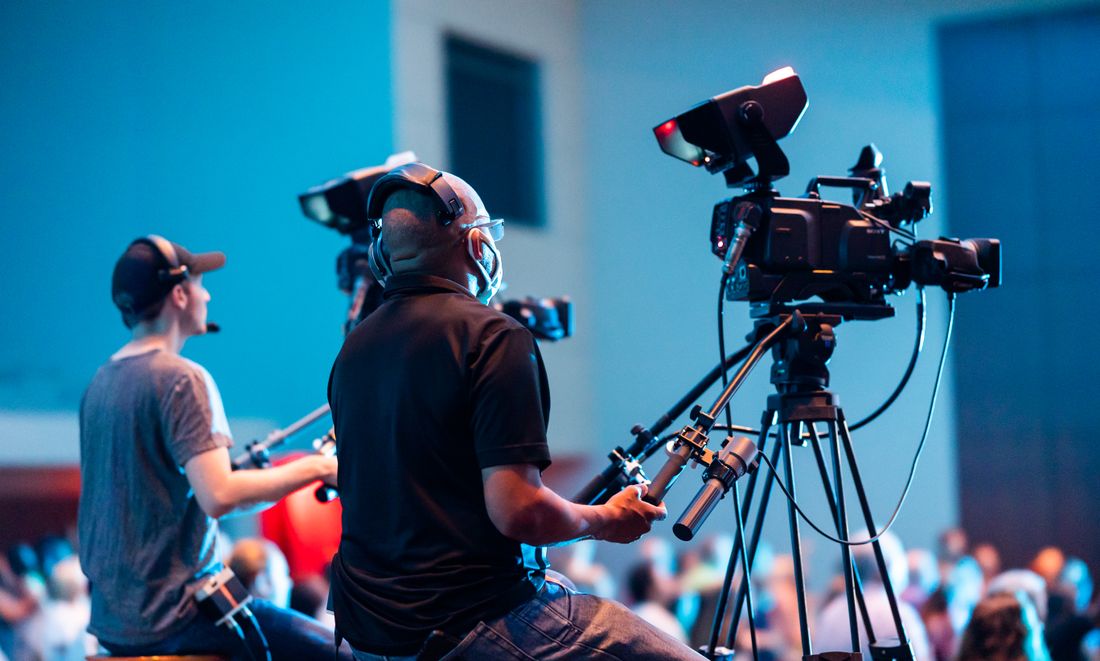
Photo by Caleb Oquendo via Pexels.
When is a second shooter genuinely unnecessary?
A second shooter is genuinely unnecessary for a small, single-room event with a simple program and no simultaneous programming (a donor breakfast for forty people, a single-session panel, an intimate office celebration). One experienced photographer covers all of it without missing anything a second camera would have caught.
It's worth saying plainly, because the honest answer isn't always "add coverage." If everyone is in one room, nothing is happening anywhere else, and the program is straightforward (remarks, a toast, some milling around) a second shooter mostly produces a second version of photos the first camera already has. There's no simultaneity problem to solve and no failure-risk profile that justifies doubling the crew. The value of a second shooter comes specifically from things happening at once or a moment worth two angles, and a small, single-track event doesn't generate either. Recommending a second shooter here anyway would be optimizing for the invoice, not the coverage, and that's not how we think about staffing a job at Core Visuals.
Does event size or simultaneity decide the answer?
Simultaneity decides the answer, not headcount alone. A 300-person event in one room with one thing happening at a time can run on a single shooter, while a 90-person event split across two rooms with overlapping programming needs two cameras. The guest count is almost beside the point.
It's tempting to set a threshold like "over 150 guests, add a second shooter," but that number tracks the wrong variable. What actually drives the need is whether the event has more than one place worth a camera at the same moment: a breakout track running while the main stage continues, a VIP reception happening alongside general networking, a step-and-repeat that needs coverage while the program itself is also running. A packed single-room conference with a straightforward agenda can be fully covered by one photographer moving with the program. A smaller event with a split floor plan or a tight, overlapping schedule can genuinely need two. Ask about the run of show and the floor plan before asking about the guest list.
What changes in the edit when two cameras feed one gallery?
When two cameras feed one gallery, the edit adds a sync and dedup step before the usual culling: time-stamping both cards to the same clock, pulling near-duplicate frames of the same moment shot from two angles, and merging everything into one chronological gallery so the client never has to think about which camera shot which photo.
This is the part clients rarely think about but should. Two shooters working the same room will sometimes capture the same instant from different positions, and without a deliberate merge step, that shows up in the gallery as visual repetition instead of added coverage. The actual work is choosing the stronger frame when both cameras caught the same beat, keeping both when the angles genuinely add something different (a wide stage shot next to the crowd's reaction to it) and delivering it as a single ordered gallery, not two separate folders the client has to reconcile themselves. Done right, the client never sees the seam between cameras. They just see more of the event than one photographer could have covered alone.
What's the honest downside of adding a second shooter?
The honest downside is cost (a second photographer is a second professional to pay for the same block of hours) and a real execution risk: two shooters without a clear plan for who covers what will drift toward shooting the same thing from slightly different spots, producing duplicate frames instead of genuinely new coverage.
That second risk matters more than people expect. Simply putting a second body on the floor doesn't automatically solve the simultaneity problem described earlier in this piece. It only solves it if the two shooters have distinct assignments going in. Two photographers who both drift toward the stage because that's where the obvious photo is produce a heavier gallery, not a more complete one. The gap-closing value of a second shooter depends entirely on a plan: one shooter on the stage and reactions, the other on the second room or the crowd, with clear handoffs at the moments that matter most. Without that plan, the client is paying for a second invoice and getting redundancy, not range.
Frequently Asked Questions
Does a second shooter mean double the photos in my gallery?
No. A second shooter is used to cover simultaneous events, not to multiply photo count. Expect a meaningfully expanded gallery, because two rooms or two angles get documented instead of one, but the gain comes from coverage you'd have missed entirely with one camera, not photo volume for its own sake. If your event has no simultaneous action, a second shooter mostly produces near-duplicate frames of what one camera already caught.
How do two photographers avoid shooting the exact same frame?
By having a clear assignment before the event starts: one shooter on the stage and crowd reactions, the other on a second room or a specific moment like an award handoff. Without that plan, both shooters tend to drift toward the obvious shot, which produces redundancy instead of range. The assignment should be set from the run of show ahead of time, not improvised once the event is already underway.
Is a second shooter worth it for a single-room event?
Usually not, if the program is straightforward and nothing else is happening at the same time. A second shooter earns its cost when there's simultaneity to cover: two rooms, overlapping programming, or a moment worth two angles. A single-room event with one thing happening at a time is typically well covered by one experienced photographer, and adding a second body there mostly duplicates coverage that already exists rather than adding to it.
Does a second camera matter more for photo or for video?
Video usually benefits more, because a video camera stays locked to one position for the length of a shot, while a photographer can reposition between frames. A second video angle gives an editor cutaways, reaction shots, and a way to smooth pacing, turning a static recording into something more watchable. For photo, the value is mostly about simultaneous coverage across rooms rather than editorial flexibility in the final cut.
How does a two-camera shoot get delivered as one gallery?
The photos get synced to a common timestamp, and near-duplicate frames of the same moment shot from both cameras get reviewed and culled down to the strongest single version before everything is merged into one chronological gallery in the edit. The client receives one ordered set of images covering the full event, not two separate folders split by camera to sort through and reconcile themselves.
Related Reading
Not sure if hourly or a package makes more sense for your event?
Tell us the expected length, and we'll run the actual numbers before you book.
See Event Coverage Packages