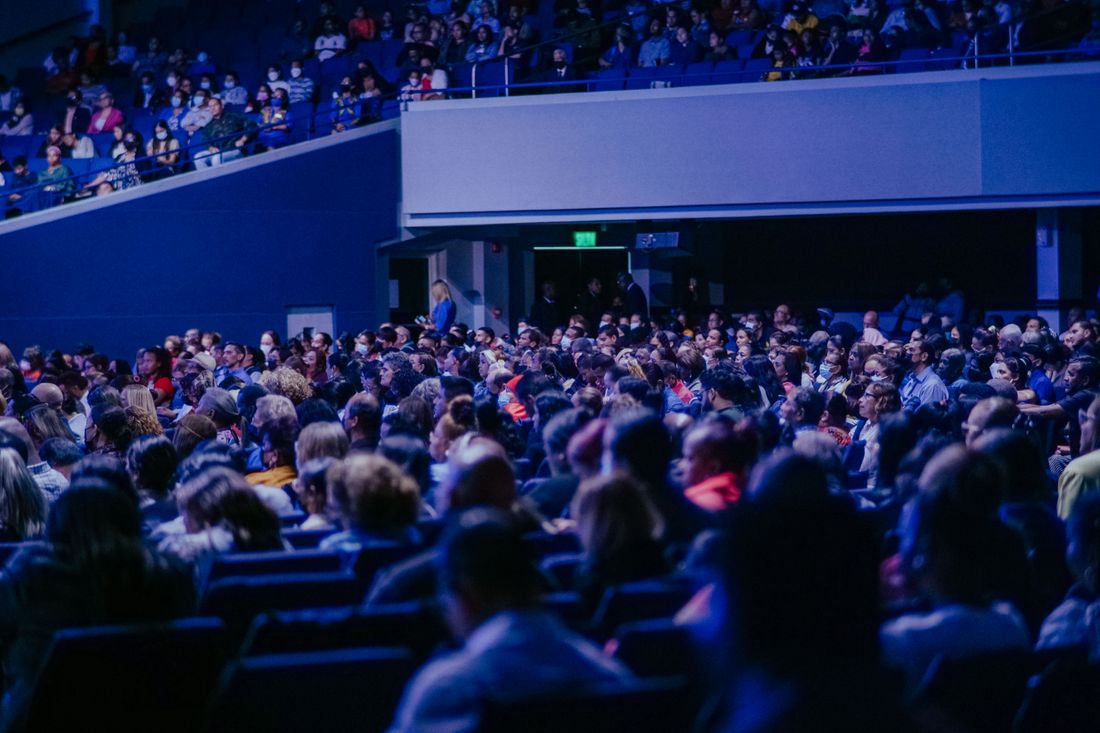
Photo: Core Visuals NYC
Every event planner asks some version of the same question before signing off on a coverage plan: is this enough photos? It's a fair question and a hard one to answer with a single number, because 200 photos covers an intimate donor reception generously and barely dents an eight-hour conference spread across three rooms. The honest answer isn't a fixed count. It's a ratio, and it moves depending on a handful of specific things about your event.
How many event photos is enough comes down to a ratio, not a fixed number: Core Visuals' published packages work out to roughly 30-40 edited photos per hour of coverage. What actually moves that ratio is room size, how packed the program is, how many distinct areas need coverage, and whether there's a dedicated photo moment like a step-and-repeat.
Table of Contents
- How many event photos per hour should you expect?
- How does room size change the photo count?
- How does program density change the ratio?
- Do multiple rooms or areas mean you need more photos?
- Does a step-and-repeat or photo moment change the count?
- How do hours booked map to the package tiers?
- What does "enough" actually mean beyond a photo count?
- What are the signs you're not getting enough coverage for your room?
How many event photos per hour should you expect?
Across Core Visuals' published packages, the math works out to roughly 30 to 40 edited photos per hour of coverage, though the ratio drifts down on longer days. The Essential package delivers 150-200 photos across up to 5 hours; Professional delivers 200-300 photos across 6-8 hours. Divide either range by its hours and you land in a similar band.
That drift isn't an accident. A five-hour reception has fewer natural editing gaps than an eight-hour conference. Shorter events front-load distinct moments, while longer ones repeat themselves: the same panel format, the same table setups, the same networking clusters photographed from slightly different angles. Editors cull duplicates, so the gallery grows slower than the clock does.
Room size isn't in that math at all, on purpose. Hours booked is what maps to photo count in a fixed package, not headcount. A packed ballroom and a half-full one booked for the same five hours land in the same 150-200 photo range. What room size actually changes is how many of those hours you need in the first place, which the next few sections cover.
How does room size change the photo count?
A bigger room doesn't add photos to a fixed package on its own. It usually adds hours, because covering more physical space well takes more time. A single intimate room lets one photographer stay put and catch the whole crowd. A sprawling ballroom or multi-zone venue means walking further between vantage points to get equivalent coverage.
Think about what a photographer is doing during an hour of coverage: finding a vantage point, waiting for a real moment, moving to the next one. In a small room, most of the crowd is visible from two or three spots. In a large ballroom, or a venue with a stage, a bar, and scattered lounge seating, that same crowd is spread across ground that takes real time to cover on foot.
That's why room size shows up as a booking decision, not a photo-count multiplier. A 40-person reception in a compact space might genuinely need only the Essential package's 5 hours. A 300-person gala spanning a main room and an adjoining lounge usually needs the Professional tier's 6-8 hours just to physically reach every corner of the space more than once.
How does program density change the ratio?
A tightly scheduled program (keynote, panel, awards, cocktail hour, each with a distinct look) produces more usable frames per hour than one long unstructured mixer, because every segment change is a natural new setup. A single three-hour reception with no formal moments gives a photographer fewer genuinely different compositions to draw from across the same time.
Program density is really about variety, not headcount. A conference that moves from a keynote stage to breakout rooms to a networking floor gives a photographer several visually distinct settings inside the same hours: different lighting, different framing, different body language. Each transition is a fresh reason to shoot.
An open-format reception with one continuous flow of mingling produces plenty of moments too, but they start to rhyme with each other after the first hour. Similar groupings, similar lighting, similar angles. That's not a flaw in the event; some of the best events are exactly that relaxed. But it does mean the edited gallery naturally settles toward the lower end of the package's photo range rather than the higher end, since there's less genuine variety to select from.
Do multiple rooms or areas mean you need more photos?
Multiple distinct areas (a main stage, a separate sponsor activation, a breakout room down the hall) split one photographer's attention across space that can't be covered simultaneously, so the honest fix is usually more hours or a second shooter. Otherwise a real moment in one room goes uncovered while another gets photographed twice.
This is the scenario where a fixed package can quietly under-deliver if nobody plans for it. One photographer covering a keynote on the main stage physically cannot be in the sponsor lounge or a concurrent breakout at the same time. If the run of show has simultaneous or sequential moments in separate rooms, that's a scheduling conversation before it's a photo-count conversation.
Sometimes the answer is booking enough hours to walk the full circuit (stage, then breakout, then sponsor area) and accepting representative rather than continuous coverage of the secondary spaces. Sometimes it's adding a second photographer so two areas get real-time coverage at once. Either way, the fix lives in the coverage plan, not in asking a single-shooter package to stretch across a building it can't be in two places in.
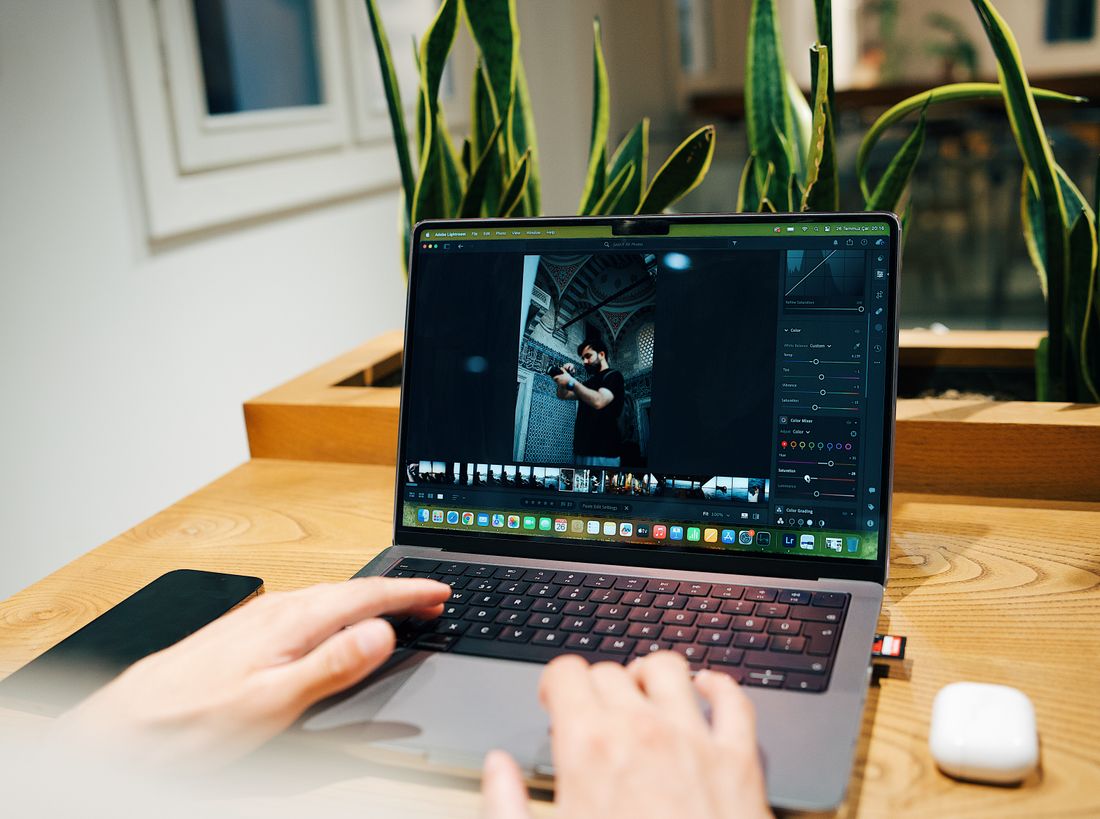
Photo: Core Visuals NYC
Does a step-and-repeat or photo moment change the count?
A dedicated photo moment (a step-and-repeat, a branded backdrop, an award-line photo op) adds a different kind of shooting task: repeated, posed frames closer to headshot pacing than event candids. It raises the raw shutter count fast, but editing culls similar frames down, so it doesn't multiply the final gallery as much as it feels like it should.
A step-and-repeat is efficient to shoot. Subjects come to the camera instead of the photographer chasing moments around a room, but each person or small group needs a clean frame, sometimes two or three attempts if someone blinks or the composition is off. Over an hour of steady traffic, that adds up to a lot of frames captured.
Where it shows up in the final gallery is different, though. A gala with 150 attendees stepping through a photo line generates plenty of raw material, but editors typically deliver one strong frame per person or group rather than every attempt. If a photo moment is a priority, say so when booking. It changes how the photographer allocates time inside the hours you've already got, even if it doesn't dramatically change the final photo count.
How do hours booked map to the package tiers?
Core Visuals' three packages tie photo count directly to hours booked: Essential covers up to 5 hours for 150-200 edited photos, Professional covers 6-8 hours for 200-300 edited photos, and Premium covers 8+ hours with photo and video together, including 200-300 images. Choosing between them starts with your run of show, not a target photo number.
The jump from Essential to Professional isn't really about wanting more photos for their own sake. It's about the event needing more hours to cover. A half-day conference with a morning keynote, midday breakouts, and an evening reception is a Professional-length event regardless of how many photos you'd like at the end.
Premium exists for a different reason: it's the tier where you want photo and video running at the same time, which is its own coverage plan rather than a bigger version of the others. If your event only needs one format, Essential or Professional will already get you into the 150-300 photo range depending on length. Premium is for events that need both formats covered simultaneously across a longer day.
What does "enough" actually mean beyond a photo count?
Enough means every real segment and area of your event is represented in the final gallery (arrivals, the formal program, the room itself, and departures), not that you hit a specific number. A gallery of 180 photos that covers the whole event well beats a gallery of 250 that's heavy on one segment and thin everywhere else.
It's tempting to treat the photo count as the whole spec, because it's the easiest number to compare across proposals. But two galleries with the same count can represent completely different levels of actual coverage. One accounts for every part of the program. The other might be 300 near-identical crowd shots because the photographer camped in one spot all night.
The better question to ask before booking is what the event actually consists of (how many segments, how many rooms, whether there's a formal photo moment) and let that shape the hours, which in turn sets the photo range through the package. The count is the output of a good coverage plan, not the plan itself.
What are the signs you're not getting enough coverage for your room?
The clearest signs are a gallery that repeats the same handful of faces and angles, a secondary space (sponsor area, breakout room, step-and-repeat) barely represented, or a program segment missing entirely, with no arrivals and no closing moments. Those gaps point to a coverage plan that didn't match the room, not a photo count that was too low.
Counting photos in isolation won't catch this. A 200-photo gallery that hits every part of your event is doing its job. A 200-photo gallery that's 80 percent one crowded corner of the room, with nothing from the stage or the reception afterward, has the right number and the wrong coverage.
Before booking, walk through your own run of show and venue map with whoever you're hiring: how many rooms, how dense the schedule is, whether there's a dedicated photo moment. That conversation is what actually determines whether the hours, and the photo count that comes with them, will be enough for the space you're in.
Frequently Asked Questions
How many photos should an event photographer deliver?
There's no universal number, it depends on event length and room size. As a reference point, Core Visuals' published packages deliver 150-200 edited photos for up to 5 hours and 200-300 edited photos for 6-8 hours, working out to roughly 30-40 photos per hour. Instead of asking for a specific count, describe your run of show, room count, and any photo moments, then let the hours get sized to match.
Does a bigger venue always require more coverage hours?
Not always, but often. A large room with one continuous crowd in a single space can sometimes be covered well from a few vantage points in fewer hours. What actually drives more hours is multiple distinct areas (a main stage, a separate lounge, a breakout room) that a photographer can't cover simultaneously. Size alone matters less than how spread out and how separated the event's activity actually is.
What should you expect from an event photographer's deliverables?
Expect an edited gallery, not a dump of every frame shot during the event. Photographers typically capture far more raw images than they deliver, especially during posed moments like a step-and-repeat, where several attempts get taken per person before one lands. Editing selects the strongest frame from each moment and removes near-duplicates, blinks, and repeated angles. A gallery of 150-300 images, sized to your hours booked and covering arrivals, the program, and departures, is the realistic deliverable to expect.
Should I book event coverage by photo count or by hours?
Book by hours, based on your actual run of show. The photo count follows from that. Core Visuals prices packages by coverage time (up to 5 hours, 6-8 hours, or 8+ hours with video) because hours are what a photographer can commit to and plan around. Photo count is a useful reference for what a given package range typically delivers, but treating it as the primary target skips the planning step that determines whether coverage actually matches your event.
How many edited photos come from a 4-hour event?
Using the roughly 30-40 photos per hour ratio, four hours works out to about 120-160 edited photos. In practice, packages beat hourly pricing from around the 4-hour mark, so most 4-hour events end up booked on the Essential package instead, up to 5 hours of coverage for 150-200 edited photos, rather than priced and sized purely off the hourly rate and a narrower ratio-only estimate alone.
Related Reading
Not sure if hourly or a package makes more sense for your event?
Tell us the expected length, and we'll run the actual numbers before you book.
See Event Coverage Packages