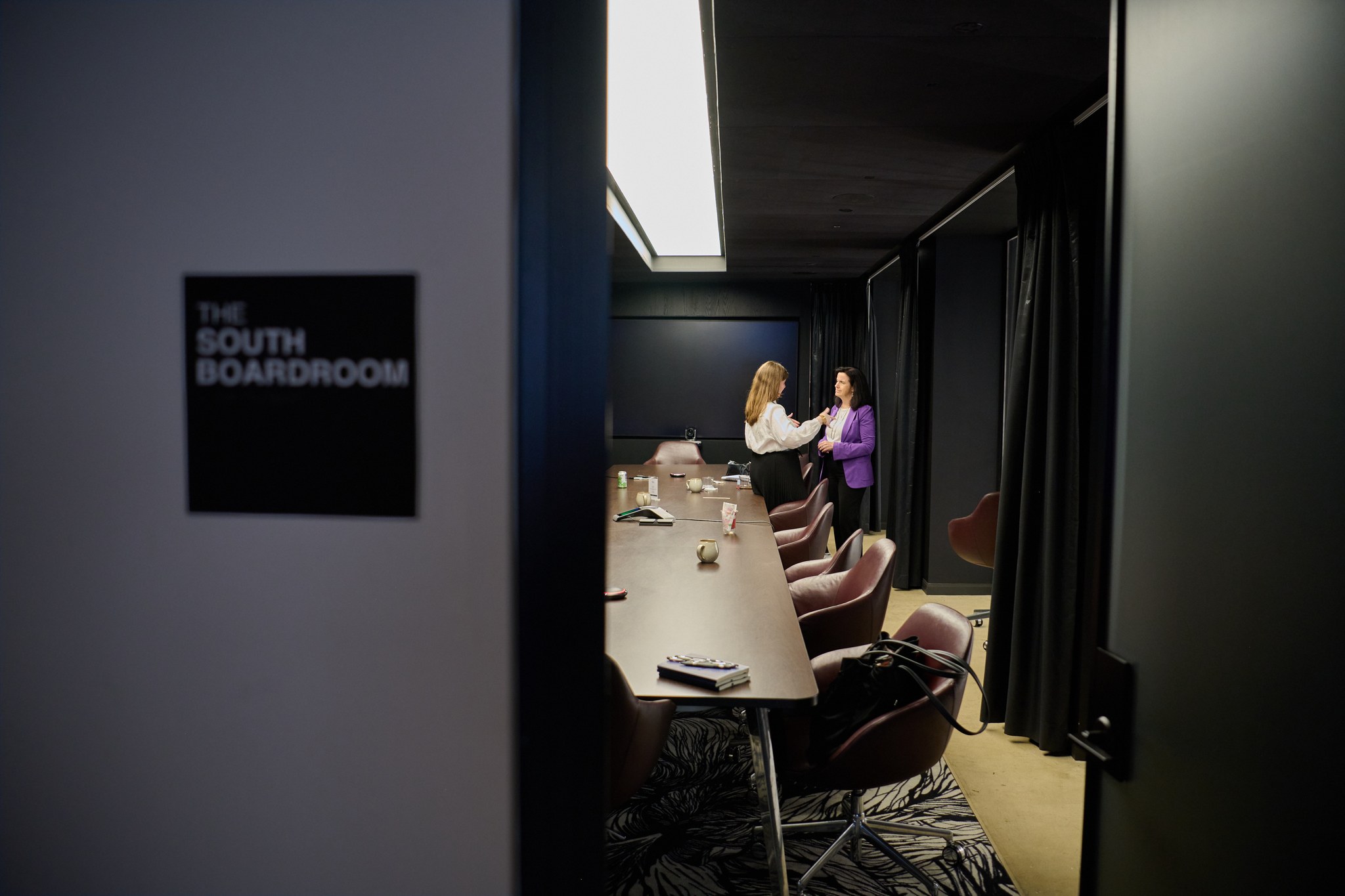
Photo: Core Visuals NYC
The shot list doesn't change when an event goes under NDA. The crew size doesn't change. The hours booked don't change. What changes is almost everything around the edges (who's allowed to hold a camera, where the files can go, who reviews them before delivery), and each of those is a governance decision with a real production cost attached, even though none of it shows up in the photos themselves.
An NDA-covered event changes a quote through governance, not craft: crew vetting and paperwork before the date is held, no live posting, strict device and card-handling rules, on-site review when files can't leave the building, a named-approver pass before delivery, and no portfolio use, a full day of work that can never be shown to another client.
Table of Contents
- An NDA event isn't a harder shoot, it's a differently governed one
- Crew vetting and paperwork happen before the date is even held
- No live posting removes an add-on and adds a hold instead
- Device and card-handling rules change how the whole day runs
- On-site culling and review when files can't leave the building
- A named approver reviews everything before it's delivered
- Controlled delivery, and the cost nobody names out loud
- What doesn't change, and how to tell your vendor early
An NDA event isn't a harder shoot, it's a differently governed one
The instinct is to assume a confidential event costs more because it's more difficult to shoot (tighter access, more pressure, less room for error). That's mostly not true. What actually changes is who can be on the job, where the files can travel, and who signs off before anything ships.
An unannounced product demo, an M&A or restructuring meeting, a closed investor day, a pharma advisory board, a litigation-adjacent internal meeting. These are all shot with the same lenses, the same lighting judgment, and the same instinct for the room as any other event. The camera work doesn't get harder. What gets added is a layer of process wrapped around that same camera work: paperwork before the booking is confirmed, restrictions on how images move once they exist, and a review step before delivery that a standard event never needs. Almost every line that changes on the quote traces back to one of those governance requirements, not to the difficulty of the shoot itself.
Crew vetting and paperwork happen before the date is even held
A confidential booking usually starts with paperwork most events skip entirely: who has to sign, whether subcontractors can be used at all, and how long that approval takes before a date can actually be confirmed. That lead time is real and worth planning around.
A standard event photographer can often bring in a trusted second shooter on short notice without anyone needing to know their name in advance. An NDA-covered event frequently requires every crew member to be named, sometimes individually vetted, and occasionally forbidden from using any subcontractor at all, which caps the crew to people already inside the agreement. None of that shows up as a separate line item, but it does mean the date-holding process takes longer and has to start earlier than a normal booking. A client who reaches out with three days' notice for a confidential event is often asking for something the paperwork alone can't clear in time, regardless of how flexible the photographer's calendar is.
No live posting removes an add-on and adds a hold instead
Same-day social coverage is a common add-on at a standard event (a few edited images posted while the room is still full). An NDA event forbids that outright, which sounds like it should simplify the job. Instead it replaces a fast deliverable with a slow, careful hold on everything shot.
Removing live posting removes the pressure of a same-day turnaround, but it doesn't remove any work. It just moves that work behind a wall until the confidentiality period lifts or the client gives explicit clearance. Every image still gets shot, culled, and edited on the usual timeline; it simply can't leave the agreed-upon delivery channel in the meantime. The photographer also has to actively manage that hold (tracking which files are cleared for eventual release and which stay locked indefinitely), which is a small but real piece of ongoing responsibility a standard event never creates. It also means coordinating with whoever on the client side eventually decides the hold can lift, since that person is rarely the same one who booked the shoot, and building in a way to reach them months later if the release date isn't set in advance.
Device and card-handling rules change how the whole day runs
Confidential coverage often comes with explicit rules about equipment: no personal phones out during the event, no cloud auto-upload on any camera, and physical custody of memory cards accounted for at the end of the night rather than left in a bag until the photographer gets home.
These rules sound minor until they're applied to an entire crew for an entire day. Disabling cloud sync means checking every device beforehand rather than trusting a default setting. No personal phones changes how a crew communicates mid-event, since a quick photo-check text to a producer isn't an option anymore. Card custody at the end of the night means a formal handoff (sometimes logged, sometimes witnessed) instead of a photographer simply packing up and leaving. None of it changes what gets photographed. It changes how carefully the equipment around that photography has to be managed for the entire booking, and it means briefing every crew member on the rules ahead of time rather than explaining them at the door, where there's no time to actually absorb them.

Photo by cottonbro studio via Pexels.
On-site culling and review when files can't leave the building
Some confidential events require that raw files never leave the venue at all, which pushes culling and a first review pass into the building itself, on a laptop set up on-site rather than back at a studio on the photographer's own schedule.
That's a meaningfully different workflow. A standard event lets a photographer cull and edit whenever it's convenient, often over several days, using whatever setup works best. On-site review compresses that into a fixed window inside a room the client controls, sometimes under supervision, before any card or drive is allowed to leave. It also means bringing enough hardware to do a real review on location rather than a quick glance (a proper monitor, enough battery, and enough time built into the schedule for it to happen without rushing). This single requirement is one of the more time-consuming governance additions, because it can't be compressed into spare hours the way normal editing can. It also changes where the photographer physically works for part of the day, trading a familiar studio setup for whatever corner of the venue the client can spare, which is worth planning for rather than discovering on arrival.
A named approver reviews everything before it's delivered
Standard event delivery goes straight from the photographer to the client. Confidential coverage usually adds a specific named person (not just "the client" in the abstract) who reviews the full set before anything is considered final and cleared to release, and who's accountable if something slips through.
That named-approver step exists because confidentiality isn't only about who sees the images eventually; it's about controlling exactly what gets included in the first place, frame by frame, before delivery happens. A photo that accidentally catches a whiteboard, a badge, or a screen in the background might be entirely fine for a standard event and disqualifying for a confidential one. Building in a formal review pass, with a specific person accountable for approving the set, adds a step to the timeline that a standard event simply doesn't have, and it's worth scheduling for rather than assuming it'll happen instantly the day after the shoot. Naming that approver before the event, not after, keeps the review from becoming the bottleneck that holds up the entire delivery.
Controlled delivery, and the cost nobody names out loud
Delivery moves from a standard gallery link to a controlled location with a shorter link lifetime, which is a minor logistics change. The bigger cost, and the one discussed the least, is that none of the work can ever appear in a portfolio.
A standard event day serves two purposes at once: it delivers the client's images and it becomes future marketing material, a portfolio piece that helps book the next job. An NDA event forecloses that second purpose entirely. The photographer works a full day that produces real, often excellent, images that can never be shown to anyone else, ever, not on a website, not in a pitch deck, not in a single social post. That's a genuine economic difference from a standard booking, even with identical hours and an identical shot list, because the day stops contributing to future work the moment the agreement is signed. It's worth naming plainly rather than treating it as an invisible cost of doing business, since it's the one line a client rarely thinks to ask about.
What doesn't change, and how to tell your vendor early
The shot list stays the same. The crew size stays the same. The hours booked stay the same. What determines whether an NDA adds real friction to a quote is mostly how early the photographer finds out. Governance requirements are cheap to plan for and expensive to retrofit.
Telling a vendor about confidentiality requirements at the time of first contact, rather than the week of the event, gives enough runway for crew vetting, equipment prep, and scheduling the extra review steps without anyone rushing. There's also a meaningful difference between saying "please be discreet" and providing an actual signed agreement with named restrictions. The first is a request a photographer will happily honor as professional courtesy, while the second is a binding set of terms that shapes crew choices, equipment handling, and delivery from the very start. Naming which one you actually need, early, is the single easiest way to keep a confidential booking from becoming an expensive surprise for either side.
Frequently Asked Questions
Does an NDA-covered event cost more than a standard event?
It typically involves more coordination, not necessarily a higher line-item price for the exact same hours and shot list. The added requirements (crew vetting, on-site review, a named-approver pass, no portfolio use) are governance costs that a photographer has to plan and staff around well before the shoot day itself. Core Visuals doesn't publish a flat rate for confidential coverage, since the specific restrictions and the coordination they require vary by client and by event.
Can a second shooter be added to an NDA-covered event on short notice?
Often not, if every crew member needs to be individually named or vetted under the agreement before the date is confirmed. Some confidential arrangements forbid subcontractors entirely, which caps the available crew to people already cleared under the paperwork on file. This is one of the main reasons early notice matters more for confidential events than for standard ones. Vetting takes time that a last-minute request simply can't manufacture.
Why can't images from a confidential event ever go in a portfolio?
Because the agreement typically restricts any future use or display of the images beyond the client's own private delivery, regardless of how strong or visually compelling the photos turn out to be. That means the photographer's full day of work produces images that can never help book future clients, unlike a standard event day, which usually serves as both delivery and future marketing material for the business.
What's the difference between asking a photographer to 'be discreet' and signing an NDA?
A request to be discreet is professional courtesy a photographer will honor without any formal restriction attached. A signed NDA is a binding agreement with named terms (who can be on the crew, how files are handled, who approves delivery) that shapes decisions from the first phone call onward. This post describes how those terms affect a production quote in practice, not what either one means legally.
Does the shot list change for a confidential event?
No. The shot list, the crew size, and the booked hours generally stay the same as a comparable standard event, and the photography itself is planned the same way. What changes is everything around that same coverage: vetting before the date is held, device and card-handling rules during the shoot, an on-site or controlled review process, and a delivery method built for confidentiality rather than convenience.
Related Reading
Trying to put a real budget on photo or video coverage?
Tell us the date, the run time, and what you need delivered, and we'll send back a quote with the line items spelled out.
Get a Quote