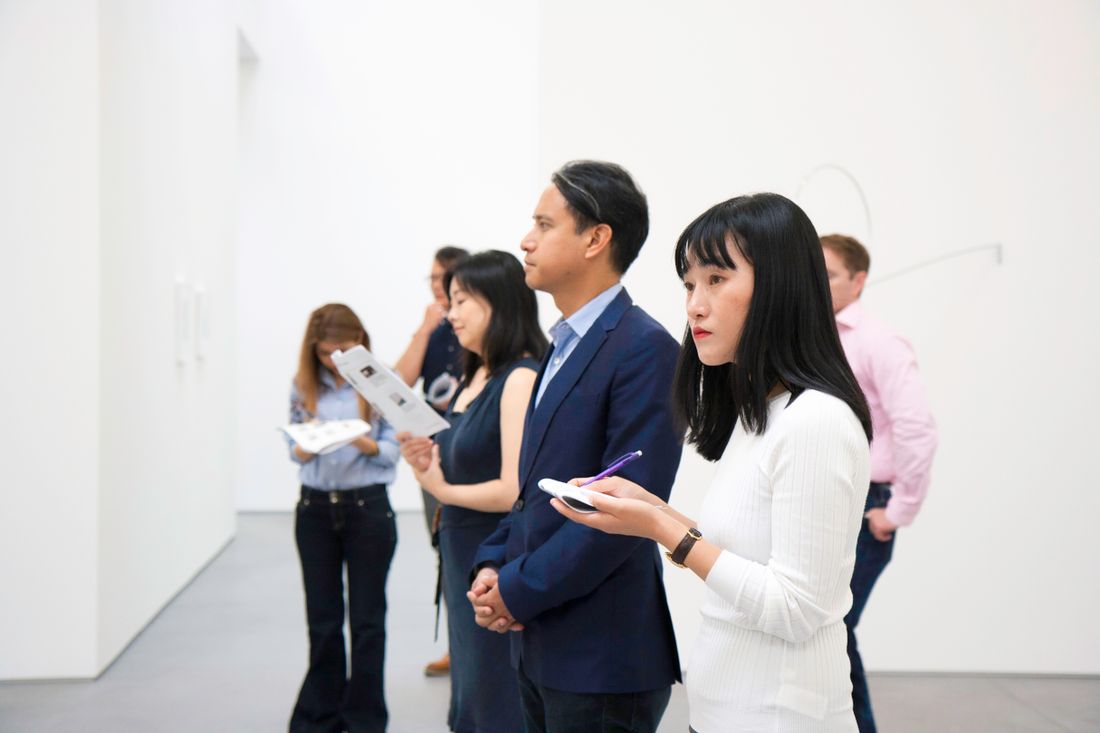
Photo: Core Visuals NYC
A corporate reception and a museum opening can look identical from across the room (a bar, a crowd, a set of frames on the wall). They aren't run the same way. The work on those walls usually belongs to someone other than the venue, arrived under a loan agreement, and has to survive the evening in the same condition it arrived in. That single fact changes how a crew moves through the room, what light touches the walls, and what the camera is actually supposed to prioritize.
An exhibition opening restricts photography in ways a corporate event doesn't: no flash near loaned or light-sensitive work, sightlines that can't block the art itself, and sometimes an embargo on when images can be published. Coverage has to treat the art as the subject even in crowd shots, and a registrar or press office typically wants crew position and lighting settled before doors open, not negotiated mid-event.
Table of Contents
- Why an Exhibition Opening Isn't a Corporate Event With Art on the Walls
- No Flash Near the Work: What That Does to Lighting and Lens Choice
- Loan Agreements and Conservation Rules Most Crews Never See
- Press Embargoes: What They Actually Mean for Opening-Night Coverage
- Where a Crew Can Stand Without Blocking the Art or the Room
- Keeping the Art as the Subject, Even in Crowd and Reception Shots
- What a Registrar or Press Office Wants Settled Before Doors Open
- What Deliverables From an Exhibition Opening Actually Need to Cover
Why an Exhibition Opening Isn't a Corporate Event With Art on the Walls
A museum or gallery opening carries constraints a corporate event simply doesn't: flash restrictions to protect the work, loan agreements that limit what can be photographed, sometimes an embargo on when images can run, and a room where the art has to stay the visual subject even during a packed reception. Coverage built for a hotel ballroom ignores all four, and it shows.
A typical corporate shoot assumes the crew controls the light, the subjects are staff or clients, and nothing in the room answers to a third party. An opening works against a different backdrop, pieces on loan from private collectors or other institutions, conservation standards set long before the party was scheduled, and an installation a curator arranged to be read in a specific order. None of that changes because there's a bar cart and a guest list taped to the front desk. A crew that treats the space like any other reception, full flash and free rein to wander, risks the venue's trust even when nothing gets physically damaged. Sorting out what the room actually restricts, and why, has to happen before the first frame.
No Flash Near the Work: What That Does to Lighting and Lens Choice
Most museums and many galleries restrict or ban flash near light-sensitive work, which means coverage has to lean on the room's existing light and a camera body that can hold up in it. That usually means faster lenses, higher ISO tolerance, and a shooting position closer to the subject than a flash-lit event would ever require.
Gallery lighting is built to flatter the art, not a photographer's exposure meter (warm, directional, often dimmer than a hotel ballroom, and sometimes deliberately uneven from piece to piece). A crew used to bouncing a speedlight off the ceiling has to relearn the room: reading available light before the event starts, picking a lens fast enough to work at that light level without a tripod blocking foot traffic, and accepting some grain in a reception shot rather than firing a flash at a canvas the venue is legally responsible for. In practice, the fix is less about buying faster glass and more about walking the space ahead of time and shooting a few test frames near the actual pieces, not just the open floor, before guests arrive.
Loan Agreements and Conservation Rules Most Crews Never See
Many pieces at an opening are on loan, and the loan agreement between the lender and the venue often sets photography terms the crew never sees unless someone asks, which pieces can be photographed at all, whether close-up detail shots are off-limits, and how images can be used afterward. A registrar or curator, not the event planner, usually holds that list.
This is different from a corporate shoot, where nearly everything in the room belongs to the client and the only real limit is a logo policy. A borrowed sculpture or painting can carry restrictions that have nothing to do with the party, a lender who doesn't want close-ups circulating before their own show, a conservator's condition report that flags a piece as sensitive to sustained light exposure, or a simple no-photography clause on one specific work in an otherwise open room. None of this is guesswork a crew should be doing on the fly. It's a short list that exists in writing somewhere at the venue, and getting it before the opening turns a potential mistake into a non-issue.
Press Embargoes: What They Actually Mean for Opening-Night Coverage
A press embargo sets a date and time before which images from the opening can't be published or shared publicly, even though the event already happened. For a crew, that means agreeing in advance on what gets delivered when, and making sure nothing lands on social media or a website before the venue's press office has cleared it.
Museums and galleries often coordinate opening coverage with a broader press push, a review embargo, a coordinated announcement, or simply wanting their own press office to control the first public images of a new show. A corporate event rarely works this way; the client usually wants recap content live within days, and there's no outside press office setting the calendar. An embargo changes the delivery conversation from "how fast can this go out" to "what date does this go out, and who confirms it first." Getting the embargo terms in writing before the shoot, not assuming a normal fast turnaround applies, keeps a crew from accidentally breaking an agreement the venue made with the artist or the press.
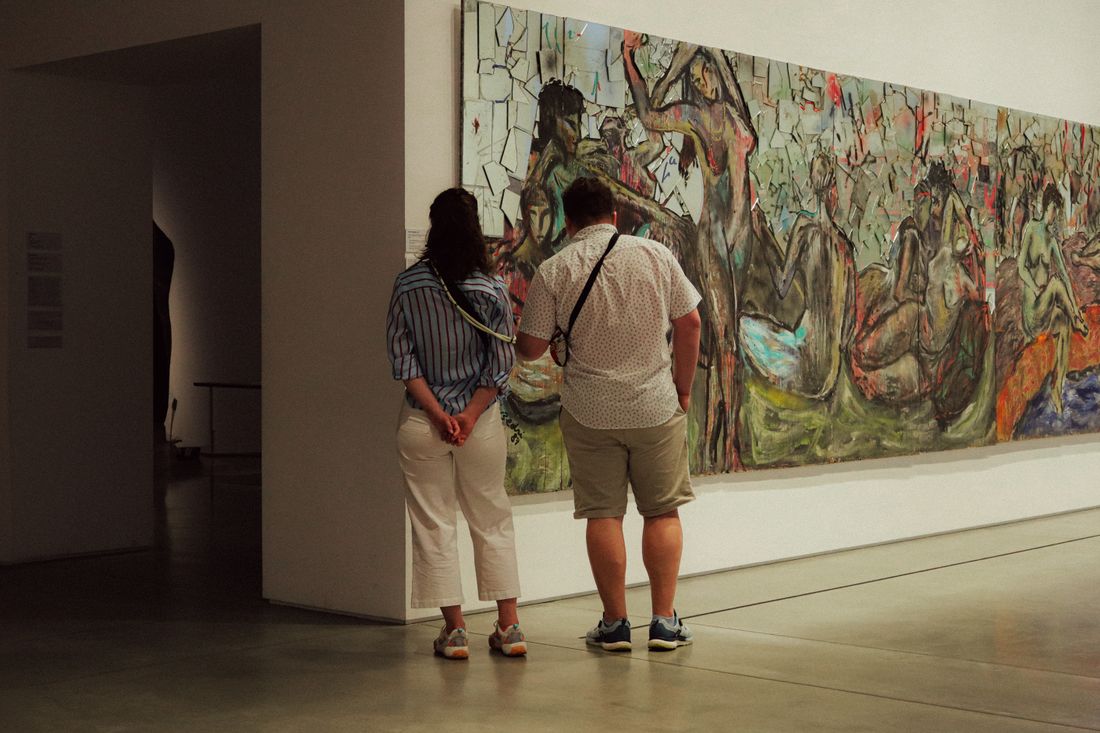
Photo by rana aldemir via Pexels.
Where a Crew Can Stand Without Blocking the Art or the Room
Crew position at an opening has to account for two things a corporate event doesn't: keeping sightlines to the art open for guests, and staying clear of the exact spots a registrar has flagged as off-limits near sensitive pieces. That usually means shooting from the side or a moving position rather than planting a tripod in front of a wall.
A gallery or museum room is often narrower and more tightly curated than a hotel ballroom, with foot traffic meant to flow past specific works in a specific order. A photographer standing directly in front of a piece to get a clean shot of guests looking at it blocks the exact thing those guests came to see, and a stationary rig in a doorway can bottleneck an entire room during a crowded first hour. Working the edges, shooting through gaps in the crowd, and checking with venue staff about any taped-off or reserved floor space before the doors open all keep coverage from becoming the thing guests have to walk around.
Keeping the Art as the Subject, Even in Crowd and Reception Shots
A reception photo at an exhibition opening still needs to show the art, not just a crowd holding wine glasses in a room that happens to have paintings behind them. That means composing so a piece or an installation view stays visible in frame, rather than defaulting to the tight headshot-style crowd coverage a corporate mixer calls for.
The shot priorities flip in a specific way: a corporate event usually wants clean shots of people first, branding second, and the room itself is just context. An opening usually wants the opposite read. The room and the work are the point, and the people in front of it show that the show is landing with an audience. That shows up in small choices: framing a conversation so the piece behind the guests stays legible, catching someone genuinely looking at a work rather than posing near it, and not cropping so tight on faces that the exhibition disappears from the photo entirely. A gallery reviewing the gallery afterward wants to see the show as much as the crowd.
What a Registrar or Press Office Wants Settled Before Doors Open
A venue's registrar or press office typically wants four things confirmed before an opening starts: which pieces (if any) are off-limits to photograph, whether flash is restricted and where, any embargo terms on when images can be published, and where a crew is allowed to stand relative to the installation. Settling these in a short pre-event conversation avoids mid-event corrections in front of guests.
This conversation usually isn't complicated, but it has to happen with the right person, often the registrar for loan and conservation questions, and a separate press or communications contact for embargo and publication terms. A crew that shows up assuming standard event rules apply is the one that gets pulled aside mid-reception to be told a piece is off-limits or a flash needs to stop. Asking ahead, even a simple email sent the week of the event, turns four separate constraints into a short, known checklist the crew can work from before a single guest ever walks in the door.
What Deliverables From an Exhibition Opening Actually Need to Cover
Deliverables from an exhibition opening usually need to serve more than one audience: the venue's own recap and archive, a press office building coverage around the show, and sometimes the artist wanting documentation of how the work was installed and received. That's a wider set of needs than a single corporate recap gallery has to satisfy.
A corporate event deliverable set is fairly uniform (a recap gallery, maybe a highlight reel, organized for one internal comms team). An opening's deliverables often split by purpose: wide reception shots that show the room and the turnout, cleaner installation views that show individual pieces without people in frame for the venue's own archive, and a smaller set cleared for press use once the embargo lifts. Sorting those categories during editing, rather than handing over one undifferentiated batch, saves the venue from re-requesting specific shots later and respects the fact that a press office and a registrar are usually pulling from the same shoot for different reasons.
Frequently Asked Questions
Can a photographer use flash at a museum or gallery opening?
Often not, or only in limited areas. Many museums restrict flash entirely to protect light-sensitive work, and galleries showing loaned pieces frequently follow the same rule even without a posted policy. The safest approach is asking the registrar or venue contact before the event rather than assuming standard event lighting applies, then planning for available-light coverage with a faster lens instead of relying on a speedlight near the walls.
What is a registrar, and why does a photographer need to talk to one?
A registrar manages a museum or gallery's collection logistics, including loan agreements, condition reports, and any photography restrictions tied to specific pieces. They're usually the person who knows which works can't be photographed, which are sensitive to light exposure, and where crew can safely stand. A press office handles publication and embargo terms separately, so both contacts may need to be looped in before an opening.
What does a press embargo mean for opening-night coverage?
A press embargo sets a specific date and time before which images from the event can't be published or shared publicly, even though the opening already took place that evening. For a crew, that means confirming delivery timing with the venue in writing beforehand, then holding images back from social media or a website until the venue's press office actually clears them, rather than defaulting to a normal fast turnaround the way a corporate recap usually would.
Where should a photographer stand during a gallery opening to avoid blocking the art?
Generally along the edges of the room or in a moving position, rather than planting a tripod directly in front of a piece guests are meant to view. Narrow gallery layouts and curated foot traffic make a stationary setup more disruptive than it would be in an open ballroom. Checking with venue staff about any taped-off or reserved floor space before doors open avoids guessing mid-event.
What should get settled with the venue before an exhibition opening starts?
Four things, usually: which pieces, if any, can't be photographed at all, whether flash is restricted and in which specific areas of the room, any embargo terms on when images can be published, and where crew is allowed to position relative to the installation. A short conversation with the registrar and press office before the event, ideally confirmed in writing, turns these into a known checklist instead of mid-reception corrections in front of guests.
Related Reading
Booking a photographer for an event and still weighing hourly versus a package?
Send over the run of show and we'll price both options out before you commit to either.
See Event Coverage Packages