Photo: Core Visuals NYC
A gala committee choosing between a hotel ballroom and a gallery space is usually thinking about atmosphere, which room feels more special, which one photographs better on the invitation. What they're not always thinking about is that the choice changes the actual coverage plan, not just the mood of the photos that come out of it.
Moving a gala from a hotel ballroom to a gallery space changes the lighting a photo and video team can rely on, how much room a crew has to move without disrupting guests, and whether the walls themselves, the artwork, become part of what needs to be documented respectfully. A ballroom gives a crew more open floor and dependable ambient light. A gallery gives the event a distinct visual identity but tighter, more deliberate coverage constraints.
Table of Contents
Light: tungsten wash versus bright white bounce
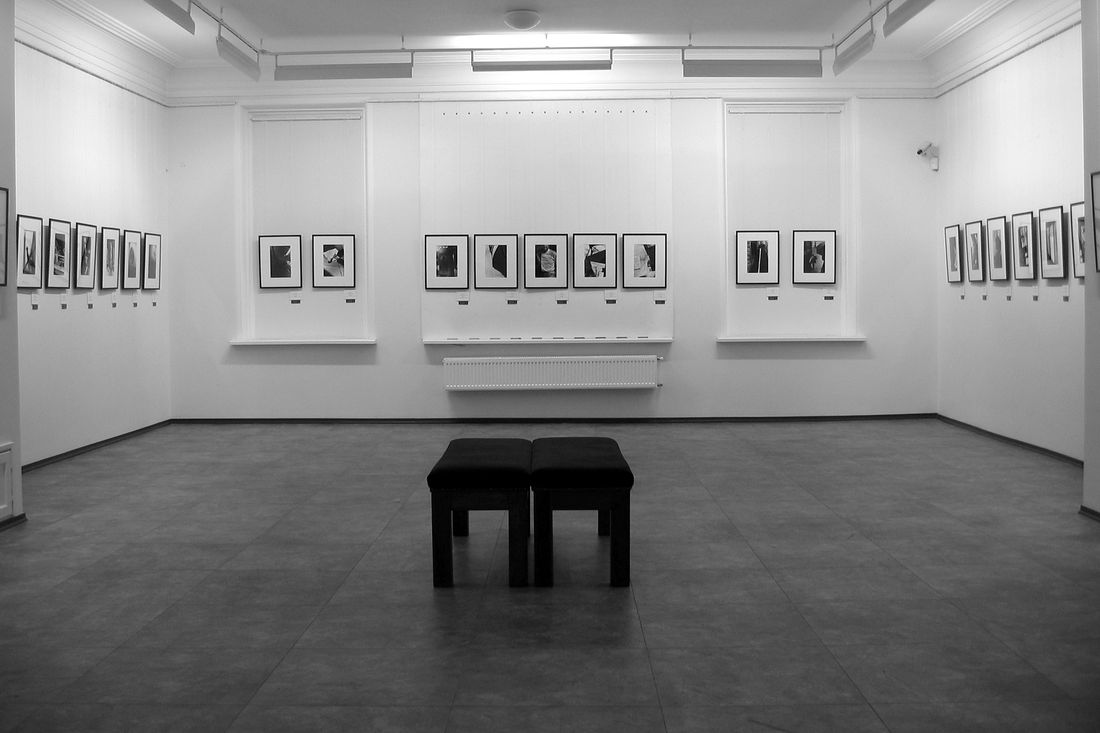
A hotel ballroom and a gallery space light a gala in close to opposite ways. A ballroom is usually a big, dim room that gets its color from chandeliers, sconces, and a moving spotlight on the stage, a warm tungsten wash that flatters skin tones and gives a photographer dramatic falloff to shape a shot with. A gallery or loft runs the other direction. The room is smaller, the walls are painted white so the art reads true, and the ambient light in the room ends up bright, flat, and color-neutral rather than warm.
Neither is worse, they just ask for different equipment. A ballroom's warm wash needs less added light to look good on camera. A gallery's bright white walls act like a giant bounce card, useful for fill, but they can flatten faces if a photographer leans on that ambient light alone instead of adding a directional source. The planning takeaway: a gallery gala usually means bringing a flash or a small strobe kit rather than trusting the room, and a ballroom gala usually means working with the venue's own fixtures instead of fighting them.
Ceiling height, bounce surfaces, and power
Ceiling height changes what a flash can actually do. A ballroom's high ceilings give a photographer room to bounce flash upward for soft, even light across a wide area, the same trick that makes ballroom candids look effortless. A gallery's ceilings run lower more often, and the nearest bounce surface tends to be a wall instead, which changes both the angle a flash gets pointed at and how close a photographer needs to stand to use it well.
Power is the other practical difference that rarely comes up until the crew is on site. A ballroom is built to host large events regularly and usually has power drops in predictable places for a stage, a DJ, or a bar setup, which a video team can tap for lighting. A gallery wasn't built for events first, so power access for lighting stands or a second camera position is worth confirming with the venue ahead of time rather than assumed.
Ballroom versus gallery, side by side
Put next to each other, the differences that actually change a coverage plan come down to five things: the light, the ceiling, how much floor a crew gets, whether flash is restricted near the art, and where the camera can physically stand.
| Hotel ballroom | Gallery or loft space | |
|---|---|---|
| Light | Warm tungsten wash from chandeliers and a moving stage spotlight | Brighter and flatter, white walls bounce ambient light around the room |
| Ceiling | Usually high, room to bounce flash upward | Often lower, walls become the nearest bounce surface |
| Floor space | Wide open floor built for large groups to move | Smaller footprint, often segmented into separate rooms |
| Flash near the art | No restriction, the walls are neutral backdrop | Sometimes restricted on specific pieces, confirm with the venue first |
| Where the camera can stand | Clear sightlines across most of the room | Boxed in by stanchions, barriers, and the art's placement |
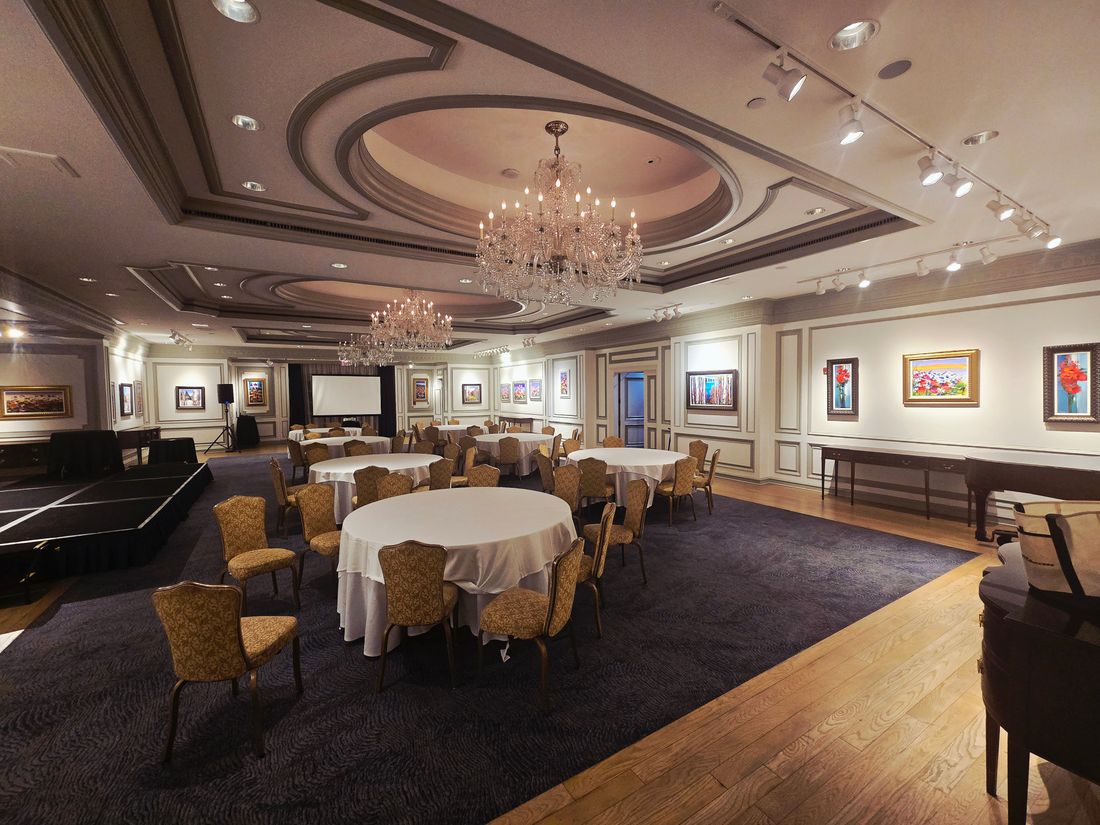
Photo: Core Visuals NYC
Crowd density and where the camera can actually stand
Ballrooms are built for large groups to move freely: wide floors, clear sightlines to a stage, room for a crew to reposition without squeezing past guests. Gallery spaces are frequently narrower and more segmented, built around discrete rooms or wall sections instead of one open floor, which means a photo and video team has less room to work and has to route movement around both guests and the art itself.
That changes practical decisions on the night: where a second shooter can stand for a wide establishing shot, how a video crew runs cables and lighting stands without blocking a doorway, and how fast a crew can move between a cocktail room and a program room if the gallery uses separate spaces for each. It's worth confirming ahead of time whether the venue allows moving or repositioning furniture, stanchions, or protective barriers near the artwork for the event, since that affects both crew movement and where guests can actually stand for photos.
Flash policy and the art on the walls
A gallery gala's walls aren't neutral backdrop the way a ballroom's drapery is. The art on display often needs its own consideration, and permission to photograph it, closely or with flash, should be confirmed with the gallery in advance rather than assumed. Some galleries are comfortable with artwork appearing in event photography as incidental background. Others restrict close documentation of specific pieces, particularly work that's for sale or on loan from a private collection.
This is a different conversation than the guest-photography permissions most galas already handle, and it's worth raising early, not as a legal question but as a practical one about what the venue is comfortable having documented. A ballroom almost never raises this question at all, since there's no art on the walls that needs protecting from a flash.
Which venue actually fits the event
Neither venue is universally better for gala coverage. A ballroom usually gives a video team more open sightlines and more predictable audio for speeches, while a gallery space often has more visually distinct backdrops but tighter crowd movement and echo-prone hard surfaces that need more careful audio handling. The right choice depends on whether the event prioritizes a polished stage moment with a clear program, or an atmospheric, art-forward feel where the room itself is part of the guest experience.
Sound is worth a specific mention because it surprises the most planners moving from a ballroom to a gallery. Ballrooms are typically built with soft furnishings, carpeting, and drapery that absorb sound reasonably well. Gallery spaces are frequently hard-surfaced, polished concrete, painted drywall, bare wood floors, because those surfaces don't compete visually with the art. That same quality makes galleries more prone to echo, which affects a video crew's ability to capture clean speech audio and how a program's remarks sound at the back of the room.
Whichever venue gets chosen, the package pricing doesn't change: coverage starts at $3,500 for up to 5 hours, $6,000 for 6 to 8 hours, and from $9,500 for a full evening with both photo and video from a two-person crew. What changes is the planning conversation before the event. A short venue walkthrough with the photo and video crew, scheduled a week or two ahead rather than skipped, resolves most of these questions in twenty minutes on site instead of guesswork after the invitations have already gone out.
Frequently Asked Questions
Does a gallery venue restrict flash photography at a gala?
Often yes, though it depends on the gallery and the specific pieces on the walls. Some galleries are fine with flash used generally in the room and only restrict close, direct flash on certain works, especially anything on loan or for sale. It's worth confirming with the venue before the event rather than assuming, since a restriction discovered mid-event limits coverage a crew could have planned around in advance.
Is a ballroom or a gallery space better for gala photography?
Neither is universally better. A ballroom usually gives a crew a warmer starting light and a wide, open floor to reposition on, which suits a polished stage moment with a clear program. A gallery gives an event a more distinct visual identity through the art itself, but the light runs flatter and the floor is usually smaller and segmented, so the crew needs to bring more equipment and plan movement around the art.
Related Reading
Trying to lock down coverage for an event that's still taking shape?
Give us the rough schedule and we'll tell you whether hourly or a package actually saves you money.
See Event Coverage Packages