Photo: Core Visuals NYC
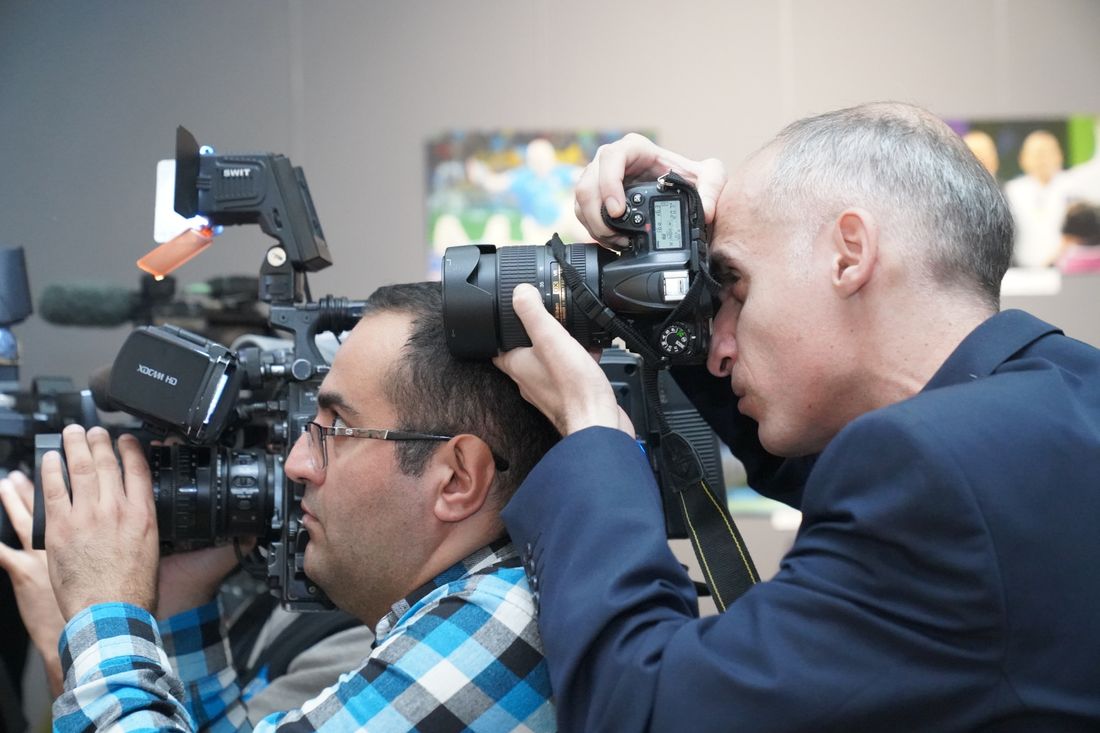
A press event isn't short on cameras. Reporters show up with their own gear, shoot what serves their story, and leave to file it on their own schedule, if it runs at all. None of that gives the host company anything it can actually use. That's the plain reason a media day still needs its own photographer or videographer in the room, working a separate list from the press pack.
Beyond what the attending press shoots for their own coverage, a comms lead running a media day needs four things locked down: a clean branded backdrop or step-and-repeat, an executive portrait usable in a release the same day, product or announcement detail shots without press clutter in frame, and a turnaround plan fast enough to go out while the news is still live.
Table of Contents
- What press won't shoot for you at a media day
- Get the branded backdrop or step-and-repeat shot clean, before the room fills
- Book two minutes with the exec for a portrait, not just candids
- Clean product and announcement detail shots, without press clutter
- What same-day and rush delivery actually look like
- Give the host crew a lane that doesn't cross the press pool
- The media day checklist: what to book beyond press coverage
What press won't shoot for you at a media day
Press photographers are covering a story, not building a company's archive. They shoot the spokesperson mid-quote, the headline moment, whatever their editor will run. A wide shot of the branded room, a clean executive portrait, or a product detail with nothing in the background rarely makes anyone's published coverage, even when it was sitting right there to shoot.
That's not a knock on the press pool. It's just a different job. Our own crew works a media day expecting nothing from outlet coverage and treats owned assets as the only guaranteed outcome of the day. Everything a comms team wants to post, send to a client, or hand to a designer the next morning has to come from a photographer or videographer shooting specifically for the host company, in the room at the same time as press but not competing with it.
Get the branded backdrop or step-and-repeat shot clean, before the room fills
A step-and-repeat only earns its cost if it's shot straight-on, level, evenly lit, and with the logo pattern fully visible, not cropped by someone's shoulder. Press will grab a quick guest photo in front of it if a name is notable enough, but that's incidental, not a set of usable brand images.
We treat the backdrop the same way we treat entrance signage: a five-to-ten-minute window before doors open, or during a lull, when the frame is still clean. Waiting until the crowd is thick means fighting sightlines for a shot that should have taken minutes. On a media day where the backdrop is doing real branding work, booking that window in advance matters more than almost anything else on the shot list.
Book two minutes with the exec for a portrait, not just candids
A press photo of an executive mid-quote is candid by nature: caught mid-sentence, sometimes mid-blink, because it's shot for a news story, not a bio page. A composed portrait, taken deliberately before or after the press moment, is what actually ends up in the release, the leadership page, or the next deck.
Pulling an executive aside for two or three minutes, even on a packed media day, gets a portrait the company controls: background, framing, expression. It's a short break that's easy to schedule around a run of show. Without it, a comms team is stuck hoping a usable frame turns up in whatever an outlet happens to publish, which may not be until well after the release goes out.
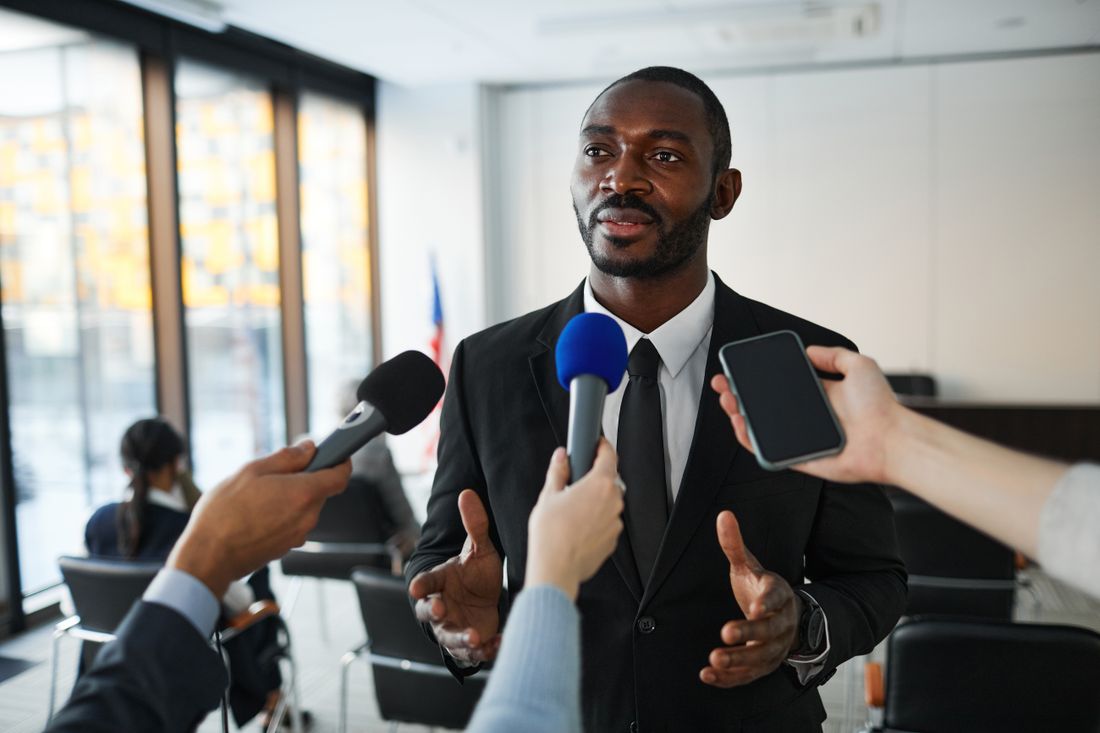
Photo: Core Visuals NYC
Clean product and announcement detail shots, without press clutter
A room full of press means lanyards, boom mics, and other camera bodies drifting into almost every frame, which a clean product or announcement detail shot can't have. The host's own crew usually needs a separate window, before doors open or after the room clears, to get that image without the day's own coverage visible in it.
This gets skipped more than it should. Shooting a product on a table, a new signage element, or an announcement detail while the room is live almost guarantees a stray badge or cable in the corner of the frame, fine for a candid, unusable for something meant to run on its own in a press kit. Ten quiet minutes before press arrives is usually enough to get the same shot without the clutter.
What same-day and rush delivery actually look like
Standard event coverage delivers in five to fifteen business days depending on the package, not same-day. The one published same-day option is on the headshot station side: a same-day-delivery add-on that gets a guest's own portrait to them mid-event. That's built for individual guest photos, not the full set of branded, portrait, and product images from a media day.
If a release is going out while the news is still live, say so before booking. Rush turnaround exists, but the premium isn't a fixed published rate. It gets quoted per job, the same way a custom scope does. A comms lead working against a same-day deadline should ask for that number up front rather than assume it's included in the standard package.
Give the host crew a lane that doesn't cross the press pool
A host photographer works around the press pool, not through it: staying off the riser or roped-off area press occupies, shooting from the side or back of the room, and moving during the gaps between press shots instead of crossing sightlines mid-frame. The goal is coverage that doesn't interrupt the coverage the outlets came for.
That's a logistics question worth answering before the day starts, not during it. Confirm where the designated press area will be, and treat it as fixed the way a stage is fixed. It also means the host crew is usually working wider angles than press bothers with, since outlets are typically locked onto the podium and rarely turn to shoot the room itself. That's exactly the gap a comms team's own photographer should be filling, not competing for a frame a wire photographer already has covered.
The media day checklist: what to book beyond press coverage
Before the day locks in, a comms lead running a media day should have a photographer or videographer booked for four things the press pool won't cover:
- A clean, straight-on shot of the branded backdrop or step-and-repeat, taken before the room fills
- A composed executive portrait, separate from any press candid, ready to drop into a release
- Product or announcement detail shots with no press clutter in frame
- A confirmed turnaround, including whether rush delivery is needed and priced, before the day starts
None of that depends on how many outlets show up or what they end up publishing. It's the part of the day the host company controls outright.
Related Reading
Trying to lock down coverage for an event that's still taking shape?
Give us the rough schedule and we'll tell you whether hourly or a package actually saves you money.
See Event Coverage Packages