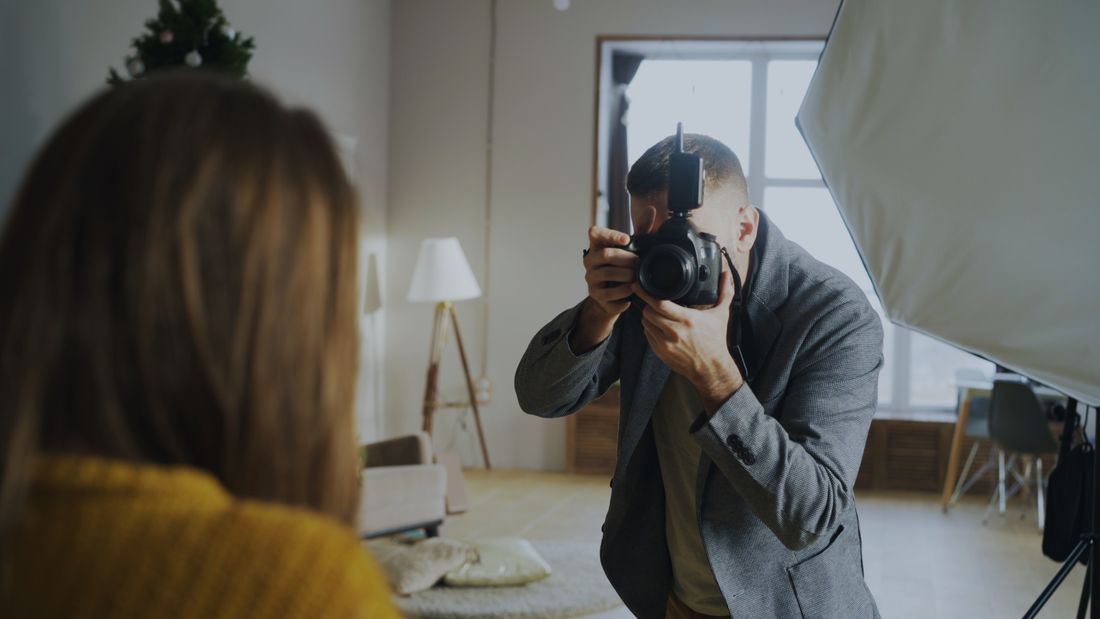
Photo: Core Visuals NYC
A headshot station is easy to book because it sounds like a fun addition to any event. The bookings that actually pay off are the ones where someone already needed the photos before the invite went out, an on location headshot session disguised as a party activity, or an attendee perk that outlives the walk to the subway.
A headshot station is worth adding to a conference or company event when three things line up: the event already gathers the right people in one room, there's enough downtime or foot traffic for a line to form, and someone internally genuinely needs the photos, not just the activity. It works as an event headshot photographer setup that runs alongside your regular coverage, not instead of it.
Table of Contents
- When a headshot station is worth adding to your event
- For conference organizers: an attendee perk people actually keep
- For your own company event: one booking solves two problems
- Does it replace your event photographer, or work alongside them?
- Matching your event to the right package
- What your venue actually needs to host it
- What your guests get, and what you get
- How to decide before you book
When a headshot station is worth adding to your event
A headshot station is worth adding when three things line up: your event already puts a room full of people in one place, that room has enough downtime or foot traffic for a line to form, and somebody inside the company genuinely needs current photos of those people. Two out of three is a nice-to-have, not a real yes.
That last part gets skipped the most. It's easy to book a headshot station because it sounds like a fun addition, guests like it, it photographs well, it feels current. All true. But the booking that pays off is the one where a specific person, usually in marketing or HR, already had "get the team updated photos" or "find a way to capture our attendee list" on a list somewhere before the event was even scheduled. Core Visuals runs this as a full studio setup (brand-matched backdrop, a photographer directing each person, tethered review so guests pick their own frame) not a novelty prop. It only earns its line item when the room, the time, and the actual need are all real at once.
For conference organizers: an attendee perk people actually keep
For a conference organizer, a headshot station works as a conference attendee headshot perk because it's one of the only giveaways that outlives the walk to the subway. A tote bag or a stress ball gets left on the seat; a professional portrait a guest can actually use on LinkedIn gets downloaded, kept, and associated with your event by name.
Compare it to what most conferences already spend on swag or lounge activations that generate a few photos for the recap reel and nothing else. A headshot station photographs around 12 guests an hour without rushing anyone, and the portrait itself becomes the marketing, attendees update their profile photo and your event rides along in the caption, without you asking for it. It also gives organizers something concrete to put in the program and the pre-event email that isn't "coffee will be provided." The tradeoff is space: you need roughly a 10-by-10-foot footprint near foot traffic and one outlet, so it works best worked into the floor plan early rather than added the week of.
For your own company event: one booking solves two problems
If you're running your own company event (a holiday party, an all-hands, an offsite) a headshot station is worth adding because it does double duty: it gives guests something genuinely enjoyable to do at the party, and it quietly clears the unglamorous problem of half the team still using a headshot from years ago.
This is the dual-purpose case that never shows up on a trade-show cost-per-lead spreadsheet, because it isn't about lead generation at all. It's about getting real use out of an event you're already paying for. Nobody schedules a dedicated headshot day for fun; it pulls people off their desks and feels like a chore. A party is different: attendance is already high, people are already dressed well, and stepping into a few-minute portrait session between drinks and dinner doesn't feel like an ask. The company walks away with updated headshots for the website, LinkedIn, and internal directories, and the team walks away with a photo they'd actually choose to use, not one cropped from a group shot.
Does it replace your event photographer, or work alongside them?
A headshot station complements standard event coverage. It doesn't replace it. Your event photographer or video team covers the room: candids, speeches, the crowd, the night's energy. The station is a separate, dedicated setup built to produce one clean, retouched portrait per guest, something a documentary-style photographer moving through a room can't stop long enough to do.
The two jobs use different tools for a reason. Event coverage stays mobile and reactive, running in parallel and catching moments as they happen. A headshot station stays fixed, with its own lighting, backdrop, and a photographer whose only job for that block of time is directing individual portraits. Running both at the same event isn't redundant. It's the difference between a recap video that shows what your event felt like and an individual asset your team can actually drop into a bio page or a directory. Booking them together, from the same team, also means one point of contact and one consistent color and retouching treatment across everything delivered.

Photo by Edmond Dantès via Pexels.
Matching your event to the right package
The right package comes down to how many hours the station needs to run and how many guests you expect, not the event category. A half-day booking runs 3 hours and comfortably covers up to 35 guests; a full day runs 6 hours for up to 75; a multi-day, multi-station setup is built for 150-plus guests across a longer run.
Core Visuals prices these by time, not by headcount, because nobody can predict exactly how many people will step up to a camera, these guest counts are what we deliver comfortably without rushing anyone, and in practice we often photograph more within the same hours. The half-day Station package, from $2,500, fits receptions, panels, and half-day programs well. The Full Day package, from $4,500 and the most frequently booked option, suits a full conference day or an all-day company event. The Trade Show tier, from $8,000, adds a second photographer and station and is built for exhibitors or multi-day conference runs with heavier booth traffic.
What your venue actually needs to host it
A headshot station needs less from your venue than people expect: about a 10-by-10-foot footprint, ideally against a wall and near natural foot traffic, plus one standard power outlet within reach. That's the entire physical ask. No special rigging, no dedicated room, no advance electrical work.
On the day, the crew arrives about 45 minutes early to build the setup and breaks it down in roughly 30 minutes at the end, so it doesn't eat into your program on either side. Pace runs around 12 guests an hour with real direction for each person, not a rushed assembly line. If your event runs bigger, or you expect a rush at a specific hour (right after a keynote, or when the bar opens at a holiday party) a second station roughly doubles capacity without doubling the wait. The only real planning task on your side is picking a good spot in the room and confirming it has usable power.
What your guests get, and what you get
Your guest gets two to four minutes of real direction and one retouched portrait, delivered to their inbox and sized for LinkedIn. You get every retouched image from the day with full commercial usage rights, a queue at your booth for the entire run, and (if you want it) a clean contact list of everyone who sat down.
That contact list is optional, which matters for a company party where the goal isn't lead capture, you can run the station purely as a guest perk and staff-photo refresh without collecting anything beyond the portrait itself. For a conference or trade show, the same list becomes a genuinely warm follow-up group, since everyone on it opted in by sitting down. Either way, you can add a branded backdrop or logo treatment on every delivered file, so the image keeps carrying your name after the guest posts it, and same-day delivery is available if you want people leaving the event with the photo already in hand.
How to decide before you book
Before booking, answer three questions: does your event already gather the right people in one place, is there a real internal need for the photos beyond the party itself, and does your venue have a 10-by-10 spot with power? If all three are yes, a headshot station is a straightforward add.
If the honest answer to the second question is "not really," it's still a fine guest activity, just budget it as one, not as a business fix. The upside either way is that it's a low-risk decision. Worst case, you've given your guests a nice portrait and yourself some usable images. Best case, you've solved a real internal problem (outdated staff headshots, a cold attendee list, a booth nobody stops at) using a budget line you were already planning to spend on the event. We reply to booking questions within one business day with a fixed quote you can forward to whoever signs off, which tends to be the easiest part of this whole decision.
Frequently Asked Questions
Does a headshot station replace our event photographer or videographer?
No, it runs alongside them, not instead of them. Your event photographer or video team covers the room: speeches, candids, the overall energy of the night. A headshot station is a separate, fixed setup with its own lighting and backdrop, dedicated to producing one retouched portrait per guest. Booking both from Core Visuals means one point of contact and a consistent color and retouching treatment across everything delivered, but they're two distinct deliverables covering two distinct needs.
We're hosting our own holiday party, not trying to generate leads, is a headshot station still worth it?
Yes, for a different reason than a trade show would want it. At your own event, a headshot station doubles as a guest activity people enjoy and a quiet fix for staff headshots being years out of date. You don't have to collect a contact list or run it as a lead tool. It can be booked purely as a perk and a staff-photo refresh, with every guest walking away with a portrait worth keeping.
How many guests can realistically get a headshot at a company event or conference?
Comfortably around 12 guests an hour, with real direction for each person rather than a rushed assembly line, that pace is what lets everyone leave with a portrait they're actually happy with. A half-day booking (3 hours) covers up to 35 guests, a full day (6 hours) covers up to 75, and a second station roughly doubles capacity for larger conferences or trade shows without doubling the wait in line.
What's the difference between a headshot station and a photo booth?
A photo booth hands people a strip of novelty prints from an automated setup. A headshot station is a real photographer, professional studio lighting, and a clean, brand-matched backdrop, producing a portrait good enough to become someone's LinkedIn photo for the next few years. That difference is why guests are willing to queue for it, and why the images are worth keeping instead of tossed in a bag on the walk out.
How far in advance should we book a headshot station for our event?
As soon as your venue and guest count are roughly set, since the physical footprint (about 10 by 10 feet, near foot traffic, one outlet) and staffing need to be confirmed with your venue ahead of time. Core Visuals replies to booking inquiries within one business day with availability and a fixed quote you can forward internally, and there's no need for a call unless you actually want one.
Related Reading
Need a headshot station that can actually keep up with a busy floor?
Tell us the event type and expected traffic and we'll size the setup and quote it before the day locks in.
See the Headshot Station