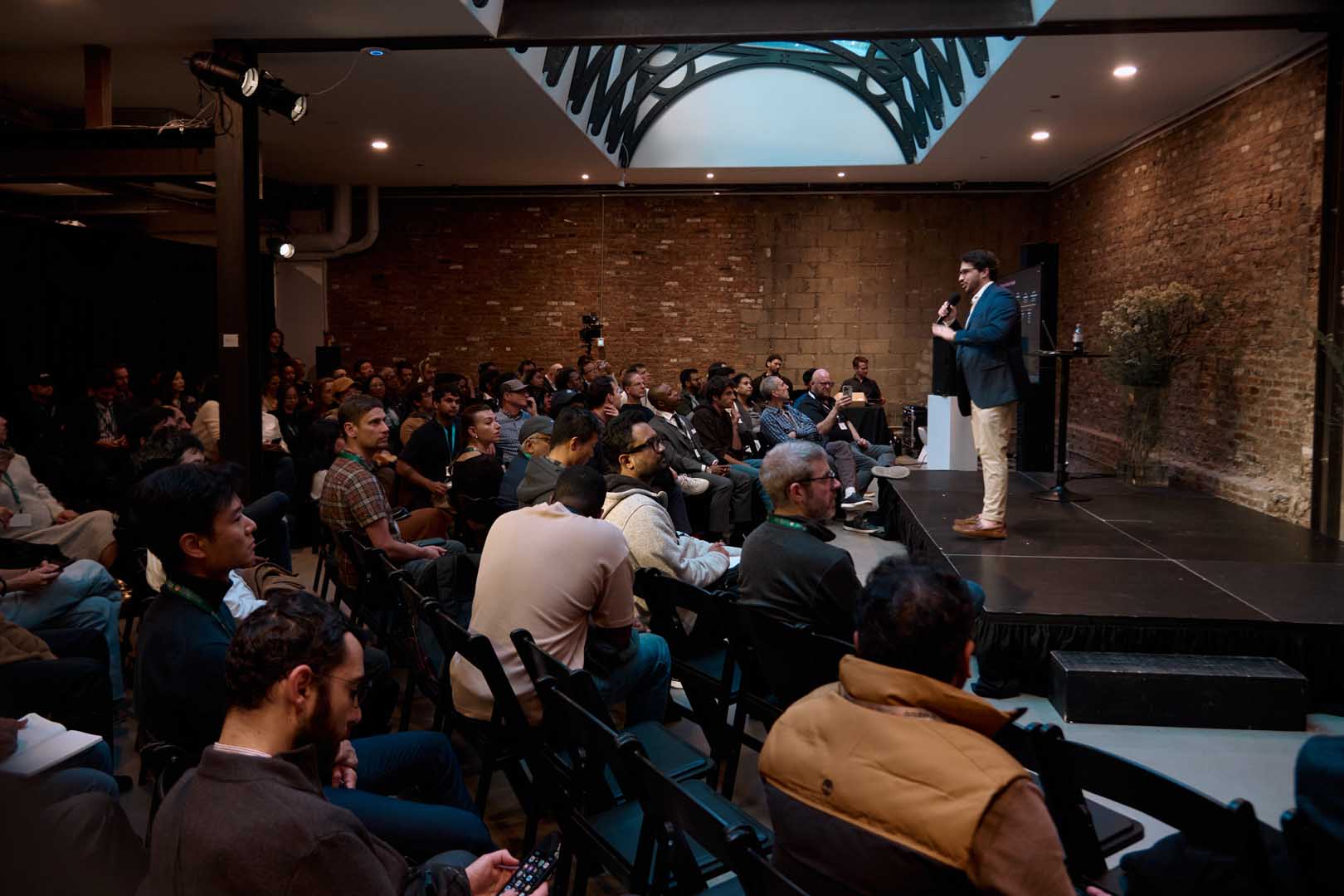
Photo: Core Visuals NYC
Conference photography pricing is easiest to understand when you stop treating coverage as a block of hours. The useful question is what the photographs need to do after the conference, because that answer changes the schedule, crew, shot priorities, delivery speed, and final quote.
For NYC conference photography, price is shaped by coverage time, number of rooms, crew size, deliverables, and turnaround. A focused single-room event needs a different plan from a conference with simultaneous breakouts, sponsor activations, executive portraits, and same-day selects. Define the uses first, then build the coverage around them.
Table of Contents
What the Photographs Need to Do
The quote starts with a plain question: what happens to these photos after the conference ends? A website recap, a sponsor report, press outreach, speaker follow-up, and next year's registration campaign each pull from a different part of the day. Naming those uses up front is what lets a photographer prioritize one moment over another instead of shooting everything at the same level of attention.
Room-wide crowd shots do not replace a clean speaker portrait or a sponsor interaction that actually reads as real interaction. A conference can generate hundreds of images and still leave a thin, unusable library if nobody named the destinations first.
- Website and recap pages need a wide establishing shot plus tighter frames of people using the room.
- Sponsor reports need signage and real interaction in the same frame, not a logo with nobody standing near it.
- Press and PR need a clean speaker portrait, separate from the wide stage shot.
- Social needs both horizontal and vertical crops from the same key moments.
The Run of Show Sets the Plan
A run of show tells the crew where the moments that cannot be repeated actually are, and which ones overlap. Keynotes, breakouts, awards, sponsor activations, and executive arrivals can land within minutes of each other. That schedule decides whether one photographer can cover the day or whether the plan needs a second camera.
It does not need to be polished. It needs times, rooms, speakers, and a note on which moments have no second take, like a speaker who only has ten minutes for a portrait or a sponsor build that comes down before the closing session.
A current run of show shared the week of the event is worth more than a clean one from a month out. If the keynote moves twenty minutes, the crew needs to know before they are standing next to an empty stage.
Rooms, Crew Size, and a Headshot Booth Add-On
Crew size follows how many things are happening at once, not the size of the guest list. One photographer covers a single-room program fine. That same person cannot shoot a keynote, two breakout tracks, and a reception happening simultaneously, no matter how the proposal reads.
Mark the overlaps on the schedule first, then decide which sessions need full coverage and which only need a representative set. Movement matters too. Two rooms on the same floor cost less time than two rooms with security screening between them.
A headshot booth is a common add-on for conferences that want attendee headshots at registration or during a break, priced and staffed separately from the event coverage crew: half a day from $2,500, a full day from $4,500, both with a brand-matched backdrop and retouching included, plus a same-day delivery option.

Photo: Core Visuals NYC
Turnaround Speed
Faster delivery is a production choice, not a courtesy line in an email. Same-day or next-morning selects need a person and a laptop reserved for transfer, review, and export while the conference is still running, and that reservation shows up in the price.
Splitting the ask usually works better than rushing everything. A small batch of keynote, sponsor, and room-energy selects can go out same-day for social, while the full gallery follows on the standard schedule.
Core Visuals' turnaround runs 5 to 10 days for the Essential package and 7 to 15 days for Professional and Premium. A faster preview than that is a different workflow and needs to be scoped before the event, not requested afterward.
Photo, Video, or Both
Photography earns its place when the conference needs a flexible library for websites, press, sponsor reports, and social. Video earns its place when motion or voice carries the value, like a keynote, a panel, or a training session where the words matter.
Do not default to both. A reception or an internal event with a reusable image library as the main goal may only need photography. When both are booked, decide up front whether the video is a short recap, a set of social clips, or a full session record. Those are different productions with different camera positions.
Core Visuals prices photo or video the same in the Essential and Professional packages. Premium combines both starting at $9,500, which runs less than booking the two separately.
Core Visuals Conference Photography Pricing
Core Visuals uses fixed packages so the quote ties directly to coverage time and deliverables. Short events under about four hours are usually cheaper on the hourly rate. Anything longer crosses over to a package.
- Hourly: $850 per hour, two-hour minimum ($1,700 minimum), scoped per event.
- Essential: $3,500 for up to five hours, 150 to 200 edited photos or a 2 to 3 minute highlight reel, 5 to 10 days.
- Professional: $6,000 for six to eight hours, 200 to 300 edited photos or a 4 to 6 minute reel, 7 to 15 days.
- Premium: from $9,500 for 8+ hours of coordinated photo and two-camera video, a 4 to 6 minute event film, and social clips, 7 to 15 days.
Before hiring a conference photographer in NYC, ask to see full conference galleries rather than a handful of stage shots, confirm how overlapping rooms get covered, and get the final image count and delivery window written into the scope. These are Core Visuals' numbers, not a claim about every photographer in the city. Compare the full scope line by line, because a lower number with fewer usable assets is simply a different product.
Related Reading
Need a real number before you can plan the rest of the budget?
Give us the date, the run time, and the deliverables you're after, and we'll send back a quote with every line item spelled out.
Get a Quote