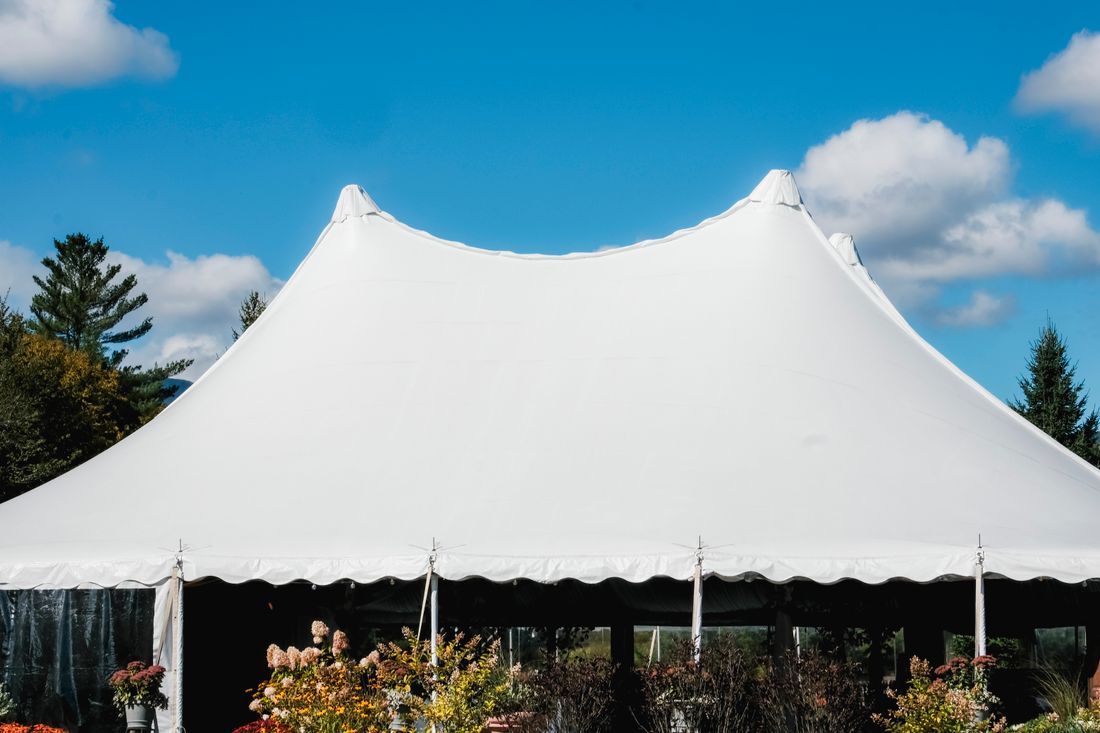
Photo: Core Visuals NYC
Manhattan's benefit calendar goes quiet by July, and what fills the gap isn't a smaller version of the same gala. It's a tent on a lawn on the East End, a club evening in Fairfield County, a garden party doing the job a ballroom used to do. The room stops being fixed. Light moves through the whole evening instead of staying constant, the ground is grass instead of carpet, and weather gets a vote. None of that is a downgrade. It's a different production problem, and the coverage plan has to be built for it on purpose.
Photographing a summer benefit outside the city means building the plan around light and a clock, not a hotel schedule. Cocktails start in hard late-day sun, the program runs through golden hour into genuine dark, and a tent changes what a wide shot can show. Timing, structure, and weather shape the shot list as much as the run of show.
Table of Contents
- What Actually Changes When the Benefit Moves Outdoors
- Light Is the Whole Story, Not a Detail
- Timing the Run of Show to the Sun, Not the Schedule
- What a Tent Does to a Wide Shot
- Where the Honest Room Photo Lives Instead
- Ground, Weather, and Wind Are Production Facts
- The Donor Deliverables a Summer Benefit Still Owes
- What's Actually Easier About a Tent on a Lawn
What Actually Changes When the Benefit Moves Outdoors
Moving a benefit outdoors and out of the city changes the coverage plan more than it changes the guest list. A ballroom fixes the light and the room shape for you. A tent on a lawn fixes neither. The plan becomes a lighting plan built against a setting sun, not a shot list built against a printed program.
Manhattan's benefit calendar empties out by July, and what replaces it isn't a smaller version of the same event. It's a different production problem wearing a tuxedo. A benefit on the East End, a club evening in Fairfield County, a garden party doing the job a ballroom used to do — same donor list, same program beats, entirely different physical conditions. The room isn't climate-controlled or blacked out. It has a horizon, a setting sun, and weather that hasn't read the run of show.
We build coverage for these events the way we'd build for a moving subject, because the light itself moves continuously, from the first cocktail frame to the last toast. Where to stand, when to shoot the honoree, what the wide shot even is — all of it follows from that one fact first.
Light Is the Whole Story, Not a Detail
Light is the whole story at a summer benefit, not one variable among several. Cocktails start in hard, flat late-day sun with short shadows and squinting guests. The program runs through golden hour, where color and depth arrive almost for free. By dessert and dancing it's genuinely dark, with the tent or string lights the only light source left.
That arc happens in roughly two hours, sometimes less, and it never repeats. A 6:30pm cocktail hour in August looks nothing like the same slot in late September — the sun sits lower, faster, sooner. So the coverage plan isn't shoot the reception, then the program, then the dancing. It's three separate lighting problems stacked back to back, each needing its own exposure strategy and, often, different gear.
The honest version: golden hour is generous, but it's a narrow, one-time window, not a mood you can call up later. If the chair's toast lands during it, that's a gift. If it lands earlier in the sun or later in the dark, the plan has to have already accounted for that — because nobody reschedules a toast for a photographer.
Timing the Run of Show to the Sun, Not the Schedule
Timing a summer benefit's coverage means working backward from sunset, not forward from the printed schedule. We ask for sunset time before we ask for the run of show, because the sun is the one participant in the evening that will not wait for a delayed cocktail hour or a long welcome speech.
In practice, that means flagging where the program is likely to collide with the light before the event starts — not fixing it in post. If the honoree remarks are scheduled for 7:45 and sunset is 7:52, that's worth a quiet note to the committee: golden hour will land mid-speech, which is good, but only if the program actually starts on time. If cocktails run long, as they often do, that window slides and the speeches end up shot in the dark instead.
This is less about controlling the room and more about knowing, in advance, which fifteen-minute stretch of the evening is the one that photographs itself and which stretch needs the most help. A schedule printed a month out can't know that. A weather app checked that morning can get close.
What a Tent Does to a Wide Shot
A tent changes what a wide shot can honestly show. Poles interrupt the sightline a ballroom would give for free. Guy lines cut across the frame at odd angles. The ceiling, especially by the second half of the evening, has some visible sag in it. None of that reads as a flaw in person — it's just a tent — but it reads immediately in a single wide frame trying to stand in for the whole room.
Canvas also does something specific to light that a hard ceiling doesn't: it bounces some of it back down, warm and diffuse, and it eats the rest, especially toward the tent's edges where the walls are lower and the light falls off fast. A flash bounced up under a white tent behaves differently than the same flash bounced off a ten-foot ballroom ceiling — softer, but less predictable, and it shifts as the sun outside changes.
The result is that the single sweeping establishing shot a ballroom hands you almost automatically has to be built more deliberately under a tent, or replaced with something that does the same job differently.
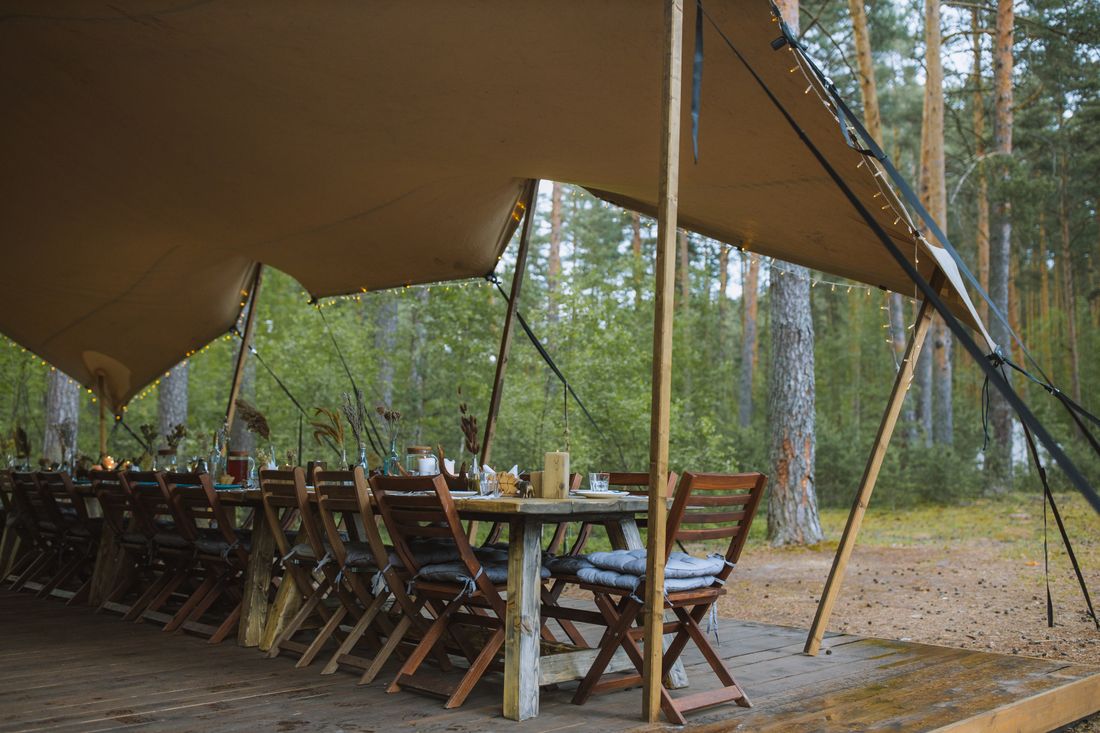
Photo by Anastasia Shuraeva via Pexels.
Where the Honest Room Photo Lives Instead
When a full-tent wide shot won't hold up, the honest room photo comes from closer in — table clusters, sightlines down a row of seated guests, the stage or podium framed against whatever's visible past the tent's open side. These shots carry the sense of scale a wide shot would have carried, without asking a pole or a sagging seam to disappear.
Layering helps more outdoors than in a ballroom. A guest in the foreground, string lights or the dusk sky in the background, does the work a single wide frame can't once the tent's structure is in the way. Toward the end of the evening, the sky itself becomes useful — a deep blue behind a lit tent reads as more flattering and more honest than a flash-lit tent against total black, which is what happens an hour later if nobody planned for it.
None of this is a workaround for a lesser room. It's a recognition that a tent is a different kind of space than a ballroom, and the photography that represents it well looks different too — not smaller, just built on a different logic.
Ground, Weather, and Wind Are Production Facts
Grass, weather, and wind are production facts at an outdoor benefit, not complaints to work around quietly. Heels sink into lawn that looked solid at the site visit. A breeze that's pleasant for guests can flip a lightweight backdrop or a sponsor banner between one photo and the next. None of it is unusual — it's just true of grass and open air in a way it isn't true of a hotel ballroom.
The rain call is the biggest one. Most committees make it by early afternoon for an evening event, and that call decides where the tent walls go up, whether the ceremony moves under cover, and how much natural light is left to work with. We plan for both versions of the evening rather than betting on the forecast, because the difference between a partly-open tent and a fully enclosed one changes the entire lighting approach.
Humidity matters too, in a quieter way — gear that sits outside for six hours in August heat and evening dew needs to be built for that, and treated that way from setup through the last frame.
The Donor Deliverables a Summer Benefit Still Owes
A summer benefit under a tent still owes the same donor deliverables a ballroom gala does — the setting changes, the shot list doesn't shrink. The honoree still needs a clean, well-lit portrait moment. The chair still needs a photo with the board, ideally early, before hair and makeup start to move in the heat. The auction or paddle-raise moment still needs to be caught cleanly, because that image often becomes the one the committee uses to thank sponsors afterward.
Sponsor signage is its own problem outdoors. A step-and-repeat or a banner that reads perfectly in daylight can go flat and unreadable by the time the room shifts into dusk, right when more guests are actually walking past it for photos. Getting that signage lit and legible into the evening isn't an afterthought — it's part of honoring what a sponsor paid for.
The list of what a benefit owes its donors doesn't change with the venue. What changes is the light available to deliver it, and how much of that has to be planned rather than assumed.
What's Actually Easier About a Tent on a Lawn
Some of a summer benefit is genuinely easier to cover than its ballroom equivalent, and it's worth saying so plainly. The room is usually smaller and warmer — fewer guests spread across a tighter footprint, which means less ground to cover between the cocktail hour and the stage, and a more intimate feel that comes through in the photos without any extra effort.
The bigger difference is the committee itself. An outdoor, self-produced event isn't fighting a hotel's banquet department for load-in time, room turnover, or a strict end time tied to another group's booking. That usually means more room to actually run the program to the light rather than to a rigid slot, and less of the friction that comes from a venue with its own competing schedule that night.
None of that erases the real work of light, weather, and a tent's physical limits. But it's a fair trade: harder light management, in exchange for a room that's easier to move around in and a schedule that answers to the sunset instead of a banquet captain.
Frequently Asked Questions
How is photographing an outdoor summer benefit different from a ballroom gala?
The core difference is light. A ballroom fixes the light for you; a tent or lawn doesn't. Cocktails start in hard late-day sun, the program moves through golden hour, and the evening ends in genuine dark, all within a couple of hours. The coverage plan has to be built around that shifting light and the sunset clock, not just the printed run of show, with different exposure strategy for each phase of the evening.
Do you shoot benefits in the Hamptons and Fairfield County?
Yes. Core Visuals is a New York production team that travels for summer benefit season, covering the East End of Long Island and Fairfield County alongside Manhattan work. There's no local office, address, or staff in either market. It's the same crew and single point of contact you'd get in the city, brought out to the venue with gear and a lighting plan built specifically for an outdoor evening.
What happens to the wide establishing shot when the venue is a tent?
It usually gets replaced rather than forced. Poles, guy lines, and a canvas ceiling that sags by evening all show up in a single wide frame in a way they don't in the room in person. Instead, we build the sense of scale from closer table clusters, layered foreground-to-background shots, and the tent framed against the sky, which reads as more honest than a strained wide shot.
Who decides whether an outdoor benefit moves under a tent if it rains?
That call belongs to the host committee, usually made by early afternoon for an evening event, not to the photography team, and not something we weigh in on. We can't offer guidance on weather liability or contract terms; that's a conversation for the venue and planner. What we do is plan coverage for both the open-air and fully-enclosed versions of the tent, so either call still works.
What donor photos does a summer benefit still need, even outdoors?
The same ones a ballroom gala needs. A clean portrait moment with the honoree, a photo of the chair with the board, a clear shot of the auction or paddle-raise moment, and sponsor signage that still reads once the light shifts toward dusk. The venue and season change the light available to capture them. They don't change what the committee actually owes its donors.
Related Reading
Not sure if hourly or a package makes more sense for your event?
Tell us the expected length, and we'll run the actual numbers before you book.
See Event Coverage Packages