A gala only happens once, in one room, for a few hours. But the coverage from it gets used for months afterward, by people who were never in that room at all, sponsors deciding whether to renew, board members who couldn't make it, donors who need to see where their money went. Planning coverage only for the people physically present is planning for the smaller of the two audiences.
It's worth naming up front why this distinction gets missed so often: whoever is planning the gala is, by definition, in the room. It's easy to plan coverage around what would make a great keepsake for the night itself, because that's the version of the event the planner is actually living through. The sponsor renewal conversation and the donor follow-up email happen weeks later, to a different person, thinking about a different question. That gap is exactly where coverage plans go wrong.
Gala coverage serves two distinct audiences with different needs: guests who were in the room, and sponsors, donors, or board members who weren't. Guests want photos that capture their specific night, their table, their friends, the honoree, the room itself. The second audience wants something faster to absorb: a highlight reel and a curated gallery that prove the event succeeded, without requiring them to have been there to understand why it mattered.
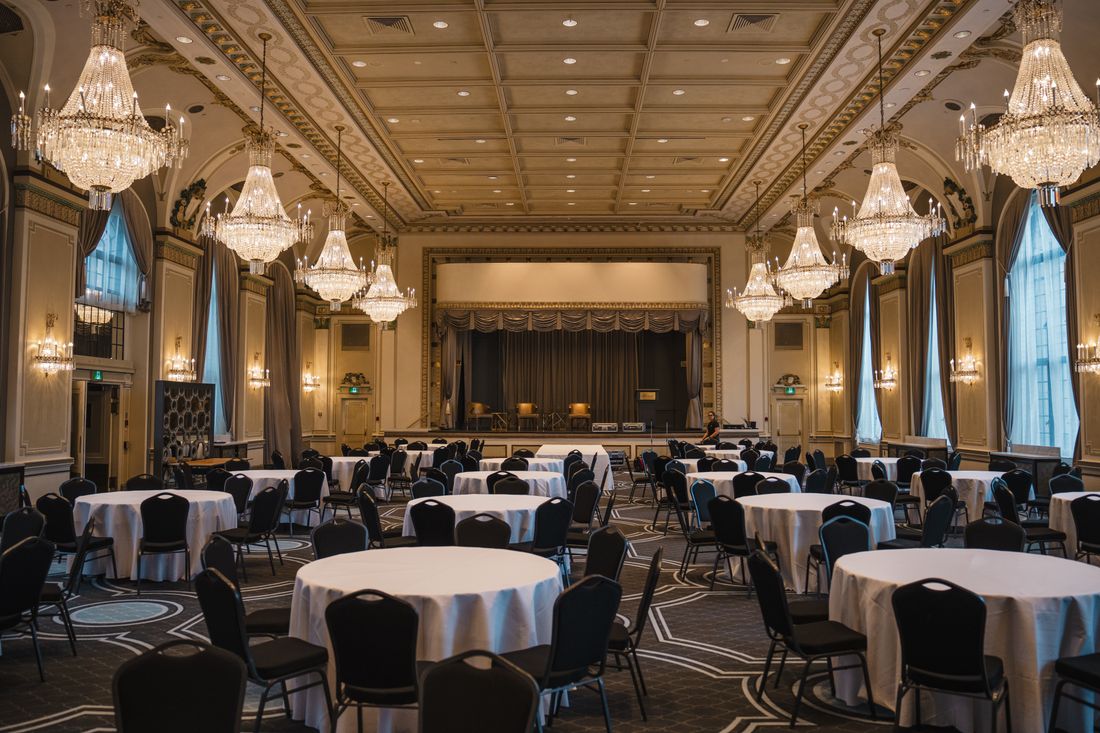
Photo: Core Visuals NYC
Table of Contents
What the room actually wants
Guests who attended a gala want photos that document their specific experience, their table, the people they came with, candid moments from the reception, and a clear shot of the honoree or keynote if there was one. These are the photos that get shared individually, tagged on social media, and remembered as "that photo from the night," which is a different job than proving the event was a success to someone who wasn't there.
This is also where a full photo gallery earns its place. A 200-300 image gallery delivered a week later lets guests find themselves, their table, and their friends, something a tightly-edited highlight reel can't do, because a reel has to cut almost everyone out to stay watchable. The room wants volume and personal relevance. The people who missed it want the opposite.
The gallery also does quiet work beyond individual guests finding their own photo. A comprehensive set gives the organizing team a real archive to pull from for next year's invitation, the venue's own portfolio request, or a last-minute press ask about the honoree, needs that only surface after the event, once someone realizes the only photo they have of a specific moment is a phone snapshot from three tables away.
What the people who missed it need instead
Sponsors, board members, and donors who weren't in the room need a highlight reel and a curated set of images that communicate the event's success in a few minutes, not a full gallery they'd have to sort through to find the point. A gala highlight reel earns its purpose by showing the room filling up, the honoree or keynote moment, visible sponsor and donor recognition, and genuine guest reactions, not just wide, empty-feeling shots of a decorated room.

This is the same content that ends up in next year's sponsor deck, on the "impact" page of the nonprofit's site, and in the follow-up email that renews a sponsorship without anyone having to sit through a sales call. A well-cut 3-4 minute reel does that job better than a raw photo gallery ever could, because the person watching it wasn't there to fill in the context themselves.
The mistake we see most often: booking only photography because "it's cheaper," then realizing three weeks later that the development team needs a video to send sponsors and there's no footage to cut one from. Deciding the audience upfront prevents this.
Covering both audiences without doubling the crew
Covering both audiences at a gala doesn't require two separate teams. A two-camera photo-and-video crew working the same room can produce both a full photo gallery and a highlight reel from a single evening. This is what the Premium coverage tier is built for: full photo coverage alongside two-camera video, delivered as a coordinated set instead of two unrelated productions that happen to share a date.
The efficiency comes from planning, not from cutting corners. A shared shot list that flags which moments need to be photographed for the room (candids, table shots, guest interactions) and which need to be filmed for the reel (the honoree's remarks, the room's energy at peak moments, sponsor signage) means the crew isn't guessing on the night. Both deliverables come out of the same coverage window instead of requiring the room to be worked twice.
This planning step is worth doing even for organizations that think they only need one format. We've had more than one client book photo-only coverage, then call three weeks later asking if there's any usable video footage for a sponsor deck. There wasn't, because nobody was filming. Deciding the audience and the format upfront costs nothing extra; deciding it after the fact usually means a second, more expensive trip back to the well that isn't there.
Why turnaround speed matters more at a gala
Gala coverage has a shorter useful shelf life for its second audience than most event content, because sponsor renewal conversations and donor follow-up happen in the weeks immediately after the event, not months later. Photos typically deliver in 5-10 days and video in 7-15 days, fast enough to fold into that follow-up window instead of arriving after the moment for asking has already passed.
The industry-standard 30-60 day turnaround that some vendors still run on effectively wastes the second audience's entire reason for needing the content quickly. A donor thank-you email that includes a highlight clip sent two weeks after the gala reads as organized and timely; the same email sent two months later reads as an afterthought, even if the footage itself is identical.
Planning a gala or fundraiser?
Tell us which audience matters most for this event (the room, the follow-up, or both) and we'll build coverage around that from the start.
See Event Coverage PackagesFrequently Asked Questions
What's the difference between covering a gala for guests versus for donors who weren't there?
Guests in the room need photos that capture the specific night, their table, their friends, the honoree, the room itself. Donors and sponsors who weren't there need a highlight reel and a curated gallery that communicates the event's success and impact in a few minutes, without requiring them to have been present to understand it.
Do we need both photo and video for a gala, or is one enough?
One is enough if you only need to serve one audience, photos for guest-facing recap content, or video for sponsor and donor follow-up. Most galas benefit from both because the two audiences want different formats: a photo gallery serves the room, and a highlight reel serves the people who need the story summarized quickly.
How fast do we need gala photos and video back for sponsor follow-up?
Photos typically come back in 5-10 days and video in 7-15 days, which is fast enough to send sponsor thank-you materials and donor follow-up while the event is still fresh in people's minds. Waiting the industry-standard 30-60 days means the follow-up lands well after anyone's attention has moved on.
What should a gala highlight reel actually include?
A gala highlight reel should show the room filling up, the honoree or keynote moment, visible donor and sponsor recognition, and genuine guest reactions, not just wide shots of tables. The goal is for someone who wasn't there to understand the event mattered and the money raised had real momentum behind it.
How much does gala photography and video coverage cost in NYC?
Coverage packages start at $3,500 for up to 5 hours of photo or video, $6,000 for 6-8 hours, and from $9,500 for a full evening with both photo and video from a two-person crew. Most galas run 4-6 hours including cocktail hour, which typically fits the middle package.