
Photo by Mikhail Nilov via Pexels.
Give a founder a script and watch what happens the second the camera rolls: the eyes drift up while they hunt for the next line, the cadence flattens into a read-through, and the person who was supposed to be the whole point of the video disappears behind a performance. Talking points fix this because they hand the founder ideas instead of sentences. The message stays locked, the words stay theirs, and the founder stays present enough for the camera to actually catch something real.
Prep a founder with talking points, not a script: give them the 3 to 5 messages, the real questions that draw each one out, and one concrete example per point, never sentences to memorize. A script makes a founder recite; talking points let them think out loud, which is what actually reads as authentic on camera.
Table of Contents
- Why a Memorized Script Kills Founder Video
- What a Founder Prep Doc Should Actually Contain
- How Many Takes a Non-Actor Founder Really Needs
- Interview-Style Capture vs. Straight-to-Camera
- The Teleprompter Tradeoff
- What to Send the Founder the Night Before
- How the Edit Rescues a Rambler
- Building This Into a Repeatable Process
Why a Memorized Script Kills Founder Video
A memorized script kills founder video because the founder switches from thinking to reciting. The eyes drift up and to the left hunting for the next line, the voice flattens into a read-through cadence, and the specific judgment that made this person worth filming in the first place disappears behind a performance.
I've watched it happen on set more times than I can count. Hand a founder a paragraph to memorize and something shifts the moment the camera rolls. They stop talking to the lens and start reciting to themselves. It shows up as small pauses before specific words, a slight sing-song rhythm, and a stare that drifts off-camera while the brain retrieves line three. None of that reads as confident. It reads as rehearsed, the opposite of what a founder video is supposed to prove.
The fix isn't more rehearsal. It's removing the script and replacing it with talking points, the ideas the founder actually believes, in the founder's own words, found in the moment instead of remembered. That's the difference this approach is built on, and it's why the prep doc, the take count, and the interview format below all follow from it.
What a Founder Prep Doc Should Actually Contain
A founder prep doc should contain the 3 to 5 core messages in plain language, the specific questions that will draw each one out on camera, one concrete example per point, and a short list of phrases to avoid, not a script, and not a list of topics to hit in order.
I build this as a single page, not a deck. At the top: the 3 to 5 things this video needs to land, written the way the founder would say them out loud, not the way a press release would phrase them. Under each one, the real question I'm asking on camera. Founders answer better to an actual question than a topic heading on a page.
Then one concrete example or short story per point, because vague statements make people sound rehearsed even when they're not memorizing anything. I also add a short 'don't reach for these' list (jargon a founder leans on when nervous, or claims that need a caveat). What I leave out matters as much as what's on the page: no full sentences, no word-for-word phrasing, no order to hit exactly. The page is a map, not a route.
How Many Takes a Non-Actor Founder Really Needs
Most founders need two to four takes per question: one to warm up and settle into the unfamiliar feeling of a lens pointed at them, one or two to find a clean and natural answer, and sometimes a final take that's looser and better than either, because by then they've stopped performing.
The first take is rarely usable, and that's fine. It's not wasted, it's the founder finding their footing. I don't tell them that going in, because knowing the first one 'doesn't count' can make some people relax and make others phone it in. Either way, I plan for it and build the schedule around it.
By the second or third take, most people settle into something worth using. That's usually where the best answer lives (specific enough to be useful, loose enough to sound like a person instead of a brand). I rarely push past four or five takes on one question. Past that point, fatigue sets in and answers get shorter and more guarded, not better. If a question isn't landing by take four, the problem is usually the question, not the founder (a prep doc fix, not a coaching fix).
Interview-Style Capture vs. Straight-to-Camera
Interview-style capture (an off-camera person asking real questions) gets a more natural answer from most founders than straight-to-camera delivery, because the founder is talking to a person instead of a lens. Straight-to-camera works better once someone has real reps on camera, or when the format calls for direct eye contact with the viewer.
Most founders haven't done enough on-camera work to talk to a lens like it's a person, and pretending otherwise doesn't fix that. Put an interviewer a few feet from the lens instead, close enough that the founder's eyeline reads as nearly-camera, and the whole dynamic changes. They're having a conversation, a skill they already have, instead of performing direct address, a skill most people never build.
Straight-to-camera still has its place (a short direct-address open, a call to action, a moment where looking the viewer in the eye is the point). I use it, but as the exception inside a shoot that's mostly interview-style, not the default. The edit can always pull a clean answer from an interview take and cut it in as a talking head; it's much harder to make a stiff direct-address take feel natural after the fact.
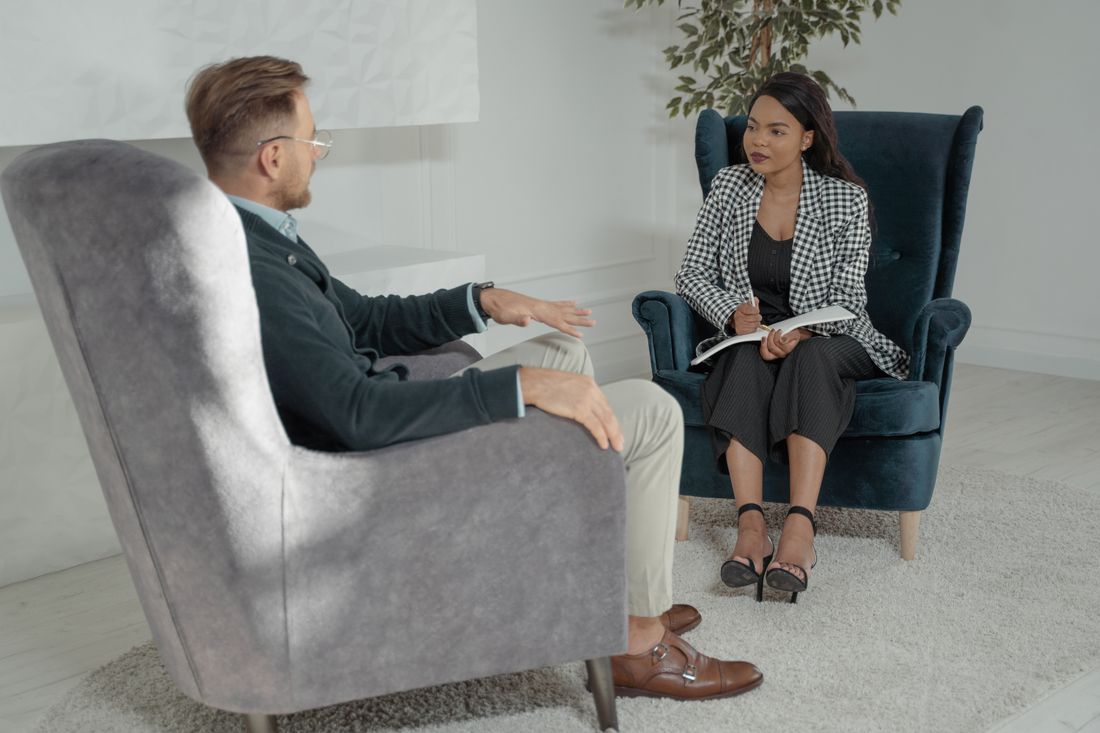
Photo by Tima Miroshnichenko via Pexels.
The Teleprompter Tradeoff
A teleprompter guarantees clean sentences but reintroduces the exact problem talking points are meant to solve: a founder reading instead of thinking, with eyes that give it away on close-ups. It's worth using for short, precise segments (a legal disclaimer, a specific figure, an exact product name) not for the parts meant to sound like the founder.
The honest case for a prompter is real: it protects against a founder blanking, and it gets an exact phrase right when the wording genuinely matters (a compliance line, a partner's name, a figure that can't be paraphrased). For those few seconds, it earns its place.
The problem is scale creep. Once a prompter is on set, it's tempting to script the whole interview to it, because it feels like insurance against a bad take. That's exactly backwards. It trades a slightly rougher, more human answer for a smoother, more forgettable one. My rule of thumb: if a line needs to be word-for-word, prompt it. If it's an opinion, a story, or an answer to a real question, it goes on the talking points page instead, and the founder finds the words live.
What to Send the Founder the Night Before
The night before, send the founder the prep doc, the exact list of questions in the order they'll be asked, and nothing genuinely new (no last-minute additions, no full script, no fresh talking points to memorize). The goal is familiarity with the shape of the shoot, not last-minute cramming.
New information the night before a shoot doesn't calm anyone down. It gives them one more thing to try to remember at 6 a.m. So I keep the package small: the prep doc they've likely already seen, the actual question order so there are no surprises about pacing, and a short logistics note (call time, what to wear, roughly how long it'll run).
I also say, in writing, that there's no wrong answer and we'll do multiple takes. That single sentence does more for a founder's nerves than any amount of extra prep material. Most anxiety on shoot day isn't about not knowing the content. Founders know their business better than anyone in the room. It's about not knowing the format. Removing that unknown the night before is worth more than another round of notes.
How the Edit Rescues a Rambler
A founder who rambles on camera isn't a failed shoot. It's raw material for an editor to shape. The edit finds the one clean sentence buried inside three minutes of thinking out loud, trims the run-up and the trailing off, and lets that sentence carry the point instead of forcing the founder to say it perfectly in one breath.
Some of the best founder soundbites I've cut came from answers that were a mess in the room. A founder circles the point twice, backs into a good line almost by accident, then keeps talking past it. On set, that can feel like a bad take. In the edit, it's the opposite. That accidental good line, isolated and given room to breathe, sounds more real than a clean, front-loaded answer usually does.
This is the actual safety net behind the talking-points approach, more than any amount of coaching on set. I'd rather have four minutes of an honest, occasionally rambling answer than ninety clean, memorized seconds, because the edit can find the real sentence inside the rambling, and there's no editing a memorized line back into sounding like a person.
Building This Into a Repeatable Process
A repeatable founder-prep process means the same prep doc format, the same night-before package, and the same interview-style setup every time, so the founder gets more comfortable with each shoot instead of starting from zero, and nobody's reinventing the approach for every video.
The founders I've filmed more than once get noticeably easier to shoot the second and third time, not because the questions get easier, but because the format becomes familiar. They know what a prep doc looks like from me, they know roughly how many takes to expect, and they know nobody's handing them a script to memorize. That familiarity does more for on-camera comfort than any single coaching tip.
This is also why I treat prep as part of the actual production, not a courtesy email sent before it. The doc, the night-before package, the interview setup. They're the same tools whether it's one video or a year of content. Founders who are going to be on camera regularly are better served by a process they can predict than by a pep talk before every single shoot.
Frequently Asked Questions
What's the difference between talking points and a script for a founder video?
A script gives exact sentences to memorize and deliver; talking points give the ideas, in plain language, the founder is meant to cover in their own words. A script protects wording at the cost of naturalness. Founders visibly shift into recitation mode. Talking points protect the message while leaving phrasing to the founder in the moment, which is why the answer sounds like a real person, not a read-through.
How long should a founder prep doc be?
One page is the right length for almost every founder shoot. It should hold the 3 to 5 messages the video needs, in the founder's own phrasing, the questions that draw each one out on camera, and one example per point. Anything longer starts turning into a script by volume alone, and founders tend to memorize a long document even when nobody's asked them to, bringing back the stiffness the prep doc was meant to prevent.
Is a teleprompter a bad idea for founder video?
Not inherently. It's a mismatch for most of a founder interview, not a mistake in every use. A prompter earns its place for short, precise lines that must be exact: a legal disclaimer, a partner's name, a specific figure. For the parts meant to sound like the founder's own thinking (opinions, stories, real answers to real questions), it reintroduces the reading cadence talking points are meant to avoid, so I keep it to those narrow cases.
How many takes does a non-actor founder actually need per question?
Plan on two to four takes per question for most founders. The first is usually a warm-up take where they're still finding their footing; it's rarely the one that gets used. The second or third is typically where the founder settles into a natural, specific answer worth cutting. I rarely push past four or five takes. Beyond that, answers get shorter and more guarded rather than better, meaning the fix is usually the question, not more takes.
What should I send a founder the night before a shoot?
Send the prep doc they've already seen, the exact order of questions they'll be asked on camera, and a short logistics note (call time, wardrobe guidance, expected run time). Don't add anything genuinely new; new material the night before creates last-minute cramming instead of calm. I also put in writing that there's no wrong answer and we're doing multiple takes, one sentence that does more for a founder's nerves than another round of notes.
Related Reading
Working on founder content or a launch and not sure what to shoot?
Tell us where the content needs to live (site, LinkedIn, press, or a launch page) and we'll come back with the scope and a fixed price before anything gets booked.
See Personal Branding & Launches