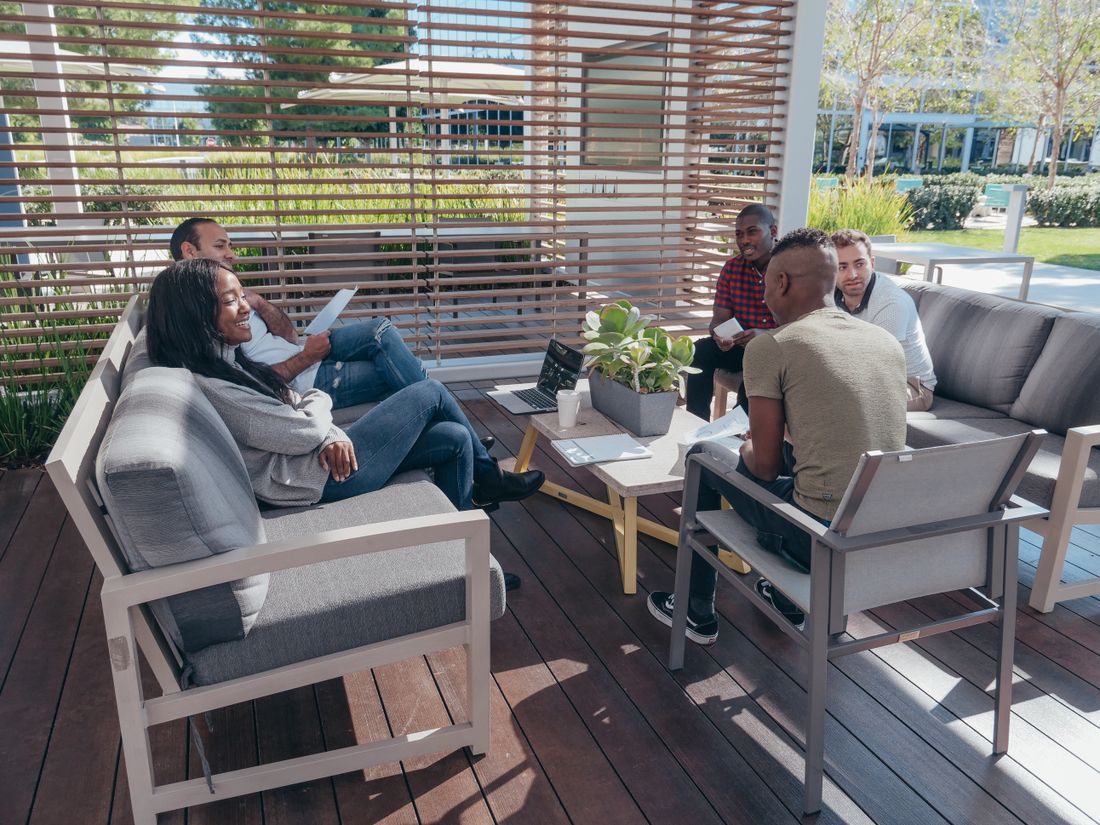
Photo by Kindel Media via Pexels.
Ask me to shoot a company offsite the same way I'd shoot a conference and the coverage misses the entire point of the retreat. A conference has a stage, an agenda, and a run of show to work from. An offsite has almost none of that (a loose schedule, a change of location, and two or three days for a team to be a team without a slide deck in front of them). The value isn't in the program. It's in everything unscheduled around it.
An offsite or retreat has no stage or agenda to document, unlike a conference or town hall. It needs candid material instead (unscripted team moments, informal group shots, real interaction) because the deliverable is culture and recruiting content, not a program record. That changes what a photographer prioritizes shooting.
Table of Contents
- What actually gets documented at a company offsite
- Why an offsite has no stage or agenda to build coverage around
- How this changes what a photographer prioritizes shooting
- What counts as a usable candid moment, and what doesn't
- How a crew moves through a multi-day retreat schedule
- What changes when a retreat moves across multiple locations
- How much time actually goes to the structured parts of a retreat
- How offsite and retreat photos actually get used afterward
What actually gets documented at a company offsite
A company offsite doesn't have a program worth documenting (no keynote, no award, no run of show). What actually gets photographed is the team itself: how people work together outside the office, what the retreat looked and felt like, and enough candid material to use for recruiting and culture content later. That's the entire brief, and it's different from what a conference or town hall calls for, where a stage and an agenda give the photographer something scheduled to point a lens at.
I think about it as the difference between covering an event and documenting a group. A conference has moments that happen on a timer (a speaker walks on, a panel starts, an award gets handed over) and the photographer's job is largely to be in position when they do. A retreat has almost none of that. Two or three days somewhere outside the office, a loose schedule of activities, and long stretches of unstructured time in between. If the photos only capture the ten minutes of opening remarks, the retreat wasn't really covered at all.
Why an offsite has no stage or agenda to build coverage around
A conference or town hall gives a photographer a schedule to work from. Sessions start and end at known times, and a stage tells you where to stand. An offsite gives almost none of that. The itinerary might list an activity or two, but most of the actual retreat happens in unscheduled stretches: meals, walks between venues, downtime in the evening, conversations that aren't on any agenda.
That absence changes how the day gets planned before it even starts. On a stage program, a shot list can build around the run of show, with a rough sense of when the next moment is coming. On a retreat, there's no run of show to check against. The schedule might say "team activity, 2 to 4pm" and leave the actual content of those two hours completely open. Covering it well means staying present through the loose parts of the day, not just the labeled ones, because the labeled ones are usually the least interesting part of the retreat to look back on a year later. The real coverage happens in between.
How this changes what a photographer prioritizes shooting
On a conference, the photographer prioritizes the scheduled program (the keynote, the panel, the award). On an offsite, that priority flips: unscripted moments matter more than anything on the itinerary, because the entire value of a retreat is showing genuine team dynamics, not a record of which sessions ran on time. A slide deck photographed well still just looks like a slide deck.
This isn't a minor adjustment. It changes where a photographer spends their time and attention all day. Instead of camping near the front of a room waiting for a scheduled session to start, the priority becomes staying mobile and available for whatever's actually happening (a game at lunch, a debrief that turns into real conversation, someone teaching someone else something on a break). None of that is on the agenda, and none of it will repeat if it's missed. A retreat photographer spends far less time in any one fixed position than an event photographer does, because the useful material isn't concentrated in one scheduled block. It's spread thin across the whole multi-day stretch.
What counts as a usable candid moment, and what doesn't
A usable candid shows something true about how the team actually interacts (real laughter, a genuine group huddle, someone mid-explanation to a colleague), not a lineup of people smiling at the camera on cue. The test is simple: would this photo still feel honest if the subjects saw it a year later, or does it read as staged the moment you look at it.
Posed group shots aren't off the table entirely (a retreat usually wants at least one full-team photo for the record), but they're a small fraction of what actually gets used afterward. What gets pulled into a recruiting page or a culture deck later is almost always the unposed material: informal group shots where people are mid-activity rather than lined up, a candid reaction shot, a small moment between two or three people that reads as real because it is. Chasing that kind of material means working from a slight distance a lot of the time, staying unobtrusive enough that people forget the camera is there, and being ready before a moment happens rather than asking anyone to recreate it.
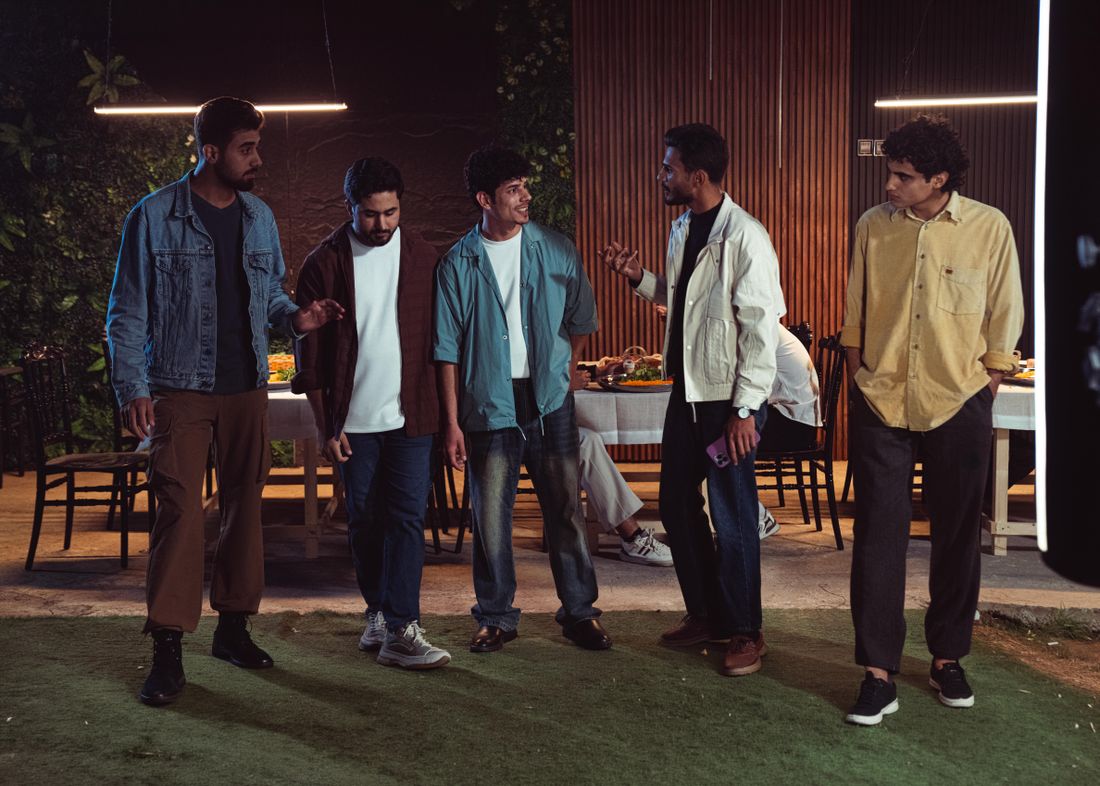
Photo by khezez | خزاز via Pexels.
How a crew moves through a multi-day retreat schedule
Covering a multi-day offsite means planning for repetition risk first. Three days of the same group in the same rough setting can produce a set that all looks the same unless the photographer actively varies angle, time of day, and which parts of the group get attention from one day to the next. That planning happens before day one, not on the fly.
Day one usually skews toward arrivals and orientation (people meeting up, settling in, the first activity of the retreat). The middle day or two is where the real material tends to live, once people have relaxed into the setting and stopped performing for a camera that's been around long enough to become background noise. The last day tends to thin out, both in energy and in what's left to shoot that hasn't already been covered. Knowing that arc in advance changes how a photographer paces themselves. Shooting hard early risks missing the better, looser material once people settle in, so the smarter approach holds some restraint on day one and leans in harder once the group stops noticing the camera is there.
What changes when a retreat moves across multiple locations
A retreat that moves between a hotel, an activity venue, and a dinner spot over two or three days means the photographer is effectively covering several different settings, not one continuous event. That means re-reading the light, the space, and the energy of the group each time the location changes, rather than settling into one environment for the whole shoot.
That also means gear and pacing decisions change constantly. A relaxed outdoor activity calls for a different lens and distance than a dinner in a dim private room, and neither resembles the lighting of wherever the group started the morning. Travel legs between locations matter too. The walk from a bus to a venue, or the wait before an activity starts, often produces some of the loosest, most candid material of the day, precisely because nobody's treating it as "the shoot" yet. Planning coverage around a multi-location schedule means building in time to scout each new setting quickly on arrival, rather than assuming the approach that worked at the first location will carry through to the next one.
How much time actually goes to the structured parts of a retreat
Most offsites still have a handful of structured moments (an opening address, a breakout session, maybe a closing toast) and those get covered too, but they take up a small share of total shooting time relative to everything unscheduled around them. A ten-minute welcome address might get two or three minutes of actual coverage before attention moves elsewhere.
That's a deliberate allocation, not neglect. A structured session photographs itself reasonably well in a short window (someone standing, a room facing them, predictable light and framing) so it doesn't need sustained attention to come back with usable frames. The unscheduled hours are the opposite: unpredictable, spread across a wide physical area, and gone the moment they end, with no announcement that they're happening. Spending disproportionate time on the parts of the day without a fixed location or a fixed start time isn't a stylistic choice. It's just where a retreat's actual value lives. A set that leans too heavily on the structured minutes ends up looking like a conference in a nicer building.
How offsite and retreat photos actually get used afterward
Retreat photos mostly get used for recruiting and culture material, not as an event record (a careers page, a LinkedIn post about the team, an internal recap, a slide in a pitch deck about company culture). That later use is exactly why unscripted moments matter more than scheduled ones: someone deciding whether to apply somewhere responds to a genuine group moment far more than a photo of people watching a slide.
Knowing that reuse is coming shapes the whole approach to the retreat, not just the edit afterward. It's part of why chasing informal group shots and real interaction takes priority over documenting every activity on the itinerary. A future hire looking at a careers page isn't trying to verify the retreat happened, they're trying to get a feel for what the team is actually like. A wide shot of everyone lined up for a group photo does some of that work. The candid material spread across three days of downtime, meals, and activity does most of it.
Frequently Asked Questions
How is offsite or retreat photography different from covering a conference?
A conference has a stage and a run of show (a keynote, a panel, an award) so a photographer can plan around known, scheduled moments. An offsite or retreat has almost none of that: a loose itinerary, unscheduled stretches, and the entire value sitting in genuine team interaction rather than a program. Coverage shifts from working a fixed position near a stage to staying mobile and present through the unscheduled hours where the real material actually happens.
How much of a retreat's photography focuses on structured sessions versus candid moments?
Structured moments (an opening address, a breakout session, a closing toast) still get covered, but they take up a small share of total shooting time. A short welcome talk photographs itself reasonably well in a few minutes of attention. The unscheduled hours around it (meals, downtime, activities, conversations between people) are unpredictable, spread out, and gone the moment they end, so they get the bulk of a photographer's time and attention across the retreat.
How does a photographer avoid repetitive-looking photos across a multi-day retreat?
By planning for repetition risk before day one. The same group in the same general setting for two or three days can easily produce a set that all looks alike. That means deliberately varying angle, distance, time of day, and which smaller groups get attention as the days go on, and pacing effort so day one isn't over-shot at the expense of the looser, more natural material that tends to show up once people stop noticing the camera.
What happens to retreat coverage when the group moves across multiple venues?
Each new location (a hotel, an activity site, a dinner venue) effectively resets the shoot, since the light, the space, and the group's energy all change with it. A photographer has to re-read the setting on arrival rather than carrying over what worked at the last stop. Travel legs between venues often produce some of the loosest, most candid material of the day, precisely because nobody treats the walk to the next spot as "the shoot" yet.
How do companies actually use their offsite and retreat photos afterward?
Mostly for recruiting and culture material rather than as an event record (a careers page, a LinkedIn post, an internal recap, a slide in a culture-focused deck). That later use is why candid, unscripted moments matter more than photos of scheduled sessions: someone deciding whether to apply responds to a genuine group moment far more than a photo of people facing a slide. The photos exist to show what the team is actually like, not to log the itinerary.
Related Reading
Booking a photographer for an event and still weighing hourly versus a package?
Send over the run of show and we'll price both options out before you commit to either.
See Event Coverage Packages