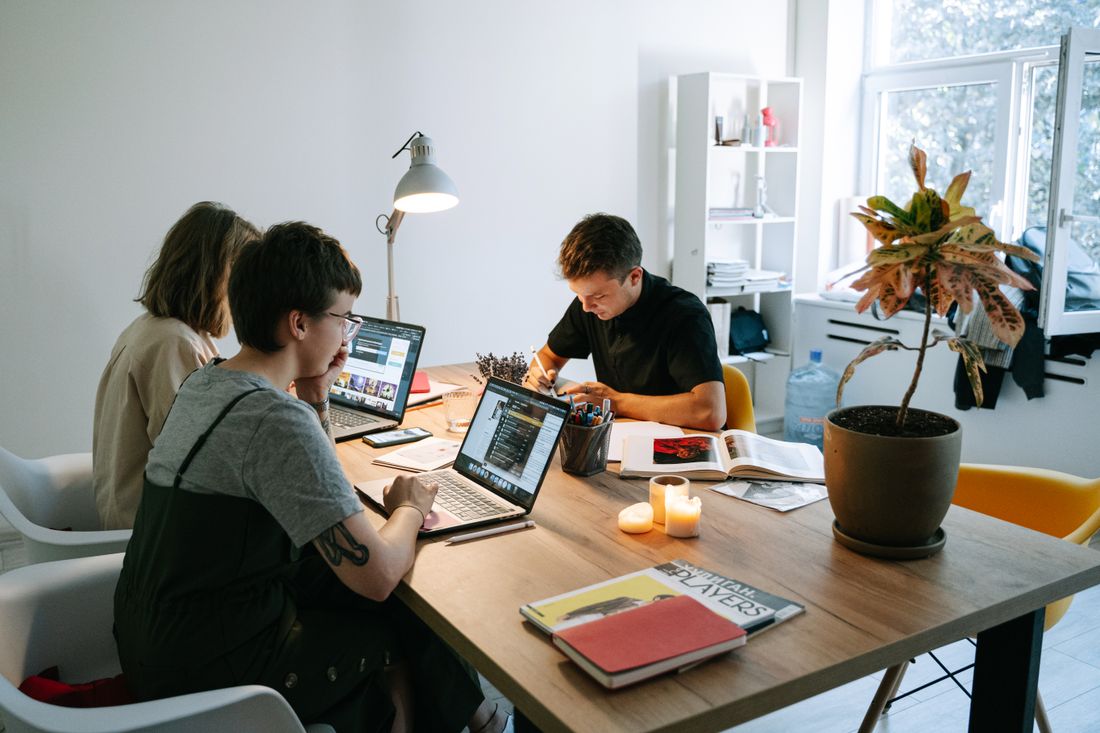
Every company we've worked with eventually books the same kind of session: five to twelve executives in a room for a day, working through next year's plan on a whiteboard instead of a stage. It isn't a board retreat and it isn't a culture offsite, and treating it like either one is why the coverage usually comes back looking wrong for what actually happened in the room.
A leadership strategy offsite is a working session for a company's own executive team, not a governance meeting with outside board members and not a team-wide culture event. Coverage for it should read as documentation of real work happening, quiet and close, in a small room with a whiteboard and open notebooks, not a stage-managed event.
Table of Contents
- What Makes a Leadership Strategy Offsite Different
- Why This Isn't a Board Retreat
- Why This Isn't a Team-Wide Culture Offsite
- What Coverage of a Working Room Actually Needs
- The Content That Actually Comes Out of a Session Like This
- What to Avoid Shooting in a Small Strategy Room
- How We Approach a Small Leadership Offsite
- Getting the Most From a Half-Day or Full-Day Session
What Makes a Leadership Strategy Offsite Different
A leadership strategy offsite is a small group of a company's own executives, usually five to twelve people, spending a day or two working through the next year's direction together. It's an internal planning session, not a presentation to anyone outside the company, and that distinction changes almost everything about how it should be covered.
There's no audience to perform for and no agenda built around applause. The room is built for thinking out loud, disagreeing on a whiteboard, and leaving with a plan that didn't exist that morning. Photographing it like a keynote, with wide shots and a podium energy, misses the entire point of what the day is actually for, because nothing in the room is meant for an audience at all.
The people in the room already know each other well. There's shorthand, interruption, and real disagreement, none of which looks like a rehearsed corporate photo. Coverage has to hold still for that instead of smoothing it into something more polished than the day actually was, which means the photographer's job is closer to staying quiet than directing anything.
Why This Isn't a Board Retreat
A board retreat brings in people who don't work at the company day to day, board members with a governance role, fiduciary questions on the table, and a more formal register even in a casual setting. A leadership strategy offsite is the opposite: everyone in the room reports into the same org chart and works together every week, so there's no outside party to satisfy.
That difference shows up in the coverage. A board retreat needs images that read as credible to outside stakeholders, so there's more attention to who's visible and how the room presents. A leadership offsite doesn't need that same formality, because the audience for the photos, later, is mostly internal, and the people in the room already trust each other.
Confusing the two leads to coverage that feels stiffer than the actual room was. A board retreat photo set can carry a little more polish. A leadership offsite set should carry more of the working-session texture, because that's the honest version of what the day looked like, sticky notes and all.
Why This Isn't a Team-Wide Culture Offsite
A culture offsite usually pulls in a much wider group, sometimes the whole company or a full department, and leans on team-building energy, group activities, and a looser, more social mood. A leadership strategy offsite is smaller and more focused: a handful of people with decision-making authority, working through specific, often uncomfortable tradeoffs about where the company is headed next.
The two get lumped together because they're both offsites, but the content need is different. A culture offsite wants images that show belonging, group energy, people having a genuinely good time together. A leadership offsite wants images that show a small group doing hard thinking, which is a quieter, less performative kind of moment to capture on camera.
Shooting a leadership offsite like a culture event, chasing candid laughter and wide group shots, produces coverage that doesn't match what the room actually needed to accomplish that day. The work is the story here, not the bonding, and the two shouldn't be photographed the same way.
What Coverage of a Working Room Actually Needs
A small strategy room needs coverage that stays out of the way while still catching the real moments: someone standing at a whiteboard mid-sentence, a hand pointing at a sticky note, two people leaning in over the same page. That kind of shooting is quiet, close, and mostly unnoticed once the room settles in, which is exactly the point of documenting rather than producing an event.
It also needs restraint about what gets shown. A room like this usually has open laptops, printed notes, and a whiteboard full of language nobody wants circulating outside the building. Coverage has to capture the working energy of the day without turning any of that material into something legible in a final image.
The goal is proof that serious, deliberate work happened, not a highlight reel. A dozen honest frames of a real working room, shot without staging or reset moments, tend to hold up better a year later than a polished set that looks like it was performed for the camera.
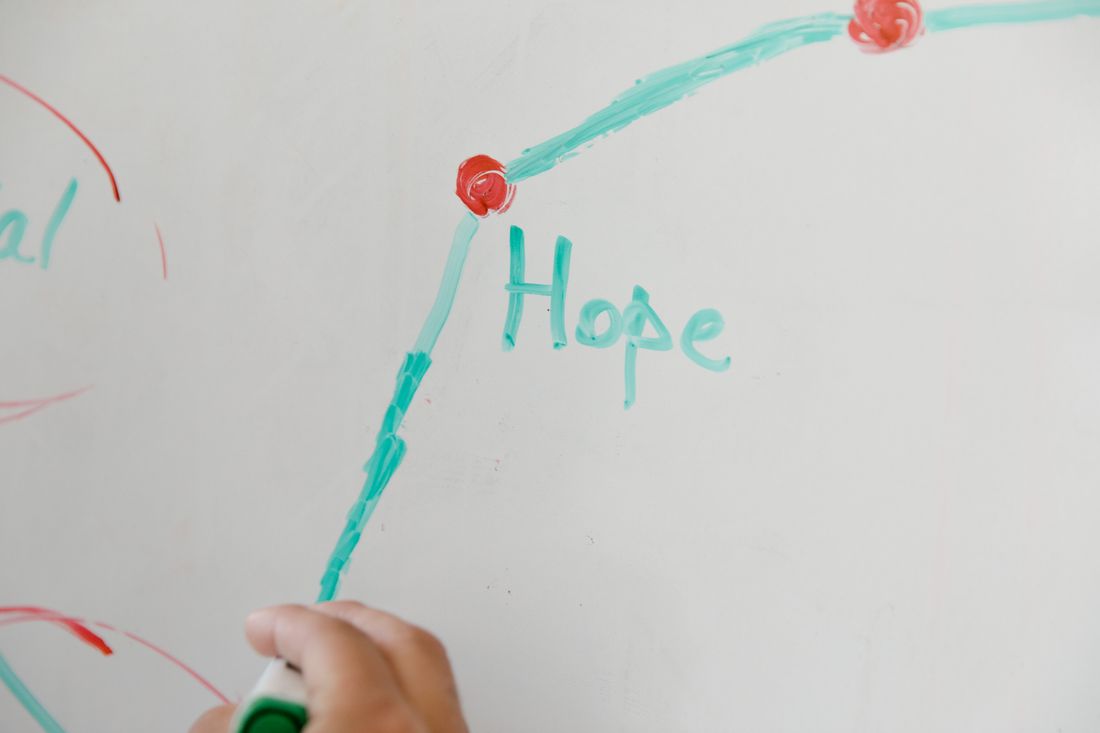
Photo by RDNE Stock project via Pexels.
The Content That Actually Comes Out of a Session Like This
Most companies don't use leadership offsite photos publicly. They use them internally, in a recap deck for the board, in an all-hands presentation explaining where the year's plan came from, or archived for whoever leads next year's version of the same session and wants to see how the last one actually looked.
That internal use case matters for how the shoot gets planned. Nobody needs a hero image built for a homepage. What's useful is a range: a few wide establishing shots of the room, several closer moments of real discussion, and a handful of detail shots, a whiteboard, a stack of printed notes, that help a recap deck feel grounded in something real and specific to that year's session.
Because the audience is internal, there's more room to be honest in the edit too. A tired face at hour six of a planning day isn't a problem to hide. It's part of an accurate record of a real working session.
What to Avoid Shooting in a Small Strategy Room
The clearest mistake is treating a small planning room like a stage: standing back for wide, formal shots that make five people around a table look like they're presenting to an audience that isn't there. A room this size reads best in closer, quieter frames, not a wide shot built for a much bigger event that never actually happened in that space.
The second mistake is not paying attention to what's on the whiteboard or the table. A strategy session often has real numbers, unreleased plans, or competitive positioning written down in plain sight. None of that should end up legible in a final image, which means checking every frame before it's ever considered a keeper, not just after delivery.
The third is over-directing the room. Asking people to re-create a moment for the camera, or pose around a whiteboard they've already stepped away from, produces images that look staged next to the honest ones from earlier in the day, and the contrast is usually obvious to anyone who was actually there.
How We Approach a Small Leadership Offsite
We treat a leadership strategy offsite the way we'd treat any working session we're documenting rather than producing: minimal setup, no extra lighting rig that changes the feel of the room, and enough time in the space early to understand where the real conversation is likely to happen before it starts moving, so we're never scrambling for position later.
Most of the day is spent shooting quietly from the edges, moving only when the energy in the room shifts, a new person takes the whiteboard, a disagreement gets animated, a plan gets crossed out and rewritten. We check every frame for legible sensitive material before it's ever handed over, since that's the one mistake a client can't fix after the fact.
We're not asking anyone to perform for us. The best frame from a session like this is usually the one nobody in the room noticed being taken, which is exactly the point of covering a working day instead of an event built for a camera.
Getting the Most From a Half-Day or Full-Day Session
A leadership offsite is usually a half day or a full day, sometimes spread across two mornings, and the coverage plan should match that shape rather than trying to compress everything into one dramatic hour. A slower pace across the whole session tends to produce more usable, honest frames than a rushed pass at the start of the day.
It's worth flagging in advance which parts of the day are likely to matter most, an opening framing discussion, a whiteboard session that usually gets heated, a closing readout, so coverage can be a little more attentive at those specific points without disrupting the flow of the rest of the day.
The simplest way to get a useful set out of a session like this is to let the room be exactly what it is: a small group of people doing real work together, and to trust that the honest version of that is more useful later than a version built to look impressive.
Frequently Asked Questions
What's the difference between a leadership strategy offsite and a board retreat?
A board retreat includes outside board members and carries governance and fiduciary weight, which calls for a more formal register even in a relaxed setting. A leadership strategy offsite is internal, just the company's own executive team working through next year's plan together, which allows the coverage to lean into working-session texture instead of stage-managed formality, and that difference is worth planning around before the day starts.
How is this different from a team-wide culture offsite?
A culture offsite usually pulls in a much larger group and leans on group energy, bonding activities, and a social mood. A leadership strategy offsite is smaller, just decision-makers, and focused on hard thinking and real tradeoffs rather than team building, so the coverage should read as quiet, focused work rather than a group celebration, and that distinction shapes almost every framing decision on the day.
Can whiteboard content or printed notes accidentally end up in the photos?
It's a real risk in a room full of open laptops, printed notes, and whiteboards covered in next year's plan. We check every frame before it's delivered for legible sensitive material, numbers, competitive positioning, unreleased plans, and would rather reshoot an angle or reframe a detail shot than hand over an image that puts real information in plain sight for anyone outside the room to read.
Do we need to stage moments for the photographer?
No, and staging usually backfires. A small strategy room reads honestly or it reads staged, and the contrast between a real moment and a re-created one is usually obvious in the final set. The better approach is quiet, unobtrusive shooting from the edges of the room while the actual work keeps happening, without anyone pausing to reset a whiteboard or a pose for a camera.
What do companies actually use this kind of coverage for afterward?
Mostly internal use: a recap deck for the board, an all-hands presentation explaining where the year's plan came from, or an archive for next year's version of the same session to look back on. Very few companies use leadership offsite photos publicly, which gives more room to be honest in the edit instead of building a polished highlight reel nobody outside the company will ever see.
Related Reading
Trying to lock down coverage for an event that's still taking shape?
Give us the rough schedule and we'll tell you whether hourly or a package actually saves you money.
See Event Coverage Packages