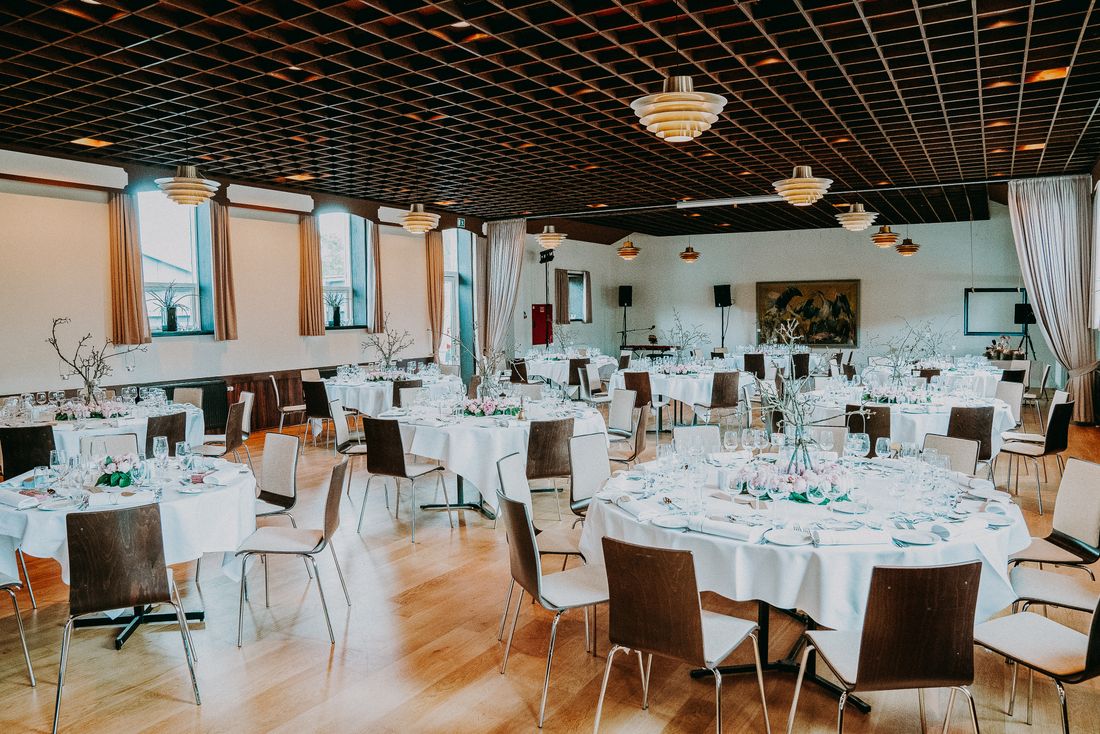
A donor breakfast gets planned by people who also plan the gala, and the habit carries over: book the photographer, hand over the same shot list, expect the same kind of images back. The two events aren't the same room. A breakfast runs two hours in daylight with fifty people at round tables, not four hours under stage lighting with three hundred in ballgowns, and coverage built for one reads as overproduced or underdressed at the other.
A donor appreciation breakfast needs its own coverage plan, not a scaled-down gala shot list: daylight instead of stage lighting, table-level warmth instead of red-carpet arrivals, and a shorter, quieter call time built around a smaller, more personal room. Treated correctly, a breakfast still produces annual-report-ready images and usable social content. It just gets there through a different register, one built for conversation over spectacle.
Table of Contents
- A Donor Breakfast Isn't a Small Gala, and Coverage Built That Way Shows
- Daylight Changes the Shot List Before the Camera Even Comes Out
- What a Donor Breakfast Actually Needs to Produce
- Building a Coverage Plan Around a Round-Table Room
- Donor Comfort With the Camera Is Different at a Breakfast Than a Gala
- Short Video Fits a Breakfast Better Than a Full Recap Reel
- A Breakfast's Scope Is Smaller, and the Booking Should Reflect That
- Planning a Breakfast Around a Fast Stewardship Turnaround
A Donor Breakfast Isn't a Small Gala, and Coverage Built That Way Shows
A donor appreciation breakfast is a distinct format, not a gala scaled down: shorter, held in daylight, smaller in headcount, and built around conversation rather than a stage program. Coverage that treats it as a mini-gala (dramatic lighting setups, red-carpet-style arrivals, a photographer working the room like it's black tie) reads as mismatched to a group that came for coffee and a thank-you, not a production.
The mismatch shows up fastest in tone. A gala photographer's instinct is to chase glamour: backlit entrances, formal group shots, a flash rig built for a dim ballroom. None of that fits a room with morning light already coming through the windows and donors in business-casual, not evening wear. The fix isn't less effort. It's a different brief. A breakfast wants images that feel warm and unforced, the kind a donor would be glad to see themselves in on a thank-you email, not images that look like they were staged for a step-and-repeat. A good vendor will match whatever brief they're handed, and a brief silent on format usually gets gala habits back by default.
Daylight Changes the Shot List Before the Camera Even Comes Out
Morning daylight is the single biggest technical difference between a breakfast and an evening gala, and it changes the shot list before a single frame gets taken: natural window light replaces a stage lighting rig, table setups get shot for warmth rather than drama, and the photographer plans around where the sun actually falls in the room that morning.
A gala photographer builds a lighting plan around a dark ballroom and a lit stage (flash, gels, maybe a rented lighting truss). None of that applies at 8am with sun coming through east-facing windows. The better approach treats the room's own light as the main light source: positioning tables and speakers near windows rather than fighting the glare, working faster in the golden window before the light gets flat and overhead, and skipping heavy flash setups that would make a casual breakfast look like it's being lit for television. The result reads as natural because it mostly is. It also changes timing: a gala's stage light stays constant for hours, but a breakfast window that looks warm at 8:15 can go flat by 9:30, so the strongest frames tend to get made early rather than late.
What a Donor Breakfast Actually Needs to Produce
A donor breakfast still needs to produce real deliverables (annual report material, a handful of social posts, and images a stewardship team can drop into a thank-you email within days) even though the room is smaller and the format is shorter than a gala. Smaller doesn't mean the output requirements shrink; it means the same requirements have to get met in less time.
That means planning the shot list backward from where the images will actually live. The annual report wants a few wide, horizontal frames with room for a headline. Social wants two or three warm, candid moments (a handshake, a laugh at a table, a speaker mid-sentence). The stewardship follow-up wants images turned around fast, often within a day or two, because a breakfast thank-you note loses impact if it arrives two weeks after the fact. None of that requires more time in the room than the breakfast already has. It requires knowing what's needed before the coffee gets poured. Writing that short deliverables list down ahead of time is what turns two busy hours into usable coverage for all three uses instead of a strong set for only one.
Building a Coverage Plan Around a Round-Table Room
A workable breakfast coverage plan covers three things in order: arrivals and table settings before the room fills, program moments once a speaker or honoree takes the floor, and table-level candids while donors are actually talking to each other, the last of which is usually the most valuable and the most skipped.
Arrivals and empty table setups are quick and easy to get first, before the room gets crowded and those clean shots become impossible. The program itself (a welcome, a short honoree moment, maybe a brief ask) needs only a few minutes of dedicated coverage, since a breakfast program is short by design. The real coverage window is everything in between: donors seated together, talking, eating, reacting to each other, which is where a breakfast's actual value as a photographed event lives. A photographer who spends the whole morning on the stage and misses the tables comes back with a program record, not a donor-appreciation record. There's no cocktail hour to fall back on if arrivals get missed and no late program to make up for it later, so getting the order right the first time matters more here than across a longer evening event.

Photo by Edmond Dantès via Pexels.
Donor Comfort With the Camera Is Different at a Breakfast Than a Gala
Donors at a breakfast are often less used to being photographed than a gala's honorees or board members, and they notice a camera in their face faster in a quiet room than they would in a loud, dark ballroom. A breakfast calls for a lower-key, less intrusive shooting style (longer lenses, fewer close flashes, more patience) even when the technical coverage plan is otherwise similar.
This isn't a legal distinction, it's a comfort one. A gala's energy and noise give a photographer cover to move in close without anyone noticing much; a quiet breakfast room doesn't offer that cover, and a donor who feels watched during their coffee is less likely to feel warmly about the organization asking them for money later that quarter. The practical adjustment is shooting from a bit further back with a longer lens, working the room's edges rather than table by table, and letting conversations run their course before moving in for a candid rather than interrupting one to get it. It's worth briefing the photographer on this directly rather than assuming it's obvious, since most event photographers shoot far more galas than breakfasts and default to gala habits without meaning to.
Short Video Fits a Breakfast Better Than a Full Recap Reel
A donor breakfast is a better fit for a handful of short video soundbites (a thirty-second honoree moment, a donor reaction, a quick welcome) than for a full multi-minute recap reel built for a gala's bigger production budget and bigger audience. The format should match the event's own scale, not borrow a gala's video plan wholesale.
A gala recap earns its length because the event itself is a production people expect a highlight reel from. A breakfast doesn't carry that same expectation, and a long polished video can actually feel mismatched to an intimate morning event, over-produced for what was, by design, a low-key thank-you. What works instead is one or two short, usable clips: an honoree's brief remarks, a candid moment at a table, something a stewardship or social team can post the same week without needing a full edit turnaround. Keeping the video ask proportional to the event keeps the whole shoot proportional too. A short soundbite clip is also faster to edit and approve than a full recap reel, which matters when the same stewardship team wants it out the door within days.
A Breakfast's Scope Is Smaller, and the Booking Should Reflect That
A donor breakfast typically runs two to three hours with a single photographer and little or no lighting equipment, compared to a gala's four-plus hours, larger crew, and full lighting setup, and the booking, hours, and cost should scale down to match rather than defaulting to a gala-sized package out of habit.
Organizations sometimes book breakfast coverage the same way they book their gala, carrying over the same hourly block or the same package tier because that's the relationship already on file. That's not wrong exactly, but it usually means paying for coverage time the event doesn't use. A breakfast's natural shape (arrivals, a short program, table time, a clean end) fits inside a shorter, simpler booking than an evening gala needs, and matching the package to the actual event keeps the cost proportional to what the morning produces. This isn't shrinking the ambition of a breakfast, just its logistics. A well-run two-hour shoot with one photographer can still cover the annual report, social, and stewardship needs without carrying costs that belong to a bigger, longer, evening format the breakfast was never trying to be.
Planning a Breakfast Around a Fast Stewardship Turnaround
The clock on a donor breakfast doesn't stop when the room clears. The images usually need to reach a stewardship team within a day or two so a thank-you note or follow-up email can go out while the morning is still fresh in a donor's mind. Planning that fast turnaround before the event, not after, is what makes it actually happen.
That means agreeing on delivery timing at the booking stage, not scrambling for it the next afternoon: a small batch of quick-turn selects for stewardship use, with the fuller edited set following on the normal timeline for the annual report and archive. A breakfast's whole value proposition to a donor is personal attention, and a photo arriving in a thank-you note three days later still lands; one arriving three weeks later reads as an afterthought. Naming that turnaround need up front is a small ask that changes how useful the whole shoot ends up being. The fuller archive can still move on a normal week-plus timeline (nobody's laying out the report the same week as the breakfast), so splitting delivery this way gets stewardship what it needs on time.
Frequently Asked Questions
How is donor breakfast photography different from gala photography?
A donor breakfast runs shorter, in daylight, with a smaller and more casual room than an evening gala. Coverage should follow that: natural window light instead of a stage lighting rig, warm table-level candids instead of red-carpet arrivals, and a lower-key shooting style suited to donors who are less used to being photographed. Treating a breakfast like a scaled-down gala usually produces images that feel mismatched to the room, even when the technical quality is fine.
What should a nonprofit's shot list include for a donor breakfast?
A workable shot list covers arrivals and table settings before the room fills, the short program itself once a speaker or honoree takes the floor, and candid table-level moments while donors are actually talking. That last category is usually the most valuable and the easiest to miss if a photographer spends the morning focused only on the stage program instead of the room, since a breakfast's real appeal lives in the conversations, not the podium.
Does a donor breakfast need video coverage too?
Short soundbites fit a breakfast better than a full recap reel (a brief honoree moment, a donor reaction, a quick welcome clip a social or stewardship team can post the same week). A long, heavily produced video can feel out of scale with an intentionally low-key morning event, so the video ask should stay proportional to the event's own size, and a shorter clip is also faster to edit and approve on a tight stewardship timeline.
How quickly do breakfast photos need to be delivered?
Faster than a typical event turnaround, ideally within a day or two for a small batch of stewardship-ready selects, with the fuller edited set following afterward for the annual report and archive. A breakfast's value to a donor is personal attention, and a thank-you photo that arrives while the morning is still fresh lands very differently than one that shows up weeks later, once the moment has already faded.
Should a donor breakfast be booked the same way as a gala?
Not usually. A breakfast typically runs two to three hours with one photographer and little or no lighting gear, well under a gala's longer call time, bigger crew, and full lighting setup. Booking the same package out of habit usually means paying for coverage the shorter event doesn't use. Matching hours and crew to the breakfast's actual scope keeps the cost proportional to what the morning actually produces.
Related Reading
Trying to lock down coverage for an event that's still taking shape?
Give us the rough schedule and we'll tell you whether hourly or a package actually saves you money.
See Event Coverage Packages