
Photo by Kampus Production via Pexels.
A roadshow doesn't happen in one room. The same deck, the same pitch, and often the same three or four people move through several cities in a matter of days, presenting to a different set of investors each time who have no idea what happened in the last city. Coverage of that trip has a different job than covering a single event: it has to make five or six separate stops read as one continuous program, not five disconnected photo shoots that happened to share a slide deck. That's a scheduling and consistency problem as much as a photography one, and it changes almost every decision about how the trip gets covered (who travels, what gets shot at each stop, and what actually gets delivered when the last flight lands).
Investor roadshow coverage documents one raise as it moves through several cities in a compressed window (the room, the presenting team, and the presentation at each stop), using one consistent visual approach so the trip reads as a single program rather than a string of unrelated events, while keeping every image discreet until the deal team clears it.
Table of Contents
- What Investor Roadshow Coverage Actually Means
- Why the Same Look Has to Travel With the Deck
- What's Reusable Across Stops and What Isn't
- Same Crew the Whole Trip, or a Local Hire in Each City
- Scheduling a Roadshow Without Losing a Day to Travel
- What Actually Gets Photographed at Each Stop
- Confidentiality Around a Financial Presentation
- What Gets Delivered After a Multi-Stop Roadshow
What Investor Roadshow Coverage Actually Means
An investor roadshow shoot documents one presentation as it moves through several cities in a single compressed window: the deck, the room, the presenting team, and the handshakes and hallway moments around each stop. The point isn't a great photo from one city. It's a consistent record of the same raise, told the same way, wherever it lands.
A roadshow is really one continuous event split into several short visits, each with its own venue and audience but the same core message. A single strong shot from one stop does little good if the next city looks like a different company presented it. We plan the visual language before the first flight leaves (framing, lighting approach, what gets photographed at each stop) so the whole run reads as one program instead of five unrelated shoots.
That's a scheduling and planning problem before it's a photography one. The stops get treated as one job with several call times, not several separate bookings, which is also why the same eye follows the deck from the first city to the last.
Why the Same Look Has to Travel With the Deck
Consistency across stops matters because investors compare decks, not photographers. If the visual treatment shifts city to city (different backdrops, different framing, a different feel to the room), it reads as a less organized process, even when the actual pitch hasn't changed at all.
The images and clips from a roadshow usually end up together later (in an investor update, a closing summary, or a page recapping the raise), and that's where mismatched coverage becomes obvious. A hotel ballroom shot with warm tungsten light next to a bright office shot with cool daylight looks like two different stories, not one raise moving forward. We set the framing and lighting approach once, at the start of the trip, and hold it at every stop after that, adjusting for the room but not for taste.
That doesn't mean every city looks identical. A room in Boston isn't a room in San Francisco, and it shouldn't pretend to be. It means the choices behind the images are the same choices, city after city, so what changes is the venue, not the standard.
What's Reusable Across Stops and What Isn't
Some coverage is genuinely interchangeable (a wide shot of the presenting team, a clean product or company b-roll cutaway, a generic room establishing shot). Other coverage is stop-specific by definition: the actual audience in that city, the specific venue, the real Q&A. Planning the shot list means knowing which is which before day one.
Reusable footage carries the least risk and does the most later work. It can back a broader update or a year-end recap without tying itself to one specific city or date. Stop-specific footage is what actually proves the trip happened: a real room, a real crowd size, a real reaction in the moment. A shot list built for a roadshow tags every setup as one or the other before the crew leaves the office, so nobody's guessing on-site whether a shot is worth the extra setup time.
That distinction also drives the schedule. The interchangeable shots can happen whenever the room allows; the stop-specific ones have to happen exactly when the real audience is in the room, which is a much narrower window.
Same Crew the Whole Trip, or a Local Hire in Each City
Both approaches work, and the right one depends on the trip. One traveling shooter keeps the eye and the editing style identical from the first city to the last. A local hire in each market removes travel time and cost but means briefing a new person, in a new room, on short notice, every single stop.
We're an NYC-based team, and when we travel for a multi-stop trip, the tradeoff usually favors one crew for the whole run. The consistency argument from the last section only holds if the same person is making the same calls at every stop. That means building real travel days into the schedule, not squeezing a flight between two meetings, and pricing the trip as one job with a travel component rather than several one-off local bookings stitched together after the fact.
The exception is a genuinely large program with stops happening at overlapping times (two cities on the same day, on opposite coasts) where one traveling crew physically can't be in both rooms. That's the case for a local addition, briefed ahead of time and handed the same shot list.
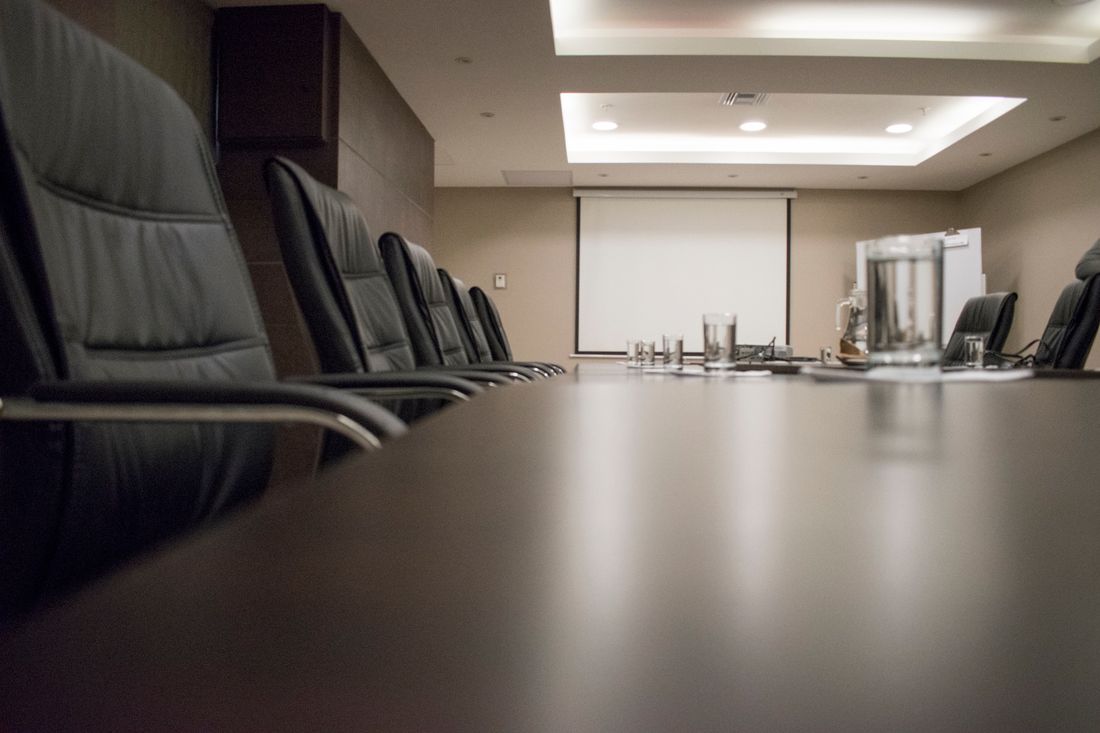
Photo by Leandro Alamino via Pexels.
Scheduling a Roadshow Without Losing a Day to Travel
A roadshow's compressed calendar is the single biggest constraint on the coverage plan, often a handful of cities inside one or two weeks, with the presenting team booked solid between meetings. The shoot has to fit inside travel days and meeting gaps that were set by the deal team, not by the photographer.
That means the schedule gets built around the presentation, not the other way around: arrive before the room fills, capture the setup and the early arrivals, shoot through the presentation and the Q&A, then get out before the room turns over for the next meeting or the team leaves for the airport. There's rarely a spare hour to reshoot something that didn't work the first time, so the plan has to assume one real take per moment and prepare accordingly.
Editing has to move at the same pace as the trip. Waiting until the last city to start cutting means a two-week backlog arrives all at once, so the practical approach is turning around each stop's material while the team is still in the air to the next one.
What Actually Gets Photographed at Each Stop
A single stop usually covers four things: the room before the audience arrives, the presentation itself, the presenting team in the room, and the informal moments before and after (handshakes, small conversations, people finding their seats). That mix gives a complete picture of the meeting without turning the coverage into a surveillance of the audience.
The audience itself gets handled carefully. These are working investor meetings, not a networking event, and most attendees didn't come expecting to be photographed. We favor wide shots of the room and the presenting side rather than tight portraits of individual investors, and check with the deal team ahead of time about who's comfortable being identifiable in any frame. The presenting team gets the closer, more deliberate coverage. They're the ones the images are actually for.
Slide content is treated as background, not the subject. The presentation screen shows up in wide shots of the room, but we don't shoot in tight on individual slides. That keeps the coverage about the moment and the room, not a copy of material that belongs to the deal team alone.
Confidentiality Around a Financial Presentation
A roadshow shoot involves financial and sometimes market-sensitive material, so discretion is a production requirement, not a courtesy. That means signing whatever confidentiality agreement the deal team asks for, keeping images off any public channel until they're cleared, and never publishing a shot that shows readable numbers, deal terms, or slide content without explicit sign-off first.
In practice that changes small things about how a shoot runs: cropping wide enough that a laptop or handout on a table isn't legible, holding delivery until the deal team has reviewed the set, and treating the whole trip as under wraps until the raise itself is public, if it's public at all. None of this is legal guidance. A company's counsel decides what's disclosable and when. The photography side just needs to default to caution and follow whatever that counsel has already decided.
It also means asking before assuming. Who's allowed in a room, whether phones or personal cameras are permitted alongside the hired crew, and who signs off on the final gallery before anyone outside the deal team sees it.
What Gets Delivered After a Multi-Stop Roadshow
The delivered set from a roadshow works best as one organized library, not five separate folders labeled by city. That means a consistent naming and tagging system across every stop, a shared edit style applied evenly, and a structure that lets the deal team pull one clean asset for an update without hunting through a week of raw files.
That final library usually outlives the raise itself. Investor relations material, a closing recap, or a future update often pulls from the same set months later, which is another reason the stops need to look like one program rather than several unrelated shoots stitched together after the fact. We tag each asset by city, date, and whether it's reusable or stop-specific, so nobody has to re-open a folder and guess what a given image was actually for.
The same review-and-clear step from confidentiality carries through to delivery. Nothing goes out publicly until the deal team has signed off, and the raw files from a sensitive room stay with the vendor, not on a public gallery link, unless the client asks otherwise.
Frequently Asked Questions
What is investor roadshow photography and video coverage?
It's photo and video coverage of an investor roadshow (the multi-city series of meetings where a company's leadership presents the same pitch to different investor groups over a short, compressed window). Coverage typically includes the room, the presenting team, the presentation itself, and informal moments before and after each meeting. The goal is a consistent, professional record of the trip that can support later investor updates or a closing recap, not a single stand-alone event photo set.
Does the same photographer travel to every stop, or is the crew hired locally in each city?
Both models exist, but a single traveling crew is usually the stronger choice for a roadshow, because the whole point of the coverage is that every stop looks and feels like the same program. We're an NYC-based team that travels for multi-stop trips rather than subcontracting a different local shooter in each market. A local addition only makes sense when two stops happen on the same day in different cities and one crew genuinely can't cover both.
How many cities does a typical investor roadshow shoot cover?
It varies by raise. Some roadshows run a handful of cities over one or two weeks, others are a shorter, tighter loop. There's no fixed number that applies to every trip; the schedule is set by the deal team well before a photography vendor gets involved. What matters more than the city count is whether the plan leaves real travel time between stops, since a schedule too tight to actually execute puts every stop's coverage at risk.
How is confidentiality handled when photographing an investor presentation?
Discretion is treated as part of the job, not an afterthought. That means signing whatever confidentiality agreement the deal team requires, keeping any images off public channels until they're cleared, and avoiding tight shots of slide content, handouts, or anything with readable numbers. This isn't legal advice. A company's own counsel decides what's disclosable and when. The production side's role is to default to caution, follow those instructions exactly, and hold delivery until the deal team signs off.
What do you actually get delivered after a multi-stop roadshow shoot?
One organized library rather than several separate sets by city, consistently edited, consistently tagged, and structured so the deal team can pull a single clean asset for an update without digging through a week of raw files. Delivery includes both the reusable material (team and b-roll shots that work anywhere) and the stop-specific material (the actual room, audience, and moment at each city), clearly labeled as which is which, with nothing released publicly until it's been reviewed and cleared.
Related Reading
Trying to lock down coverage for an event that's still taking shape?
Give us the rough schedule and we'll tell you whether hourly or a package actually saves you money.
See Event Coverage Packages