Photo: Core Visuals NYC
Run the same event in New York, Philadelphia, a client summit in Fairfield County, and a summer donor evening out east, and the photo library that comes back can look like four different companies made it. Nothing about that is inevitable. It's the predictable result of leaving four decisions unmade before the first shutter click, and all four have straightforward fixes.
A multi-city event series reads as one program when four decisions stay fixed across every stop: the lead shooter, a written look spec covering color and crop, a shared file naming and delivery structure, and a shot list built around categories instead of a specific room. Everything else (the room, the light, the exact shot order) can vary safely.
Table of Contents
- Why does the same event look like four different companies made it?
- Does the same photographer need to shoot every city?
- What should a written look spec actually cover?
- Why does file naming matter more than it sounds like it should?
- How do you build a shot list for a room you haven't seen yet?
- What's actually fine to change from city to city?
- Should the first city just be treated like the other three?
- Should each city's photos live in a separate vendor delivery?
Why does the same event look like four different companies made it?
A multi-city event series looks like four companies made it when four things vary at once: default color and contrast, the retouch standard, the room itself, and how sponsor logos and headshot backgrounds get treated stop to stop. Fix those four and the mismatch mostly disappears.
Every photographer edits color a little differently, even shooting the same settings. One leans warm and desaturated, another cooler and punchier. On one event, nobody notices. Across four cities in a season, a marketing team pulling images into one deck sees the seams (warm New York, cool Philadelphia, flat Fairfield County).
Rooms compound it. A ballroom, a client's own conference room, and a donor's tent out east throw different light, ceiling heights, and backgrounds behind a step-and-repeat. A photographer reacting only to the room in front of them, with no shared standard, produces four honest but disconnected sets of images.
The last piece is the small stuff that reads as branding even when nobody planned it: a sponsor logo lit flat in one city and rim-lit in another, or a headshot backdrop that's charcoal in one room and a plain wall in the next. Stacked together, that's the difference between a program and separate events.
Does the same photographer need to shoot every city?
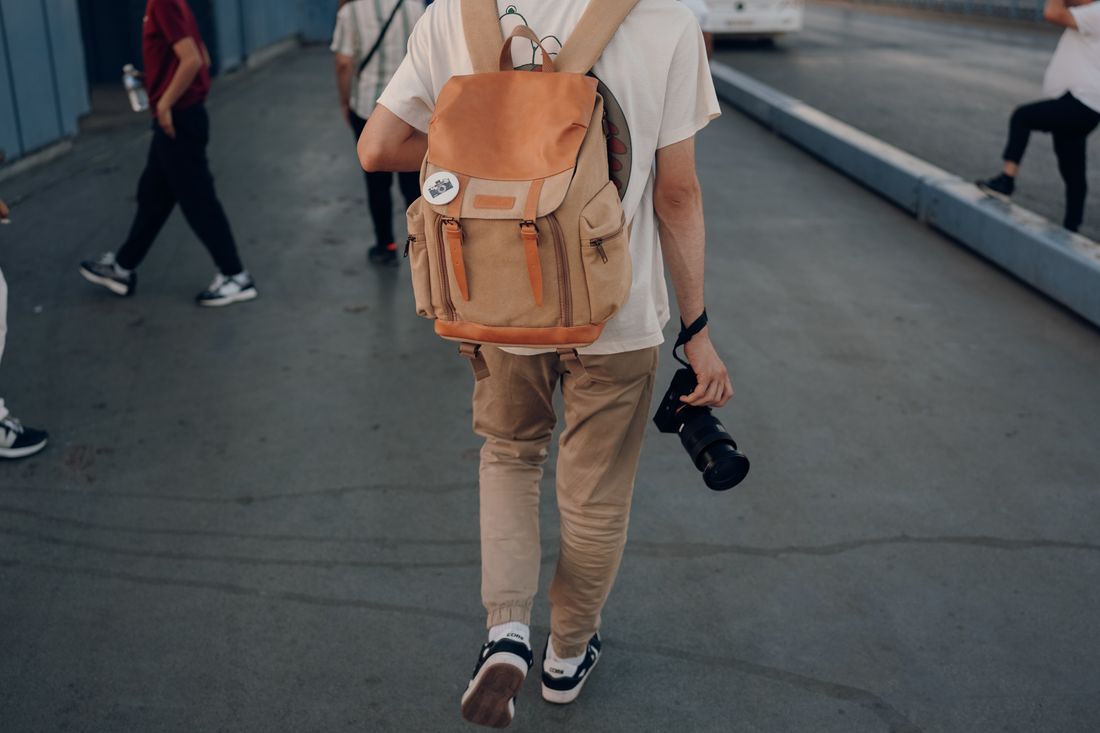
The single most effective way to keep a multi-city series consistent is booking the same lead shooter for every stop, not the same style of photographer. A person carries judgment calls (color, crop, pacing) between cities in a way no written spec replaces, because most of what a shooter does under pressure never gets written down.
This is the lever most series get wrong first, usually for a reasonable-sounding reason: booking a local photographer in each city looks cheaper than sending one shooter to Philadelphia, then Fairfield County, then back out east. What happens is closer to the opposite of savings. Four photographers means four sets of instincts about exposure, four senses of how tight to crop a stage shot, four ideas of a usable candid, none of it on an invoice. It shows up months later, when the marketing team can't build one deck out of a mismatched season.
A traveling lead shooter carries the program in their head. That means knowing what the wide shots look like, what gets skipped, what a sponsor logo needs. It's why one crew on the road, rather than a bench of local hires, tends to produce a library that looks like one thing.
What should a written look spec actually cover?
A look spec is a short written document (usually under a page) that fixes the four decisions most likely to drift between cities: color and contrast treatment, crop conventions, how much of the room shows up in a wide shot, and whether flash gets used indoors. It travels with the shooter, not just in their head.
Color treatment means picking a lane and naming it (true-to-life and slightly warm, or cleaner and more neutral) and holding it regardless of what a venue's house lighting does to the raw files. Crop conventions cover the boring but decisive stuff: how tight a portrait-style shot gets cropped, whether a stage shot always includes the podium or sometimes goes tighter on the speaker. Wide shots need a rule too. Does the room read in every wide, or only in each city's establishing shot? Flash use matters more than it sounds: a series that's bounced-flash-lit in one city and available-light-only in another has a visibly different mood before anyone touches color.
None of this replaces judgment. It just means a substitute shooter, or the same shooter three cities and two months later, isn't guessing at decisions already made once.
Why does file naming matter more than it sounds like it should?
Delivery structure and file naming matter because a multi-city series gets used long after the event (in decks, recaps, and next year's invite) by people who weren't there and don't remember which city produced which photo. A consistent folder structure and naming convention is what makes the library searchable instead of archaeological.
In practice that means agreeing on a naming pattern before the first shoot and holding every stop to it: something like year, city, event name, and a sequence number, applied the same way whether the shoot happened in Manhattan or a Fairfield County boardroom. It also means the same folder tiers every time (raws, selects, final retouched, web-sized) instead of whatever structure a given vendor's export defaults to.
The temptation is to let each city's delivery look like whatever that photographer normally sends a client, because it's faster than asking for something custom. That's exactly how a library ends up with one city in numbered files, another in a gallery link that eventually expires, and a third named after a camera's default file counter. A year later, nobody can find the Philadelphia keynote photo without opening several different systems and guessing.
Photo by Michael Burrows via Pexels.
How do you build a shot list for a room you haven't seen yet?
A shot list template built for a multi-city series should describe categories of shots, not room-specific instructions, since the shooter usually hasn't seen the room before arriving. Arrivals, stage wides, candid crowd, sponsor signage, and a portrait set are categories that hold up in a hotel ballroom, a tent, or a client's own office.
A template written around a specific venue breaks the moment the series moves. A wide shot from a mezzanine only works if every city has a mezzanine. A template written around a category (one wide that establishes the room and the crowd together) gives the shooter a job to do in whatever space they find, and gives every city a comparable shot to place side by side.
The template should also flag what's fixed versus what's judgment. Sponsor signage and stage wides are usually non-negotiable, while how many candid crowd shots make sense depends on the room's size and the event's energy. Writing that distinction down once means a shooter walking into an unfamiliar room isn't reinventing the list from scratch, and a client reviewing several cities' worth of images sees the same categories every time, even though no two rooms looked alike.
What's actually fine to change from city to city?
The room's architecture, the natural light, the specific candid moments captured, and the exact sequence of shots can all vary city to city without breaking a series' consistency, because none of those are what a viewer compares across cities. What has to stay fixed is the treatment applied to whatever the room happens to produce.
A summer donor evening out east and a client summit in a Fairfield County boardroom are never going to look like the same room, and trying to force that would be a mistake. One might be outdoors at golden hour; the other might be fluorescent and windowless. A look spec doesn't erase that difference. It makes sure the color grade, the crop logic, and the flash approach land the same way on both, so the difference reads as a different venue, not a different production standard.
The same goes for pacing. A trade show floor moves differently than a seated donor dinner, and the shot list should flex to that rhythm rather than force an identical sequence. Consistency lives in the decisions that carry across every room, not in making every room look interchangeable, which isn't the goal and wouldn't be believable anyway.
Should the first city just be treated like the other three?
The most reliable way to launch a multi-city series is to treat the first stop as a pilot rather than the first of four identical shoots. Shoot it, review the delivery immediately, and adjust the look spec and shot list before the second city, while mistakes are still cheap to fix.
A look spec written before anyone's shot a frame is a guess. It's usually close, but it rarely survives contact with a real room, a real sponsor logo placement, and a real crowd size. The pilot city is where that guess gets tested against reality, where a written “warm, true-to-life color” turns out to clash with a venue's house lighting, or a crop convention that looked fine on paper cuts off half of every sponsor banner.
The review after stop one should be short and specific: does the color treatment hold up, did the shot list categories produce what the marketing team needed, does the file naming make sense once real files exist. Whatever gets fixed here is fixed once, for the rest of the series. Skipping the pilot means relearning the same lessons three more times, in front of three more audiences.
Should each city's photos live in a separate vendor delivery?
A multi-city series should live in one shared photo library from the start, not four separate vendor deliveries merged later, because merging after the fact means reconciling several naming systems, several folder structures, and several ideas of what counts as a final image, work nobody budgeted for.
This is the payoff of everything else here. A single lead shooter, a written look spec, a shared naming convention, and a category-based shot list all point toward the same outcome: one library a marketing team can open a year from now and pull every stage wide from the fall series out of, without knowing or caring which city produced which file. That's the actual test of whether a series worked as a program, rather than several separate events that happened to share a logo.
It also changes how the season gets planned. Once there's one library instead of several vendor relationships, adding a fifth city, or dropping one, doesn't mean starting a new system from scratch. It means pointing the same crew, spec, and folder structure at a new room, the difference between an event series and four one-off shoots that happen four times a year.
Frequently Asked Questions
What's the single biggest cause of a multi-city event series looking inconsistent?
Different photographers is the biggest cause, more than different rooms. Each photographer edits color and contrast a little differently by default, crops differently, and makes different calls about what's worth shooting. A room change reads as one photo looking different from the last; a different photographer city to city reads as the whole program looking different, because dozens of small decisions shift at once instead of one.
Do we need a written look spec if the same photographer shoots every city?
Yes, even with the same shooter. A look spec protects the series against a second shooter covering an overlap date, an associate handling overflow, or the lead shooter's own style drifting slightly between the first stop in September and the fourth stop in December. Writing the color treatment, crop rules, and flash approach down once means nobody has to reconstruct a standard from memory months later.
How much should the shot list differ between cities?
The categories should stay identical (arrivals, stage wides, candid crowd, signage, portraits) while the specific shots inside each category flex to the room. A trade show floor and a seated donor dinner move at different speeds, so forcing an identical shot order rarely works. What matters is that every city produces a comparable set of categories a marketing team can place side by side later.
What should the pilot-city review actually check?
The pilot review should check three things quickly: whether the color and contrast treatment holds up against the venue's real lighting, whether the shot list categories produced what the marketing team actually needed, and whether the file naming and folder structure make sense once real files exist. Whatever needs adjusting gets fixed once, before the second city repeats the same mistake three more times over.
Does Core Visuals have local teams in Philadelphia, Fairfield County, or the Hamptons?
No. Core Visuals is a New York production team that travels to those markets, not a company with local offices or staff there. For a multi-city series, that's the point. The same lead shooter and the same look spec travel with the crew from city to city, which is what keeps a series consistent in the first place, with one point of contact coordinating every stop.
Related Reading
Booking a photographer for an event and still weighing hourly versus a package?
Send over the run of show and we'll price both options out before you commit to either.
See Event Coverage Packages