Photo: Core Visuals NYC
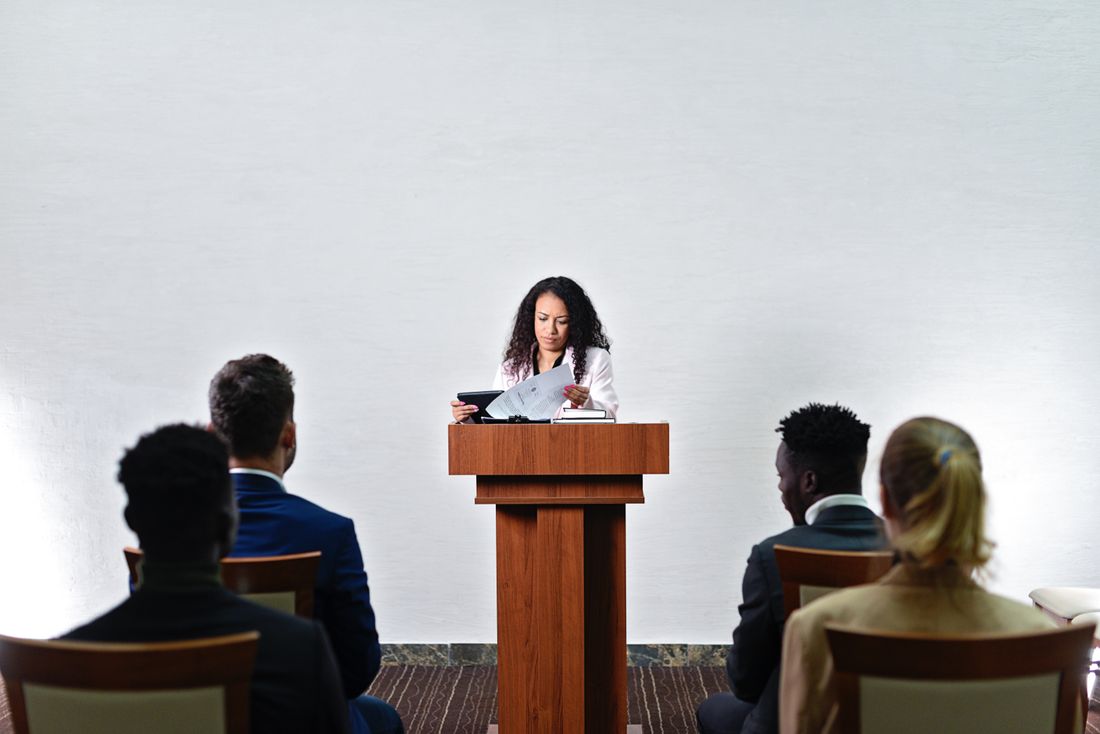
A government press conference looks, from the audience's side, like a corporate event with fewer chairs and a plainer backdrop. From behind a hired camera, it's a different job. Corporate events give a photographer or videographer room to plan the frame, control the pace, and generally be the only crew documenting the moment. A public agency announcement adds an existing press pool with its own positions and deadlines, a program that might run only a few minutes with no rehearsal, a principal who's rarely the only person the client needs documented clearly, and a delivery window built around a news cycle rather than a gallery. None of that is complicated once it's named, but it's rarely obvious to a communications team booking a crew for the first time, and it's genuinely different from staffing a private company's own press day, where the crew usually is the only documentation in the room. This is about the production logistics specific to a public-sector announcement: where a hired crew stands, what has to stay legible in frame, and what a public information officer should settle before anyone shows up.
A government press conference adds logistics an ordinary corporate event doesn't have: working alongside an assigned press pool, keeping podium and backdrop branding legible in every crop, negotiating sightlines with a press advance person, and delivering same-day for a news cycle instead of a week-later gallery, all inside a program that may run only minutes with no rehearsal.
Table of Contents
- Why a Government Press Conference Isn't a Corporate Event With a Podium
- Podium and Backdrop Branding: Keeping the Seal Legible in Every Usable Frame
- Negotiating a Sightline With the Press Advance Person
- Shooting a Program That Might Run Twelve Minutes With No Rehearsal
- Capturing the Principal and the People Standing Behind Them
- The B-Roll and Cutaways a Comms Office Actually Needs
- A Delivery Window Built for Same-Day News Use, Not a Next-Week Gallery
- Who's Actually Watching, and What to Settle Before the Crew Arrives
Why a Government Press Conference Isn't a Corporate Event With a Podium
A government press conference already has its own audience of working press with deadlines, gear, and a preferred spot near the podium before a hired crew ever shows up. The job for our crew is fitting into that existing arrangement without blocking a sightline or standing where a news photographer expects to stand.
Corporate events treat the hired photographer or videographer as the primary documentation, positioned wherever gets the best frame. A public agency announcement usually has a press pool already assigned prime positions, and a hired crew works the edges of that arrangement rather than the center of it. That means checking in early with whoever is running press logistics, understanding where the pool riser or rope line sits, and choosing a position that gets a clean shot of the principal without cutting across a working journalist's lens. It also means moving less during the program than at a private event, since sudden movement near a press pool reads as more disruptive in a room built around live reporting. This is also where the distinction from a private press day matters: there, we're often the only crew in the room; here, we're one of several.
Podium and Backdrop Branding: Keeping the Seal Legible in Every Usable Frame
The seal, banner, or step-and-repeat behind the podium is the one piece of the frame the client cares about most, because it identifies the announcement in every photo and clip that circulates afterward. A crew has to frame so that branding stays legible and uncropped in the widest realistic use, not just the hero shot.
Framing decisions that would be a stylistic choice at a corporate shoot become a functional requirement here. If a still gets cropped to a square for social use, or a clip gets trimmed vertical for a news outlet's feed, the backdrop needs to survive that crop without losing the identifying text. That usually means shooting wider than instinct suggests and leaving margin on both sides of the podium, rather than tightening in on the speaker's face the way a corporate headshot-style frame would. It also means checking backdrop height and podium height together before the event starts, since a taller speaker or a lower podium can push a banner's top edge out of frame in a way that's invisible until the first shot comes back. None of this is a creative call. It's a checklist item, confirmed before the first person speaks.
Negotiating a Sightline With the Press Advance Person
Most public agency events assign a press advance person to manage where media and hired crews stand, and that person's decision about riser space and sightlines is close to final once the room is set. A crew's job is arriving early enough to negotiate a workable position before that decision gets locked in for the day.
A press advance person is balancing a lot in a short window: available floor space, the pool's existing claim on the best angle, safety lines, and often a security detail with its own opinion about where cameras can stand. Showing up minutes before the event starts means taking whatever position is left, which is sometimes a genuinely bad one. Showing up well ahead gives room to ask specific questions: where the pool riser will sit, whether a second position off to the side is allowed, and whether the crew can move once speaking starts or must commit to one spot. That last question matters more than it sounds, since a room with only one clean sightline forces a choice between a wide establishing angle and a tighter shot of the principal, a choice that usually can't be revisited once the microphones are live.
Shooting a Program That Might Run Twelve Minutes With No Rehearsal
A public agency announcement is often short, sometimes over in the time it takes to introduce a corporate speaker, and there's rarely a rehearsal or a run-through beforehand. A crew has to be positioned, focused, and rolling before the first word is spoken, since there's no second take and often no warning before it starts.
A corporate event usually comes with an agenda, a rehearsal, or at least a stage manager confirming timing in advance. A press conference frequently doesn't, because the point is often getting a statement out quickly rather than staging a produced moment. That changes how a crew preps: cameras set and metered against the actual podium lighting well before anyone arrives, framing locked on the spot where the principal will likely stand, and audio checked against whatever microphone setup the room already has rather than one we bring ourselves. It also means treating the walk-up and opening seconds as part of the usable footage, not a warm-up to ignore, since a short program doesn't leave slack to lose the first moments to a settling shot. Nothing about this is exotic. It's closer to covering a live, unscripted moment than a produced corporate video.
Photo by ClickerHappy via Pexels.
Capturing the Principal and the People Standing Behind Them
A public agency announcement rarely has just one person worth photographing. Staff, interpreters, colleagues from partner agencies, and community members often stand behind the principal, and a client's internal archive usually wants those people captured clearly too, not just blurred shapes in the background of a wide shot.
A corporate shoot can usually get away with a tight frame on a single speaker, since the rest of the room isn't part of the story the client wants told. A public agency's comms team often needs the opposite: a documented record of who stood where, which matters for an internal archive even when it never appears in a press photo. That means planning at least one angle wide enough to hold the full lineup in reasonably sharp focus, alongside the tighter shot of whoever is speaking, and coordinating with the public information officer beforehand on which names and roles matter enough to confirm on the spot rather than guess at afterward. It also means being ready to reframe quickly if someone unexpected joins the lineup at the last minute, which happens more often at these events than at a scheduled corporate press moment with a fixed run of speakers.
The B-Roll and Cutaways a Comms Office Actually Needs
An agency comms office rarely just needs the podium moment. Cutaways of the room filling in, reaction shots from the audience, exterior or lobby shots establishing the venue, and quiet handshake or greeting moments before the program starts all end up in a release, a newsletter, or an internal recap that the podium clip alone can't cover.
A corporate event brief usually names specific b-roll because there's time to plan it: product shots, a keynote crowd, a branded step-and-repeat. A public agency comms team often can't hand over that kind of shot list in advance, since the announcement may have been finalized only shortly before the event, so a crew has to anticipate the useful cutaways rather than wait to be told. That means arriving early enough to get quiet room and setup shots before anyone arrives, staying a few minutes after the program ends to catch informal moments, and treating any interaction between the principal and the people around them as a potential cutaway. None of this replaces the direction a PIO can give when there's time for it. It's what fills the gap when there isn't.
A Delivery Window Built for Same-Day News Use, Not a Next-Week Gallery
A public agency press conference is usually newsworthy for a matter of hours, not weeks, so the delivery timeline has to match a newsroom's clock rather than a typical event gallery's turnaround. Selects and a short edited clip need to move fast enough to still be useful once the news cycle moves on.
A corporate event gallery can reasonably go out a week later, since the content stays relevant as long as the campaign or initiative it supports does. A press conference doesn't get that grace period. If the announcement is the story today, footage delivered days later is mostly useful for an archive, not for the audience the client actually needed to reach. That reshapes the workflow on our end: culling and delivering a small set of clean stills fast, rather than a full edited gallery, and prioritizing a short, usable clip over a polished, longer piece. The fuller edit and complete photo set can follow on a normal timeline once the immediate need is covered. Fast first, complete second, is the difference between content that gets used and content that arrives after the moment has passed.
Who's Actually Watching, and What to Settle Before the Crew Arrives
A public agency announcement usually serves several audiences at once: reporters filing same-day stories, constituents who see the coverage later, other agencies tracking the initiative internally, and an archive that outlives all of them. Naming those audiences before the event helps decide what to shoot first and what can wait.
Sorting out who the footage is actually for changes real decisions on the day, like whether a wide documentary shot matters as much as a tight, usable clip of the principal speaking, or whether an internal newsletter needs its own set of candid shots beyond what goes to press. A short conversation before the crew arrives, ideally with the public information officer, should settle a handful of things: who the principal and any other speakers are, roughly how long the program will run, where press advance wants the crew positioned, and which shots matter most given how the footage will be used. Any question about credentialing or access rules should go to that office or the client's counsel rather than get guessed at on our end. That one conversation upfront tends to save more time than anything decided once the room fills up.
Frequently Asked Questions
How is photographing a government press conference different from a private company's press day?
A private company's press day usually has one hired crew as the only documentation in the room, working on a schedule the company itself controls. A public agency press conference already has an assigned press pool with its own positions and deadlines, and a hired crew works around that pool rather than as the room's sole photographer. The planning difference follows from that: less control over sightlines, tighter coordination with whoever manages press logistics, and a shorter, less flexible program.
What should a public information officer settle before the crew arrives?
Before the event, it helps to confirm who the principal and any other speakers are, how long the program is expected to run, where press advance wants a hired crew positioned relative to the press pool, and which shots matter most for how the footage will be used, whether that's same-day press, an internal archive, or a constituent-facing recap. Settling this in one short conversation avoids working it out live once press and staff have already filled the room.
How much advance time does a crew need for podium and backdrop branding to look right?
Enough time to check backdrop and podium height together before anyone arrives, since a mismatch between the two can push a seal or banner out of frame in a way that isn't obvious until the first shot comes back. Arriving well before the announcement also allows a wider framing choice that survives a later crop to social or vertical video, rather than a tight frame locked in with no room to adjust once the space fills with people.
What b-roll does a public agency comms office usually need beyond the podium shot?
Beyond the speaking moment itself, most agency comms teams end up using cutaways of the room filling in, quiet greeting or handshake moments before the program starts, reaction shots from the audience, and establishing shots of the venue. Because the specific announcement is often finalized close to the event, there's rarely a detailed shot list handed over in advance, so a crew generally has to anticipate these cutaways rather than wait to be told which ones matter.
How fast can photos and video from a press conference actually be delivered?
Turnaround depends on the shoot and the client's own review process, so it's worth discussing directly rather than assuming a fixed number, but the workflow itself is built around speed: a short list of clean stills and a brief usable clip first, with a fuller edited gallery following once the immediate news need is covered. That sequencing matters more here than for a typical corporate shoot, since relevance for a press conference fades fast.
Related Reading
Booking a photographer for an event and still weighing hourly versus a package?
Send over the run of show and we'll price both options out before you commit to either.
See Event Coverage Packages