
Photo: Core Visuals NYC
A broker-dealer or wealth management firm running its annual conference for its own advisor network isn't putting on an investor day. There's no analyst panel, no earnings script, no reporter checking a quote against a press release. The room is full of the firm's own advisors, and the point of the week is recruiting and retention: who's getting recognized on stage, which breakout drew a crowd, which recruiting booth had a line. That's a completely different coverage job than a public-facing investor event, and treating it like one wastes the trip.
An internal financial advisor conference (breakout sessions, top-producer recognition, recruiting booths aimed at other advisors) needs coverage built around recognition moments, booth traffic, and breakout energy, not the analyst-facing polish a public investor day requires. The audience is the firm's own advisor network, and the deliverables get reused for recruiting, not filed with a regulator.
Table of Contents
- What Makes an Internal Advisor Conference a Different Coverage Job
- The Recognition Stage Is the Moment Worth Protecting
- Breakout Sessions Carry Retention Value, Not Headline Value
- Recruiting Booths Need Traffic Documentation, Not Wide Shots
- What a Public Investor Day Needs That This Event Doesn't
- Building the Shot List Around Recruiting Reuse
- Advisor Headshots Belong on the Same Trip
- Turning One Conference Into a Year of Recruiting Content
What Makes an Internal Advisor Conference a Different Coverage Job
An internal advisor conference is built for the firm's own advisor network, not for the public markets, and that distinction changes what a camera needs to prioritize. A broker-dealer's annual conference runs on breakout sessions, a recognition stage for top producers, and recruiting booths aimed at other advisors. Nothing here goes to an analyst or a regulator.
A public investor day answers a different audience entirely: shareholders, analysts, reporters watching for a specific number or forward-looking statement. Coverage for that kind of event has to protect against ambiguity. A soundbite that reads wrong out of context is a real problem. An internal advisor conference doesn't carry that pressure. The room already knows the firm. What it needs documented is energy: who showed up, who got recognized, which sessions people actually stayed for. Mixing the two coverage logics (shooting an internal recruiting event like it needs investor-day caution) produces safe, flat images nobody ends up using for the recruiting deck they were actually shot for.
The Recognition Stage Is the Moment Worth Protecting
A top-producer recognition segment is the single highest-value moment at most advisor conferences, and it needs the tightest coverage plan of the day, name announced, advisor walking up, handshake or trophy moment, reaction shot from the room. That sequence gets reused for a year: next year's invite, the firm's recruiting deck, a LinkedIn post for the advisor who won.
The planning question is timing, not creativity. Recognition segments move fast. A name gets called, a few seconds of walk-up, a photo moment, and the program moves to the next name. There's no retake. Knowing the run of show in advance, where the winner enters from, and where the best angle on the handshake actually is matters more than any lighting setup. A missed recognition photo isn't a missed nice-to-have; for a firm using this content to recruit next year's producers, it's the shot the whole afternoon was supposed to protect. A second camera positioned on the audience side of the stage is worth the extra setup here, since the reaction shot (colleagues applauding, a spouse in the crowd) often ends up doing more work in a recruiting email than the handshake photo itself.
Breakout Sessions Carry Retention Value, Not Headline Value
Breakout sessions at an internal advisor conference matter for a different reason than they would at a public conference: the value isn't press pickup, it's proof the firm invests in its advisors' skills. A room full of engaged advisors taking notes during a practice-management session is coverage that supports retention messaging (this firm trains its people), not a headline moment.
That reprioritizes what's worth a shooter's time. A packed breakout with visible engagement (advisors leaning in, hands up during Q&A) is worth a few minutes even if the topic itself is niche. An empty or half-full room, even with a well-known speaker, isn't worth defending with better framing. The same route-plan logic that applies to any multi-track conference applies here: read the room, not just the agenda, and prioritize breakouts that show advisors actively getting something out of being there, since that's the image doing the retention work later. A wide shot from the back of the room, capturing rows of attentive faces rather than just the speaker at the podium, usually communicates that engagement better than a tight shot on the presenter alone. The room's reaction is the evidence, not the slide behind them.
Recruiting Booths Need Traffic Documentation, Not Wide Shots
A recruiting booth's coverage job is proving it drew a crowd, which means shots of actual conversations (an advisor leaning over a table talking to a recruiter, a line of people waiting their turn) do more work than a clean, empty wide shot of the booth itself. An empty booth photo looks tidy and proves nothing to whoever's deciding next year's recruiting budget.
This is a small but real shift in instinct. A wide establishing shot is still useful once, early, to show the booth exists and how it's branded. Everything after that should be aimed at traffic and engagement: hands pointing at a screen, two people mid-conversation, a stack of business cards being handed over. Booths compete for next year's budget the same way any internal program does, and a photo set that shows real interest is a stronger argument than a caption claiming it. The camera's job at a recruiting booth is evidence, not decor. Timing the visit matters too. The busiest stretch is usually right after a breakout lets out, when advisors walk the expo floor between sessions.
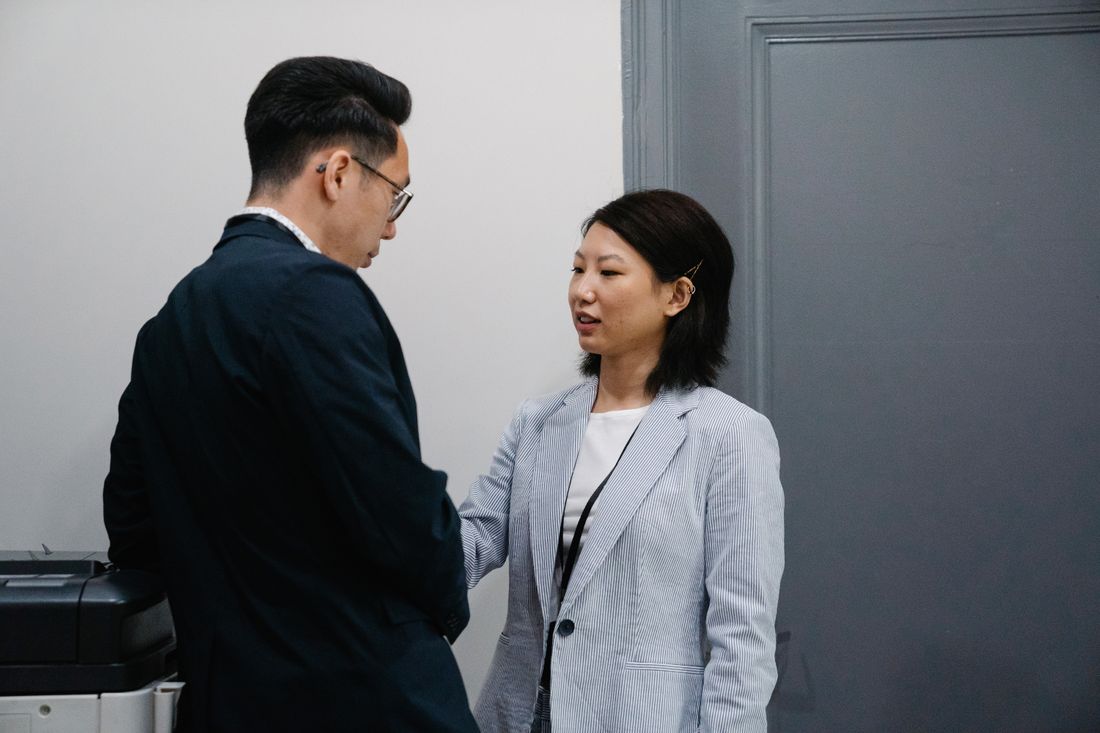
Photo by Felicity Tai via Pexels.
What a Public Investor Day Needs That This Event Doesn't
A public investor day needs a level of message control an internal advisor conference simply doesn't. Every soundbite treated as something an analyst or reporter could quote out of context, no candid reaction shots near a screen showing numbers, a tighter approval chain before anything ships externally. None of that applies to a firm's own internal advisor gathering, where the audience already works there.
That's a meaningful production difference, not just a mood difference. On a public investor day, a shooter is trained to avoid catching partial numbers on a monitor, to keep interview questions narrow enough that answers can be approved fast, and to assume every frame might eventually face outside scrutiny. An internal advisor conference allows more candid coverage (genuine reactions, unscripted conversation at a booth, a looser recognition-stage moment) because the deliverable is going back to the firm's own people, not out to the market. Knowing which event this is before the crew arrives changes the whole approach, not just the caption.
Building the Shot List Around Recruiting Reuse
The shot list for an internal advisor conference should be built backward from where the images end up: next year's invite email, a recruiting deck for prospective advisors, individual LinkedIn posts from advisors who got recognized. Each of those reuse paths wants something specific, a clean recognition portrait, a wide room shot that reads as energy and scale, a candid booth conversation that shows genuine interest.
That's a different shot list than a generic “cover the event” brief produces. A recruiting deck needs images that answer a prospective advisor's real question (what's it actually like here) more than it needs technically perfect keynote coverage. An individual advisor's LinkedIn post needs a usable portrait-orientation frame of them at the recognition moment, not just a wide stage shot they'd have to crop badly. Planning the shot list around these specific reuse cases, agreed with the firm's marketing or recruiting team before the event, means the deliverables actually get used instead of sitting in a folder nobody opens again.
Advisor Headshots Belong on the Same Trip
Advisors traveling in for the conference are already dressed and camera-ready, which makes the event itself the most efficient time to update headshots that are otherwise scattered across years and photographers. Setting up a simple headshot station near the recruiting booths or a quiet hallway lets advisors step in for a few minutes between sessions instead of scheduling a separate shoot later.
This works because it solves a real logistics problem firms run into: advisors are spread across offices and rarely photographed with the same setup or the same photographer, so headshots on the firm directory or LinkedIn end up visibly inconsistent. Catching everyone in one place, once a year, at an event they're already attending, is the practical fix. It also gives the recruiting team a matched, current set of advisor portraits to pair with the recognition and booth coverage. Useful for the same recruiting materials the rest of the event's photos are feeding. A single consistent background and light setup, used for every advisor who steps in, is what actually makes the set read as matched later. Mixing backdrops partway through the day undercuts the whole point of doing it in one place.
Turning One Conference Into a Year of Recruiting Content
A single well-planned conference shoot can supply a firm's recruiting content for the full year between events, recognition photos for next year's invite, booth shots for a recruiting deck, breakout coverage for internal training pages, individual portraits for advisor LinkedIn profiles. Treating the shoot as a single year's content bank, not a one-day deliverable, is what makes the coverage worth the planning effort.
That reframing changes how the crew works the room. Instead of chasing a generic highlight reel, the goal is a defined set of assets sorted by where they'll live: recognition stage for recruiting emails, booth traffic for the sponsor and recruiting deck, breakout energy for internal retention messaging, individual portraits for advisors' own use. Handing the firm's marketing team a sorted, labeled set at delivery (rather than one long folder) is a small step that saves them real time and makes it far more likely the content actually gets used across the channels it was shot for.
Frequently Asked Questions
What's the real difference between an internal advisor conference and a public investor day?
An internal advisor conference is for the firm's own advisor network (breakout sessions, top-producer recognition, recruiting booths) and the deliverables get reused for recruiting and retention. A public investor day answers to shareholders, analysts, and reporters, which means tighter message control, no candid shots near financial figures on screen, and a narrower approval chain. They need different coverage plans, not the same crew running the same shot list twice.
What should get top priority at a top-producer recognition event?
The recognition sequence itself, name called, advisor walking up, handshake or trophy moment, reaction from the room. It moves fast with no retake, so knowing the run of show and the best angle in advance matters more than lighting setup. That sequence typically gets reused the longest: next year's invite, a recruiting deck, an advisor's LinkedIn post. A second camera on the audience reaction is worth the setup. That shot often outperforms the handshake photo.
Do all the breakout sessions at an advisor conference need full coverage?
No. Prioritize breakouts by visible engagement. A packed room with advisors leaning in and asking questions is worth documenting because it supports retention messaging, proof the firm trains its people. A well-known speaker in a half-empty room isn't worth the same time. Reading the room matters more than following the printed agenda alone, and a wide shot of an attentive crowd usually communicates that engagement better than a tight shot on the speaker.
Why photograph a recruiting booth's conversations instead of just the booth itself?
An empty, tidy booth photo proves the booth exists but nothing about whether it worked. Shots of real conversations (an advisor leaning in, a line waiting for a turn) are the evidence a firm needs when arguing for next year's recruiting budget. One clean establishing shot early is useful; everything after that should show actual traffic and engagement, ideally timed around the busiest stretch of the expo hall rather than a quiet lull.
Can advisor headshots get done at the same conference?
Yes, and it's usually the most efficient time to do it. Advisors are already traveling in, dressed, and camera-ready, so a simple headshot station near the booths or a quiet hallway lets people step in between sessions. It solves the common problem of advisor headshots being scattered across years and photographers, and gives the recruiting team a current, matched set alongside the rest of the event coverage.
Related Reading
Booking a photographer for an event and still weighing hourly versus a package?
Send over the run of show and we'll price both options out before you commit to either.
See Event Coverage Packages