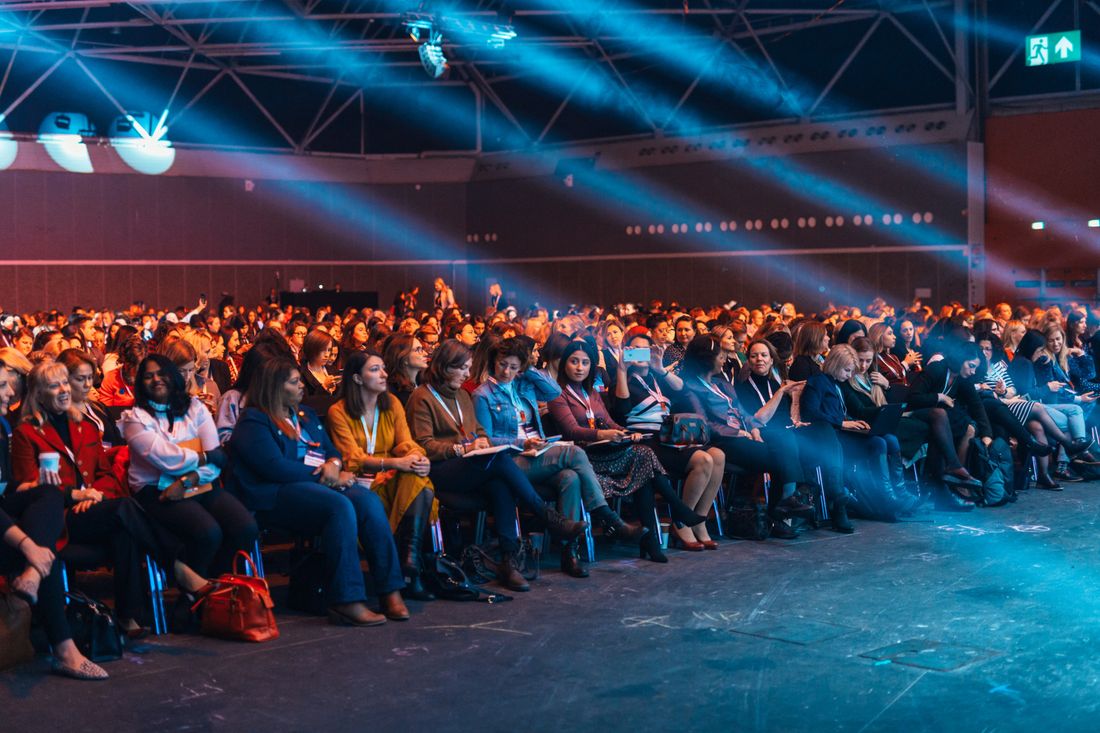
Photo by Loveleen Cherub via Pexels.
A sales kickoff isn't one event. It's three, stacked into two or three days: a stage program that sets the year's targets, an awards segment that puts names on stage in front of the whole revenue org, and a highlight reel that outlives the room by a year or more. Most coverage plans treat it like a single conference shoot. That's usually where the plan starts falling short.
A sales kickoff blends three different jobs into one production: a stage program of keynotes and quota-setting, an awards segment recognizing top performers, and a highlight reel built to outlive the event. That mix is why SKO coverage needs both a photographer and a video crew working the room at once, not one or the other.
Table of Contents
- What a Sales Kickoff Actually Asks a Production Crew to Cover
- The Stage Program: Keynotes, Quota-Setting, and Exec Addresses
- The Awards Segment Inside a Bigger Show
- Why the Recognition Moment Needs Photo, Not Just Video
- The Hype Reel: Built to Get Reused All Year
- Why Photo and Video Have to Run Together at an SKO
- Why January Is a Booking Bottleneck for a Different Reason Than December
- What Changes in Production Planning for a Multi-Day Kickoff
What a Sales Kickoff Actually Asks a Production Crew to Cover
A January sales kickoff isn't one event to cover. It's three stitched together: a stage program of keynotes and quota-setting, an awards segment recognizing top performers, and a highlight film built from both. Treating those as one continuous shoot instead of three connected pieces is where a coverage plan usually goes wrong first.
Most SKOs run one or two full days at a hotel ballroom or off-site venue: a general session where leadership sets the year's targets, breakout or track sessions split by region or product line, and a closing block that mixes recognition with a party atmosphere. A production plan has to account for all of it at once, a stage crew that can move fast between speakers, a photographer working the floor during breakouts, and enough usable footage banked by the closing session to start cutting a reel before the room even empties out. None of that works if a crew shows up planning to shoot "a conference" the way they'd shoot one single keynote.
The Stage Program: Keynotes, Quota-Setting, and Exec Addresses
The stage program is the spine of a sales kickoff, the general session where the CEO sets tone for the year, the head of sales unveils quota and territory changes, and department leads deliver updates the whole revenue org needs to hear at once. Coverage here has to read as clean and authoritative, not candid.
That means wide shots of the full stage setup, tight shots of whoever's speaking, and cutaways to the screens showing the numbers being announced, since those slides often get pulled straight into next quarter's internal recap deck. Video needs the audio path locked to a board feed or lav mic, not room sound. A quota announcement nobody can hear defeats the point of filming it. Photo coverage runs in parallel, catching the room's reaction as much as the stage itself: arms crossed during a hard number, applause during a strong one. Those reaction shots often say more about how the year actually landed than the speech does.
The Awards Segment Inside a Bigger Show
The awards or recognition segment at an SKO calls top performers on stage by name, but it's one piece of a multi-day event, not the whole show the way a dedicated awards ceremony is. That distinction changes the brief: coverage has to move fast between one award and the next agenda item, not build a whole shoot day around it.
A standalone awards ceremony gets a dedicated shot list built around every winner, verified names, and a formal group-photo lineup after the show. That level of granularity is its own job. Inside an SKO, the recognition segment is usually a compressed ten or fifteen minutes wedged between a keynote and a breakout, so priority narrows to the handshake-and-hold for each name called, a clean still of the winner with whatever they're handed, and wide coverage of the room's reaction. There's rarely time to reset for a formal group photo afterward the way a standalone ceremony allows, which is why catching the moment clean the first time matters even more here.
Why the Recognition Moment Needs Photo, Not Just Video
A name called on stage and a handshake that lasts two seconds is gone before a video editor can pull a usable still from footage, which is why recognition moments need a dedicated photographer shooting stills alongside video, not a frame grab after the fact. Sales leadership needs one clean, high-resolution photo per winner, not a video still.
That single still gets reused constantly, separately from any video edit: dropped into the internal newsletter the following week, pinned in the company Slack channel, printed into next year's kickoff deck as a "past winners" slide, and pulled by HR for an internal recognition wall. None of those uses want a sixteen-by-nine video frame with motion blur on the hands or a mic in front of a face. They want a still shot at full resolution, properly exposed for stage lighting instead of ambient room light, cropped so a name badge or company logo reads clearly if it's visible. That's a photography problem, solved on the spot, not something a video team can hand off after editing.

Photo by Domingos Henriques via Pexels.
The Hype Reel: Built to Get Reused All Year
The highlight film cut from SKO footage rarely gets watched once and shelved. It gets used in new-hire onboarding, dropped into recruiting decks and job pages, and replayed as the opener at next year's kickoff to set energy before the first speaker. That reuse is why the reel gets planned for, not built as an afterthought.
Planning for that reuse means shooting footage that still reads well outside the room it was captured in: wide crowd-energy shots that don't depend on knowing who's on stage, tight reaction shots of genuine excitement rather than posed cheering, and B-roll of the room itself (banners, branded stage design, name badges, the walk-in). A reel built only from stage-speaker footage feels like a corporate video. A reel with room texture and real reaction feels like a place someone would want to work. Because the same footage gets recut for a thirty-second recruiting clip, a two-minute onboarding piece, and a ninety-second kickoff opener next year, the raw footage has to be shot wide and clean enough to survive three very different edits later.
Why Photo and Video Have to Run Together at an SKO
An SKO needs both a photographer and a video crew working the same room at the same time, because the two mediums solve different problems: stills deliver same-day, high-resolution recognition images for internal use, while video needs days of editing before the hype reel is ready. Booking only one discipline leaves a real gap on the other side.
Skip the photographer and the recognition segment produces motion-blurred handshake stills pulled from video, useless for the newsletter or next year's deck. Skip the video crew and there's no reel for onboarding or recruiting, meaning someone has to organize a separate shoot later to fake energy that already existed in the room. The two crews also have to coordinate physically. A photographer moving through the crowd for candid reaction shots can't stand in a video camera's sightline during a wide stage shot, and a video crew running cable across an aisle can't block the path a photographer needs to reach a stage-side position before the next name is called. That's a logistics conversation that has to happen before the event, not during it.
Why January Is a Booking Bottleneck for a Different Reason Than December
December's booking crunch comes from a compressed holiday-party calendar everyone tries to fit into a few available weeks. January's crunch comes from the calendar itself. Most companies run a calendar-year fiscal cycle, so SKOs cluster into the first three or four weeks of the year, all competing for the same pool of experienced event crews at once.
The two crunches don't look alike, but they solve the same way: book earlier than feels necessary. A company whose kickoff always lands the second week of January is competing for crews against every other company whose fiscal year also starts in January, on a much shorter runway than December's spread across four weeks of party season. Waiting until after the holidays to start planning a mid-January event leaves almost no lead time to lock a crew that already knows how to run photo and video together on a multi-day stage program (a narrower skill set than most single-day corporate shoots require). Companies that book in the fall, before the holiday rush even starts, get first choice of crew instead of whoever's still available.
What Changes in Production Planning for a Multi-Day Kickoff
A multi-day SKO changes the production plan beyond booking earlier: it usually means a crew on site across two or three full days, a fast turnaround on recognition photos so the internal newsletter can run before the room clears, and a realistic edit timeline for the hype reel instead of assuming unlimited time before the next big internal moment.
It also means agreeing in advance on what "done" looks like for each deliverable, since the three pieces move on different timelines: recognition stills often need to go out within a day or two, a short highlight reel might be expected within a week for an all-company email, and a longer, more polished cut of the same footage can take longer if it's meant for recruiting pages or next year's kickoff opener. Locking those timelines before the event, not during it, keeps a client from expecting same-day everything and keeps the production team from over-promising a fast edit on top of a fast photo turnaround. Planning an SKO shoot is really a conversation about which deliverable serves which audience, and when each one actually needs to land.
Frequently Asked Questions
What does "sales kickoff coverage" actually include?
SKO coverage typically covers three connected pieces: the stage program (keynotes, quota announcements, exec addresses), the awards or recognition segment where top performers are called out by name, and a highlight film built from footage across the event. Photography handles same-day recognition stills and room documentation; video handles the stage program and gets edited into a short reel afterward. Most kickoffs need both disciplines working the room at the same time, not one or the other.
Why does the awards segment at a sales kickoff need a photographer if there's already a video crew?
Because a name called on stage and a handshake photo op lasts a few seconds, long enough for a photographer to catch a clean, high-resolution still, but not long enough to reliably pull a sharp frame grab from video footage later. That still gets reused constantly: the internal newsletter, a Slack recognition post, next year's "past winners" slide, an HR recognition wall. None of those want a motion-blurred video frame with a microphone in someone's face.
How is SKO awards coverage different from a full awards ceremony shoot?
A standalone awards ceremony gets a dedicated shot list built around every winner, verified names, and a formal group-photo lineup after the show. Inside a sales kickoff, the recognition segment is usually a compressed ten or fifteen minutes wedged between a keynote and a breakout session, so there's rarely time to reset for a formal group photo. The priority narrows to the handshake-and-hold and a clean still per winner, captured right the first time.
What does the SKO highlight reel actually get used for after the event?
The highlight film rarely gets watched once and shelved. It typically gets folded into new-hire onboarding to show incoming employees what the culture feels like, pulled into recruiting decks and careers pages, and replayed as the opening moment of next year's kickoff to set energy before the first speaker takes the stage. That ongoing reuse is why the footage needs to be shot wide and clean enough to survive several very different edits later.
Why should a company book its January sales kickoff earlier than feels necessary?
Most companies run a calendar-year fiscal cycle, so SKOs cluster into the first three or four weeks of January, all competing for the same small pool of crews experienced at running photo and video together on a multi-day stage program. That's a shorter, denser window than December's holiday-party season. Companies that start the conversation in the fall, before the year-end rush, get first choice of a crew instead of whoever's still open in January.
Related Reading
Booking a photographer for an event and still weighing hourly versus a package?
Send over the run of show and we'll price both options out before you commit to either.
See Event Coverage Packages