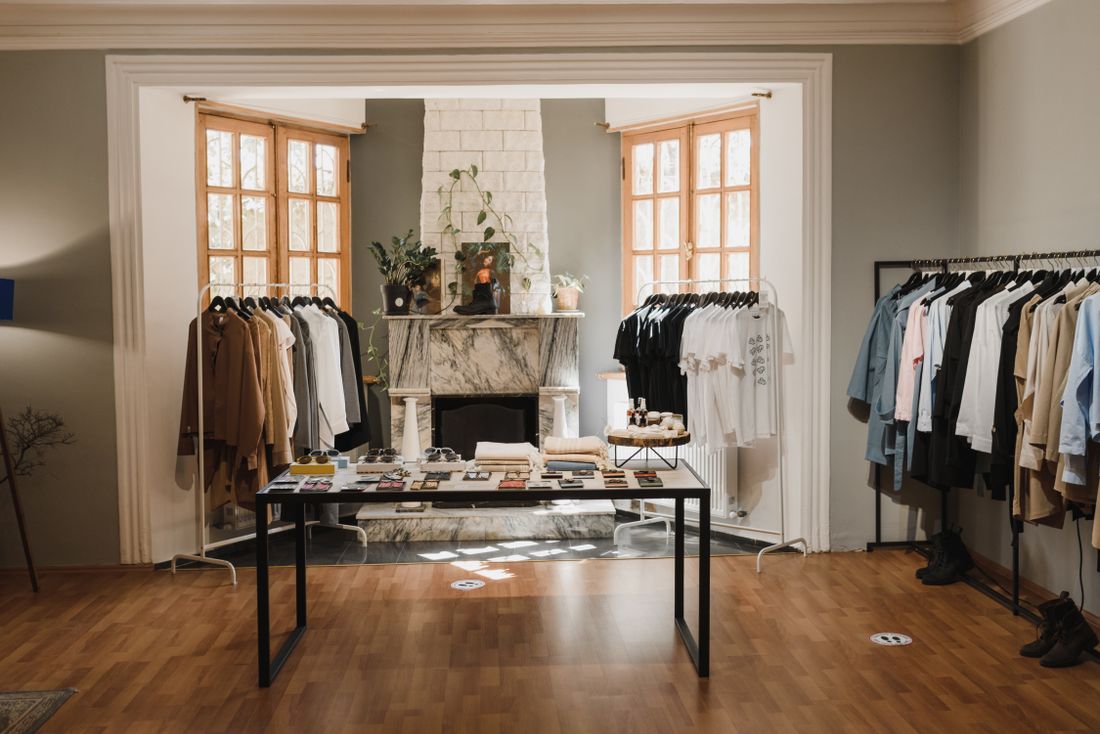
Photo: Core Visuals NYC
During market week, most of the collections buyers and press actually see aren't on a runway. They're in a showroom, shown across a schedule of appointments where garments have to read accurately and the look order has to hold up on its own. That's the format we cover: garment color and texture, buyer and press candids, and a consistent, ordered set for every look. We don't shoot runway shows or backstage, and this post is a working checklist for booking and planning showroom coverage instead.
Showroom and presentation coverage documents a designer or brand's collection as it's shown to buyers and press in a fixed room during market week, not on a runway. The job is accurate garment color and texture, candid buyer and press coverage, and consistent look-by-look documentation for a line sheet or press kit, on a same-week turnaround. Runway photography is a separate discipline Core Visuals does not offer.
Table of Contents
What Showroom Coverage Means, and What It Doesn't
Showroom or presentation coverage documents a designer or brand's collection as it's shown to buyers and press in a fixed room during market week, rather than on a runway. It's a commercial job: buyers deciding what to order and editors deciding what to cover, both moving through the room on an appointment schedule rather than watching a show.
We shoot the showroom format: garments on the rack and on the body, buyers handling fabric, press taking notes, the room itself. We do not shoot runway shows, backstage prep, or models walking a runway path, a separate discipline covered further down.
Getting this distinction right matters because the deliverable is different too. A runway gallery is built around a walk sequence a viewer watches once. A showroom set gets studied afterward, by a buyer deciding on an order or an editor picking an image for a story, so it has to hold up look by look rather than as a sequence.
Who's Actually in the Room: Buyers and Press on a Schedule
The audience at a showroom appointment is buyers and press, not a general crowd, and each group works the room differently.
- Buyers move slowly. One can spend twenty minutes at a single rack, checking fabric weight and finish before deciding whether to place an order.
- Press move fast. A press visit is often five minutes and a request for two or three usable images before the next appointment on their own schedule.
- Neither group is there to be photographed. Coverage has to work around a live appointment calendar: hands on fabric, a buyer flipping through a rack, a short conversation between a designer and an editor, none of it staged.
This is also where general event photographers can miss the job. They're used to posed group shots or wide crowd coverage, and a showroom appointment has neither.
Getting Color and Texture to Read Accurately
A line sheet or press kit is only useful if the garment in the photo matches the garment in the room, so color and texture accuracy matter more here than in most event coverage. A dress that photographs warmer or cooler than its actual dye lot, or a knit that loses its texture under flat light, creates a real problem for a buyer placing an order after the appointment ends.
- We light for the fabric, not just the room, so weave, sheen, and finish stay legible in the frame.
- We shoot garments on the rack before they're worn, since a rack image reads cleanly for a line sheet in a way a worn shot sometimes doesn't.
- We keep white balance and exposure consistent across the appointment window, so pieces photographed an hour apart still match when they're laid out side by side.
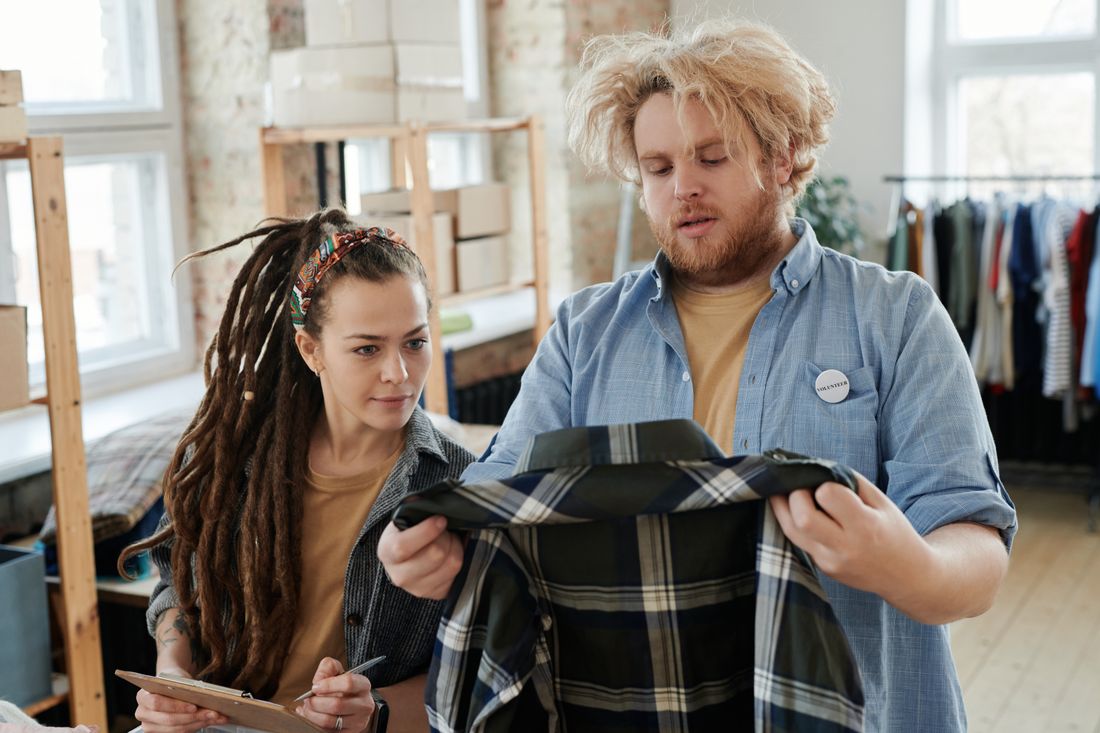
Photo: Core Visuals NYC
Look-by-Look Consistency for a Line Sheet
Look documentation is a complete, consistently framed photo of every garment in the collection, shot the same way and in the same order it's presented, the raw material a brand turns into a line sheet, a press kit, or a sales deck.
- Every look gets the same background and framing, so the set reads as one collection when it's laid out together, not a mix of different angles and lighting.
- We track look order against whatever numbering the brand is using, so delivered files match how the brand already organizes the collection.
- Buyer and press candids stay a separate, clearly labeled set from the look documentation, so nobody has to sort one from the other after delivery.
This part of the job has more in common with product photography than with general event coverage: repeatable, catalog-minded, built for reuse rather than a single social post.
Same-Week Turnaround: What to Ask For
Market week runs on its own clock, and turnaround has to match it. Core Visuals doesn't publish one blanket rush price, so the honest move is to ask for the timeline you need when you book, rather than assume a number.
- Standard event-coverage turnaround runs five to fifteen business days depending on the package: five to ten days on the Essential tier, seven to fifteen on Professional or Premium.
- Rush delivery, including a same-day set of press selects, is something we already do on other event work. The rush premium isn't a published rate and gets set per job, so raise it during planning, not after the appointment.
- A small, fast set for press, a handful of hero images from the day, is realistic to turn around quickly. A full look-by-look line sheet takes longer, since every image is edited and matched against the collection's look order.
What We Don't Shoot During Market Week
We don't shoot runway shows, backstage model prep, or any coverage where the subject is a model walking a defined runway path. That's a separate discipline with its own access requirements, crews, and pacing, and it isn't part of what Core Visuals offers. Our market-week work is showroom and presentation coverage only: buyers, press, and the garments themselves.
Runway photography means fixed-position shooters with long lenses covering a fast-moving line of models, usually from a photographers' pit with credentialed access managed by the show's own production team. Backstage coverage means documenting hair, makeup, and dressing in a chaotic, fast-turnover space minutes before a show starts. Neither is a showroom job, and neither is what we're set up to do.
If a brand needs both runway photography and showroom coverage for the same market week, those are two separate bookings with two different skill sets, and we're only the second one.
What to Send Before We Arrive
Planning showroom coverage comes down to three things.
- The appointment schedule, so we know when buyers and press are in the room and can plan quiet coverage around live pitches.
- The look order and any naming convention the collection uses, so delivered files match your own system instead of a shoot-day number.
- What the coverage is actually for and the turnaround you need. A press set and a full line sheet get edited and turned around differently.
Send those three and the appointment itself stays simple. We're planning for a live room with people moving through it, not a controlled studio session, and knowing the schedule in advance is what lets us build in buffer for appointments that run long.
Related Reading
Not sure if hourly or a package makes more sense for your event?
Tell us the expected length, and we'll run the actual numbers before you book.
See Event Coverage Packages