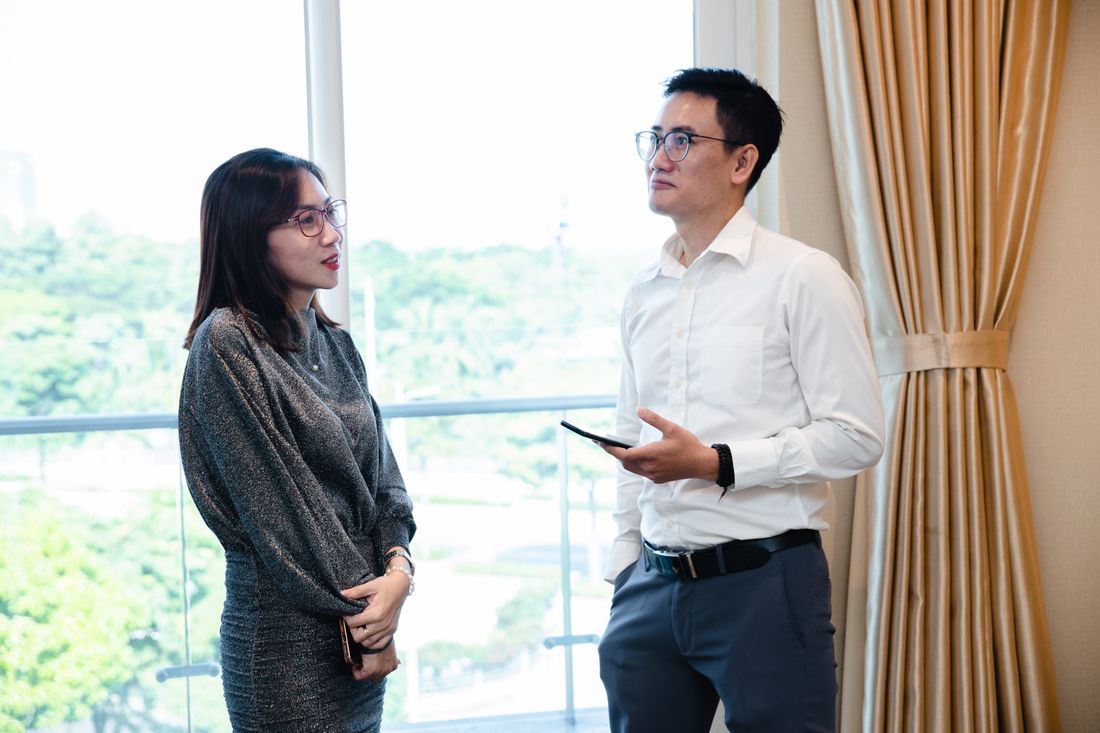
Photo: Core Visuals NYC
A retirement or farewell event is two events happening in the same room: a celebration and a goodbye. Coverage that only plays one of those notes reads wrong later, whether it's photos from the day itself or a tribute video assembled afterward. Here's how we think about the tone, the shot list, and the second deliverable most people don't plan for until it's too late.
A farewell or retirement event needs coverage that holds two true things at once: the room is happy, and it's saying goodbye. That means fewer staged hero shots and more attention to reactions, quiet in-between moments, and clean speech audio, especially if a tribute video will be built from the footage later.
Table of Contents
- Why This Room Reads Differently Than a Normal Event
- The Tone Failure Modes on Both Sides
- What Actually Changes on the Shot List
- The Coverage Usually Has Two Lives, Not One
- Why Clean Audio Matters More Here Than at Most Events
- The Room's Reactions Are Half the Story
- Should There Be a Sit-Down Interview
- What to Tell Us Before the Day
Why This Room Reads Differently Than a Normal Event
A retirement or farewell event asks a photo and video team to hold two true things in one frame: the room is genuinely happy, and it is saying goodbye to someone. Coverage that plays only celebration or only tribute misses what the day actually is, and it shows in the final gallery.
I treat this as its own category, not a variation on a standard executive event or a birthday. A standard corporate event optimizes for energy and forward motion: the brand, the announcement, the next thing. A farewell has a past tense built into it, whoever is leaving and for whatever reason. That changes the pacing of coverage: fewer wide hype shots of a room mid-applause, more attention to the specific moments a person will actually want to keep. It also changes who the photos are for. A retirement gallery gets looked at by the honoree, by their family, by colleagues who will not see them daily anymore. That audience wants accuracy and warmth over spectacle.
The Tone Failure Modes on Both Sides
The two ways this coverage goes wrong sit opposite each other: treating the room like a party with balloons and hype shots, or treating it like a memorial with somber, static portraits. Both misread what's actually happening. The honoree isn't a mascot for a theme, and they aren't gone, they're present, changing roles, and still standing right there.
We aim for restrained warmth: real light, real reactions, minimal styling cues that push the room toward either extreme. No forced toasts staged for the camera, no over-lit hero shot of the guest of honor looking wistfully into the distance. In practice, the strongest images from this kind of event are the ones nobody arranged: someone leaning in to say something quiet, a genuine laugh mid-story, a handshake that runs a beat longer than usual. Cliche retirement props (a gold watch, an empty desk, a "so long" banner) read as filler when they show up in a gallery. We skip them and shoot the room instead.
What Actually Changes on the Shot List
The shot list shifts toward reaction and away from posed hero moments: fewer formal lineup photos, more coverage of the audience while someone else speaks, and closer attention to small physical details, a handshake, a hand on a shoulder, a gift changing hands, that carry more weight here than at a typical event.
Posed portraits still happen, but they get less real estate. We also build in time for the in-between beats: people arriving, the room settling before a speech starts, the walk from the podium back to a seat. Those moments end up doing more work in a gallery than another wide shot of the room. Because a retirement or farewell can mean very different things depending on the circumstances, a planned exit after decades, a health-related step back, a role change dressed up as a send-off, we do not build the shot list around a specific narrative. We shoot the room as it actually behaves and let the coverage reflect that, not a script we brought in with us.
The Coverage Usually Has Two Lives, Not One
Most farewell events generate two separate deliverables from the same day: a gallery or recap of the event itself, and, often weeks later, an internal tribute or send-off video assembled from speeches and reactions captured live. If that second use isn't planned for during the shoot, the raw material for it often isn't there.
This matters because the two deliverables want different things from the same footage. A same-day recap can lean on wide shots, ambient sound, and a general sense of the room. A tribute video needs speech audio clean enough to cut as the spine of a video, multiple camera angles on whoever is speaking so an editor isn't stuck on one static frame for four minutes, and reaction shots that can cut in around the words. If we know in advance that an internal tribute piece is likely, we plan the coverage, mic placement, camera positions, who to prioritize, around both outcomes from the start, rather than trying to reverse-engineer a tribute cut from photo-first footage after the fact.

Photo by Mikhail Nilov via Pexels.
Why Clean Audio Matters More Here Than at Most Events
Speech audio is the one element a tribute video cannot fake or fix later. If a toast or a story is inaudible or buried under room noise, that section becomes unusable no matter how good the picture looks. For an event built around people speaking about a person, that's the deliverable, not a bonus.
That's why we treat audio as a first decision, not an afterthought bolted onto the camera. A lav mic on the speaker, or a mic on the podium paired with a backup recorder, gets us a track an editor can actually build around, versus a camera-mounted mic picking up glasses clinking and HVAC. We also flag ahead of time who is likely to speak, even informally, so we're not scrambling to get a mic on someone mid-toast. None of this requires elaborate gear, it requires knowing in advance that the speeches are the content, not just the backdrop the room provides around them. A five-minute conversation about who's speaking saves an editor hours later.
The Room's Reactions Are Half the Story
A tribute or recap built only from the person speaking feels flat. The reactions in the room are what confirm the words meant something, and they're what an editor reaches for whenever a cutaway is needed. Missing them at the time means an editor has nothing to cut to later, no matter how good the speech audio is.
Practically, that means a second angle or a second shooter watching the audience while the primary coverage stays on whoever is speaking: the person nodding along, the colleague getting emotional, the quiet laugh at an inside joke only three people understand. It also means holding the camera on the quieter beats between speeches: the room resetting, someone catching the honoree's eye across the table, the pause before applause starts. Those in-between moments are usually where the most honest images of the day come from, and they're the ones most easily lost if coverage only chases the "big" moments on a printed agenda.
Should There Be a Sit-Down Interview
A short, simple interview with the honoree or a close colleague gives a later tribute video a spine speeches alone won't provide, but it only works handled with restraint, without assuming anything about why the person is leaving. We ask open questions. We don't script an answer for them.
We treat the interview as optional and led by what the client actually wants, not a default we push on every single booking we take. If it happens, we keep the questions open and simple, what stands out, what you'll miss, what's next, and let the honoree answer however fits their actual situation, whether that's a long-planned exit, a step back, or something more complicated they'd rather not detail on camera. A few minutes is usually enough time. The goal is a handful of usable, honest lines an editor can build a video around later, not a forced narrative about a chapter closing that we invented for them on set.
What to Tell Us Before the Day
The coverage above depends on a short conversation before the event, not on us guessing on-site: who's likely to speak, whether a tribute video is wanted later, whether a sit-down interview makes sense, and roughly how the room will be set up. That's a five-minute conversation that changes what gear and how many people show up.
We build the plan around the actual event: how many speakers, whether it's a sit-down dinner or a standing reception, whether leadership wants photos only or photos and a video team working in parallel. None of this needs to be locked down weeks out. A rough run of show a few days ahead is usually enough for us to plan mic placement, camera positions, and who's prioritized for coverage. If you already know a send-off video is likely down the line, telling us that upfront before the event, not after, is the single biggest thing that changes how we end up shooting the day.
Frequently Asked Questions
What's different about covering an executive's retirement or farewell event versus a normal company event?
A standard event optimizes for energy and forward momentum. A farewell event has to hold celebration and goodbye at once, so the coverage shifts toward reaction shots, quiet in-between moments, and honest small details, a handshake, a shared look, a genuine laugh, instead of wide hype shots and posed lineups. The goal is a gallery that feels accurate to what the room actually felt like, not a themed event package built around a single tone.
Should we plan for an internal tribute or send-off video, or just get event photos?
If a tribute video is even a possibility, tell us before the event rather than after. It changes what we prioritize live: clean audio on every speaker, multiple camera angles instead of one static frame on a podium, and reaction shots an editor can cut around later. Trying to build a tribute video from photo-first footage after the fact usually means missing the audio and angles that video editing actually needs to work.
How do you avoid making the coverage feel like a eulogy?
By keeping the honoree present rather than treating them as a subject to memorialize. We shoot real reactions and genuine moments instead of staged, wistful hero portraits, and we skip clichéd retirement props like a gold watch or an empty desk. Most rooms mix warmth and humor with real sentiment during a send-off, and the coverage should reflect that actual mix, not flatten the day into something heavier than it was.
What if we don't know the full reason someone is leaving, or the circumstances are complicated?
That's common, and it's not something we need to know going in. We shoot the room as it actually behaves rather than building coverage around an assumed story, no shot list that presumes a triumphant career close or a difficult exit either way. Whatever the real circumstances turn out to be, the same approach works: honest reactions, clean audio on the speeches, and restraint on anything that overstates or understates the moment.
How far in advance should we brief you on speakers and the run of show?
A few days ahead is usually enough for us to plan properly. We just need a rough sense of who's likely to speak, whether it's a sit-down dinner or a standing reception, and whether a tribute video is wanted later on. That short conversation is what determines mic placement, camera positions, and whether we bring a second shooter along to cover audience reactions while the speeches are happening.
Related Reading
Not sure if hourly or a package makes more sense for your event?
Tell us the expected length, and we'll run the actual numbers before you book.
See Event Coverage Packages