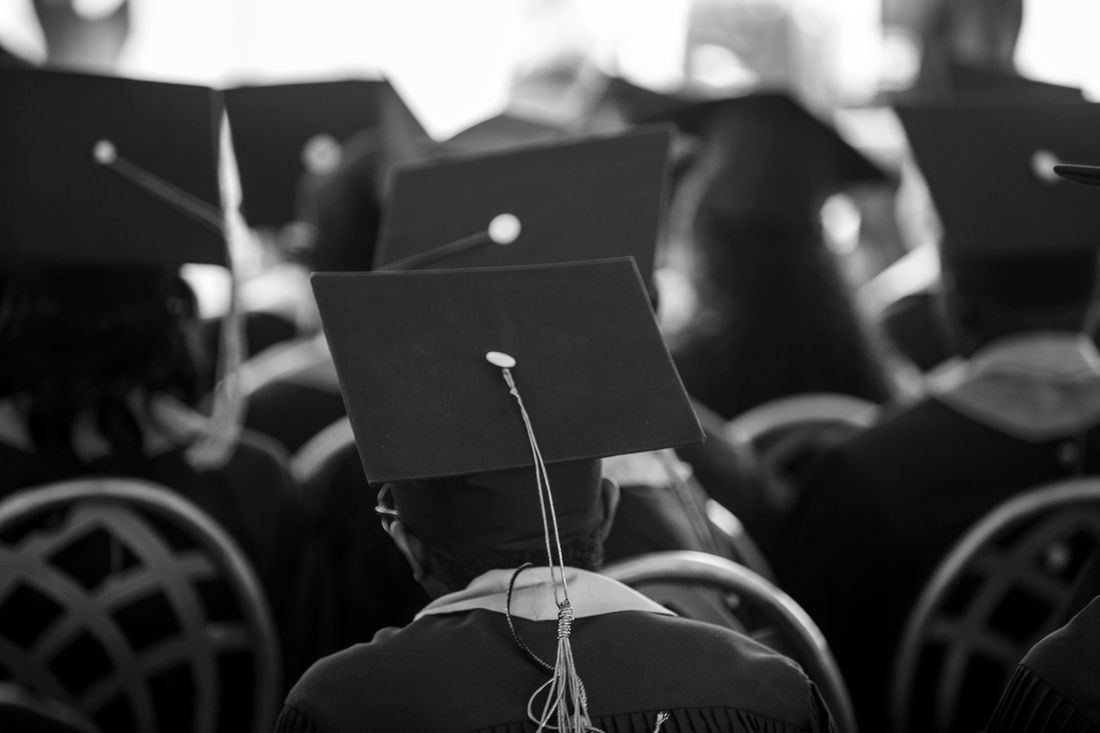
Photo: Core Visuals NYC
Commencement is one of the least forgiving events a photographer can be handed. The processional starts, the names get called in order, and there is no version of the afternoon where a missed crossing gets a second try. Everything about covering it well comes down to planning around that one fixed, unrepeatable sequence.
Commencement photography differs from other event coverage because the core moment, a graduate's name called and the walk across the stage, happens once, in a fixed order, with no retake. Coverage has to be planned around that sequence weeks ahead, not adjusted the morning of, serving marketing, development, press, and archive needs at once.
Table of Contents
- Why Commencement Photography Only Gets One Take
- What the Institution Actually Needs the Files For
- What Families Want vs What the Institution Needs
- Negotiating Crew Position With the Stage Manager and AV Team
- The Outdoor Ceremony Light Problem
- The Arena and Indoor Light Problem
- What a Communications Office Should Settle Weeks Ahead
- Matching Delivery to How the Institution Will Use the Photos
Why Commencement Photography Only Gets One Take
Commencement runs on a script that does not bend: each graduate's name is read once, at one microphone, during a walk across the stage that lasts a handful of seconds. There is no retake, no second pass at a missed frame, and no ceremony scheduled next week to fix it. Everything else about the day moves around that one fixed sequence.
Most events give a photographer room to reposition, wait out a bad angle, or catch the next similar moment a few minutes later. Commencement doesn't work that way. A processional, an honorary-degree presentation, and hundreds of individual crossings all happen in a set order on a set clock, built for the audience in the room, not for a camera. In practice, that means working out the exact stage geometry beforehand: where the name gets called, where the diploma changes hands, where the handshake happens. By the time the ceremony starts, there's no more room left to test angles. A short walkthrough of the stage a day or two out, if the institution allows it, is usually the difference between a plan that holds and one that gets improvised in real time once the processional begins.
What the Institution Actually Needs the Files For
A communications office usually needs commencement photos for four separate jobs at once: marketing and admissions content, development and donor outreach, press and media requests, and the registrar's or archive's permanent record. Each of those audiences wants a different kind of frame from the same afternoon, and they rarely say so out loud until asked.
Marketing wants energy and variety, wide shots of the crowd, candid reactions, campus in the background. Development wants the platform party, honorees, and anyone the institution might thank in a future appeal. Press wants a small number of clean, quotable frames that can run same-day. The archive wants comprehensive, systematic coverage, ideally every graduate who crossed, filed in program order. In practice, one shoot rarely optimizes for all four automatically. A comms office that names the priority order ahead of time, rather than assuming a photographer will read minds, gets a set of files that actually covers what each department will ask for later, instead of discovering the gap when development goes looking for a stage photo that was never taken.
What Families Want vs What the Institution Needs
Families generally want one specific thing: their graduate, in focus, at the instant their name is called, with a clear face and a clean background. The institution needs the whole event documented, the crowd, the speakers, the setting, the scale of it. Those aren't the same assignment, even though they happen in the same room.
Many institutions solve this by treating stage crossings as their own dedicated coverage line, separate from broad room shots, either as two assigned roles on the same crew or a clear division of attention within one. Missing a family's crossing has an outsized cost relative to its size in the file count: it's one frame out of thousands, but it's the frame that family remembers the day by. In practice, a comms office is well served by deciding, before the ceremony, whether stage-crossing coverage is a guaranteed deliverable or a best-effort one, and saying that plainly to whoever is covering it, rather than letting the crew guess at expectations that only surface after families start asking where their photo is.
Negotiating Crew Position With the Stage Manager and AV Team
Where a photographer can stand, and whether they can move during the ceremony, is negotiated with the stage manager and AV team, not decided by the photographer alone. That conversation needs to happen weeks ahead, because stage plans, camera risers for a livestream feed, and sightlines for the platform party are usually locked well before anyone thinks about photo coverage.
A fixed position near the stage steps often works better than a roaming one, since movement during the processional or the reading of names can cross sightlines the AV team has already planned around for the livestream or jumbotron feed. Access badges, entrance and exit choreography, and where an assistant with a second camera can stand all need sign-off from whoever runs the room. In practice, the earlier this gets settled, the more flexibility a photographer actually has, because a position requested weeks ahead is negotiable in a way a position requested the morning of the ceremony is not, and the stage manager has every reason to say no to a request that shows up after the run of show is already printed.
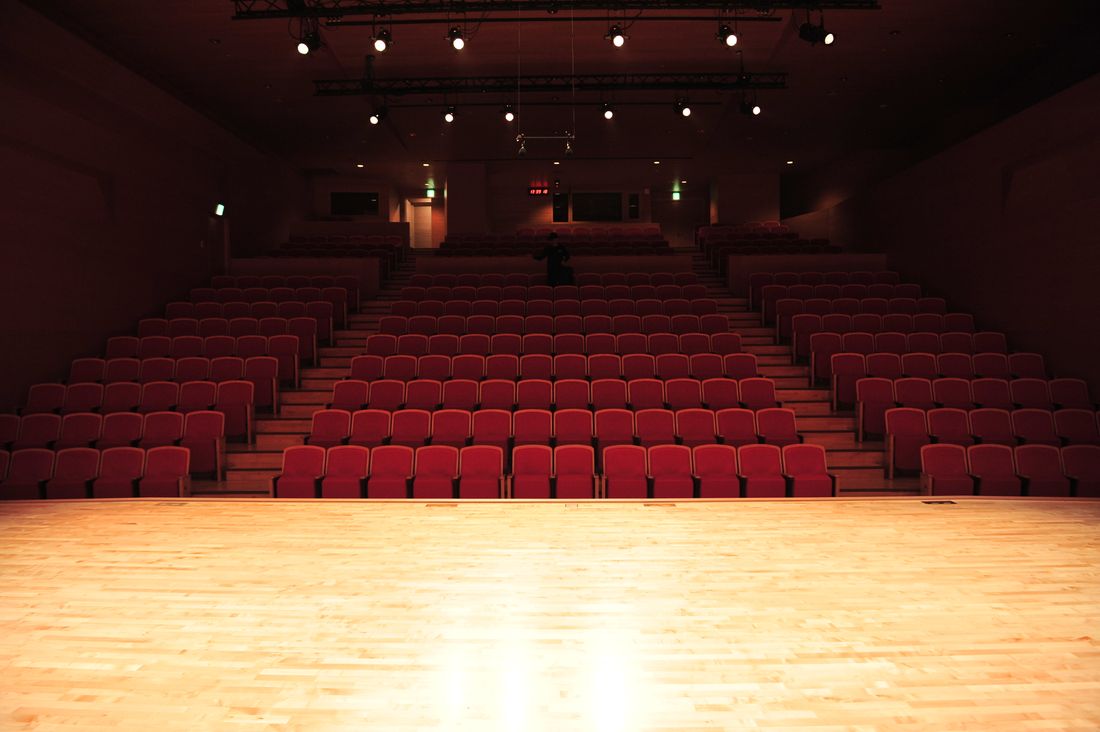
Photo by JIUN-JE LIN via Pexels.
The Outdoor Ceremony Light Problem
Outdoor commencement ceremonies usually run late morning into midday, which puts the sun close to overhead: harsh shadows under caps and gowns, blown highlights on white robes, and a stage that's often backlit against whatever the venue used as scenery. None of that is a lighting choice anyone made for the photographer's benefit.
Tents solve the sun problem and create a new one, patchy shade that shifts as the sun moves, with graduates walking in and out of it mid-crossing. Fill flash or a reflector helps on faces under caps, but only if the position negotiated with event staff allows for it without becoming a distraction. Weather contingency matters too: a ceremony moved indoors on short notice changes the light problem entirely, so it's worth knowing the rain plan and backup venue in advance rather than discovering it that morning alongside everyone else. A comms office that shares the contingency plan early saves a photographer from planning for the wrong room.
The Arena and Indoor Light Problem
Arena and indoor commencement venues bring mixed light sources, colored stage wash, house lighting, and a jumbotron all firing at once, plus real distance between the seats and the stage. That combination pushes toward higher ISO and longer lenses, and it means the venue's lighting rig, built for an audience's eyes, wasn't designed with a camera's sensor in mind.
Color temperature is worth checking ahead rather than guessing on arrival, since a stage lit half in warm tungsten and half in a colored wash reads very differently on camera than it does to the eye in the room. Distance from the stage also shapes what's actually achievable: a wide shot of the platform party is easy from most seats, but a clean, well-lit face at the exact second a name is called usually requires a position much closer than general seating allows, which loops back to the position negotiated with the stage manager well before doors open, since general admission seating rarely leaves a usable angle on its own.
What a Communications Office Should Settle Weeks Ahead
The name list and reading order, the seating chart, the stage plan, the platform party list, and the run of show all need to be locked weeks before the ceremony, not finalized the morning of. These documents are what a photographer actually plans coverage against, and a late change to any of them ripples through the whole plan.
A single point of contact on the comms team, rather than a rotating cast of coordinators, cuts down on last-minute confusion about where crew can stand or when the schedule shifted. Institutions also have their own consent and privacy policies about identifying individual graduates in published photos, and that's a decision the comms office owns, not something a photographer should be guessing at on site. In practice, the ceremonies that run smoothest for coverage are the ones where these questions got answered in a planning call weeks out, not in a hallway conversation before doors open, when there's no longer time to adjust a stage plan or reprint a program.
Matching Delivery to How the Institution Will Use the Photos
Different departments need the files on different timelines: same-day highlights for social media, a small curated set for press by the next morning, and a complete, fully edited archive delivered over the following weeks once every stage crossing has been culled and labeled. Treating all of that as one delivery deadline usually shortchanges someone.
A ceremony with hundreds or thousands of individual crossings generates a large volume of raw files, and sorting them in program order, tied to the name list, is what makes the archive actually usable later, both for the registrar and for families requesting their graduate's photo after the fact. In practice, agreeing on a staged delivery plan ahead of time, quick turnaround for a handful of hero frames, then a longer window for the full culled set, keeps every department's expectations realistic instead of everyone waiting on the slowest deliverable, and it gives the registrar a clear, firm date to plan around instead of an open-ended promise that keeps slipping.
Frequently Asked Questions
How far in advance should a university book a commencement photographer?
Many institutions start these conversations months ahead, since crew position has to be worked out with the stage manager and AV team, and that negotiation depends on stage plans and camera risers that get locked early. Booking early also gives the comms office time to settle the name list, seating chart, and run of show before those documents are finalized for other departments, which is when position requests stop being negotiable.
Can one photographer cover both individual stage crossings and the wide ceremony shots?
It depends on the scale of the ceremony. A smaller graduating class can sometimes be covered by one photographer working a fixed position near the stage. Larger ceremonies with hundreds of crossings usually split the work: dedicated stage-crossing coverage as one assignment, and broad room, crowd, and platform-party coverage as another, so neither job gets shortchanged when the schedule doesn't leave room for one person to do both well.
What's the real difference between outdoor and arena commencement coverage?
Outdoor ceremonies bring harsh midday sun, blown highlights on gowns, and shifting tent shade, which usually calls for fill light and careful position relative to the sun. Arena ceremonies bring mixed color temperatures, house lighting built for an audience rather than a camera, and real distance from the stage, which pushes toward longer lenses and higher ISO instead. Neither problem gets solved by the same fix.
Who ends up owning the commencement photos after the ceremony?
That's a licensing and usage question the institution and photographer settle in the agreement, not something to assume. Institutions also maintain their own consent and privacy policies about identifying individual graduates in published images, and those policies belong to the comms office, not the photographer. Worth confirming both, usage rights and the privacy policy, in writing before the ceremony, not after files are already delivered.
How is commencement different from a typical conference or corporate event, photographically?
A conference has flexible sessions, repeatable moments, and room to reposition between talks if one gets missed. Commencement has one fixed, unrepeatable sequence, names called in order, each graduate crossing once, with no equivalent moment happening again later in the day. That difference changes how far ahead planning has to happen and how little room there is to adjust anything once the processional actually starts moving.
Related Reading
Not sure if hourly or a package makes more sense for your event?
Tell us the expected length, and we'll run the actual numbers before you book.
See Event Coverage Packages