
Photo: Core Visuals NYC
A campus career fair looks like one event with hundreds of students moving through it, but for the company paying for coverage it is really one table, worked for a few hours, that needs to look like a place worth applying to. The students are not the client. The employer is, and almost every decision about how to shoot a recruiting booth follows from that single fact: what a careers page and a recruiting deck actually need, how to catch a busy table without every frame reading as a transaction, what consent and university media policy mean for the people who pass through the frame, and which narrow windows in a fair's long, uneven schedule are worth shooting at all. This is the practical version of that plan, built from how we approach a recruiting table when the company hiring is who we're working for.
Campus recruiting event photography should document the employer's booth working, not the students who visit it: recruiters in genuine conversation, a table drawing real interest, a team that reads as people a candidate would want to work with. Coverage plans around a careers page's and recruiting deck's actual needs, the fair's narrow useful windows, and consent questions routed to the university and the client's own recruiting team.
Table of Contents
- What Makes Campus Recruiting Event Coverage Different From Other Event Photography?
- What Do a Careers Page and Next Season's Recruiting Deck Actually Need From This Coverage?
- How Do You Shoot a Busy Table Without Every Frame Looking Like a Transaction?
- What Consent and Media Policy Questions Come Up When Students Are in Frame?
- When During a Career Fair Are the Useful Windows for Coverage?
- What Should the Recruiting Team Have Ready Before the Doors Open?
- How Is Career Fair Coverage Different From a Headshot Station or a Trade Show Booth?
- Who Should Actually Be in the Photos From a Recruiting Booth?
What Makes Campus Recruiting Event Coverage Different From Other Event Photography?
Campus recruiting event coverage is built around the employer's booth, not the students who stop by it. The company staffing the table is the client, so the plan, the shot list, and the schedule follow that fact directly rather than treating the day as general fair coverage.
A career fair looks like one event, but it is really dozens of small transactions happening in parallel, one company at a time, one conversation at a time. The photographer's job is not to document the fair. It is to document one employer's presence at it: the booth working, the team looking approachable, a line that reads as real interest rather than foot traffic drifting past. That distinction changes where a photographer stands, how tight the framing gets, and which moments actually matter. A wide shot of the whole hall might look impressive, but it rarely does anything for the company that hired the coverage. The useful frames come from staying close to one table for most of the day, learning its rhythm, and treating the rest of the room as background rather than subject.
What Do a Careers Page and Next Season's Recruiting Deck Actually Need From This Coverage?
A careers page and a recruiting deck need a small set of genuinely usable images: recruiters mid-conversation, the booth looking staffed and active, and a few clean frames of the team that could sit next to a job listing without explanation. Volume matters less than having the right handful.
Most of what gets shot at a career fair never gets used. What earns a slot on a careers page or in a slide deck is narrower: a photo where the energy is obvious at a glance, where a candidate scrolling job listings would read the scene correctly without a caption. That usually means two or three recruiters in genuine conversation, not lined up and smiling at the lens, plus a wider shot that shows the booth drawing a crowd. A recruiting deck built for next season wants the same material in a different crop, often needing empty space around the subjects for text. Planning for that before the day starts, rather than sorting for it afterward, is what keeps the resulting folder small and usable instead of large and undifferentiated.
How Do You Shoot a Busy Table Without Every Frame Looking Like a Transaction?
Shooting a busy table without every frame reading as transactional means working for genuine conversation rather than the handoff moment, staying at an angle that shows two people actually engaged rather than one handing paperwork to another, and waiting for a beat of real reaction instead of firing through the queue.
The easiest frame at a recruiting table is the one everyone defaults to: a candidate handing over a resume, a recruiter accepting it, both looking at the camera for a second. It reads as a transaction because that is exactly what it is, and it rarely says anything about what it would be like to work there. The more useful frame comes a few seconds later or earlier, in the middle of an actual answer, a laugh, a recruiter leaning in because the conversation got interesting. That means working the edges of the table rather than head-on, and being patient enough to let a normal exchange happen instead of interrupting it. It slows the number of usable frames per hour, but it is the difference between a photo that looks staffed and one that looks like a place worth working.
What Consent and Media Policy Questions Come Up When Students Are in Frame?
Students at a career fair table are not the subject the company is paying for, but they end up in frame constantly, which raises real consent and university media policy questions that a photographer cannot answer alone. Those questions route to the university running the fair and to the client's own recruiting team, not to a blanket rule assumed in advance.
Every school runs its career fair differently, and some have specific rules about photographing students on campus that a visiting photographer has no way of knowing without asking. The honest approach is to raise the question early, with the university's career center and with the client's recruiting contact, rather than guessing or assuming a general media policy applies everywhere. In practice that often means favoring angles where students are present but not the clear subject of the frame, over-the-shoulder or from behind the recruiter's side of the table, and keeping full-face crowd shots to situations where consent is not in question. It is a smaller creative constraint than it sounds, and it keeps the resulting images focused on the employer, which is where they were supposed to be focused anyway.
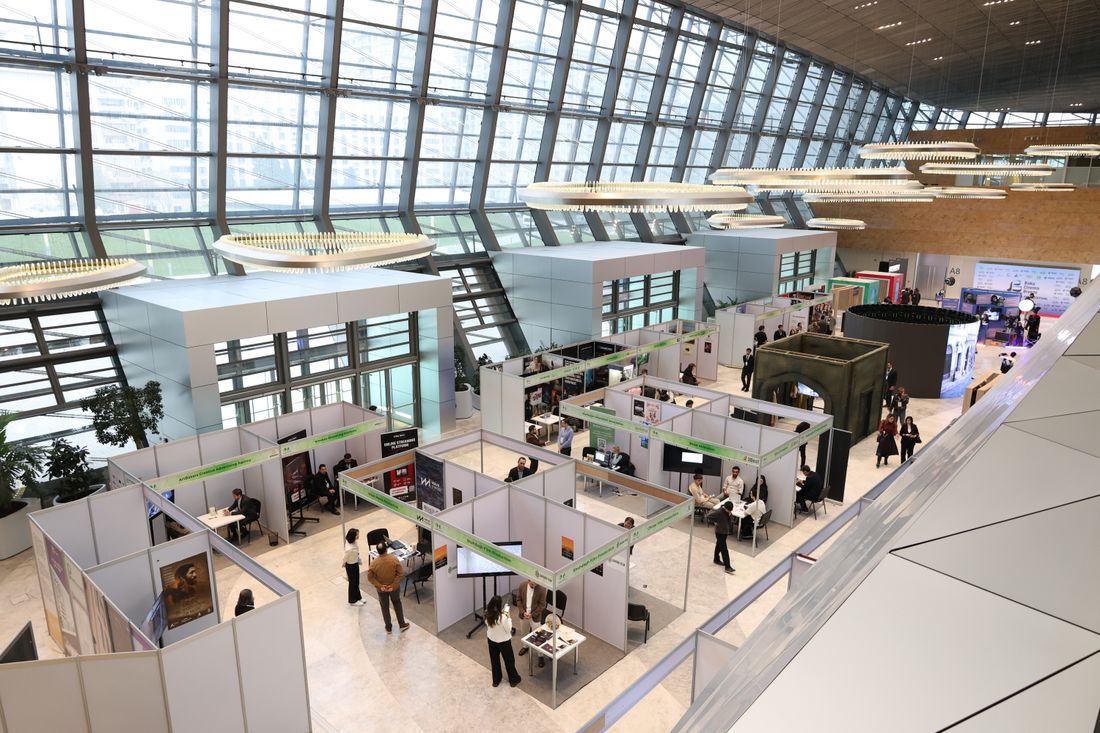
Photo by Tahir Xəlfəquliyev via Pexels.
When During a Career Fair Are the Useful Windows for Coverage?
A career fair has a handful of narrow windows where coverage is actually worth shooting: the first real rush after doors open, whatever midday peak the fair naturally builds toward, and short stretches when a recruiter and a candidate settle into a longer conversation. The slow stretches in between are worth watching, not shooting through.
The first ten or fifteen minutes after doors open often looks busiest but photographs worst, since most of the traffic is people walking the row before committing to a table. The real window comes once students start stopping, reading, and talking rather than just passing, which is usually a little later than it feels like it should be. Midday tends to bring the fair's real peak, when the room is fullest and a queue at a strong booth reads as genuine draw. Between those windows, activity often thins out enough that forcing frames does more harm than good, since a photographer visibly working a quiet table can make it look quieter than it is. Reading that rhythm instead of shooting on a fixed schedule is most of the job.
What Should the Recruiting Team Have Ready Before the Doors Open?
Before doors open, the recruiting team should have the table set, materials organized, and a rough sense with the photographer of who is working the booth and for how long, since coverage is only as good as the setup it is documenting. A five-minute walkthrough beforehand solves most of what would otherwise get fixed mid-shoot.
A recruiting table often gets dressed in the last few minutes before a fair opens, which is exactly when a photographer benefits most from being there already. Knowing which recruiters are working the table, whether they rotate through the day, and where the company wants the team standing when the room is busiest turns the first useful window into usable frames instead of scouting time. It also helps to flag anything that should stay out of frame, a messy stack of giveaways, a laptop screen with something sensitive open, before the first candidate walks up rather than after. None of this takes long. It is a short conversation, but skipping it usually means losing the fair's best window to setup instead of coverage.
How Is Career Fair Coverage Different From a Headshot Station or a Trade Show Booth?
Career fair coverage is documentary, following the employer's table as it actually runs, while a headshot station is a scheduled service built around a queue of individual portraits and a trade show booth serves a sales conversation instead of a hiring one. All three can happen at the same kind of event, but they are different assignments with different shot lists and different outputs.
It is easy to lump these together because they all happen on a fair or expo floor, but the goals barely overlap. A headshot station exists to move people through a line and hand them a usable portrait, which is closer to a production line than to documentary coverage. A trade show booth is generally selling a product or service to potential customers, so its useful frames are about that pitch landing, not about hiring. Campus recruiting coverage sits apart from both: nobody is queuing for a photo of themselves, and nothing at the table is for sale. The job is to document a hiring conversation happening naturally, which calls for a quieter, more observational approach than either of the other two formats.
Who Should Actually Be in the Photos From a Recruiting Booth?
The recruiters and the booth itself should carry most of the photos, since they are what the company controls and what next season's coverage needs again. Students belong in frame as context, part of what makes the booth look active, rather than as the subject the coverage is built to feature.
It is a natural instinct to treat a career fair like any other event and chase the most interesting face in the room, but that face usually belongs to a candidate the company has no lasting relationship with and, depending on the school, may not have clear consent to feature. The people worth featuring deliberately are the recruiters themselves, since they are the team a future candidate would actually be sizing up, and they will be back at the next fair whether or not this year's candidates are. Students appear throughout the resulting set because a real conversation cannot be photographed without them, but they read as texture and proof of activity, not as the point of the image. Keeping that hierarchy straight while shooting is what keeps the final set usable a year later.
Frequently Asked Questions
Who is the client for campus recruiting event photography, the company or the students?
The company staffing the recruiting table is the client. Students who stop by are part of the scene, but the coverage exists to show the employer's booth working: recruiters engaged in real conversation, a table that draws interest, a team that looks like people worth working with. The shot list, the framing, and the schedule all follow from that, not from covering the fair as a whole.
Can students be included in photos from a career fair without their consent?
That depends on the university running the fair and the client's own recruiting policy, not on a general rule a photographer can assume. Some schools have specific media policies for their career fairs. The practical answer is to ask the university's career center and the client's recruiting team before the day starts, and to favor framing where students are present but not the clear subject when consent is uncertain.
What is the single most useful photo from a career fair booth?
Usually a recruiter mid-conversation with a candidate, caught in a genuine moment rather than posed for the camera. It reads correctly on a careers page or in a recruiting deck without needing a caption, because the energy of a real exchange is visible at a glance. A posed handshake or resume handoff looks like a transaction and rarely earns a spot in the final set.
How much of a career fair should actually be photographed?
Far less than it feels like in the moment. The useful windows are narrow: the rush once students start actually stopping rather than walking past, the fair's midday peak, and any stretch where a conversation runs long enough to be worth catching. Shooting through the slow stretches in between usually produces frames nobody ends up using, and can make a quiet table look quieter than it actually is.
Does a company need to prepare anything before recruiting event coverage starts?
A short walkthrough helps more than most companies expect. Knowing which recruiters are working the table, whether they rotate through the day, where the company wants the team standing when the room is busiest, and what should stay out of frame turns the fair's first useful window into usable photos instead of scouting time. Five minutes before doors open is usually enough to cover most of it.
Related Reading
Booking a photographer for an event and still weighing hourly versus a package?
Send over the run of show and we'll price both options out before you commit to either.
See Event Coverage Packages