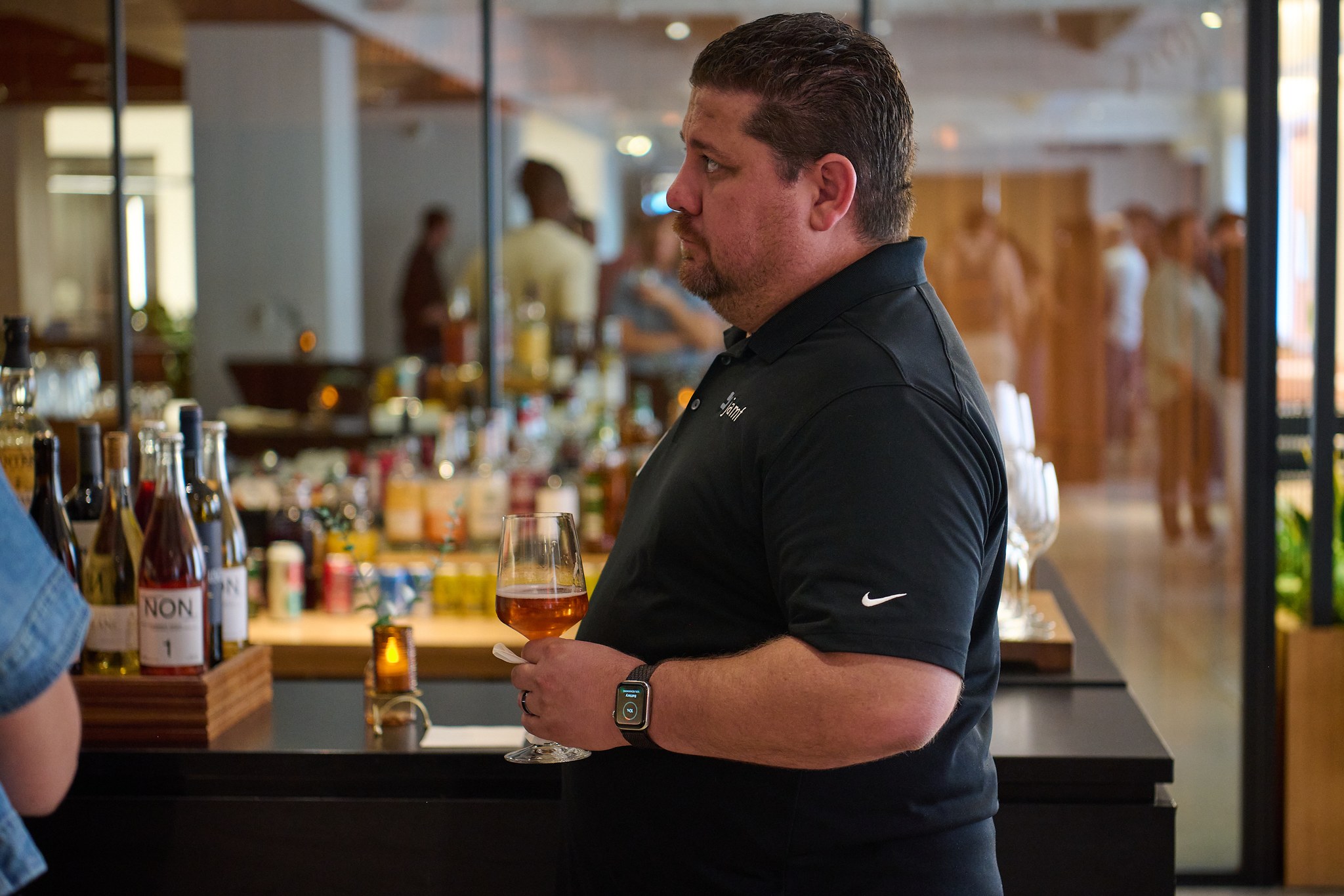
Photo: Core Visuals NYC
A regional sales meeting isn't one event with two agenda items. It's two different shoots wearing the same lanyard: a working, candid register during the training days, and a formal, recognition-driven register on the closing night. Treat it as one continuous style and either half comes back wrong.
Coverage for a regional sales meeting has to plan for two distinct registers in one engagement: candid, functional documentation during the multi-day training sessions, and formal, recognition-focused coverage for the closing awards night. The right approach books one team that can shift visual style between them, not one static shot list stretched across both.
Table of Contents
- Why a Regional Sales Meeting Shoots Differently Than One Event
- What Training-Day Coverage Actually Needs to Capture
- The Awards Night Register Change: From Candid to Formal
- Scheduling One Photographer or Team Across Multiple Registers
- What Gets Used Where: Recruiting, Internal Comms, Recognition
- The Difference Between a Regional Meeting and an Annual Kickoff
- Planning the Shot List Before the Meeting Starts
- What a Realistic Package Looks Like for a Multi-Day Regional Meeting
Why a Regional Sales Meeting Shoots Differently Than One Event
A regional sales meeting photographs differently than a single dinner or a company-wide kickoff because it's actually two events stacked into one trip: a run of working training sessions, then a closing night built around recognition. Each half has its own visual logic, and a shot list built for only one of them leaves the other looking like an afterthought.
A single awards dinner is a known quantity to plan for. A company-wide kickoff is too. A regional sales meeting sits in between them logistically, smaller than the kickoff, longer than the dinner, and built around a specific cohort that returns to the same format year after year, often at the same hotel or conference center.
That recurring shape matters for coverage. A regional team wants images that read as their meeting, specifically, not a generic corporate event borrowed from a template. Getting the two registers right the first time makes next year's version easier to plan, since the reference footage already exists and the team already knows what worked.
What Training-Day Coverage Actually Needs to Capture
Training-day coverage needs candid, functional images: people working in breakout rooms, a presenter mid-slide, hands taking notes, small-group discussion. The goal is documentation that looks like real work happening, not a posed reenactment of it. Anything that reads as staged undercuts the point of shooting the training days at all.
This is a quieter shoot than the awards night, and it should look like one. Wide shots of the room set up theater-style, medium shots of engagement during a breakout, a few genuine reaction shots when something lands well in the room, that's the working vocabulary, repeated across however many days the training runs, adjusted for whatever format each session actually takes.
These images end up doing quiet, unglamorous work later: internal recap decks, a recruiting page showing what the program actually looks like, a slide in next year's planning deck. None of that needs a dramatic frame. It needs an honest one, and honest is easier to get right when nobody's posing for it.
The Awards Night Register Change: From Candid to Formal
The awards night calls for a different visual register entirely: formal, recognition-focused coverage built around the moments the room came together for. A stage or a set banquet table, a spotlight, people dressed up rather than in training-day badges, a shift in pace from documentation to occasion.
Shooting this half like an extension of the training days undersells it. The room planned for a different kind of night, and the coverage should meet that intention. Wider establishing shots of the space set for dinner, tighter frames on recognition moments, and portraits of people who clearly dressed for the evening all read as a deliberate shift, not a continuation of the same style used two days earlier.
This is also the half most likely to get reused outside the meeting itself: a still from the awards night in a year-in-review post, a portrait a winner is proud enough to use elsewhere. Formal coverage earns that kind of second life more than a training-room candid does, which is one more reason the register change matters.
Scheduling One Photographer or Team Across Multiple Registers
Booking one photographer or team across both registers works better than splitting the assignment, because a single point of contact already understands the meeting's flow by the time the awards night starts. Switching photographers mid-trip means a fresh person walking into the formal night cold, with none of the context the training days built.
In practice, this means blocking time for both halves in the same statement of work, with a clear break in style between them written into the plan rather than assumed. A shot list for training days and a separate one for the awards night, both under one booking and one point of contact.
It also keeps the visual language consistent across the whole trip, even though the register changes. The same eye is making the call on both ends, which matters more for a recurring regional meeting than a one-off event, since next year's coverage should feel like it belongs to the same series rather than starting over.

Photo by Markus Spiske via Pexels.
What Gets Used Where: Recruiting, Internal Comms, Recognition
Training-day images tend to serve internal audiences first (recap emails, a recruiting page, next year's planning materials) while awards-night images do more outward-facing work, showing up in year-in-review content or a winner's own professional profile. Planning for both audiences up front avoids ending up with only half the material either one needs, weeks after the trip is already over.
A recruiting page benefits from the training-day material specifically, because it shows what the program is actually like to attend, not a polished highlight reel built for an outside audience. That's a different job than the awards night is doing, and conflating the two usually means neither audience gets served well, since the images end up generic instead of purposeful.
Knowing which images are headed where before the shoot starts helps prioritize in the room. A photographer who knows the training-day shots are bound for a recruiting page frames differently than one who thinks everything is headed for the same recap deck, and that difference shows up clearly in the final selects.
The Difference Between a Regional Meeting and an Annual Kickoff
A regional sales meeting is a smaller, recurring cohort event, distinct from a company-wide annual kickoff that brings everyone together once a year. The scale is different, the audience is narrower, and the coverage plan should reflect that instead of borrowing a kickoff's shot list wholesale and hoping it fits.
An annual kickoff usually needs to represent the whole company to itself, so it leans on scale: a full room, a stage built for hundreds, a sense of the entire organization in one place at once. A regional meeting doesn't need that scale, and forcing it in makes a smaller, more focused room look thin by comparison instead of deliberately intimate.
The training-plus-awards-night structure is also specific to the regional format. A kickoff rarely runs multi-day breakout training the way a regional meeting does, and a kickoff's closing moment is usually a company address, not a recognition dinner built for a specific sales cohort that trained together all week and knows each other by name.
Planning the Shot List Before the Meeting Starts
The shot list for a regional sales meeting works best built before the meeting starts, with the training days and the awards night planned as separate lists under one schedule. Waiting to figure out coverage priorities in the room usually means the quieter, more valuable training-day moments get missed in favor of easier, more obvious shots that don't need much planning at all.
That planning conversation is short but specific: which breakout sessions matter most, who's expected to win recognition on the closing night, whether there's a keynote worth prioritizing over general room coverage. None of it requires a formal document, just a shared list going in before anyone arrives on site and the schedule takes over.
Building the list in advance also sets expectations for pacing. A team that knows the awards night runs on a tighter schedule than the open training days can plan its coverage rhythm accordingly, instead of discovering the schedule crunch mid-shoot and scrambling to catch up on moments already gone.
What a Realistic Package Looks Like for a Multi-Day Regional Meeting
A realistic package for a multi-day regional meeting covers the training sessions at a lighter cadence than the awards night, since the training days need documentation, not a full event-style shot count, while the closing night earns denser coverage built around fewer, more deliberate moments the room is actually waiting for and remembers well afterward.
That's a different allocation than a single-day event package, which usually spreads coverage evenly across one continuous block of time. A regional meeting's package should be built around the two registers directly, with clear expectations set in advance for how much time and attention each half actually gets and why.
Fixed packages help here specifically because a multi-day, two-register meeting has more moving parts than a single dinner. Knowing the scope and the price going in, rather than negotiating day by day once the trip is already underway, keeps the planning conversation focused on the meeting itself instead of the invoice sitting at the end of it.
Frequently Asked Questions
What's the difference between covering a regional sales meeting and a single sales dinner?
A regional sales meeting spans multiple days and mixes two registers: working training sessions and a closing awards night. A single sales dinner is one register, one evening, one shot list, built around one continuous style from start to finish. The regional format needs a plan for both halves, not a dinner-style approach stretched thin to cover a longer, more varied trip with its own agenda and its own audience.
Do we need one photographer for both the training days and the awards night?
One team across both halves works better than splitting the assignment. Whoever shoots the training days already understands the group's flow and priorities by the time the formal night starts, instead of a new person walking in cold with no context. It also keeps the visual language consistent across a trip that changes register midway through, which matters more for a meeting that repeats every year.
How is a regional sales meeting different from an annual sales kickoff?
A regional meeting is a smaller, recurring cohort event, not a company-wide gathering built to represent the whole organization at once. It typically runs multi-day training plus a closing recognition night, a structure an annual kickoff usually doesn't follow, since a kickoff's closing moment is usually a company address rather than a dinner. Coverage built for a kickoff's scale tends to make a smaller regional room look thin by comparison, rather than deliberately intimate.
What should training-day coverage actually capture?
Candid, functional documentation: breakout sessions, a presenter mid-slide, small-group discussion, genuine reaction shots when something lands well in the room. The goal is honest evidence the work happened, not a staged reenactment of it, since anything that reads as posed undercuts the point of shooting the training days at all. These images usually serve internal audiences first, like recap emails and recruiting pages, more than outward-facing content built for people outside the company.
How far in advance should we book coverage for a multi-day regional meeting?
Book as soon as the agenda splits into training days and a closing night, since the two registers need separate planning inside one statement of work rather than one shot list stretched across the whole trip. A shared list built before the meeting starts, covering both halves and who's expected to be recognized, keeps priorities clear instead of getting decided on the fly once the room is already full and the schedule is already moving.
Related Reading
Trying to lock down coverage for an event that's still taking shape?
Give us the rough schedule and we'll tell you whether hourly or a package actually saves you money.
See Event Coverage Packages