Photo by Domingos Henriques via Pexels.
A rebrand has one thing a first launch never has: something to compare against. The content job isn't introducing a new identity. It's proving the old one is actually gone. That means before photos of what's being replaced, real coverage of the unveiling itself, and refreshed team, office, and product content once the new identity is live, not a bigger version of a first launch's shot list.
Rebrand launch content needs to prove change happened, not introduce something new: before photos of the old identity while it still exists, real coverage of the unveiling itself, and refreshed office, team, and product content once the new identity is live, a different job than a first-time brand launch, which has no 'before' to contrast against.
Table of Contents
- A Rebrand Isn't a First-Time Launch, and the Content Shouldn't Be Either
- What Counts as 'Before' Content, and Why You Need It Before the Old Identity Vanishes
- Documenting the Unveiling Moment Itself
- Proving the Physical Space Changed (Office, Signage, and Environment)
- Proving the People Are the Same, but the Era Is New
- Proving the Product Changed, When There Is a Product
- Timing the Shoots So There's Actually Something to Compare
- What Gets Skipped, and Why It Undermines the Proof
A Rebrand Isn't a First-Time Launch, and the Content Shouldn't Be Either
A rebrand has something a first-time launch never has: a 'before.' The entire content job is proving change happened (old logo next to new, old office next to refreshed one, the reveal moment itself). A first launch only has to introduce something. A rebrand has to document a difference.
That distinction changes the whole shot list. A founder launching a first brand needs content that establishes who they are, headshots, a founder story, maybe a product shot. Nobody's asking 'prove this is real,' because there's nothing to compare it to. A rebrand walks into a room where people already have an opinion about the old version. The content has to answer a question the audience is already asking: did anything actually change, or did you just swap a logo? That's a genuinely harder job than introducing something new, and it needs its own plan, not a bigger version of a first-launch plan, but a different one built entirely around contrast.
What Counts as 'Before' Content, and Why You Need It Before the Old Identity Vanishes
Before content means photographing the old logo, office signage, packaging, and materials while they're still up, not after they've been pulled down. Most rebrands shoot the after and try to describe the before in text. A described 'before' is a claim. A photographed one is proof, and it only exists in a narrow window.
In practice, this window closes fast. Signage gets swapped in a weekend. Old business cards get thrown out the day the new ones arrive. Website screenshots are easy to grab archived, but the physical world (the lobby, the truck wrap, the uniform, the packaging on a shelf) usually isn't preserved anywhere once it's gone. If a rebrand is on the calendar, the before shoot should happen before demolition starts, not as an afterthought once someone realizes there's nothing to contrast against. It doesn't need to be elaborate. A handful of clean, well-lit shots of the old signage, the old office as it stood, and the old materials laid out is enough, raw material for a comparison the after content will eventually sit next to.
Documenting the Unveiling Moment Itself
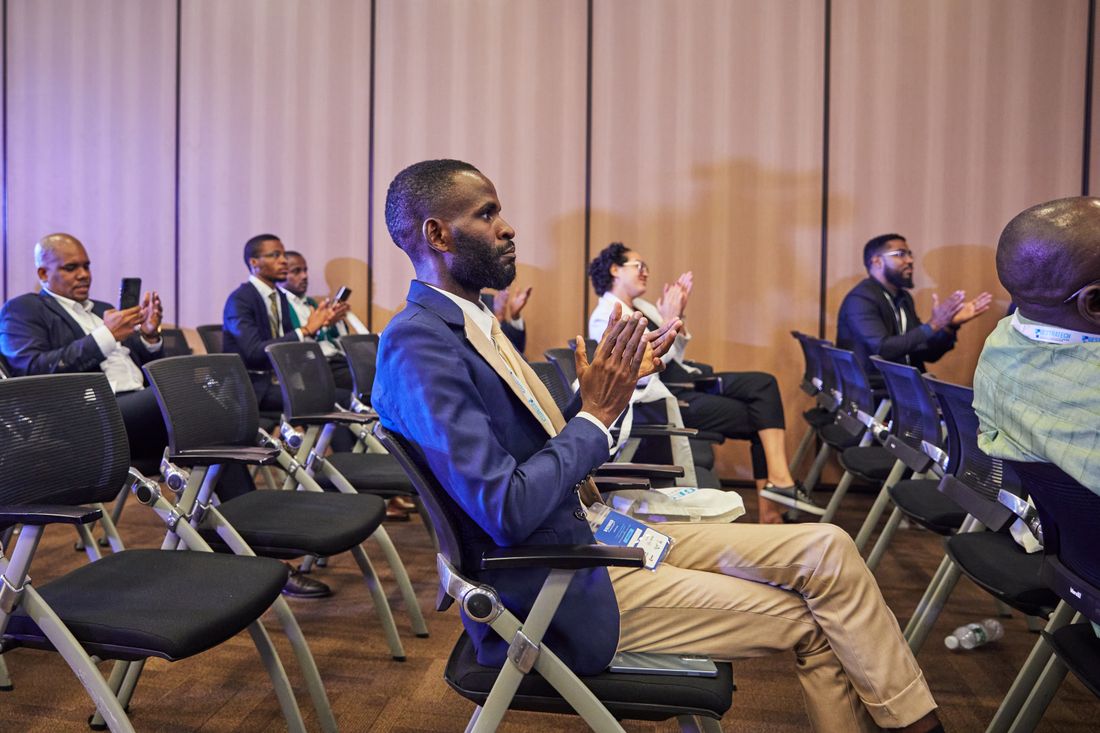
The unveiling (the actual event where the new identity gets shown to employees, clients, or the public for the first time) is a one-time moment that can't be recreated later. It needs its own coverage: the reaction in the room, the reveal itself, and the first look, not just posed shots of the finished materials afterward.
Most companies plan the reveal as an event but don't plan it as a content job. Someone remembers to hire a photographer for the party, and the coverage comes back looking like a party (cocktails, name tags, a banner). What's missing is the actual moment of change: the sign coming down and the new one going up, a team seeing the new brand for the first time, a leader saying it out loud. That's the footage that later gets used in a recap video, an internal announcement, a LinkedIn post marking the milestone. If the plan is only 'document the event,' the reveal itself (the two or three seconds that are the entire reason for the event) can get missed while everyone's shooting the room.
Proving the Physical Space Changed (Office, Signage, and Environment)
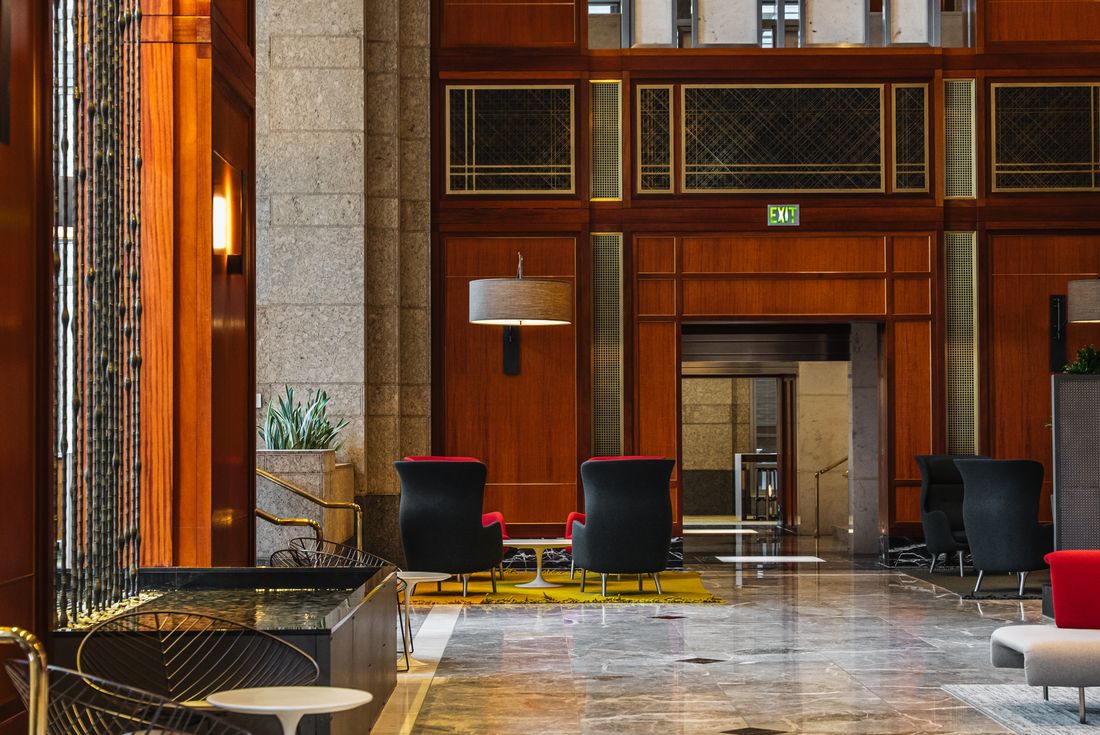
Rebrands usually touch the physical environment: new signage, a repainted lobby, updated uniforms, refreshed packaging on a shelf. Photographing that environment after the change (clean, well-lit, without people crowding the frame) gives a company something concrete to put next to the old photos, which is what actually makes 'we changed' read as true instead of asserted.
This is where a rebrand's content plan differs most from a standard office-photography job. The point isn't to make the space look good in isolation, most companies already have decent photos of their office. The point is to make it directly comparable to the before shots: same angle on the entrance, same framing on the reception desk, same distance on the signage. That consistency is what lets someone flip between old and new and see the change instead of two unrelated sets of nice photos. Include the small stuff too (new business cards on a desk, packaging on a shelf, a delivery truck with the new wrap). None of it needs to be dramatic. It just needs to exist in a form that sits next to its 'before' counterpart.
Proving the People Are the Same, but the Era Is New
New headshots and team photos after a rebrand aren't vanity content. They're proof the organization actually adopted the change, not just the marketing department. A rebrand that updates the logo but keeps three-year-old headshots with the old backdrop and old branding visible behind people quietly undercuts its own story.
I've seen this gap plenty. A company rolls out new colors and a new logo everywhere except the team page, where the headshots are still shot against the old backdrop with the old brand colors bleeding into the background. It's a small inconsistency, but it's exactly the kind of detail that makes a rebrand feel unfinished or cosmetic. Refreshed team content doesn't have to mean reshooting everyone from scratch the week of launch. It means the next round of headshots, the next all-hands photos, the next event coverage all reflect the new identity consistently, on purpose, instead of drifting into it over the next two years. It's less about one big shoot and more about making sure nothing shot after launch day quietly still looks like the old company.
Proving the Product Changed, When There Is a Product
If the rebrand touches packaging, a physical product, or a storefront, the after content needs to show the product itself in its new form (on a shelf, in someone's hand, in the space where it's actually sold or used), not just a studio shot of the package on a white background.
A clean product shot on white proves the design changed. It doesn't prove the change made it into the world. That second part is what a lot of rebrand content skips. The product in context, next to real shelf neighbors or in an actual storefront, is what shows the rebrand went from a design file to something customers are actually encountering. This matters more the more physical the business is. A software company changing a logo mostly needs its digital surfaces updated and photographed. A retail brand, a restaurant, or a company with a physical storefront needs the storefront itself documented (the new signage from the sidewalk, the new interior, the product on the shelf under the new branding). That's the shot that closes the loop between 'we redesigned this' and 'you can go see it.'
Timing the Shoots So There's Actually Something to Compare
Rebrand content only works as proof if the before shoot happens before anything changes and the after shoot happens once the change is actually live, not mid-transition, when half the signage is new and half is old. Plan both shoots against the rebrand's real timeline, not around whoever's available that week.
In my experience planning shoots around events, timing is usually the first thing that slips, and it's the one thing a rebrand's content plan can't really absorb slipping. If the before shoot gets pushed and the new signage goes up first, that footage is gone. There's no reshooting the old office once it's the new office. If the after shoot happens too early, while some materials are still transitioning, the photos end up half-old, half-new in a way that reads as unfinished rather than intentional. The fix is boring but it works: put both shoot dates on the actual rebrand calendar next to the signage install date, the packaging changeover date, and the launch event date, instead of treating photography as something to schedule after everything else is locked.
What Gets Skipped, and Why It Undermines the Proof
The most common gap is skipping the before shoot entirely and going straight to polished after content, which leaves a company with nice new photos and no way to show what changed. The second most common gap is treating the unveiling as a party to photograph instead of a moment to document.
Both gaps come from the same place: rebrand content usually gets planned by whoever's already planning the launch event, and their job is making the launch look good, not making the change provable. Those aren't the same brief. A launch-event photographer will get flattering photos of a nice party. Proving a rebrand happened needs a plan that starts earlier (documenting what's being replaced) and continues past the event, into the next round of headshots, office photos, and product shots that stay consistent with the new identity instead of drifting back toward old habits. None of this needs to be complicated. It just needs someone treating the rebrand as a documentation problem, not only a design and marketing one, and building the shot list around comparison instead of just coverage.
Frequently Asked Questions
Do we need before photos if we already have old marketing materials?
Old marketing materials show the old design, but they're usually shot for marketing, not comparison (different angles, different lighting, staged rather than documentary). A dedicated before shoot captures the old signage, office, and materials specifically so they can sit next to the after shots in the same format. It doesn't take long or need to be elaborate, but it needs to happen before the old identity is physically removed, which is the part that's easy to miss.
How is rebrand content different from what we needed for our first brand launch?
A first launch introduces something new with no comparison point. The content job is establishing identity. A rebrand has a comparison point built in: the old version. The content job becomes proving the change is real, which means shooting the before, documenting the unveiling itself, and refreshing team and office content afterward, a different plan than a first launch, built around contrast instead of introduction.
What if the rebrand doesn't include a physical event or unveiling moment?
Not every rebrand has a party. Sometimes it's a website flip and an email announcement. Even then, there's usually a moment worth documenting: a team meeting where the new identity gets shown internally first, a founder recording a short explainer, or simply the new office signage going up. The goal is capturing a specific moment of change, not requiring an event that doesn't exist for its own sake.
How soon after the reveal should we shoot the refreshed office and team content?
As close to the change being fully live as practical, once new signage, packaging, or materials are actually in place, not mid-transition with a mix of old and new visible in frame. Waiting a few weeks so everything settles is fine and often better than rushing; waiting months usually means small drift back toward old habits creeps in before it gets documented as the new standard.
Can we reuse the rebrand's launch photos as our team's regular headshots and content?
Launch-day photos capture a moment, not a repeatable headshot set. People are dressed for an event, lighting is built for the room, not a consistent backdrop. It's fine to pull a few usable shots from launch coverage, but the team should still get a proper headshot refresh afterward so the ongoing content (LinkedIn, the website, future press) consistently reflects the new identity rather than one event's lighting.
Related Reading
Got a launch coming up and no clear shot list yet?
Walk us through where the content needs to show up, site, LinkedIn, press, or a launch page, and we'll put together the scope and the price before you book anything.
See Personal Branding & Launches