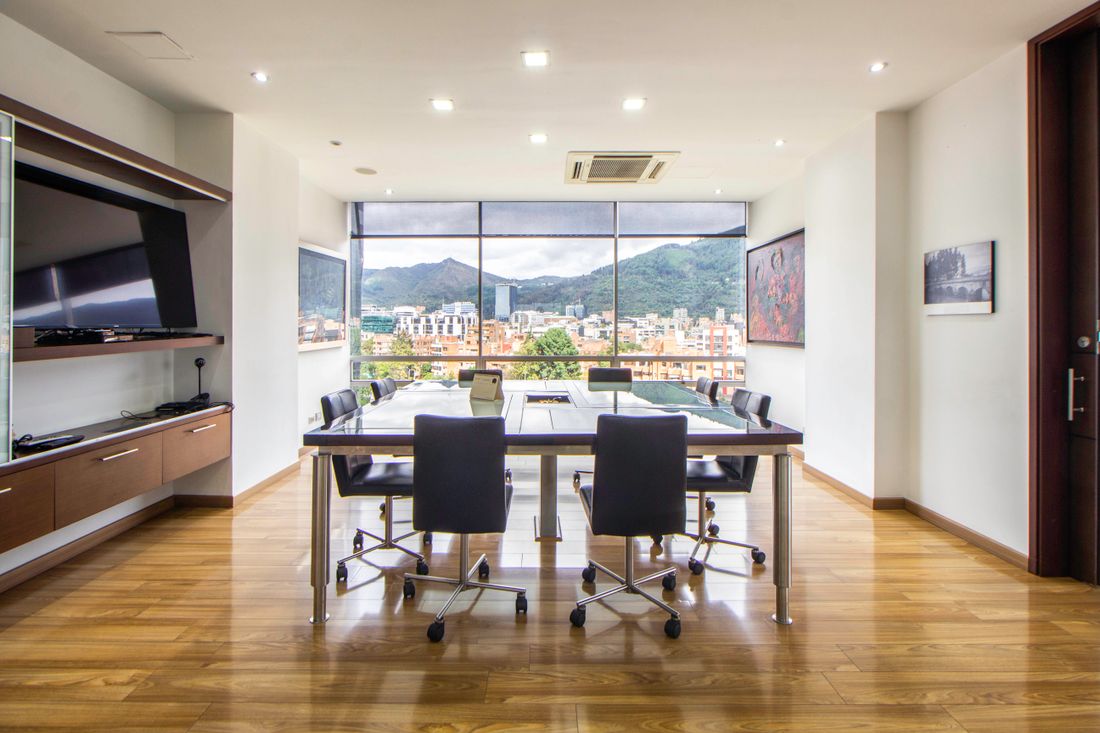
Photo: Core Visuals NYC
A portfolio company's annual meeting or an LP meeting isn't a scaled-down conference. It's a closed room with a guest list that stays a guest list, and the coverage around it has to prove the meeting happened at the standard the fund wants documented, without doing anything a conference photographer would default to.
Coverage for a portfolio company's annual or LP meeting means one photographer working a small room: no wide shots that identify a confidential guest list, nothing readable on any screen or handout, a short deliverable set built for a dozen people instead of a thousand, and an approval step before any image leaves the building.
Table of Contents
- The Room and the Standard
- No Crowd Shots That Identify the Room
- Nothing Readable on a Screen or Handout
- A Crew That Stays Out of Sightlines
- The Deliverable Set for a Dozen People
- The Approvals Layer Before Anything Leaves the Building
- Reusing the Set for Next Year's Raise
- How This Differs From a Public Investor Day
The Room and the Standard
A private equity portfolio company's annual meeting or an LP meeting gets covered differently than a conference because the room itself is small and the guest list is confidential. Coverage exists less to capture a big audience and more to document that the meeting happened, and happened at a professional standard, for people who weren't in the room.
A conference runs on volume: hundreds of badges, a stage, a step-and-repeat, coverage built to show scale and energy. An LP meeting or a portfolio company summit runs on the opposite instinct. The room might hold a dozen people, sometimes fewer, and every one of them is there because they belong there, not because they registered online. The fund isn't trying to prove attendance. It's trying to prove competence, that the presentation was organized, the room looked the part, and the people running it showed up prepared. That's a narrower brief than event photography usually gets handed, and it changes almost every decision that follows, from how many people carry a camera into the room to what happens to the files once the meeting ends.
No Crowd Shots That Identify the Room
The single clearest difference from conference coverage is what stays out of frame: no wide shot wide enough to resolve who's sitting where. Limited partners and portfolio company leadership are frequently people who don't want their attendance at a specific meeting documented in a photo that could circulate beyond the fund's own use.
At a conference, a crowd shot is the point, proof of turnout, energy in the room, a wide frame full of faces for the recap deck. At an LP meeting, that same instinct is a liability. We shoot tighter and more deliberately: the speaker at the podium, a detail of the materials on the table, a room shot framed so faces are present but not identifiable at a glance. When a portrait or a named credit is actually wanted, that's arranged individually and on the record, not lifted out of a wide room shot after the fact. The working assumption is that nobody in that room signed up to be recognizable in a photo unless they specifically agreed to it, and coverage plans around that assumption from the first call rather than discovering it mid-shoot.
Nothing Readable on a Screen or Handout
Every frame gets checked for legibility before it's kept: a screen full of portfolio performance figures, a printed deck left open on the table, a whiteboard with fund math on it. If a document or slide can be read in the photo, that photo doesn't make the final set, full stop.
This is a different discipline than a conference, where a slide on a screen is often exactly what a photo is supposed to show. An LP meeting or a portfolio company summit usually has real numbers on those screens, ones the fund controls tightly outside of that room. The safer habit isn't avoiding the podium or the presentation entirely, it's framing around the content: a shot from an angle where the screen is out of focus, a wide room shot where a slide is present but not legible, a speaker shot that crops the deck out of frame. When it's genuinely unclear whether something on a screen is sensitive, the default is to treat it as sensitive and check afterward, not to guess and hope nobody notices later.
A Crew That Stays Out of Sightlines
This is a one-photographer job, sometimes one photographer and one videographer, never a crew sized for a conference. A room built for a dozen people notices two extra bodies with cameras immediately, and that awareness changes how people sit, what they say, and how naturally the meeting actually runs.
We position from the back or the side of the room rather than moving through it, and we treat the agenda the way we'd treat a closed board session: quiet entries and exits, no repositioning mid-remarks, no asking someone to repeat a line for a better angle. A conference crew works the room because a big room can absorb that movement without anyone noticing. A meeting this size can't, so the job becomes staying out of every sightline that matters, the presenter's eyeline to the group, the group's eyeline to each other, while still coming away with a usable set. That's a different skill from conference coverage, closer to how a photographer would behave inside a client advisory meeting than at a public event.
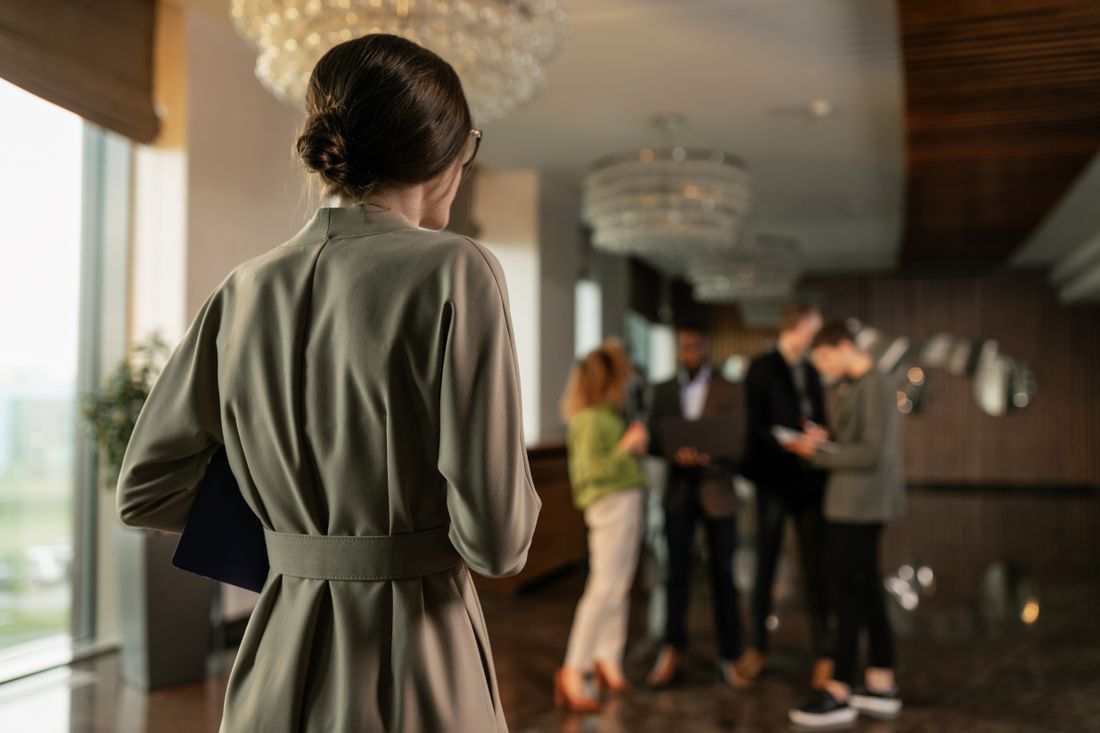
Photo by Alena Darmel via Pexels.
The Deliverable Set for a Dozen People
The deliverable list is short and specific, not the broad recap gallery a thousand-person conference generates. Most annual and LP meetings need a handful of individual portraits of whoever's presenting, a few honest room shots that show the meeting happened, and a short set of usable stills or clips for the fund's own materials.
There's no highlight reel of a crowd cheering a keynote, because there's no crowd. There's no sponsor-wall coverage, because there are no sponsors to credit. What replaces that volume is precision: a clean portrait of the managing partner at the podium, a wide shot of the room that reads as professional without identifying anyone specific, maybe a short video excerpt of a presentation for internal use later. We scope this exact list with the fund or the portfolio company before the meeting rather than shooting broadly and sorting afterward, since broad, unscoped shooting is exactly what creates the identification problem the rest of this coverage exists to avoid in the first place.
The Approvals Layer Before Anything Leaves the Building
Nothing from an annual or LP meeting goes anywhere, not a shared drive, not a slide deck, not a website, before one named person on the fund's or the portfolio company's side reviews the full set. That review step isn't optional the way it might be after a public event, it's the whole reason the coverage was scoped this tightly in the first place.
We deliver the complete gallery privately to that one point of contact, usually someone in investor relations or a chief of staff role, rather than posting or distributing anything directly. That person is the one who knows which attendees are sensitive about being identified, which numbers on a screen were meant to stay in the room, and which frame simply looks wrong for reasons that have nothing to do with photo quality. We also flag anything we'd personally hold back, a legible number, a face that reads too clearly in a wide shot, so the reviewer isn't the only check on discretion. Publication and distribution decisions stay entirely with the client's own team.
Reusing the Set for Next Year's Raise
A well-scoped set from this year's annual meeting is worth planning to reuse, not reshoot, for next year's raise or update. A clean portrait of the same speaker, a room shot that still reads as current, or a short video clip built for internal use often has a longer shelf life than the single meeting it came from.
That reuse only works if the original set was built with it in mind: portraits shot against a background that won't look dated in twelve months, room shots that don't include anything time-stamped by a specific slide or attendee, files organized and labeled so someone can find the right frame without emailing to ask. We talk through the next raise or the next LP update at the same time we scope the current meeting's deliverables, since a fund's need for this kind of material rarely stops at one meeting a year. Planning the reuse case up front costs nothing extra and saves a second shoot's worth of coordination later.
How This Differs From a Public Investor Day
A public company's investor day and a private fund's LP meeting look similar on a calendar but run on opposite instincts: one is built to be seen widely, the other is built to be documented quietly. Confusing the two is the fastest way to end up with coverage that doesn't fit the room it was shot in.
An investor day is a public-facing event with a room built for scale, media in attendance, and a genuine interest in wide, energetic coverage that shows momentum to an outside audience; that's its own coverage problem with its own answer. An LP meeting or a portfolio company summit has none of that intent behind it. The audience is confidential, the numbers on screen are internal, and the entire point of the coverage is proof for people who trust the fund but weren't in the room, not persuasion aimed at people who weren't invited. Scoping a shoot correctly starts with naming which of these two rooms you're actually in before anyone picks up a camera.
Frequently Asked Questions
How many photographers does a portfolio company's LP meeting need?
Almost always one, sometimes paired with one videographer if video is part of the ask. LP meetings and portfolio company annual meetings usually seat a dozen people or fewer, and a room that size notices extra crew immediately. We plan for a single photographer to cover the agenda quietly from the back or side of the room, since a bigger crew adds a presence the meeting doesn't need and works against the discreet tone the day calls for.
Can photos from an LP meeting show who attended?
Not by default. Limited partners and portfolio company leadership frequently prefer their attendance at a specific closed meeting stay undocumented in any photo that could circulate beyond the fund's internal use. We shoot tighter frames, a speaker at the podium, a detail shot, a room view where faces aren't individually identifiable, rather than wide crowd shots. A named portrait only happens when someone specifically agrees to it, arranged separately from general room coverage.
What should stay out of frame at a portfolio company annual meeting?
Anything legible: portfolio performance figures on a screen, a printed deck left open on the table, fund math on a whiteboard. If a document or slide can be read in a photo, it gets excluded from the final set. The safer habit is framing around that content rather than avoiding the presentation entirely, shooting from an angle where a screen is out of focus, or cropping a slide out of a speaker shot.
Who approves photos or video before an LP meeting's coverage is used?
One named person on the fund's or portfolio company's side, usually someone in investor relations or a chief of staff role, not the photographer and not any individual attendee. We deliver the complete gallery to that one point of contact privately rather than posting or distributing anything directly, since that person knows which attendees are sensitive about identification and which numbers on screen were meant to stay in the room.
Can this year's LP meeting photos be reused for next year's raise?
Often, yes, if the set was built with reuse in mind from the start. A clean portrait against a background that won't date quickly, or a room shot that doesn't reference a specific slide or attendee, can serve more than one raise or update. We talk through next year's likely needs while scoping the current meeting's deliverables, since a fund's need for this kind of material usually recurs annually rather than stopping at one event.
Related Reading
Not sure if hourly or a package makes more sense for your event?
Tell us the expected length, and we'll run the actual numbers before you book.
See Event Coverage Packages