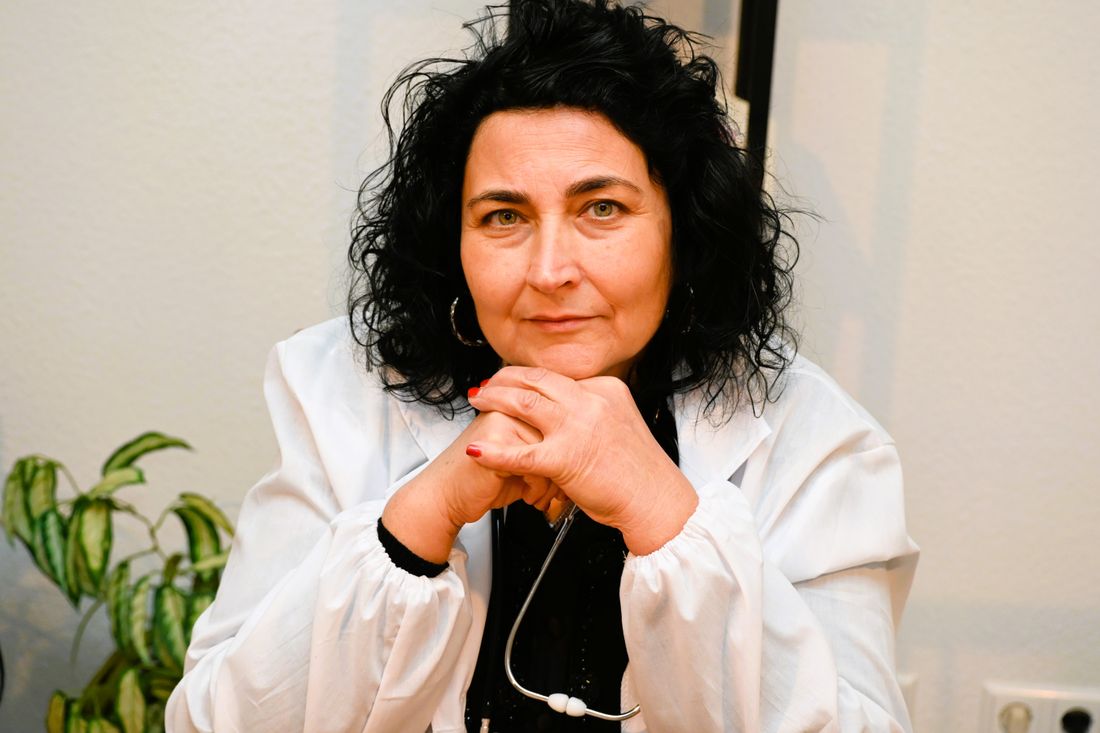
Photo by GIUSEPPE DE BERGOLIS via Pexels.
A hospital-issued headshot is built to make one clinician look interchangeable with every other name on the directory page (same backdrop, same crop, same lighting). That's a reasonable goal when the hospital is the brand. It stops working the moment a physician starts building something of their own, because that work depends on being recognized as one specific person, not a component of a system. What follows isn't a medical question. It's a production question, and it has a fairly specific answer.
A physician building an independent brand needs content built around being one identifiable person, not the interchangeable photo a hospital directory produces: a portrait shot somewhere other than a clinical room, a set of short talking pieces a producer can actually book from, and a plan for what gets added once the practice or platform is running.
Table of Contents
- Why the Hospital Headshot Works Against an Independent Physician's Brand
- What the First Content Set Actually Needs
- A Portrait That Reads as a Specific Person, Not a Directory Photo
- Choosing a Room That Isn't an Exam Room
- Short-Form Talking Pieces a Producer Can Actually Book From
- What Changes for a Media Booker, a Publisher, and a Prospective Patient
- Building the Set Around a Practice Launch or a Book
- The Cadence Question Once the Practice Is Running
Why the Hospital Headshot Works Against an Independent Physician's Brand
A hospital headshot is built to make one clinician look interchangeable with every other name on the directory page: same backdrop, same crop, same lighting, same slightly formal expression. That consistency is the point inside a hospital system, where the institution is the brand and every physician is a component of it. It becomes the wrong asset the moment a physician's new work depends on being recognized as a specific person.
The directory photo isn't a bad photograph. It does its actual job well. It reassures a visitor that this system employs qualified people, without asking anyone to remember a face. A physician who starts giving media interviews, publishing a book, or opening an independent practice is asking for close to the opposite outcome. A producer booking a segment, a publisher designing a jacket, or someone searching for a specific doctor by name all need the thing the directory photo was built to avoid: a face and a voice that stand out from the next name on the list.
This isn't a wardrobe or lighting fix applied on the margins. It's a different production brief entirely, starting from a different goal.
What the First Content Set Actually Needs
The first content set for an independent physician brand needs four things regardless of which direction the launch takes: a portrait that reads as an individual rather than a directory photo, a room that doesn't look clinical, a handful of short talking pieces, and at least one clean asset a producer or publisher can use without requesting something else. Skipping any one of the four usually means someone downstream has to go back and shoot it later, on a tighter deadline.
The portrait carries more weight than it looks like it should, because it ends up everywhere (a media kit, a book jacket, a practice website, a LinkedIn header). The room matters because a clinical background reads as institutional even when the person standing in it is the one launching something independent. The talking pieces matter because most bookings, a podcast or a local news hit or a panel, start with a producer watching thirty seconds of someone before deciding whether to book them. And the producer-usable asset matters because bookers move fast and rarely have time to request a different crop or a longer clip.
A Portrait That Reads as a Specific Person, Not a Directory Photo
A portrait reads as an individual when it gets the attention a magazine profile gets (natural or soft studio light, a real expression instead of a held smile, and a background that says something about the person rather than the institution). The difference from a directory photo isn't really technical. One photo is trying to look consistent with a hundred others. The other is trying to look like nobody else.
That shows up in small choices. A directory headshot is usually shot straight-on, tight, against a plain backdrop chosen so it matches every other photo on the page. An individual portrait can afford a looser crop, a bit of environment in frame, and a pose that isn't perfectly symmetrical, because the goal isn't matching. It's recognition. A producer scanning a folder of guest photos, or a reader flipping past a jacket, should be able to place this specific face after seeing it once.
None of this requires abandoning a professional register. It requires shooting for one person instead of a whole roster.
Choosing a Room That Isn't an Exam Room
The room a portrait gets shot in should read as personal or professional space, not clinical space (a home office, a bright meeting room, a bookshelf-lined corner, anywhere that doesn't carry the visual signals of an exam room or a hospital corridor). Those signals are strong enough that even a warm, well-lit clinical space still reads as "at work inside the system" rather than "this is my own thing."
This is a production decision, not a statement about the physician's actual workplace. A practice launch, a book, or a run of media appearances is fundamentally about the person, and a room full of institutional cues competes with that message even when nobody consciously registers why. A bright, uncluttered room with natural light and a bit of personality, a bookshelf, a window, furniture that looks chosen rather than issued, does the opposite. It gives the eye somewhere to land that isn't a wall of equipment.
The room only needs to do one job: get out of the way of the face, without looking like nowhere at all.

Photo by Tirachard Kumtanom via Pexels.
Short-Form Talking Pieces a Producer Can Actually Book From
A producer deciding whether to book a guest usually watches a short clip before reading anything else, so the first content set should include several 30 to 90 second pieces of the physician talking directly to camera (clear audio, steady framing, no slides or props competing for attention). These clips do a different job than the portrait: they show how someone sounds and carries themselves in motion, which a still photo can't answer.
The format matters more than the subject of the clip. A producer isn't evaluating the specific point being made in a sample; they're evaluating delivery, pacing, and whether this person is comfortable on camera. That means the clips should be clean enough to use as-is (decent room tone, a simple background, a horizontal crop for a website and a vertical crop for social) rather than pulled from a longer, more casual recording where the sound or lighting drifts from moment to moment.
A folder of five or six clips like this does more for a booking decision than a long interview a producer doesn't have time to watch.
What Changes for a Media Booker, a Publisher, and a Prospective Patient
A media booker, a publisher, and a prospective patient are all looking at the same photo and video set for different reasons, so the set has to work on more than one register at once: a booker wants proof someone is comfortable on camera, a publisher wants an image that holds up small and in black and white, and a prospective patient wants a face that looks current and approachable.
A media booker moves fast and mostly cares about the short clips. Do they show someone who talks in clean, quotable sentences without needing a second take? A publisher is thinking about a book jacket or an author page, which means the portrait needs to hold up cropped tighter than intended, sometimes printed in black and white. Someone researching an independent practice online is looking for something closer to reassurance: a recent, unposed-feeling photo that matches how the physician actually looks and sounds, not a stock-feeling image from years earlier.
One well-planned shoot can serve all three, but only if all three needs were named before the shoot, not discovered afterward.
Building the Set Around a Practice Launch or a Book
A practice launch and a book launch pull the same first content set in slightly different directions. A practice launch leans on the portrait plus website-ready photos of the actual space, while a book leans harder on the portrait alone plus talking pieces a publicity team can hand to producers directly. Naming which one is driving the shoot changes the shot list before anyone shows up.
For a practice launch, the useful additions are photos of the physical space once it's ready (a waiting area, a consultation room shot to look inviting rather than clinical, signage if there is any) because someone researching the practice online wants some sense of where they're going. For a book, priority shifts toward assets a publicist can distribute without asking for anything else: a high-resolution portrait sized for a jacket, an author-page photo, and talking pieces already cut to the lengths podcast and news producers actually use.
Both cases still start from the same base: one strong portrait and a handful of clean talking clips, with the launch-specific work added on top of it.
The Cadence Question Once the Practice Is Running
Once a practice, a book, or a media presence is actually running, the content need shifts from a single launch shoot to a recurring cadence (new talking pieces tied to whatever the physician is currently doing, an occasional portrait refresh, and coverage of real moments like a talk or a panel or an opening) rather than another studio session. A one-time shoot answers the launch question. It doesn't answer what gets posted six months later.
The right cadence depends on how visible the physician is trying to stay. Someone doing occasional media appearances might only need a portrait refresh once a year and a new batch of talking pieces before a specific push, like a book release or a conference season. Someone building an ongoing public presence around the practice benefits from batching instead: a single half-day session every quarter that produces enough short-form pieces to last until the next one, rather than scheduling a new shoot every time something happens.
Either way, the cadence question is worth deciding alongside the first shoot, not after the folder of usable content runs out.
Frequently Asked Questions
What's wrong with using a hospital headshot for an independent physician brand?
Nothing is wrong with the photo itself. It's doing exactly what a hospital directory needs, which is making every clinician look consistent with the rest of the roster. The problem is the goal. An independent brand, whether it's a private practice, a book, or a run of media appearances, depends on being recognized as one specific person. A photo built for consistency across many people works against that from the start.
What's the first photo and video content set a physician launching an independent brand needs?
The first set should include a portrait shot somewhere other than a clinical space, so it reads as an individual rather than a directory photo, plus several short talking pieces (30 to 90 seconds, clean audio, steady framing) that a producer or publicist can use without requesting anything else. Together, those two pieces cover most early bookings, website needs, and media kit requests.
What kind of room works best for this kind of portrait?
A room that reads as personal or professional rather than clinical works best (a home office, a bright meeting room, or anywhere with natural light and a bit of real character, like a bookshelf or a window). The goal is removing institutional visual cues without making the space look generic or empty. The room's only job is supporting the face in frame, not competing with it.
How does the content need to differ for a media booker, a publisher, and a prospective patient?
A media booker mostly evaluates the short talking clips to judge camera comfort and delivery. A publisher needs a portrait that holds up small and in black and white, since it may end up on a jacket or an author page. Someone researching a practice online is looking for a current, approachable photo that matches how the physician actually looks and sounds. One shoot can serve all three if each need is named in advance.
How often should a physician refresh this content once the practice or platform is running?
That depends on how visible the physician wants to stay. Occasional media appearances might only need a portrait refresh once a year plus a new batch of talking pieces before a specific push, like a book release. An ongoing public presence benefits from batching instead, a short session every quarter that produces enough usable content to last until the next one, rather than shooting reactively each time something comes up.
Related Reading
Got a launch coming up and no clear shot list yet?
Walk us through where the content needs to show up, site, LinkedIn, press, or a launch page, and we'll put together the scope and the price before you book anything.
See Personal Branding & Launches