
Photo: Core Visuals NYC
A museum staff page holds a strange mix of people: a curator writing for scholars, an educator greeting a school group, a development officer emailing a trustee, an executive director quoted in the press. They rarely think about each other's photos. The person building the staff page has to make all of them look like they work at the same place.
Museum and cultural staff headshots need one consistent register that still works for every role on the page, from curators and educators to development officers and the executive director. That means warm enough for the education team's public-facing work, credible enough for the page a major donor reads, and consistent enough that the staff directory doesn't look like five separate institutions.
Table of Contents
- One Staff Page, Five Different Audiences
- What Actually Has to Hold Across Every Role
- The Photo a Major Donor Actually Studies
- Why the Education Team's Photo Can't Be Too Stiff
- Scheduling Around Gallery Hours and Program Calendars
- Where in the Building You Can Actually Shoot
- Planning for the Turnover Education and Development Roles See
- Keeping the Look Reproducible for the Next Hire
One Staff Page, Five Different Audiences
A museum or cultural nonprofit's staff page puts roles side by side that almost never interact day to day, and each one is written for a different reader: a curator whose work gets read by scholars and fellow institutions, an educator who greets school groups and families, a conservator whose name shows up mostly in credit lines, a development officer whose photo a major donor will actually study, and an executive director quoted in the press.
Nobody plans the staff page around that mismatch on purpose. It happens because headshots get scheduled department by department, whenever each team gets around to it, rather than as one coordinated project. The result is a page where the curator's portrait was shot two years ago on a phone, the educator's is a school-photo-day snapshot, and the development team just had something recent and polished done. Visitors and funders read that inconsistency as disorganization, even when the actual work happening across those roles is excellent. The photos are often the only thing tying the departments together visually, which is exactly why they can't be left to happen on five different schedules.
What Actually Has to Hold Across Every Role
The one thing that has to be consistent across a museum's whole staff page isn't the pose or the exact background, it's the register: the same warmth, the same level of formality, the same sense that everyone was photographed by the same institution on purpose. That's what makes five very different jobs read as one team.
Register is a narrower target than it sounds. Too formal and the educator who spends their day with third-graders looks like they belong at a law firm. Too casual and the development officer's photo undercuts the trust a donor-facing page is trying to build. The workable middle is a calm, approachable portrait style that doesn't lean hard toward either extreme, one that reads as credible without reading as stiff. Getting there usually means agreeing on a small set of fixed choices, lighting, background tone, framing, before anyone books a single session, rather than letting each department's photographer make those calls independently. Once that register is set, it can flex slightly by role without breaking, which is the actual goal.
The Photo a Major Donor Actually Studies
A development officer's or executive director's headshot gets more scrutiny than almost anyone else's on the staff page, because it's often the first visual impression a prospective major donor or trustee forms before ever meeting them in person. That photo needs to read as competent and trustworthy on its own, without any text around it doing the work.
This is the portrait where the credibility bar sits highest, closer to what a law firm or an investment fund would use than what a classroom-facing role needs. That doesn't mean cold or corporate, a museum's development team still benefits from warmth, but it does mean sharper attention to details a donor might register even subconsciously: a clean background, confident but relaxed posture, lighting that doesn't flatten the face into something generic. Treating this portrait as interchangeable with, say, a part-time gallery educator's photo undersells the actual weight it carries. It's worth planning as its own priority within the larger shoot, not an afterthought once the rest of the staff has been photographed.
Why the Education Team's Photo Can't Be Too Stiff
An educator's headshot is doing a different job than a development officer's: it's reassuring a parent or a school group leader that this is a warm, approachable person before their kids ever walk into a program. A portrait that's too formal undercuts that read even if it's technically well shot.
The temptation, once a museum has settled on a polished register for its donor-facing staff, is to apply that same formality everywhere without adjusting for who's actually looking at each photo. An education department's photos live on program pages parents are scanning to decide whether a summer camp or a school tour feels like a good fit, not on a donor prospectus. That calls for a slightly warmer expression, a touch more visible personality, without abandoning the shared register entirely. The goal is a portrait that a parent finds approachable and a board member still finds credible, which is a narrower needle to thread than photographing either audience alone, but it's the actual brief for this specific role.
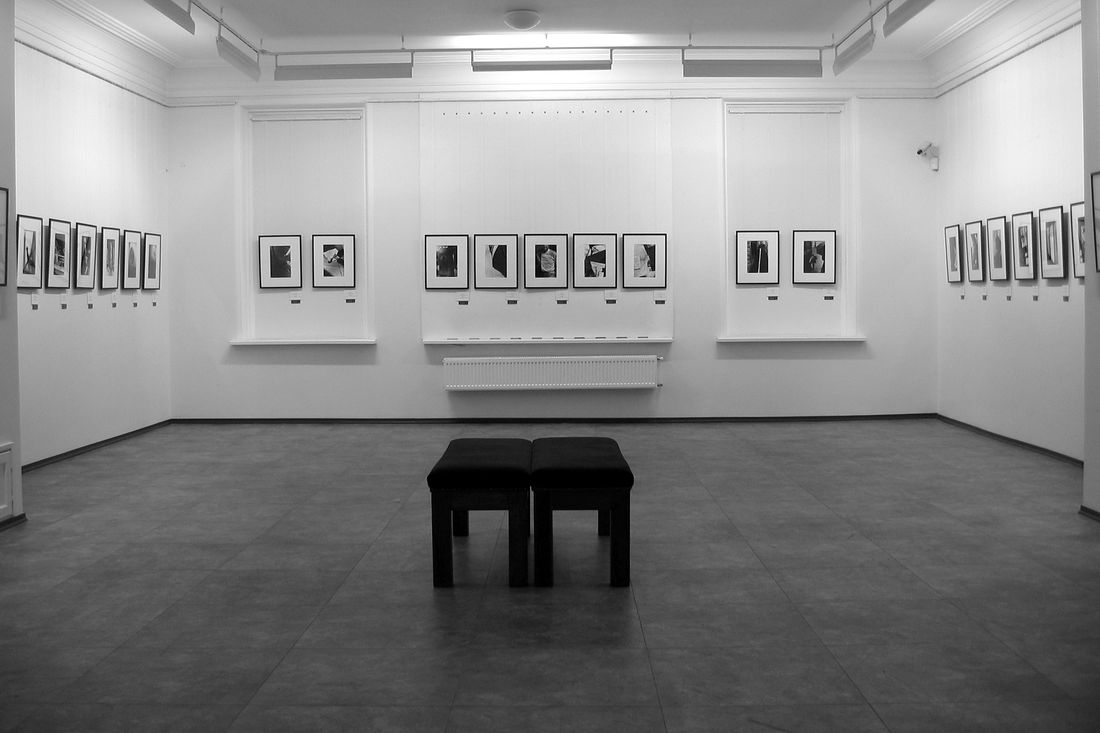
Photo by Alexander Grigorian via Pexels.
Scheduling Around Gallery Hours and Program Calendars
A museum's shoot has to work around public hours, active exhibitions, and a program calendar that doesn't pause for photography, which usually means early mornings before opening or a closed Monday, not a random weekday afternoon. Staff availability compounds the problem: educators are often out running programs, and curators keep their own research schedules.
Booking one continuous block for the whole staff rarely works cleanly at an institution like this. A more realistic plan treats the shoot as a short standing window, an early morning slot or two spread across a week, so each department can rotate through without abandoning a program or a gallery shift. Coordinating that calendar is usually harder than the photography itself, and it's worth assigning to one person internally who can see the whole institution's schedule, rather than leaving each department to book its own slot and hoping the results match. A confirmed list of who's actually available on which morning, gathered ahead of time, saves the shoot day from turning into a scramble to track people down.
Where in the Building You Can Actually Shoot
Environmental context can strengthen a museum staff photo or work against it, depending on what's actually behind the person. A plain wall or a quiet corridor keeps the focus on the subject and travels safely across every use, while a gallery background risks pulling focus onto whatever happens to be hanging there instead.
The instinct to shoot curators and educators in front of the collection makes sense visually, but it raises a practical question worth settling with the institution before the shoot, not during it: which spaces and which works are actually clear to photograph and publish, and which aren't. That's a confirmation to get from the museum's own team rather than assuming any public gallery is fair game. A workable middle ground is often a neutral, uncluttered spot inside the building, a stairwell, an office corridor, a study room, that still reads as the institution without depending on a specific artwork staying in frame or in the public eye indefinitely. Locking that location choice in advance keeps the shoot day simple and avoids relitigating it department by department.
Planning for the Turnover Education and Development Roles See
Education and development departments at cultural institutions tend to turn over faster than curatorial or conservation staff, which means the staff page needs a plan for adding one new hire's photo without re-shooting everyone else or waiting for a bigger batch to accumulate. A repeatable process matters more here than in a department that rarely changes.
The practical fix is treating the original shoot as the one that sets the standard, then keeping that standard documented well enough that a single new hire can be slotted in months or years later without anyone needing to reconstruct the original lighting and background from memory. That's a smaller, faster session than the full staff shoot, but it only works cleanly if the original setup was actually recorded rather than left to whoever happened to be there that day. Institutions that skip this step usually end up with a visibly newer, slightly different-looking photo appearing next to older ones within a year of the first shoot, which reopens the same inconsistency problem the original project was meant to solve.
Keeping the Look Reproducible for the Next Hire
A staff headshot standard is only useful if it can be repeated exactly, which means documenting the specific choices, background, light direction, framing, crop, rather than trusting that the same general look will happen again by default. That documentation is what makes a one-off shoot into an actual standard the institution can maintain.
In practice this can be as simple as a short internal reference: a sample photo, a note on where in the building it was shot, and the crop dimensions used for the website versus a printed program. Handing that to whoever books the next round, in-house staff or an outside photographer, removes the guesswork that usually causes drift over time, where each new round looks a little different from the last until the whole staff page has quietly stopped matching. A museum that treats its headshot standard as a maintained asset, not a one-time project, is the one whose staff page still looks coherent five hires and two exhibitions later.
Frequently Asked Questions
Do curators and development staff really need different photo styles?
Not different styles exactly, but different emphasis within one shared register. A curator's portrait can lean slightly more understated, while a development officer's needs the sharper credibility bar a major donor's page demands. Both should still read as coming from the same institution and the same photo session, just calibrated for who's actually going to be looking at each one and what they need to see.
How much environmental context should be in a museum staff photo?
Usually less than the instinct suggests. A neutral, uncluttered spot inside the building keeps focus on the person and avoids depending on a specific artwork or gallery layout staying the same over time. A hint of the institution's real interior works well; a background that competes with the subject or ties the photo to one exhibition rarely ages well past that show's run, which is a real cost on a staff page meant to last years.
How do we schedule a shoot around gallery hours and public programs?
Most institutions end up using early mornings before opening or a closed weekday, spread across more than one date rather than a single long session. Assigning one internal coordinator to gather staff availability ahead of time, rather than letting each department book independently, is what actually keeps the shoot from colliding with an active program, a tour group, or an exhibition install already underway somewhere in the building.
What happens when someone leaves and a new hire needs a matching photo?
That's the case a documented standard is built for. If the original shoot's setup, background, lighting, framing, crop, was recorded rather than left to memory, a new hire's photo can be added in a short follow-up session without re-shooting the whole staff or guessing at how the earlier photos were made in the first place, sometimes years after that original session wrapped up for good.
Should staff be photographed inside the galleries themselves?
Sometimes, but it's worth confirming with the institution first which spaces and works are actually clear to photograph and publish, since a gallery background ties the image to a specific installation and can pull attention away from the person. A quiet corridor or office space inside the building often serves the staff page better than the gallery floor over the long run, once an exhibition eventually closes.
Related Reading
Booking headshots or a brand video for your team?
Tell us how many people and whether you need photo, video, or both, and we'll send back a fixed price with the volume discount already applied.
See Headshots & Brand Videos