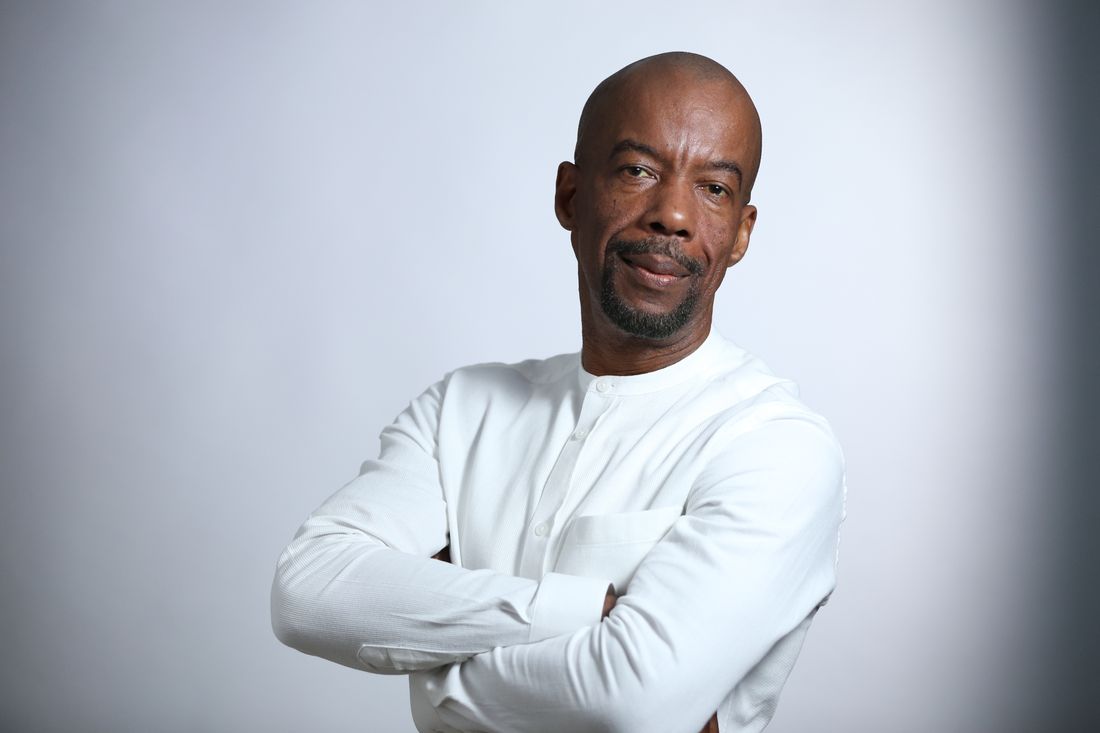
Photo: Core Visuals NYC
A five-office headshot rollout isn't a single-office shoot multiplied by five. The math changes the moment travel, time zones, and five different rooms enter the picture, and pricing it like one big booking hides where the real cost actually comes from.
Pricing a multi-city headshot rollout changes because travel replaces shooting days with non-shooting days, one photographer's calendar has to bend across time zones and wildly different office sizes, and the same lighting setup has to be rebuilt identically in five separate rooms. The real cost driver isn't the distance between cities, it's the coordination that distance creates.
Table of Contents
- Travel Doesn't Just Add a Fee, It Removes Shooting Days
- One Traveling Photographer or Local Crews: What Each Costs You
- Time Zones and Office Size Don't Scale the Same Way
- The Same Setup Has to Work in Five Rooms You've Never Seen
- Editing Has to Hold One Standard Across Every Office
- Five Office Managers Are a Coordination Cost, Not a Detail
- Sequence or Simultaneous: The Trade-Off a Buyer Actually Makes
- Where a Rollout Stops Being Cheaper Per Head
Travel Doesn't Just Add a Fee, It Removes Shooting Days
Travel on a multi-city rollout costs more than the flight. It consumes days that never touch a camera: arrival, drive time to the office, setup and teardown in an unfamiliar room. Those days still occupy the photographer's calendar and the client's timeline, even though nothing gets shot.
On a single-city shoot, that overhead barely registers. On a five-city rollout it multiplies by five, and it often means one full day per city produces less usable shooting time than a single local booking would. A short flight away can still cost most of a day once you count getting to the office, waiting on the first employee, and testing the room. A city on the other side of the country can cost an entire day before a single frame is shot.
That's the part a per-office quote hides if it's built the same way a single booking is priced. The honest way to plan a rollout is to treat travel days as their own line, separate from shoot days, and to be upfront that five offices rarely fit into five consecutive shoot days.
One Traveling Photographer or Local Crews: What Each Costs You
A rollout can use one photographer who travels to every office, or a local photographer briefed for each one. The traveling photographer costs more in travel days and calendar risk. The local option costs more in the work required to make five different people's images look like one project.
Sending the same person to every office is the simpler consistency story: one eye, one lighting habit, one sense of pacing across five very different rooms. The cost is travel exposure. Flight delays, a missed connection, or a sick day pushes the whole schedule, not just one office's slot.
Briefing local photographers removes most of that travel risk and usually compresses the overall timeline, since offices can shoot closer together on the calendar instead of waiting for one person to move city to city. What it adds is a documentation and quality-control problem: a written setup guide, reference frames, and a review step that catches drift before it reaches the final gallery. We treat that documentation as part of the job, not an afterthought, because without it, local crew quietly becomes five different looks.
Time Zones and Office Size Don't Scale the Same Way
A twelve-person office and an eighty-person office aren't the same booking, even inside one project. Time zones limit how many cities a single week can realistically hold, and office size determines whether a city needs half a day or two full days, so a rollout schedule can't be templated evenly across cities.
A small satellite office might clear its whole team in a few hours. A regional headquarters with staggered shifts, meeting-heavy calendars, and eighty people to photograph needs real runway, sometimes closer to two days once breaks and no-shows get rescheduled. Building the same time block for both wastes a slow day in one city and runs out of daylight in the next.
Time zones compound this. A crew that starts at nine in New York and needs to be functional at nine in a city three hours behind loses a working day to the shift alone. Planning a rollout means mapping each office's real headcount and each city's real time zone before setting a schedule, not assuming every stop needs the same slot.
The Same Setup Has to Work in Five Rooms You've Never Seen
Consistency across a rollout depends on rebuilding the same backdrop, light ratio, camera height, and subject distance in a room the crew has usually never stood in before. Five offices rarely offer five equally good walls, so the setup has to adapt to real constraints while still producing images that read as identical.
One office might have a clean, evenly lit conference room. Another might have windows on every wall, patterned carpet underfoot, or a wall six feet shorter than the one used in the last city. None of that shows up until the crew is standing in the room.
We handle this with a documented reference: measurements, a lighting diagram, and sample frames from the first office that later shoots get matched against, not guessed at. That's the mechanism that keeps five rooms from becoming five slightly different photo shoots. It also means the first office in a sequence carries extra weight, since every later room gets built to match it.

Photo by Valentin Ilas via Pexels.
Editing Has to Hold One Standard Across Every Office
Shooting five offices consistently only gets a project halfway there. The edit has to hold the same color, crop, and retouching level across five separate shoot days and however many photographers were involved, or the final galleries read like five projects stitched together instead of one.
A skin tone that reads slightly warm in one office and slightly cool in another is invisible on its own gallery and obvious the moment someone builds a team page or a directory out of all five. The same goes for crop distance, background treatment, and how aggressively retouching gets applied.
The fix isn't complicated, but it takes discipline: one editor, or a tightly documented process if more than one is involved, reviewing the full set side by side before delivery. That review step is where a rollout either becomes one coherent project or quietly turns into five. It's also the step that's easiest to skip when a timeline gets tight, which is exactly when it matters most.
Five Office Managers Are a Coordination Cost, Not a Detail
A rollout multiplies the number of people managing the shoot on the client side, not just the number of locations. Five office managers means five calendars, five sets of employee availability, and five chances for a detail to get lost between the person who booked the project and the person running the room.
One office manager forgets to tell the team about the shoot. Another schedules it during an all-hands. A third assumes remote employees don't need to be included and never asks. None of that is unusual, and none of it is really anyone's fault. It's what happens when a single decision gets relayed through five different people who weren't in the room when it was made.
The way we manage this is the same briefing document sent to every office manager: what the shoot needs from them, what employees should expect, how long each session runs. It doesn't eliminate the coordination load, but it puts the same information in front of everyone instead of five slightly different versions of the plan.
Sequence or Simultaneous: The Trade-Off a Buyer Actually Makes
A rollout can move sequentially, one photographer traveling city to city over several weeks, or simultaneously, multiple crews shooting the same week. Sequential protects consistency and stretches the timeline. Simultaneous compresses the timeline and puts real pressure on the documentation that's supposed to keep several crews' work looking like one.
Sequential is the safer default when a single photographer is available and the project isn't racing a deadline. One person, one eye, one sense of what matches looks like, carried from office to office. The cost is time: five cities at a pace of roughly one every week or two adds up to a project measured in months, not days.
Simultaneous makes sense when the calendar can't absorb that stretch: a leadership deadline, a website relaunch, a compliance date. It compresses the whole project into a single week or two, but it means the reference guide and review process from earlier sections aren't optional extras anymore. They're the entire reason five different crews can produce one usable set of images instead of five.
Where a Rollout Stops Being Cheaper Per Head
A rollout's per-person cost doesn't automatically drop as headcount goes up, because travel and coordination scale with the number of cities, not the number of people photographed. Five offices totaling two hundred people isn't inherently cheaper per head than five separate single-office bookings covering the same total headcount.
Volume helps when it reduces the number of separate trips, setups, or review passes needed. It stops helping once each additional city reintroduces its own travel day, its own room to rebuild, its own office manager to brief, its own local schedule to fit around real headcount and time zone. At that point, adding a sixth small office to the rollout can cost close to booking that office on its own.
The variable a buyer actually controls is how much variation between offices they'll accept. A looser tolerance, some acceptable difference in background or light between cities, reduces the documentation and review load that makes a rollout expensive. A tighter tolerance, images functionally interchangeable across five offices, is achievable, but it's the coordination cost this piece has been describing, not the headcount, that decides what a rollout actually takes to pull off.
Frequently Asked Questions
Does it cost less to book headshots for five offices at once than five separate times?
Not automatically. Booking together can reduce some overhead, one set of planning conversations, one editing standard applied throughout, but travel and coordination costs scale with the number of cities, not the total headcount. A five-office rollout of two hundred people can cost close to five separate bookings of the same size once travel days, local scheduling, and consistency review are counted. The savings come from tighter coordination, not simply from combining offices into one project.
Should the same photographer shoot every office, or can local photographers be briefed instead?
Either works, and the right choice depends on what matters more: consistency or timeline. One traveling photographer produces the most consistent results with the least documentation effort, but adds travel days and calendar risk. Briefed local photographers remove most of that travel risk and let offices shoot closer together in the calendar, but require a written setup guide, reference frames, and a review step to keep five different people's images looking like one project.
How much does office size affect the schedule for a multi-city rollout?
Significantly. A small satellite office might clear its whole team in a couple of hours, while a regional headquarters with eighty people and staggered shifts can need most of two full days once breaks and rescheduled no-shows are factored in. Building the same time block for every city either wastes time in the smaller offices or runs out of daylight in the larger ones. Each office's real headcount should set its own slot, not a shared template.
What actually keeps five different offices looking like one consistent project?
Documentation, not luck. A measured lighting setup, reference frames from the first office, and a written guide covering background, camera height, and subject distance give every later shoot something concrete to match. On the editing side, one editor or a tightly documented process reviewing all five galleries side by side catches drift in color or crop before delivery. Skip either step and five offices reliably turn into five slightly different photo shoots.
Is it better to shoot all five offices in the same week or spread them out?
It depends on what the project can't sacrifice. Spreading offices out lets one photographer travel to each in sequence, which protects consistency but stretches the project over weeks. Shooting simultaneously with multiple crews compresses the timeline to a week or two but puts real pressure on the reference guide and review process, since those become the only thing keeping several crews' work looking like a single coherent set.
Related Reading
Need a real number before you can plan the rest of the budget?
Give us the date, the run time, and the deliverables you're after, and we'll send back a quote with every line item spelled out.
Get a Quote