Photo: Core Visuals NYC
The room that sees a product first is not the same room a public launch fills months later, and treating an internal reveal like a smaller version of demo day misses what that day actually needs. Employees are watching something they helped build become real, in a room where nothing on screen or on camera can leave until someone outside that room says it can. That's a coverage problem before it's a creative one.
Covering an internal product reveal means shooting a room that gets the news before the market does, under an embargo nobody on the crew set. The footage serves two audiences on two different timelines: internal morale content that can move this week, and material for the external launch reel that has to wait its turn.
Table of Contents
- The Internal Reveal Is a Different Assignment
- The Embargo Problem: What Gets Shot but Can't Publish Yet
- Who Actually Decides What's Embargoed
- Two Audiences, One Shoot: Internal Morale and the External Launch Reel
- The Reveal Moment Is One Take
- What the Room's Reaction Is Actually Worth on Camera
- The Handoff to the Public Launch
- Briefing the Crew Before the Room Fills Up
The Internal Reveal Is a Different Assignment
An internal product reveal is a different assignment from a public launch because the audience already works there, the footage has two separate destinations, and the actual reveal moment happens exactly once. Treating it like a scaled-down demo day misses what the room actually needs from whoever is holding the camera.
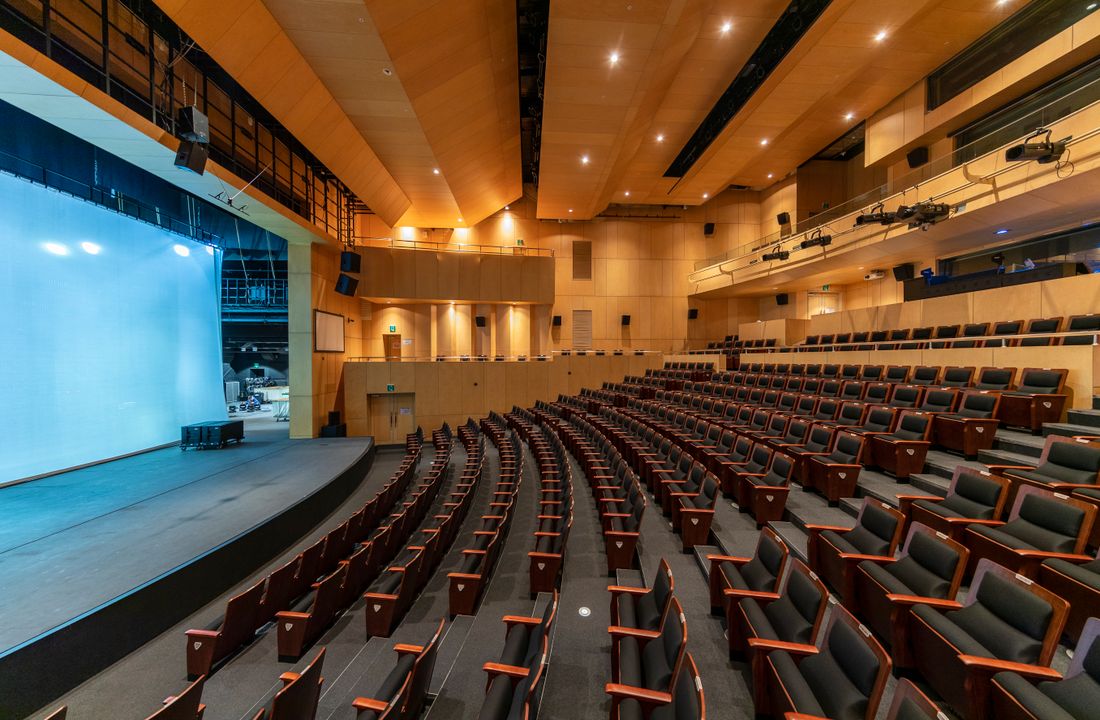
At a public launch, the news is already out. Reporters, customers, and analysts show up already knowing roughly what they're about to see, and the job is documenting a performance built for exactly that audience. An internal reveal runs backward from that. The people in the seats are finding out in real time, often before they're allowed to say a word about it outside the building, and their reaction is the only footage of genuine surprise this product will ever get.
That changes what we plan for before the room fills up. We're not just covering a stage and a screen. We're covering employees watching something become real, some of them people who spent a year on a feature nobody outside the company has heard of yet. The crew has to know that going in, not figure it out once the lights come up.
The Embargo Problem: What Gets Shot but Can't Publish Yet
The embargo problem is simple to state and easy to blow through by accident: almost everything in an internal reveal room can be shot, but only part of it can be published anywhere before the public launch date, and the two lists don't overlap the way anyone assumes on shoot day. A slide with a ship date, a live demo of an unreleased feature, a pricing screen, a leadership Q&A that gets specific about next quarter, all of it is fair game for the camera and off limits for a caption.
That's not a reason to under-shoot the room. It's a reason to shoot with two folders in mind from the first frame: what can move today, and what waits. Photos of people reacting, applauding, laughing at a joke from the stage travel fine internally almost immediately. The screen behind them, the deck, the demo itself, generally can't, not because the images are bad but because the information in them hasn't been cleared to leave the room yet.
Getting this wrong doesn't usually mean a leak. It usually means a well-meaning post to an internal channel that a comms or legal person then has to walk back.
Who Actually Decides What's Embargoed
Deciding what's embargoed is not a call the photographer or video crew gets to make on the day, and it shouldn't be treated as one. That decision belongs to whoever owns the launch timeline, usually product marketing or comms working with legal, and it needs to exist as a written list before anyone sets up a tripod, not as judgment calls made in the room in real time.
In practice, that means asking for the embargo list before the shoot, not during it. What's the actual launch date. Is pricing final or still moving. Are there slides in the deck that show a roadmap item further out than what's being revealed today. Is anyone in the room bound by an NDA who isn't full-time staff. Those answers change where we point the camera and what we flag as internal-only versus safe to move right away.
We ask for that list as a standard part of booking an internal reveal, the same way we'd ask for a run of show. It's a production requirement, not an optional courtesy, and it's cheaper to get in writing before the event than to sort out after something's already been posted.
Two Audiences, One Shoot: Internal Morale and the External Launch Reel
An internal product reveal serves two audiences from the same afternoon of footage, and they need different things on different timelines. Employees in the room want to feel like they were part of something, and that content can move on an internal channel almost right away. The external launch reel is a separate deliverable built later, on the public launch date, from a subset of the same day's footage plus whatever gets shot at the public event itself.
Internal morale content wants immediacy and honesty: real reactions, the room applauding, a leader visibly nervous before walking on stage, employees checking their phones because they're texting their own team the news. None of that needs polish. It needs to exist fast, while the moment is still fresh enough that a Monday-morning post about the reveal still feels current instead of like old news.
The external reel wants something narrower: the strongest few seconds of reaction, a clean shot of the reveal itself, maybe a soundbite from a leader that reads fine without the internal context. That's a smaller, more selective cut, and it's worth deciding on shoot day which footage is being held for which audience instead of sorting it out later.
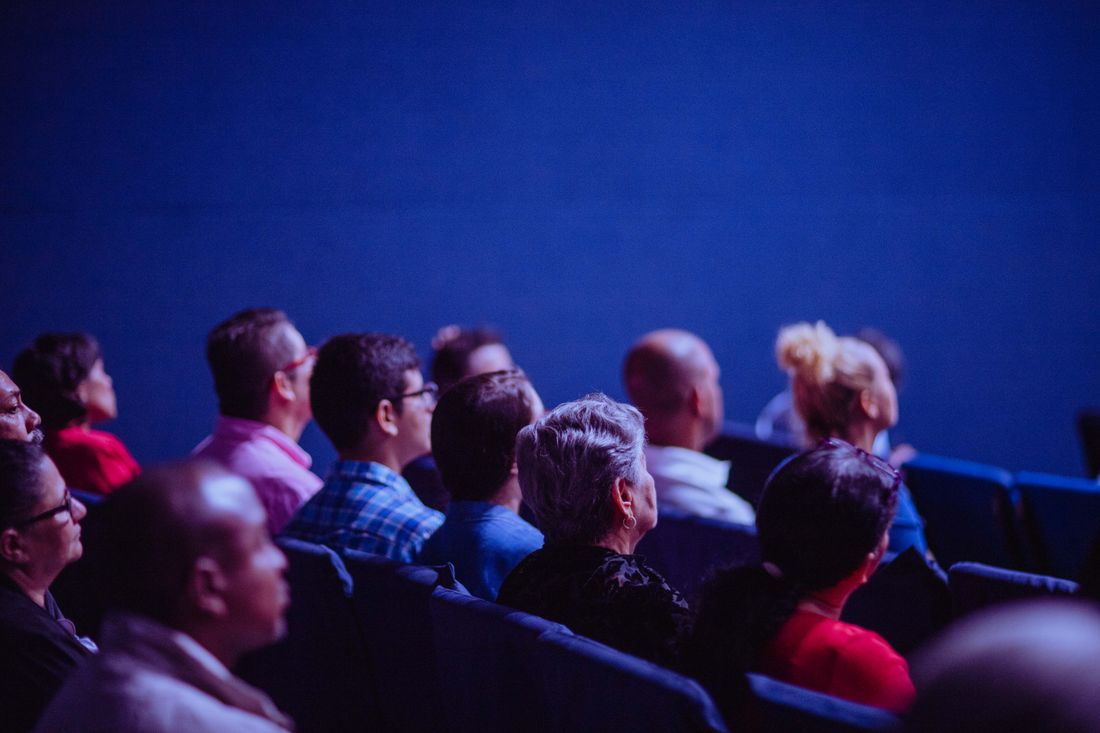
Photo by Luis Quintero via Pexels.
The Reveal Moment Is One Take
The actual reveal, the exact second a slide flips, a curtain drops, or a leader says the product name out loud for the first time to that room, happens once and can't be restaged. Everyone in the room already knows what's coming the second time, so reshooting the moment for a cleaner angle captures a room performing surprise instead of feeling it.
That puts real pressure on where the camera is positioned before the moment happens, not after. We're not adjusting framing once someone's reaction starts; we're choosing, ahead of time, which angle is most likely to catch both the screen and the crowd's first response without an operator physically moving through the room mid-reaction. A second camera on a wide shot of the whole room is often the safer bet than one perfect angle that might miss the room entirely if the reveal timing shifts by even a few seconds.
This is closer to covering a live event than a controlled shoot, and it should be planned that way. A rehearsal or tech run beforehand helps everyone confirm timing, but the actual reveal only happens once, on the day, in front of the people it's for.
What the Room's Reaction Is Actually Worth on Camera
The room's reaction is often worth more on camera than the product demo itself, because it's the one piece of footage from the entire launch process that can't be recreated once the news is public. A wide shot of employees genuinely surprised, leaning forward, reacting to each other rather than performing for a lens, is footage a public launch event simply cannot produce, since by the time reporters and customers fill a room, the surprise is already gone.
That reaction footage does real work later. It's evidence, for an internal audience and sometimes an external one, that the people who built the thing were genuinely excited about it, not just told to look excited. A leadership team can say a launch matters. A room full of employees visibly reacting says it without anyone having to say anything.
We treat that reaction shot as a primary deliverable, not a secondary one picked up as a courtesy while the crew stays focused on the stage. That means covering the crowd as seriously as the screen, with enough coverage across the room that a genuine reaction doesn't get missed because every camera was pointed forward.
The Handoff to the Public Launch
The handoff between an internal reveal and the public launch event works when both are planned as one production with two dates, not two separate jobs that happen to cover the same product. Without that planning, a crew ends up reshooting beats at the public event that were already captured better, and often more honestly, in the internal room weeks earlier.
Some footage genuinely can only come from the public launch: press attending, customers using the product for the first time, staging built specifically for an external audience. But plenty of what a launch reel actually needs, a leader's genuine reaction, the room's energy, an early version of a soundbite that gets refined later, already exists from the internal reveal and just needs to clear embargo before it's usable.
We plan both shoots against a single shot list split into two columns from the start: what only the internal room can capture, and what only the public event can. That keeps the crew from spending public-launch time re-covering ground already sitting on a hard drive from weeks before, and it means the eventual reel can pull from whichever moment was actually the stronger one.
Briefing the Crew Before the Room Fills Up
Covering an internal reveal well starts with a briefing that happens before anyone walks into the room, not a set of instructions shouted across it once the event is underway. That briefing covers the embargo list, who signs off before anything gets posted, where the crew is positioned for the reveal moment itself, and which shots are being held for internal use versus flagged for the eventual external reel.
We also confirm NDA and confidentiality terms for the crew directly, since an internal reveal often includes information that hasn't cleared legal, and anyone working the room needs to be covered by the same confidentiality expectations as an employee sitting in the audience. That's a standard part of how we scope this kind of coverage, not an add-on negotiated after a shoot already went sideways.
None of this needs to slow a reveal down or make it feel produced. Employees should still experience the moment as a surprise, not a stage set for cameras. The planning happens beforehand specifically so the room itself never has to feel like it's being managed for content while people are finding out something real.
Frequently Asked Questions
What makes internal product reveal coverage different from a public launch shoot?
An internal reveal covers employees seeing a product before the market does, in a room bound by an embargo the crew doesn't control. The reveal moment itself typically happens once and can't be restaged, unlike a public launch where the news is already out and the crew documents a planned performance. Coverage has to be positioned correctly ahead of time, and the resulting footage serves two separate audiences on two different publishing timelines.
Who decides what footage from an internal reveal is embargoed?
That decision belongs to whoever owns the launch timeline, usually product marketing or comms working with legal, not the photography or video crew on site. We ask for a written embargo list before the event: the actual launch date, whether pricing is final, which roadmap details are still confidential, and whether anyone in the room is bound by an NDA. That list determines what can move internally right away and what has to wait.
Can internal reveal footage be reused for the public launch reel?
Often, once it clears embargo. Genuine reactions, a leader's first delivery of a line, or the room's energy from the internal reveal frequently outperform anything reshot later for an external audience, because the surprise only exists once. We plan both events against one shot list so the eventual reel can pull whichever version, internal reveal or public event, actually produced the stronger footage, instead of defaulting to whatever was shot most recently.
Why can't the actual reveal moment be re-shot for a better camera angle?
Because everyone in the room already knows the news the second time, so a reshoot captures a room performing surprise rather than feeling it. That's why camera positioning has to be decided before the reveal happens, not adjusted afterward. A wide safety shot of the whole room paired with a tighter angle on the stage is usually a safer plan than one perfect angle that risks missing the room if reveal timing shifts by even a few seconds.
What should a company have ready before booking coverage for an internal reveal?
A written embargo list covering the launch date, pricing status, and any roadmap details still confidential, along with a run of show for the reveal moment itself. It also helps to confirm NDA or confidentiality terms for the crew directly, since they'll be capturing information that hasn't cleared legal yet. Having those pieces settled before the event keeps the crew from having to guess what's safe to shoot and what isn't.
Related Reading
Not sure if hourly or a package makes more sense for your event?
Tell us the expected length, and we'll run the actual numbers before you book.
See Event Coverage Packages