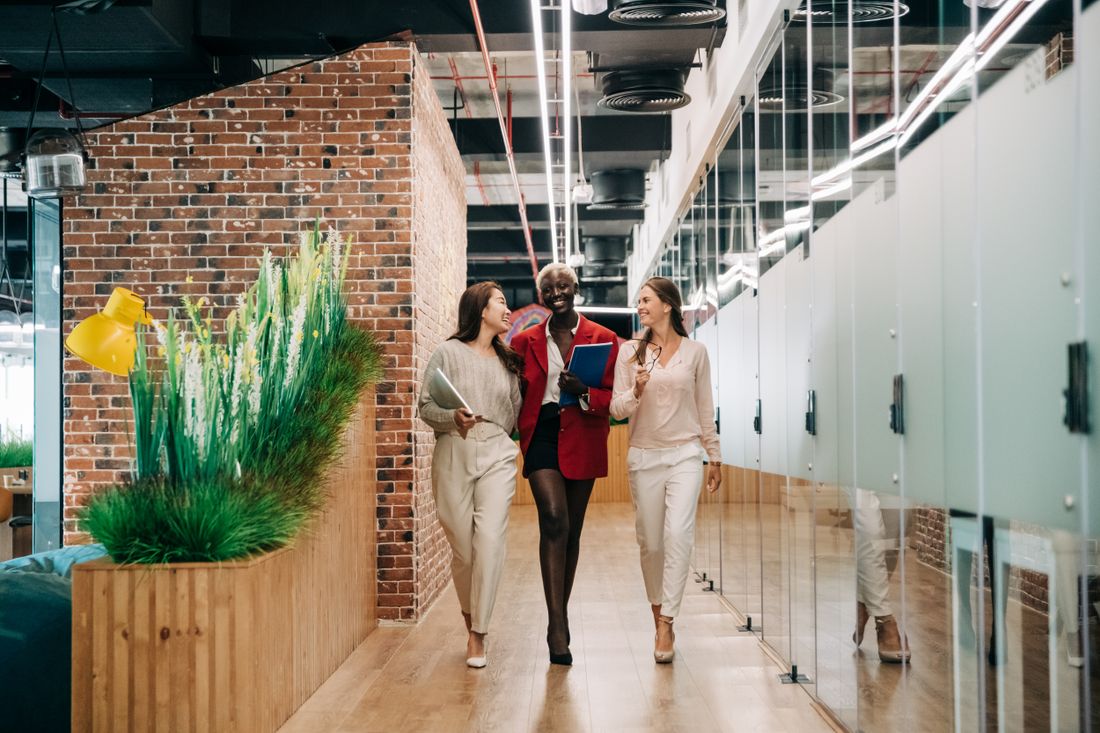
Photo: Core Visuals NYC
Some companies run their innovation lab open house once and call it done. The ones that get real mileage from the space run it every quarter, sometimes monthly, walking a fresh set of clients or press through the same rooms with a slightly different story each time. That's a coverage problem most vendors aren't set up for. A single-event photographer wants one hero shot and a wrap. A recurring showcase needs something closer to a system: consistent coverage that still feels alive on the fifth visit, not the third rerun of the first one.
An innovation lab open house that runs on a recurring basis needs coverage built around the walkthrough itself, not a single hero reveal. The story is "here's how we work," told fresh each visit through the guide, the visitors, and the specific stops on that day's tour, rather than a one-time unveiling of a finished product.
Table of Contents
- A Recurring Open House Isn't a Product Reveal
- The Guide Leading the Tour Is the Actual Subject
- Each Visit Deserves Its Own Angle, Not a Rerun
- What a Lab Walkthrough Actually Needs Shot
- Working Around What Can't Be Shown Clearly
- The Real Output Is a Library, Not a Single Reel
- Scheduling Coverage Around the Tour's Own Rhythm
- How to Brief a Recurring Lab Tour Correctly
A Recurring Open House Isn't a Product Reveal
An innovation lab open house that runs quarterly or monthly is a fundamentally different coverage job than a one-time product reveal: there's no single finished thing to unveil, just an ongoing space that different visitors get walked through on different days, each time with its own guide and its own emphasis.
A product demo day has a clear climax (the moment the thing gets shown for the first time), and coverage naturally builds toward it. A lab open house has no equivalent climax, because the lab isn't new and the visit isn't a debut. What's actually being documented is a repeatable experience: a guide leading a small group through workstations, project areas, and prototypes in progress, explaining the work as they go. Coverage that waits for a demo-day-style reveal moment on a lab tour will end up standing around waiting for something that was never going to happen. The useful footage was already available the whole time, in the ordinary act of the tour itself.
The Guide Leading the Tour Is the Actual Subject
On a recurring lab tour, the guide leading visitors through the space carries the story more than any single piece of equipment does. Their gestures toward a workstation, their pace through the room, and their conversation with the group are what make the coverage feel specific to that day's visit rather than generic.
This flips the usual instinct for a technical space, which is to make the equipment or the prototypes the visual center. On a lab tour, the equipment is often the same from visit to visit. It's the interaction around it that changes. A shot of someone gesturing toward a workstation while explaining it to a visiting client says more about that specific visit than a static shot of the workstation alone, because the gesture and the audience are what's actually different this time. The room repeats. The guide's energy and the group's reaction don't, and that difference is exactly what a photographer should be chasing on any given visit.
Each Visit Deserves Its Own Angle, Not a Rerun
A lab open house repeated every quarter risks looking identical each time unless coverage deliberately varies the angle: a different entry point into the space, a different sequence of stops, or a different group composition, so the fifth set of photos doesn't read as a copy of the first.
The temptation on a recurring shoot is to fall back on the exact same setup that worked before (same opening shot at the front door, same mid-tour shot at the main workstation cluster, same closing shot near the exit). It's efficient, and it produces usable images every time, but stacked side by side across four quarters, the sameness starts to undercut the point of showing the lab as a living, active space. A small deliberate variation each visit, even something as simple as starting the tour from the opposite end of the room, keeps the coverage feeling like a record of real activity instead of a recurring template stamped out on a schedule.
What a Lab Walkthrough Actually Needs Shot
A useful shot list for a recurring lab open house centers on the walkthrough moments themselves: visitors entering and orienting to the space, a guide gesturing toward a specific area mid-explanation, small group conversation at a workstation, and a few wider shots establishing the scale and character of the room.
What it doesn't need, on most visits, is a close, isolated product shot of anything still in development. That's a different job with a different sensitivity, closer to how a finished product gets revealed on its own demo day. A lab tour's coverage stays at the level of the room and the people moving through it, which also sidesteps most of the confidentiality questions that come with photographing an in-progress prototype closely enough to read detail. The visitors' reactions, genuinely engaged or asking a real question, do more work than another static equipment shot ever will, and they're the part of the visit that's actually different from the one before it.
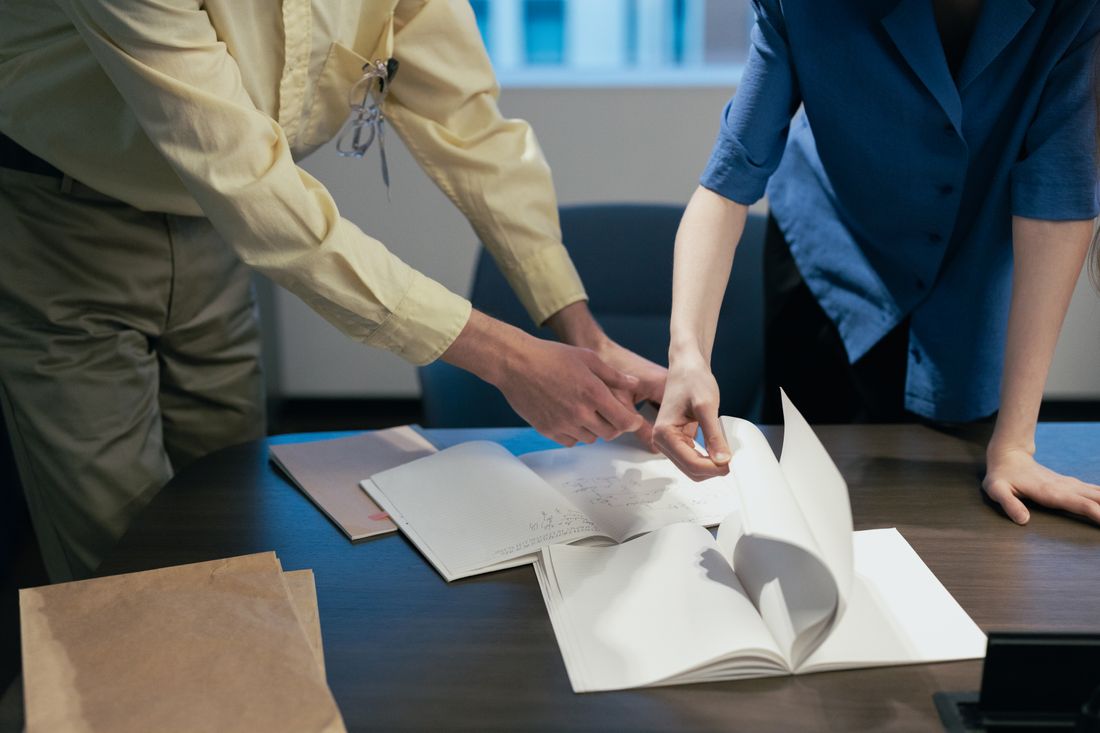
Photo by cottonbro studio via Pexels.
Working Around What Can't Be Shown Clearly
Every recurring lab tour has something on the workbenches that shouldn't end up sharp and legible in a photo, whether that's an early prototype, a whiteboard mid-sketch, or a screen mid-demo, and coverage needs a practical habit for staying wide and out of focus on those specifics without turning every frame into an empty room.
This isn't a legal call, it's a framing one: shooting from an angle where the workbench is present but soft in the background, favoring the people over the object, and checking with whoever's hosting the visit which areas are open for close coverage that day. What counts as shareable often changes visit to visit depending on what's currently on the tables, so the right habit is asking at the start of each shoot rather than assuming last quarter's rules still apply. A quick check at the door costs nothing and avoids a much bigger conversation after delivery, when a photo is already circulating somewhere it shouldn't be.
The Real Output Is a Library, Not a Single Reel
Coverage across several recurring visits adds up to something a single-event shoot never produces: a growing library of walkthrough images spanning different seasons, different visitor groups, and different stages of the lab's own work, useful for recruiting pages, press requests, and investor materials well after any one visit wrapped.
A one-time product reveal produces a tight, finite set built around a single narrative. A recurring open house, covered consistently over a year, produces something closer to an evolving record, proof the space is genuinely active rather than staged for one good afternoon. That distinction matters most when the images get reused later, in a recruiting deck or a press kit assembled months after any specific visit. A library built from several real visits reads as ongoing activity. A single polished set, reused every time regardless of context, starts to read as exactly what it is: one good afternoon standing in for a year of them, which is a harder thing to hide than most companies expect.
Scheduling Coverage Around the Tour's Own Rhythm
Scheduling coverage for a recurring lab open house works best around the tour's natural rhythm, arriving before the group to catch the room before anyone's in it, then following the walkthrough loosely rather than pinning it to a rigid shot-by-shot script that assumes the exact same path every time.
A demo day can be storyboarded tightly because the sequence of events is planned and repeatable within that single day. A lab tour's actual path shifts slightly depending on the guide, the visiting group's interests, and what questions come up along the way. Overplanning the shot list for a lab tour means missing the moments that make each visit distinct, chasing a script instead of the room. A looser brief (cover the entry, the two or three natural stops, the group's genuine reactions) adapts to whatever that day's specific walkthrough actually looks like, instead of forcing that day's tour into last quarter's plan and missing what's actually happening in the room.
How to Brief a Recurring Lab Tour Correctly
Briefing a recurring lab open house means telling the photographer up front that this is an ongoing series, not a one-off event. Say how often it runs, who's usually visiting, and what's stayed consistent from past visits, so the coverage builds toward a coherent library instead of restarting from zero each quarter.
We ask for the visiting group's general makeup, roughly how long the walkthrough runs, and which areas are open for close coverage that day before every lab tour we shoot, because those answers shape the pacing and the angle far more than a generic event brief would. A company treating each visit as a fresh one-off event loses the compounding value a real library builds over a year. Framed correctly from the first visit, the coverage becomes an asset that keeps paying off well past the day it was shot, instead of a folder of nearly identical photos nobody quite knows how to use months down the line.
Frequently Asked Questions
How is covering a recurring lab open house different from a single product demo day?
A demo day builds toward one reveal moment and produces a tight, finite set of images. A recurring lab open house has no single climax. It's an ongoing walkthrough repeated for different visitors on different days. Coverage focuses on the guide, the group, and the room itself rather than waiting for a big unveiling moment that a lab tour was never structured to have.
How often should we shoot our innovation lab's open house tours?
It depends on how often the tours actually run and how the images get used. A company hosting monthly client visits benefits from coverage on most of them, building a real library over time. One hosting a handful of tours a year might cover each one, since there are few enough that every visit still carries fresh material worth capturing rather than repeating the last.
What should we avoid showing clearly in lab tour photos?
Anything currently in development that shouldn't be legible yet (an early prototype, a whiteboard mid-sketch, a screen displaying unfinished work). The practical fix is favoring people over objects and keeping workbenches soft in the background rather than in sharp focus. What's open to show can change visit to visit, so it's worth confirming with the host before each individual shoot.
Can the same photos from one lab tour be reused for every future open house?
They can be used for general marketing, but reusing the exact same set for every subsequent visit undercuts the point of an ongoing showcase. A recurring tour benefits more from a growing library built across several real visits, since that variety is what makes the lab read as an active, evolving space rather than one good afternoon reused repeatedly for years afterward.
Do we need a tight shot list for each lab tour visit?
A loose brief works better than a rigid one. Cover the entry to the space, the natural stops the guide makes, and the group's genuine reactions, but leave room to follow whatever that day's specific walkthrough actually looks like. Overplanning a lab tour's shot list tends to miss the moments that make each visit distinct from the last one covered.
Related Reading
Booking a photographer for an event and still weighing hourly versus a package?
Send over the run of show and we'll price both options out before you commit to either.
See Event Coverage Packages