
Photo: Core Visuals NYC
A restaurant group's venues already have someone shooting the food and the room. What the operator behind those venues needs is different: content built around the founder (for press, a second-location pitch, a landlord conversation, or a hiring page) and it rarely gets scoped as its own project until a reporter or investor asks for a photo that doesn't exist yet.
Founder content for a hospitality group covers the operator, the spaces they built, and the team around them, never the plate, the menu, or the pour. It exists for press, second-location announcements, investor and landlord conversations, and hiring, which are different audiences than the ones a venue's own food and interior photography is built for.
Table of Contents
- Why an Operator's Content Need Differs From the Venue's
- What "Founder Content" Means Here. Not the Food
- Press and Media Kit Photography for Group Founders
- The Room They Built, as the Founder's Visual Signature
- The Team at Pre-Service. Not a Menu Shot
- Content for a Second-Location Announcement
- Investor and Landlord Conversations Need Their Own Assets
- Hiring and Recruiting Content for Hospitality Groups
Why an Operator's Content Need Differs From the Venue's
A restaurant or hospitality group's venues already have photography and video covering the room and the food, handled on an ongoing basis by whoever shoots for that location. What the operator behind those venues needs is different: content that puts a face and a track record behind the group itself, for press, a second-location pitch, a landlord conversation, or a hiring page. That's a founder brand problem, not a restaurant marketing problem, and treating it like the second one usually means it stays unsolved.
Most requests we hear from operators start as "we need better restaurant photos," when what's actually missing is a current photo of the person running the group. A local business feature needs a founder portrait, not a plated shot the outlet will crop anyway. A pitch deck for a second address needs a leader who reads as credible next to the projections, not another dining room photo the reader has already seen on the venue's own page. The venue's content answers what a night there feels like. The operator's content answers who built it and whether they can build a second one. Different questions, different assignments.
What "Founder Content" Means Here. Not the Food
Founder content for a hospitality group means portraits and video of the operator, the space they built, and the team around them, not the plate, the menu, or the pour. We draw that line early and keep it there: this scope covers leadership, not food styling, and a shoot built for one doesn't quietly turn into the other on the day.
In practice that means a session built around this brief has no food stylist, no plating consultant, and no shot list built around a tasting menu. It has a photographer or crew focused on the founder's face, posture, and presence in the rooms that matter (the one they designed, the one they're about to open, the one where the team gathers before doors). If a group also needs food and interior photography, that's a separate, ongoing relationship with whoever already covers the venue, and it should stay separate rather than getting folded into a founder shoot where it competes for time and attention it wasn't scoped for.
Press and Media Kit Photography for Group Founders
A press-ready media kit for a hospitality group founder needs a current headshot, one or two environmental portraits in the group's actual spaces, and a short video clip an outlet can embed or pull a still from, assets built to be handed to a reporter on short notice, not assembled after a request lands.
Local press moves fast, and a feature on an expansion or a new concept often runs on whatever image the outlet can get within a day or two. Without a current media kit, that usually means a years-old headshot pulled from an old bio page, or a photo an editor grabs from social media that was never meant to represent the group in print. Neither does the founder any favors. Building the kit ahead of time (a clean headshot, a portrait in the space, a short clip) means the group controls how it's represented instead of leaving that to whatever's easiest to find the day a reporter asks.
The Room They Built, as the Founder's Visual Signature
An environmental portrait of the founder standing in a space they designed does more for a leadership bio than a studio headshot, because it shows judgment as well as a face, the room itself is evidence of decisions the founder actually made, in materials, layout, and mood.
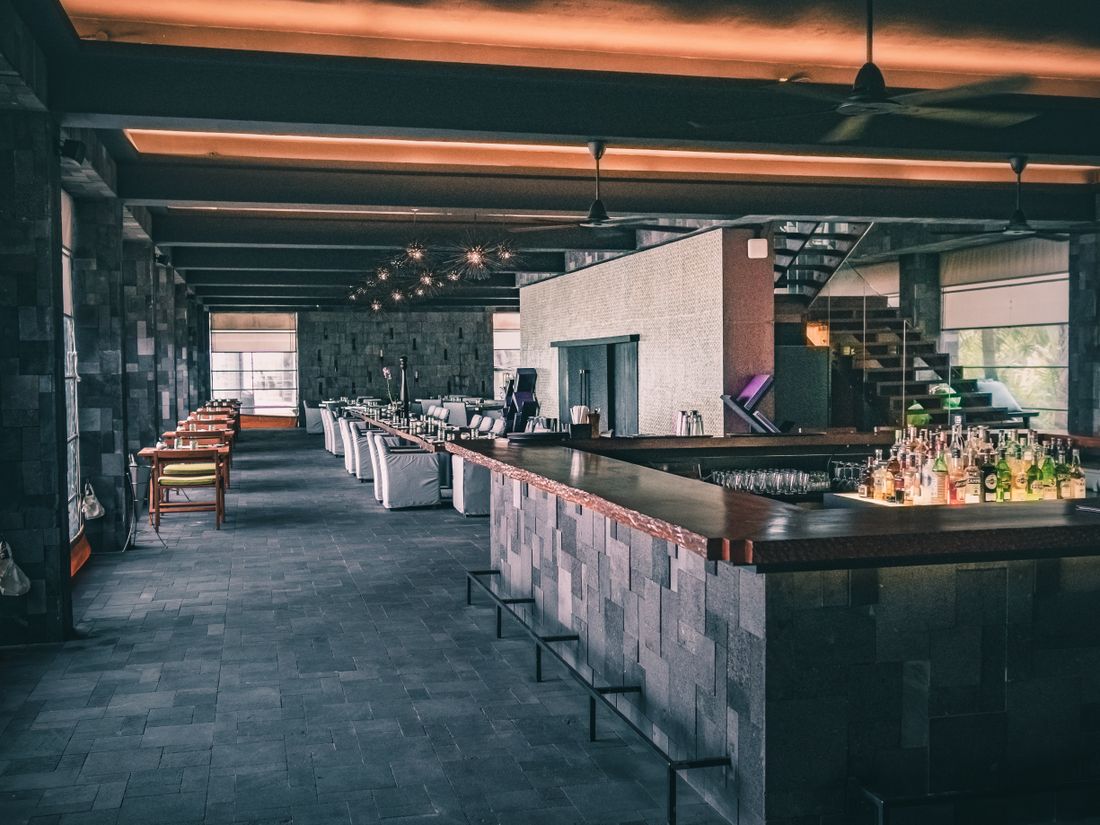
This is different from the interior photography a venue already gets for its own marketing, which is usually a wide, empty, well-lit shot meant to sell the room on its own. A founder portrait in that same room is composed the other way, the person is the subject, the space is context, close enough to read as theirs without turning into a real estate listing. It's the kind of image that works in a bio, a deck, or an awards submission because it answers two questions in one frame: what does this person do, and what have they actually built. A generic headshot only answers the first one. A group with more than one address can repeat the approach at each location, giving the founder a small set of portraits that map to the actual story instead of one image reused everywhere it's needed.
The Team at Pre-Service. Not a Menu Shot
A short window before doors open (the walkthrough, the staff meeting, the room getting set) is genuinely different material from food or dining photography, and it's some of the most useful leadership content a hospitality group can have: it shows culture and management style without a single plate in frame.
Pre-service is when a founder's actual leadership shows up in a way a posed portrait can't capture (how they talk to a team, what the briefing looks like, whether the room feels calm or scrambled twenty minutes before the first table sits down). Documenting that stretch, quietly and without staging, produces the kind of footage that reads as real management, not a performance for the camera. It also happens away from guests, which solves a practical problem too: no diners in frame, no privacy concerns, and no risk of the shoot becoming a distraction during service itself. It's leadership content that could only come from that specific window in the day.
Content for a Second-Location Announcement
Announcing a second location needs its own content: the founder in front of the new address, a short piece of video explaining the decision in their own words, and updated portraits that show growth rather than reusing the same image from the group's first opening years earlier.
An announcement built entirely on food photography from the flagship tells the audience nothing about the expansion itself. It just repeats the message the first location already sent. What actually signals growth is the founder, visibly present at the new address, saying something specific about why this neighborhood, this scale, this timing. That's a leadership story, not a menu preview, and it belongs to the operator's brand rather than the new venue's own launch marketing, which will get its own food and interior coverage once it opens. Treating the two as one shoot usually means the founder's role in the story gets buried under exterior shots of a space that isn't even finished yet.
Investor and Landlord Conversations Need Their Own Assets
A pitch deck or a lease conversation runs on different visual proof than a diner ever sees: a founder photo credible enough to sit next to real numbers, and a short video that shows the person making the case, not a slideshow of past venues standing in for a track record.
Investors and landlords are evaluating the operator as much as the concept, and a deck full of beautiful dining-room photography doesn't answer their actual question, which is whether this specific person can execute again. A clean founder portrait, used consistently across every deck and follow-up email, reads as more prepared than a mismatched set of screenshots and old event photos gathered the week before a meeting. The same goes for video, a short clip of the founder speaking directly to camera about the vacancy or the concept carries more weight in a follow-up email than another walkthrough of the flagship space the landlord has likely already toured in person.
Hiring and Recruiting Content for Hospitality Groups
Recruiting for management and kitchen leadership roles benefits from the same founder and team content built for press and investors. Candidates researching a group before an interview want to see who runs it and what the room feels like from the inside, not another plated dish on a careers page.
Hospitality hiring is competitive enough in New York that a careers page or job listing leaning entirely on food photography misses what a serious candidate for a management role is actually trying to learn: what the leadership is like, whether the team looks organized, whether this is a place with a real structure or one running on chaos. Portraits of the founder and honest documentation of the team at work (a walkthrough, a pre-service meeting, an ordinary Tuesday) answer that better than any dish photo could. It's a small addition to a hiring page, but it's the content most hospitality recruiting pages are missing entirely, even when the rest of the site looks otherwise polished and current.
Frequently Asked Questions
Does founder brand content for a hospitality group include photographing the food or menu?
No. This scope covers the founder, the spaces they built, and the team around them, not plates, menus, or food styling. If a group also needs food and interior photography, that's handled separately by whoever already covers the venue on an ongoing basis. Mixing the two into one shoot usually means the founder's portrait gets rushed to make room for a plating setup that was never part of the brief.
How is this different from the photography our restaurant already has?
Venue photography sells the room and the food to a diner deciding where to eat tonight. Founder content sells the operator to a reporter, investor, landlord, or job candidate deciding whether to trust this person with a second location or a leadership role. Same group, two different audiences, two different assignments. The venue's existing photographer doesn't need to cover both, and usually shouldn't try to on the same shoot day.
Should a hospitality group founder use photo or video for this kind of content?
Both, used for different things. A still portrait covers a press kit, a deck, or a bio page (fast to send, easy to reuse). A short video works better when the founder needs to explain a decision in their own words, like a second-location announcement or an investor follow-up. Most groups end up needing a small set of each rather than choosing only one.
How often should a hospitality group refresh its founder content?
Refresh it around real change, not a fixed calendar: a new location, a visible change in the founder's appearance, or once existing photos start looking noticeably dated next to current press coverage. Groups that go several years on one old headshot usually notice only when a reporter or a candidate is already looking for something current, which is a worse moment to discover the gap than any planned refresh.
Can one shoot cover a founder across multiple restaurant locations?
Yes, and it's efficient to plan it that way, one session covering the founder in two or three of the group's spaces, plus a pre-service moment at one location, produces enough variety for a press kit, a deck, and a careers page without repeating the same backdrop everywhere. Scheduling around each location's actual pre-service window takes coordination, but it's a single project rather than several separate ones.
Related Reading
Got a launch coming up and no clear shot list yet?
Walk us through where the content needs to show up, site, LinkedIn, press, or a launch page, and we'll put together the scope and the price before you book anything.
See Personal Branding & Launches