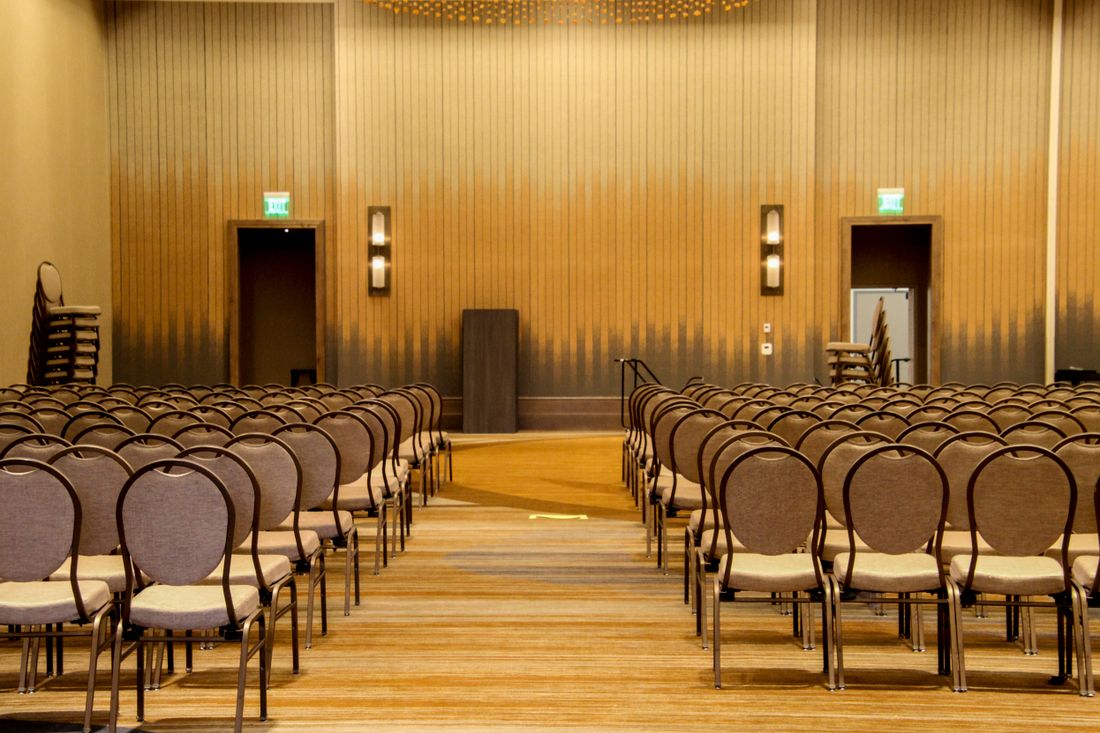
Photo: Core Visuals NYC
People choosing between a half day and a full day tend to do it with arithmetic. Add up the hours the event runs, compare that number to a package threshold, and book whichever side of the line it lands on. That math misses the actual variable. A five-hour donor reception that runs straight through and a five-hour day that includes a morning session, a three-hour gap, and an evening reception are not the same booking, even though both add up to five hours on paper. What decides half day versus full day is the shape of the schedule, not the sum of it.
Half day or full day comes down to the shape of the event, not the hour total. One continuous block of activity books as a half day even close to five hours long. A real gap in the schedule (a morning session and a separate evening reception) forces a full-day booking instead.
Table of Contents
- The line isn't a number of hours. It's the shape of the day
- When one gap turns a half day into a full day
- What setup, teardown, and travel eat out of a half day in NYC
- The hidden hours nobody budgets for
- Which events reliably fit a half day
- Which events almost never fit a half day
- What happens when a half day runs long, and why decide before, not on the night
- The honest case for staying at half day
The line isn't a number of hours. It's the shape of the day
Whether an event needs a half day or a full day comes down to the shape of the schedule, not the hour count. One continuous block of activity (even one running close to five hours) still books as a half day. Two separated segments, like a morning session and an evening reception, force a full day.
That distinction matters because two five-hour days can require completely different bookings. A donor reception that runs straight from 4 to 9pm without a break is a half day regardless of length, one continuous shoot, one setup, one energy level throughout. A conference that opens at 8am, breaks at noon, and resumes with an evening awards dinner at 6pm is a full day even if the actual coverage hours add up to less, because the crew has to be present and ready through the dead time in between.
This is why we ask about the run of show before quoting hours, not just a start and end time. The schedule's shape is what determines whether a booking behaves like our Essential package or needs the longer Professional tier.
When one gap turns a half day into a full day
A single gap in the schedule usually pushes a booking from half day to full day, not total hours worked. A morning keynote followed by a dead afternoon and an evening cocktail reception means the crew is on the clock for the whole span, even though the actual shooting happens in two short windows with real downtime between them.
The gap is the cost driver, not a bonus. A photographer can't leave the building for three hours and come back cheaper. Camera bodies, backup drives, and lighting gear generally stay with the crew, and most NYC venues don't make a full round trip elsewhere worth the risk of missing re-entry. Even if the crew steps out to eat or scouts the next room, that time still sits inside the booked window. A half day assumes the crew works through the block it's hired for; once a genuine gap appears, the booking has to cover both sides of it.
This is the most common reason a half-day estimate turns into a full-day quote once we see the actual run of show, not because more shooting is happening, but because the day stopped being one block.
What setup, teardown, and travel eat out of a half day in NYC
In NYC specifically, building security check-in, freight elevator waits, and a strict loading-dock window can quietly take a real chunk off each end of a booking before a single frame gets shot. A half day at a venue with tight building rules leaves less actual shooting time inside it than the same hour count somewhere with easier access.
Midtown high-rises and private clubs are the clearest examples. A crew badge has to get issued, gear has to clear security, and the freight elevator might run on a schedule shared with catering and AV. None of that counts as billable shooting time, but all of it eats into the booked hours if it isn't planned around. A venue with its own loading dock saves real time versus one buried in a security-heavy tower.
Travel between two NYC venues on the same day (a ceremony at one address, a reception at another) adds its own tax: crossing town mid-afternoon can cost 30 to 45 minutes that has to sit inside the schedule, not on top of it. That travel window is exactly the kind of gap that pushes a half day into full-day territory.
The hidden hours nobody budgets for
The hours people forget to count are the ones before and after the visible program: arrival ahead of doors to shoot the room before it fills, a detail pass over signage and table settings while they're still clean, and formal group photos that run long after a ceremony technically ends. None of that is downtime. It's real coverage.
A room-and-detail pass is easy to skip mentally when planning a schedule, but it's often some of the most useful material delivered, the empty tablescape, the signage before guests smudge it, the stage before anyone's standing at the podium. Doing that well means arriving before the official start time, not squeezing it in between arriving guests.
Group and formal shots after a ceremony or award moment are the other one. What looks like a five-minute photo on a run-of-show document regularly takes fifteen to twenty once people are actually gathered, positioned, and re-gathered when someone wanders off. Planning a half day around the printed schedule instead of the realistic version of it is how bookings run short.
Which events reliably fit a half day
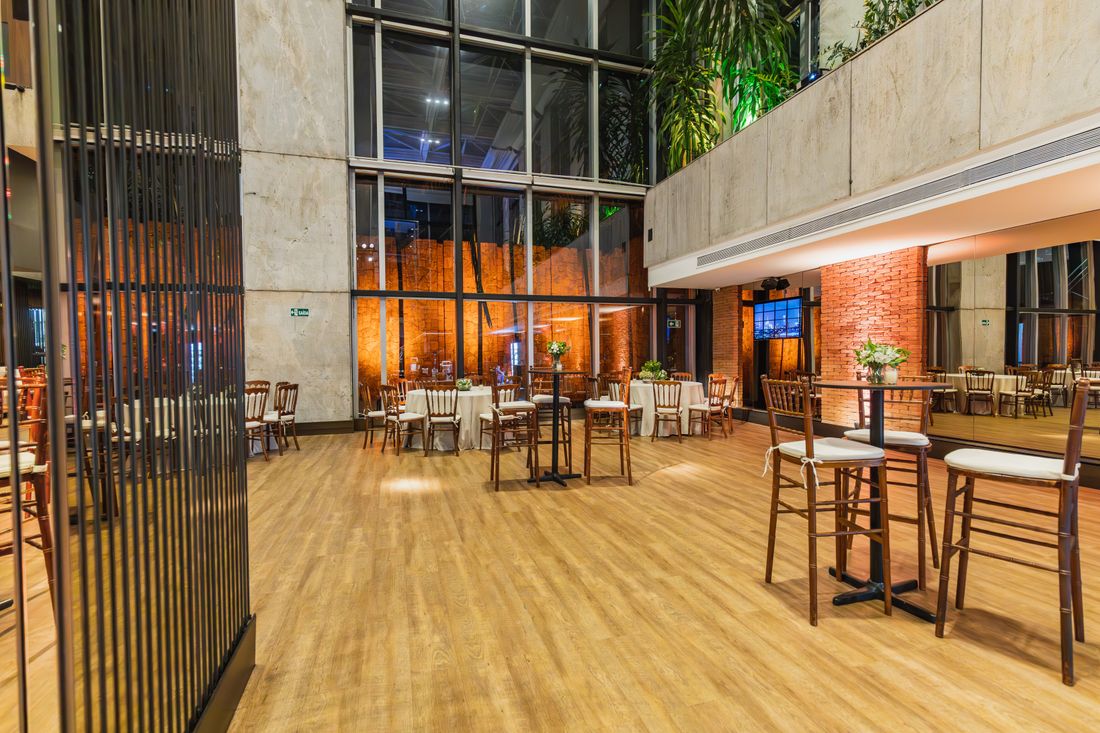
Events that stay inside one continuous block reliably fit a half day: a donor reception, an executive panel, a single keynote plus networking, a ribbon cutting, or a product launch that runs start to finish in one room without a scheduled break. If the whole event could happen without anyone leaving and coming back, it's almost always a half-day booking.
The common thread across these is continuity, not subject matter, a 40-person donor reception and a 200-person product launch can both be half-day events if each runs as one unbroken block. Our Essential package, covering up to 5 hours, is built for exactly this shape: single photographer or videographer, one setup, one sustained shoot.
What makes these events forgiving is that there's nowhere for a gap to hide. A panel discussion followed immediately by a reception in the same room, with no scheduled downtime between them, keeps the crew working the whole time they're booked, which is the actual definition of a half day, regardless of the exact hour count.
Which events almost never fit a half day
Full conferences with morning keynotes and afternoon breakouts, galas with a separate cocktail hour and formal dinner program, and any event split across two venues almost never fit a half day. Each builds in a structural gap or a second location, which is what forces a full-day booking, no matter the total shooting time.
Multi-segment conferences are the clearest case: a keynote at 9am, breakouts scattered through the early afternoon, and a closing reception at 5pm covers real ground, but the gaps between segments are exactly the dead time that pushes a booking into our Professional tier's 6-8 hour range. A trade show booth with a late teardown followed by a client dinner across town is the same pattern, two segments, one gap, one full-day booking.
Galas behave the same way even in a single building, cocktail hour, a program with speeches or an award presentation, and dinner service each have their own pacing and often their own room. The crew isn't idle during any of it, but the event's own structure is what makes it a full day, not a preference for more coverage.
What happens when a half day runs long, and why decide before, not on the night
When a half-day event runs past its booked hours, the honest options are an overage rate for the extra time or an early wrap once the booked block ends. Neither is a good call to make in the moment. Setting a realistic hour estimate before booking, with padding for a program that runs long, beats negotiating overtime mid-event.
Programs run long constantly. A keynote runs ten minutes over, awards take longer than scripted, a reception doesn't want to end on schedule. None of that is unusual, but deciding how to handle it shouldn't happen live, with a planner distracted by an actual event and a photographer watching the clock.
The fix is boring and effective: pad the estimate honestly when booking. If a program is scheduled for four and a half hours, book for five. That small cushion is far cheaper than an overage rate negotiated after the fact, and it removes the worst version of this problem, a crew packing up mid-toast because the booked window just ended.
The honest case for staying at half day
When an event is genuinely one continuous block, booking extra hours past what the schedule needs mostly produces more of the same photo, the same room, the same crowd, just more frames. A half-day booking that matches a half-day event isn't a compromise; it's the accurate one, and a full day wouldn't change what's on the ground to shoot.
It's tempting to book up as insurance, on the theory that more hours can't hurt. But hours don't manufacture variety a schedule doesn't have. A three-hour reception photographed for five hours instead of three mostly yields a longer, slower version of the same coverage, not meaningfully different material. A 40-person donor reception makes the point cleanly: three hours of real programming, covered fully, with two extra hours on top mostly produce the same room from slightly different angles.
The honest guidance runs the other direction from what's most profitable to sell: if the run of show is one continuous block that fits inside 5 hours, the Essential package is the right call, not a reason to talk someone into Professional. We'd rather quote the booking that actually matches the day.
Frequently Asked Questions
What actually separates a half-day event booking from a full-day one?
It's the shape of the schedule, not the total hours. A half day is one continuous block of activity, even if it runs close to five hours. A full day has a real gap built in (a morning session and a separate evening reception, for example) which puts the crew on the clock for the whole span rather than one sustained shoot. The gap, not the clock, is what actually changes the booking.
How many hours count as a half day for event coverage?
Our Essential package covers up to 5 hours and fits most half-day events, a reception, a panel, a single-segment launch. Once a schedule needs 6 to 8 hours because of breakouts, a second segment, or a venue change, that's Professional-tier territory. The hour range matters less than whether those hours form one continuous block or two separated ones with a gap in between. Plan around the shape first, and the right tier tends to follow on its own.
Can a short morning event still need a full-day booking?
Yes, if it's paired with a separate evening segment. A 90-minute morning ribbon cutting followed by an evening reception adds up to only a few hours of actual shooting, but the crew has to be available across the whole span between them. The gap, not the shooting time, is what pushes it into full-day pricing, the schedule's structure, not the length of either piece on its own.
What happens if a half-day event runs past its booked hours?
Running over usually means an overage rate for the extra time, or the crew wrapping once the booked block ends. Neither is a good call to make mid-event. The better approach is padding the hour estimate honestly when booking, so a program running slightly long doesn't turn into a live negotiation while the reception or awards moment is still actually happening. That decision is far easier to make calmly in advance.
Should I just book a full day to be safe, even for a shorter event?
Not if the event is genuinely one continuous block. Extra hours on a schedule that doesn't need them mostly produce more of the same photo, not new material. Padding a realistic half-day estimate by 30 to 60 minutes covers most overruns. Jumping straight to a full-day package makes sense only when the actual run of show has a real gap in it, not as general-purpose insurance.
Related Reading
Trying to lock down coverage for an event that's still taking shape?
Give us the rough schedule and we'll tell you whether hourly or a package actually saves you money.
See Event Coverage Packages