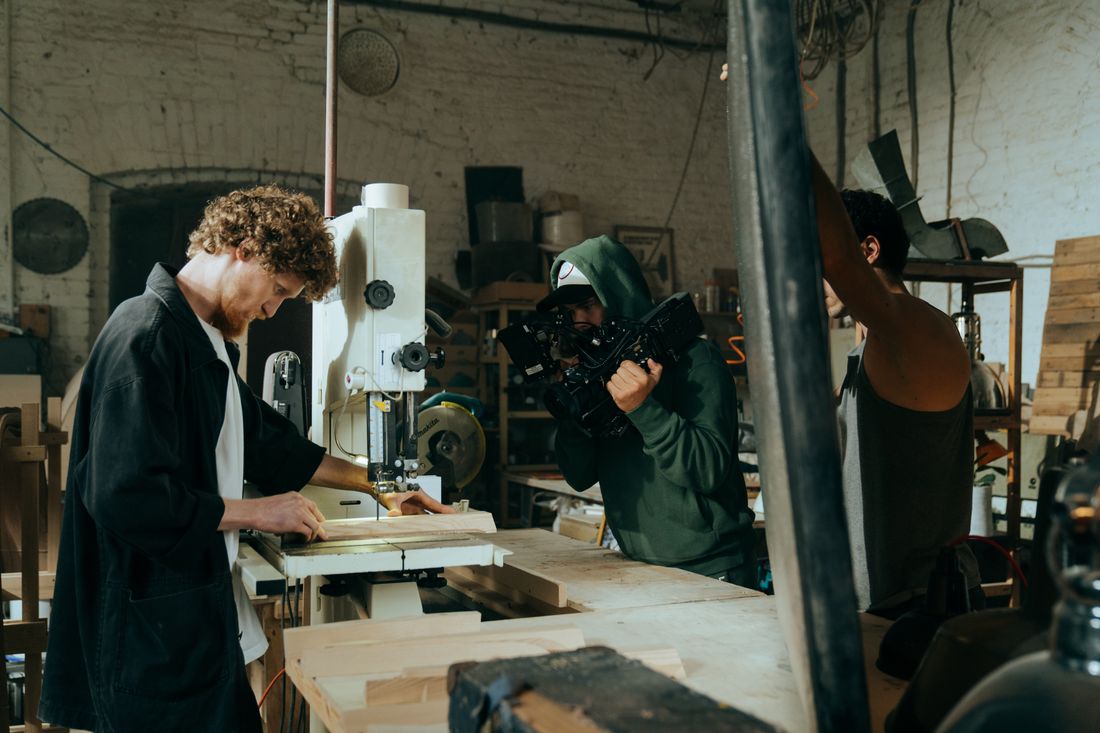
Photo by cottonbro studio via Pexels.
A founder day-in-the-life video is one of the easiest formats to pitch and one of the easiest to get wrong. The idea sounds simple: follow the founder around for a day, cut it into something watchable, post it. What that pitch skips is the real test, whether the day itself has anything worth watching, which has nothing to do with how likable the founder is on camera.
A founder day-in-the-life video works when the founder’s actual day contains something a camera can show that words can’t (a real process, an unusual environment, a specific rhythm nobody else has). It fails when the day is generic enough that any other founder’s footage would do just as well, which is most days, for most founders.
Table of Contents
- The honest test for whether a founder should even attempt this format
- Why “wake up, coffee, laptop, meetings” reads as filler, not content
- What a genuinely distinctive founder day actually looks like on camera
- What to do when the founder’s real day is mostly a desk
- What a producer needs from the founder before the cameras roll
- Why a performed day falls apart on camera faster than people expect
- How to shoot a real day without turning it into a highlight reel
- When to skip the day-in-the-life format entirely
The honest test for whether a founder should even attempt this format
A founder day-in-the-life video is worth shooting when the founder’s actual day contains something a camera can show that words can’t (a real process, an unusual environment, a specific rhythm nobody else has). It’s not worth shooting when the day is generic enough that any other founder’s footage would work just as well.
That’s the whole test, blunter than most people want it to be. A founder who spends the day walking a factory floor, tasting product batches, or fielding a strange customer call has something worth pointing a camera at. A founder whose day is Slack, a laptop, and three Zoom calls does not. Not because the work isn’t real, but because none of it is visual. A screen full of email doesn’t read as content no matter how well it’s cut.
Before booking a shoot, ask the blunt version: if a stranger watched ten minutes with the sound off, would they know whose company this was, or what it does? If the honest answer is no, the format isn’t the problem to fix yet. The day is.
Why “wake up, coffee, laptop, meetings” reads as filler, not content
The generic founder day (coffee, laptop, back-to-back calls) fails on camera because it’s interchangeable. Nothing in that footage is specific to the company, the industry, or the founder, so it reads as filler rather than proof of anything, and viewers scroll past filler within seconds no matter how well it’s lit or shot.
The problem isn’t that the footage looks bad. A well-shot latte and a well-shot laptop screen can look genuinely nice. The problem is that nothing in the sequence is evidence of anything. It doesn’t prove the founder built something real, doesn’t show the product, doesn’t show a customer, doesn’t show a decision getting made. It’s a mood board with a person standing in it.
Viewers notice this instantly, even without being able to say why. A video that could belong to any founder, in any industry, in any city, reads as generic before the first cut lands, and generic content gets scrolled past regardless of production value. The risk isn’t that the format looks amateur. It’s that it looks like stock footage of “a founder,” which is a category, not a person.
What a genuinely distinctive founder day actually looks like on camera
A distinctive founder day has a real, physical, specific thing happening (a hands-on production process, a workshop, kitchen, or warehouse most people never see inside, a customer interaction with real stakes, or a task only that founder in that industry would ever do). The test is whether the visual is theirs, not whether the founder performs well on camera.
This isn’t about charisma. A quiet, awkward-on-camera founder with a genuinely unusual process still beats a polished, camera-ready founder with a generic office day, because the format lives or dies on what’s in frame, not on delivery. Someone hand-finishing a product, walking a client through a space before a launch, or doing the one task only that business requires. That’s footage nobody else could produce, because nobody else has that day.
The environment does a lot of this work by itself. A workshop, a kitchen, a studio, a loading dock, a genuinely cluttered real office all read as specific in a way a conference room never will. None of this requires a more interesting day than the founder actually has. It requires noticing which parts are already visual and building the shoot around those.
What to do when the founder’s real day is mostly a desk
A founder whose real work is genuinely desk-bound (reviewing contracts, managing a remote team, running spreadsheets) is being honest, but that honesty doesn’t produce a watchable day-in-the-life video. The better move is a different format entirely: a point-of-view piece, a decision-focused segment, or a shoot built around one real meeting instead of a full day.
This is where a lot of these pitches quietly go wrong. The founder gets asked to perform a day that looks more visual than their actual work, which is exactly the fabricated-texture problem this format is supposed to avoid. A founder shouldn’t invent a factory tour they don’t take, or a hands-on task they don’t actually do, just to give the camera something to point at.
If the real day is a desk, a screen, and a series of calls, the honest answer is that day-in-the-life isn’t the right format right now, not that the founder should perform a more interesting version of their job. A single real moment, well shot, beats an entire fake day, well edited.
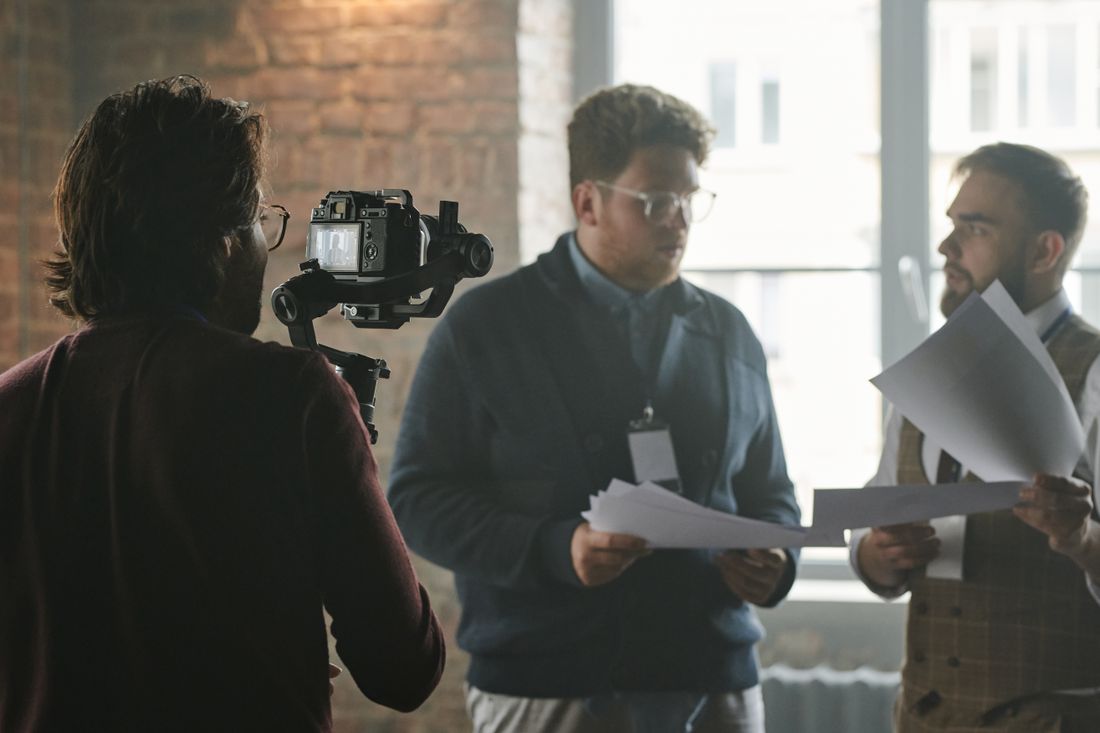
Photo by Henri Mathieu-Saint-Laurent via Pexels.
What a producer needs from the founder before the cameras roll
A producer needs an accurate, un-curated description of what the founder does hour to hour, not a highlight-reel version of the day, but the real one, boring parts included. That accuracy is what lets a producer find the two or three visual moments worth building the shoot around, instead of staging a “day” once the crew arrives.
The most useful thing a founder can hand over before a shoot isn’t a shot list. It’s an honest walk-through of a normal Tuesday, unedited for how impressive it sounds. Which hour has something happening in a physical space. Which task the founder does that nobody else in the company does. Which part of the day feels too mundane to mention, but is actually the most specific thing on the schedule.
A producer’s job from there is to build the shoot around the two or three moments that are genuinely visual and genuinely theirs, and let the rest of the day stay off camera rather than padding it with reenacted busywork. Three honest, specific scenes beat twelve generic ones, every time.
Why a performed day falls apart on camera faster than people expect
A performed day (staged to look busier than a founder’s actual work) tends to fall apart on camera, because performed body language reads differently than real focus, even to a viewer who couldn’t name what feels off. The tell isn’t the day’s content. It’s the founder’s posture and pacing, which shift once the day becomes a show.
People are good at spotting performance even when they can’t explain how. A founder pretending to read an email intently for the camera moves differently than a founder actually reading one (shoulders square instead of settled, eyes tracking too evenly, pace too consistent for real thought). None of that is conscious on either side, but it shows up in the footage, and it’s part of why staged “candid” moments so often read as slightly off.
This is also why the honest-day approach produces better footage, not just more honest footage. A founder doing the actual task moves at the actual pace of that task, which is the texture that makes a video feel real instead of produced. Performing a bigger version of the day trades that texture for something busier and hollower.
How to shoot a real day without turning it into a highlight reel
Shooting a real day without manufacturing drama means filming what’s actually scheduled and trusting that a genuinely distinctive day doesn’t need embellishment (no re-staged reactions, no fake “spontaneous” calls, no manufactured tension). The editing does the shaping afterward; the shoot day itself should track the founder’s real schedule as closely as possible.
The instinct on a shoot day is often to add drama where none exists (a dramatic walk into frame, a reaction shot re-done because the first one wasn’t “camera-ready” enough). That instinct is exactly what turns an honest day into a performed one, and it’s usually unnecessary, because a genuinely distinctive day already has its own structure: a process with steps, a problem that gets solved, a before-and-after.
The better approach is closer to observational documentary than commercial production. The crew follows the founder’s real schedule, captures what’s actually happening, and leaves the shaping for the edit rather than the set. That means accepting some uneventful stretches on camera, because a day with the boring parts removed before filming starts stops being a real day.
When to skip the day-in-the-life format entirely
Skip the day-in-the-life format when the founder’s day is genuinely desk-bound and screen-based, when there’s no environment or process that would look different from a competitor’s, or when the founder would need to invent activity to make the day watchable. In any of those cases, a different personal branding format will produce something more useful than a padded, generic day.
None of this means a desk-bound founder has nothing worth filming. It means day-in-the-life specifically isn’t the right container for that founder’s actual work. A founder whose real value is judgment, not process, is usually better served by a format built around that judgment directly: a point-of-view piece, a single well-chosen meeting, or a segment built from one real decision instead of a stretched-out day.
That format-selection question is bigger than any one video, and it’s worth working through before booking a shoot day around a single format. If a founder is unsure whether day-in-the-life fits their actual work, that’s a planning conversation, not a shoot-day problem.
Frequently Asked Questions
How do I know if my day as a founder is interesting enough to film?
Picture a stranger watching ten minutes with the sound off. Would they know what your company does or who you are? If the day includes a real physical process, an environment most people never see, or a task only your business requires, it’s likely worth filming. If the honest answer is Slack, a laptop, and back-to-back calls, the day isn’t the problem to fix. A different format will serve you better than a padded, desk-bound day.
What should I have ready before a day-in-the-life shoot?
An honest, un-curated walk-through of a normal day, not a highlight version. Tell the producer which hours involve real physical activity, which task nobody else in the company does, and which parts feel too mundane to mention, since those are often the most specific moments available. That accuracy lets the producer plan around two or three genuinely visual scenes instead of discovering on-site that the day has to be staged to give the camera something worth pointing at.
Can I make my day look busier or more exciting than it actually is?
You can, but it usually backfires. Performed activity moves differently than real activity (pacing too even, reactions slightly too clean) and viewers pick up on the mismatch even when they can’t name it. A founder doing an actual task at its actual pace reads as authentic; one re-staging a “spontaneous” moment for the camera reads as produced. The honest version of your day, even an uneventful one, generally holds up better on camera than a performed, busier version.
What’s the alternative if my day genuinely isn’t visual?
A desk-bound day doesn’t disqualify you from personal branding video. It disqualifies you from this specific format. Founders whose real value is judgment rather than physical process are usually better served by a point-of-view piece, a segment built around one real decision or meeting, or content that shows expertise directly instead of dressing up a calendar. The goal is matching the format to what’s actually visual about your work, not forcing every founder into the same day-long shoot.
How long should a founder day-in-the-life shoot actually run?
Long enough to capture the two or three genuinely distinctive scenes in the day, not necessarily the full day itself. A producer working from an honest breakdown of your schedule can usually identify which hours matter and shoot those closely, rather than rolling cameras for eight or ten hours to catch moments that could have been scheduled directly. A tightly shot half-day built around real, specific scenes usually outperforms a full day padded with generic footage between them.
Related Reading
Working on founder content or a launch and not sure what to shoot?
Tell us where the content needs to live (site, LinkedIn, press, or a launch page) and we'll come back with the scope and a fixed price before anything gets booked.
See Personal Branding & Launches