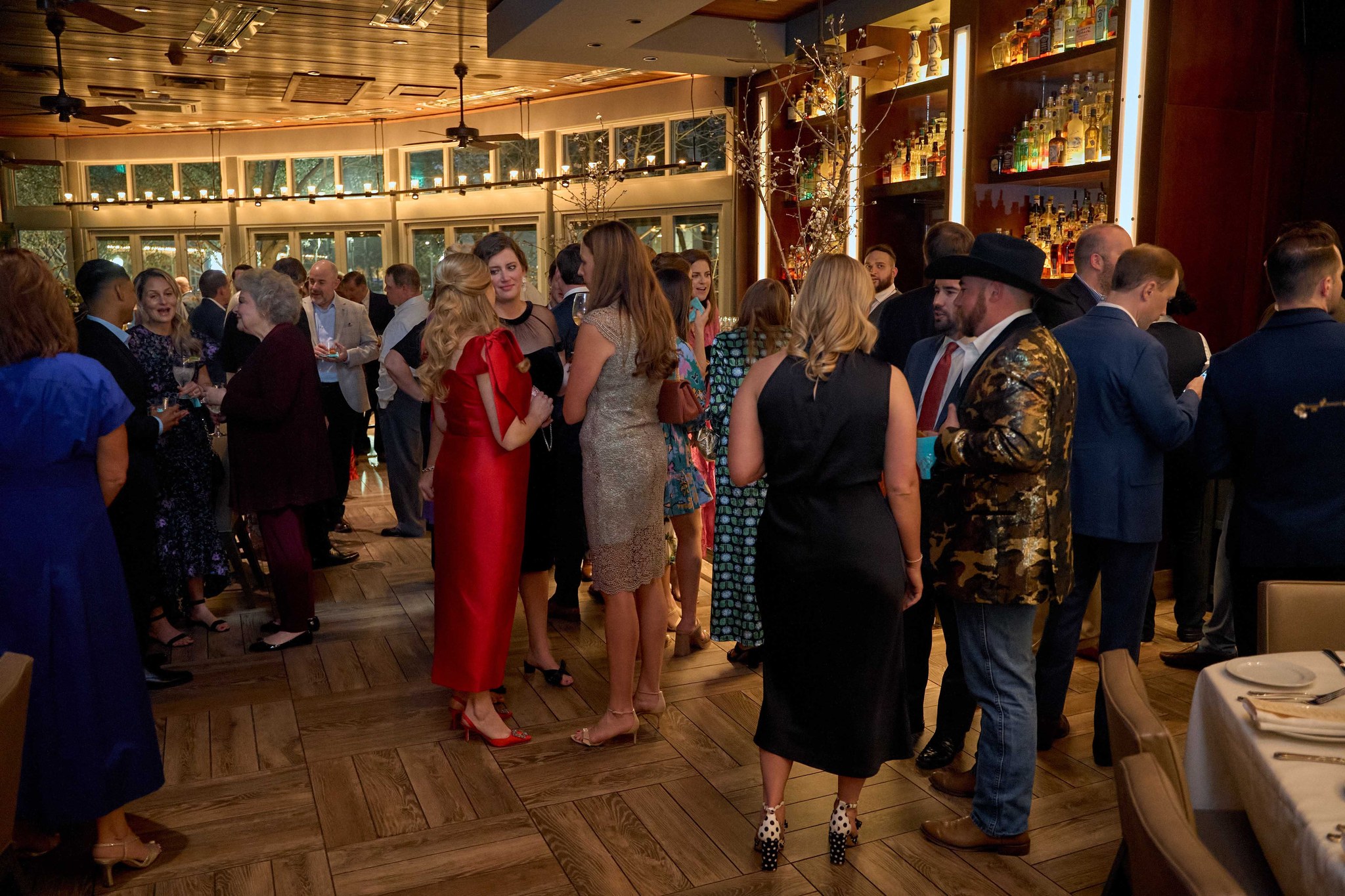
Photo: Core Visuals NYC
A customer or partner awards ceremony puts a different kind of guest in the room than most corporate events do. The people being honored don't work for the company hosting the night, and that changes what the coverage actually needs to capture. It's less about the host company looking good and more about the honorees feeling genuinely recognized in front of people who matter to their own business.
Photographing a customer or partner awards ceremony means treating the honorees, not the host company, as the subject the coverage exists to serve: clean, usable portraits of each winner receiving their award, real reactions from people who don't work for the host, and enough context shots that a winner can show the photo to their own team and their own clients without the host company crowding the frame.
Table of Contents
- Who Is Actually in the Room at This Kind of Night
- The Honoree Is the Subject, Not the Host Company
- Capturing Real Reactions From People Who Don't Work Here
- What Winners Actually Do With These Photos Afterward
- Sequencing Coverage Through the Program, Not Just the Stage
- The Mistake of Treating It Like a Generic Awards Night
- How This Differs From an Internal Sales Recognition Dinner
- Planning the Shot List Around Named Honorees
Who Is Actually in the Room at This Kind of Night
A customer or partner awards ceremony fills a room with people who run their own businesses, not employees of the company hosting the event. Resellers, distributors, top clients, agency partners, all of them are guests being honored for their own results, not staff being recognized for doing their job inside someone else's org chart.
That distinction matters more than it sounds like it should. An employee awards night happens inside a relationship the company already controls. A customer or partner night happens inside a relationship the company is actively trying to keep, which means every honoree in the room is also, in some sense, being pitched on staying a partner.
The coverage has to hold both of those things at once: real recognition for real outside people, delivered in a way that also reflects well on the host company's judgment for choosing them. Missing either half turns the night into either a generic award show or a thinly disguised sales event, and guests tend to notice which one they're actually sitting through.
The Honoree Is the Subject, Not the Host Company
The single biggest shift from internal recognition coverage is whose face carries the photo. At a customer or partner ceremony, the winner's face, name, and company matter more than the host's branding, because the winner is the one who is going to actually use the photo somewhere, on their own website, their own social feed, their own internal recognition wall.
That means portraits need to be clean enough to stand alone, without a host company logo dominating the background or a host executive crowding into every frame. A winner sharing their award photo doesn't want it to read as an ad for the company that gave it to them. They want it to read as their own moment.
Handshake photos still matter, since they document the actual presentation and the relationship behind it. But they shouldn't be the only shot. A winner deserves at least one frame that's clearly theirs, not shared with whoever happened to be handing over the trophy that night.
Capturing Real Reactions From People Who Don't Work Here
Genuine reactions read differently when the person reacting doesn't have a stake in how the host company's internal culture gets portrayed. A partner hearing their name called has a different kind of surprise than an employee who half-expected recognition might be coming. That reaction is worth catching candidly, before the posed handshake photo replaces it.
The practical implication is timing. A photographer needs to be positioned to catch the moment a name is announced, not just the moment someone walks up to collect the award. The gap between those two moments is often where the most honest expression happens, and it's easy to miss if the coverage plan only accounts for the formal handoff on stage.
Table reactions matter too. A partner's own colleagues at their table, clapping, laughing, reacting in real time, tell a fuller story than the stage moment alone. Those wider shots round out a recognition set that would otherwise be entirely staged, formal frames with little life in them.
What Winners Actually Do With These Photos Afterward
A customer or partner winner typically takes their award photo back to their own company, their own website, and sometimes their own clients, using it as proof of outside recognition rather than internal pride. That downstream use is worth planning for from the start, since it shapes what kind of image is actually useful to deliver.
A photo cluttered with the host company's stage branding, signage, or step-and-repeat can work fine for the host's own recap content, but it's a weaker gift for the winner to reuse elsewhere. A cleaner variant, still clearly from the event but without heavy host branding dominating the frame, gives the winner something more versatile to put to work in their own materials.
Delivering both versions solves this without extra planning complexity: a branded set for the host's own channels, and a cleaner set built specifically so winners can use their own recognition photo without it doubling as an ad for someone else's company, or looking staged for the occasion.
Photo by Andrew Patrick Photo via Pexels.
Sequencing Coverage Through the Program, Not Just the Stage
A strong recognition set covers three distinct moments for each winner, not just the one everyone assumes matters: the announcement and reaction, the actual stage moment, and a brief, clean follow-up portrait once they've stepped off. Treating the stage handoff as the only shot worth planning leaves the rest of the story uncaptured.
The follow-up portrait is easy to skip in the rush of a live program, but it's often the most useful frame a winner walks away with. A composed, well-lit shot taken just after the applause, away from the crowd and the stage lighting, tends to look cleaner than anything captured mid-ceremony under a spotlight.
None of this requires slowing the program down. A brief pause near the edge of the stage, coordinated with whoever is running the run of show, is usually enough to get a clean frame without holding up the next presentation or making a winner feel rushed off stage before they've had a moment to enjoy it.
The Mistake of Treating It Like a Generic Awards Night
A generic awards-night approach, wide room shots, a stage, a handful of handshake frames, technically documents the event without actually serving its real purpose. That approach works fine for a night where the mechanics are the point. It falls short when the entire reason for the event is making specific outside people feel specifically recognized.
The gap shows up afterward, when a winner looks for a usable photo and finds only a wide shot of the stage with their face barely visible in a row of other honorees. A generic set technically proves the event happened. It doesn't give any individual honoree something they'd actually want to use themselves.
The fix isn't more photos. It's a plan built around named honorees from the start, a list of who's being recognized and in what order, so the coverage can be positioned to actually get each one a usable frame instead of hoping a good shot happens to land in the mix by chance.
How This Differs From an Internal Sales Recognition Dinner
An internal sales recognition dinner, the kind built around a company's own top performers, covers people who already work inside the host's culture and understand the context behind every award category. The coverage there can lean on shared internal references because the whole room already speaks that same internal language and history.
A customer or partner ceremony has no such shared context to lean on. The honorees run their own separate businesses, and the coverage has to work without assuming any internal familiarity, since the photos are headed straight to audiences who have never heard of the host company's internal award names or inside jokes about the category.
That difference changes what a caption or recap needs to explain, and it changes how self-contained each photo has to be. An internal recognition photo can rely on shared context. A partner recognition photo has to stand on its own, understandable to someone seeing the honoree's company for the first time, with no prior explanation needed.
Planning the Shot List Around Named Honorees
The most useful preparation for this kind of night is a named list of honorees in program order, shared with the photographer ahead of time rather than assembled on the fly. Knowing who's winning what and roughly when removes the guesswork that leads to missed reactions or rushed, poorly lit follow-up portraits later in the evening once the room starts thinning out.
This list doesn't need award-category detail or backstory. Names, companies, and approximate order are usually enough to plan positioning and timing around, so the photographer isn't discovering who matters in the room at the same moment the announcement happens on stage.
A night built around a dozen or more honorees benefits from this kind of structure more than almost any other event type, since the difference between a usable, individual photo and a forgettable group shot usually comes down to whether anyone planned for that specific person to have their own moment. A short list beats no list every time, and it costs nothing to send ahead.
Frequently Asked Questions
How is photographing a customer or partner awards night different from an employee awards ceremony?
The honorees don't work for the host company, so the photos need to serve people outside the organization who will reuse them on their own websites and social channels. That means cleaner portraits with less host-company branding dominating the frame, more attention to real reactions from guests without internal context, and a shot list built around named outside honorees rather than internal team members who already share the host's culture and inside references.
Should the photos be heavily branded with the host company's logo?
A branded set works well for the host's own recap content, but winners generally get more use out of a cleaner variant without heavy host branding crowding the frame. Delivering both a branded set and a lighter one gives the host material for their own channels while giving each winner something more versatile they can actually put to work in their own materials, without it reading as an ad for someone else's company.
What's the most commonly missed shot at this kind of event?
The clean follow-up portrait taken just after a winner steps off stage, away from stage lighting and the crowd. Coverage often stops at the handshake moment on stage, but that frame is usually shared with whoever is presenting the award and rarely reads as cleanly as a brief, composed shot taken moments later once the winner has stepped aside from the spotlight and the noise of the room.
Do we need a full list of honorees ahead of time?
Names, companies, and rough program order make a meaningful difference, even without award-category detail. Knowing who's being recognized and roughly when lets a photographer position for real reactions and clean follow-up portraits instead of discovering who matters in the room as it happens, which is often the difference between a usable individual photo and a forgettable wide shot with a dozen faces packed into it somewhere near the back.
How does this differ from a generic awards-night approach?
A generic approach, wide room shots, a stage, a handful of handshakes, documents that an event happened without giving any individual honoree something specifically theirs. A customer or partner ceremony exists to make outside people feel recognized, so the coverage needs a plan built around named honorees from the start rather than a general assumption that good shots will simply happen on their own during the program.
Related Reading
Not sure if hourly or a package makes more sense for your event?
Tell us the expected length, and we'll run the actual numbers before you book.
See Event Coverage Packages