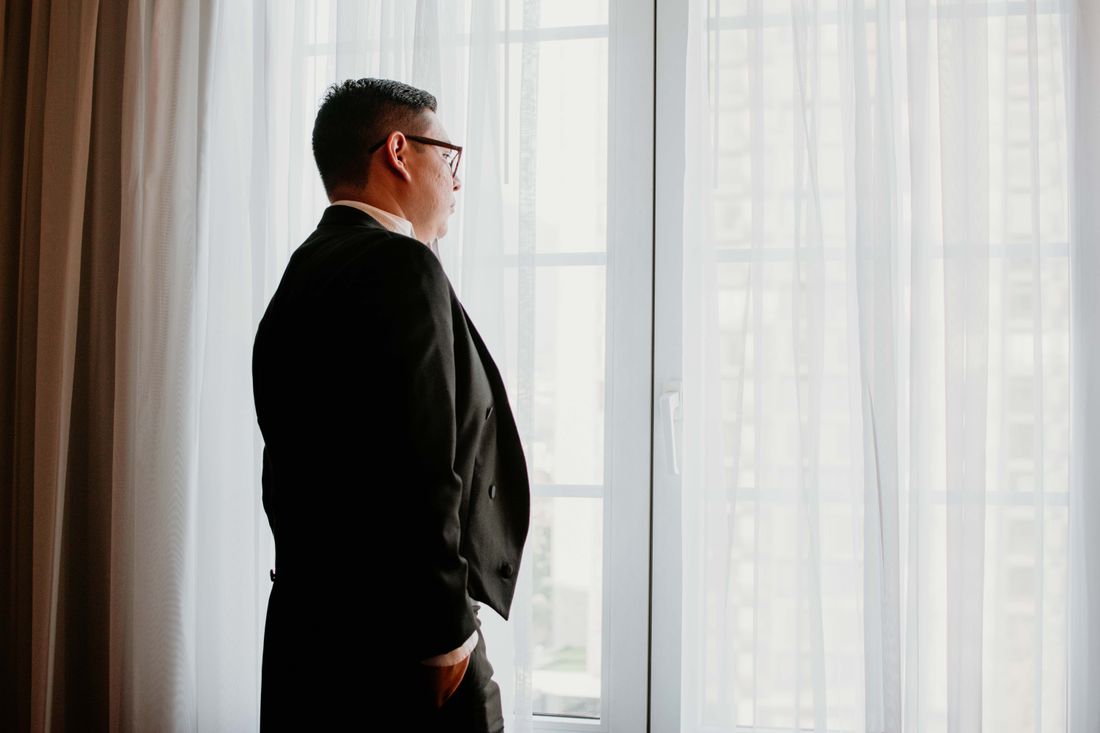
Photo: Core Visuals NYC
An outside hire arrives with a blank slate. Someone has to build their public face from scratch, so a fresh portrait usually gets planned in as part of the announcement. An internal promotion doesn't get that clean slate, and that's exactly the problem. Everyone already has a photo of the person being promoted, taken at the old level, in the old role, often years before the title changed. That photo feels like it settles the question, so nobody schedules a new one. The announcement runs anyway, with an image that quietly argues against the news it's supposed to support.
An internal promotion to the C-suite needs a new portrait, a short video statement, and separate internal and external edits, because the existing headshot was built for a different level of authority and quietly undercuts the announcement it runs alongside. The harder problem isn't sourcing a photo, it's replacing one everyone already assumes is good enough.
Table of Contents
- Why Does the Old Headshot Undercut a C-Suite Promotion Announcement?
- What Actually Changes Between a Manager's Portrait and an Officer's?
- What Does a Full C-Suite Announcement Asset Set Actually Include?
- How Should You Handle Being Photographed by People Who Know You at the Old Level?
- When Should the Shoot Happen Relative to the Announcement Date?
- What Changes When the Predecessor Is Still in the Building?
- How Does One Shoot Serve the Intranet, LinkedIn, Press, and the Annual Report for a Year?
- Who Should Actually Own This Project: Comms, HR, or the New Officer?
Why Does the Old Headshot Undercut a C-Suite Promotion Announcement?
The company usually announces an internal promotion with whatever headshot is already on file, and that headshot was taken for a different job. It shows someone at the old level, in the old context, often years earlier. The announcement text says "chief." The photo still reads as manager. Readers register the mismatch before they register the news.
Nobody is lying, exactly. The photo is real, shot for a directory page or an old bio at a moment when the subject's authority in the room was smaller. Put it next to a press release announcing a chief-level title and the two halves start arguing with each other. The words claim new authority. The photo insists the old job is still current, and most readers absorb the photo before they read the copy under it.
An external hire rarely has this problem, because someone has to source a photo for a person who's brand new, and usually remembers to make it current. An internal promotion skips that step by default, on the assumption that a person who already has a headshot doesn't need another one. That assumption is the actual gap, and it often goes unnoticed until the announcement is out.
What Actually Changes Between a Manager's Portrait and an Officer's?
A manager's portrait is usually built to read as approachable and team-adjacent: softer light, a warm smile, a background that says "colleague." An officer's portrait needs to read as steady and accountable to people who've never met them, a decision-maker a journalist, investor, or new hire can put a name to. The tone shifts more than the technical setup does.
Framing tends to tighten and formalize. A manager's photo might be shot at a desk, casual and candid in feel. An officer's portrait usually moves closer to a plain background and a distance that matches however the rest of the leadership page is already presented, so the new face slots into an existing visual system instead of standing out as one shot on a different day, in a different style.
Expression shifts too, though not toward stiffness. The goal isn't a colder face, it's a more composed one, less spontaneous grin, more settled confidence. Wardrobe should track whatever register the other officers already established, since a promotion photo that looks noticeably more casual, or more formal, than the peers next to it reads as a mismatch of its own.
What Does a Full C-Suite Announcement Asset Set Actually Include?
A complete set covers three things: a portrait delivered in more than one crop, a short video statement in the new officer's own words, and edited versions built separately for an internal audience and an external one. Most companies plan for one asset, usually just the portrait, and improvise the rest once the announcement date is already locked.
The portrait needs a tight headshot crop for the intranet and directory, plus a wider three-quarter crop that survives a press release, a LinkedIn post, and eventually an annual report page. The video statement doesn't need to be long. A minute of the new officer speaking plainly about what the role means, in a setting that matches the portrait's visual world, does more for morale than a written quote.
Internal and external versions diverge in tone more than content. Employees already know the person and want to hear something honest about the transition. Press, investors, and outside partners have never met them and need the more formal, credential-forward framing instead. Shooting once with both audiences in mind, rather than one all-purpose cut, keeps this from becoming two separate projects later.
How Should You Handle Being Photographed by People Who Know You at the Old Level?
The honest answer is that it stays a little awkward, and planning for that beats pretending it won't happen. Being formally portrayed by the same internal team that watched someone run status meetings as a director a year earlier creates a self-consciousness an external hire never has to manage. Naming that plainly produces a better sitting than performing total ease.
Bringing in a photographer the person hasn't already worked with, if that's an option, removes some of the strangeness of standing formally for someone who's used to seeing them at a desk. A short list of reference images, showing the register the shoot is aiming for, gives the new officer something concrete to hold onto instead of improvising a "executive face" in the moment, which is usually where the stiffness comes from.
It also helps to treat the shoot as ordinary company logistics rather than a spotlight event. Scheduling it quietly, alongside other routine photo work rather than as its own announced occasion, keeps colleagues from turning it into a bigger moment than it needs to be, which is often what makes the sitting feel exposed in the first place.

Photo by Monstera Production via Pexels.
When Should the Shoot Happen Relative to the Announcement Date?
The shoot should happen far enough before the announcement date that images are ready, reviewed, and approved with time to spare, not scheduled the same week as the news itself. A portrait rushed the day before an announcement tends to show it, in a tense expression or a background chosen in a hurry.
Working backward from a locked announcement date is the more reliable approach than working forward from whenever the promotion conversation happened to conclude. That gives room for a wardrobe check, a second look at the shot list against whatever the leadership page already shows, and a real review cycle instead of a same-day approval under deadline pressure.
Confidentiality complicates this in ways an external hire doesn't face. If the promotion isn't public yet, the shoot has to happen without tipping off the floor, which usually means scheduling it as generic headshot or content-day time rather than a visibly separate session. That constraint is exactly why the timing needs deliberate planning instead of getting handled the week the news breaks.
What Changes When the Predecessor Is Still in the Building?
When the outgoing officer hasn't left yet, the new portrait shouldn't echo theirs, and the shoot's timing and location should stay quiet enough that it doesn't read as a public changing of the guard while the departure is still being handled privately. The goal is a clean asset, not a visible contrast.
This is more common than the sequencing on an org chart suggests. Transitions overlap for weeks or months while a handoff happens, and during that stretch, a visibly staged new-officer shoot in the same office the outgoing one still walks through can create friction that has nothing to do with the photography itself. Discretion in scheduling matters here as much as anything about lighting or wardrobe.
Practically, that often means shooting off the main floor, at a different time of day, or in a separate space entirely, and holding the images until the announcement is ready rather than letting them circulate internally ahead of the news. The photo itself doesn't need to say anything about the predecessor. The production plan just needs to stay out of their way.
How Does One Shoot Serve the Intranet, LinkedIn, Press, and the Annual Report for a Year?
One shoot has to outlast the announcement week by roughly a year, since the same portrait will likely show up on the intranet, the new officer's LinkedIn profile, a press mention, and eventually the annual report, each with different crop ratios and different tolerance for informality. Planning for all four uses up front avoids a second shoot six months in.
The annual report is the strictest of the four. It usually wants a formal, evenly lit portrait against a plain or brand-neutral background, shot at a resolution and crop that survives print, not just a screen. LinkedIn and the intranet are more forgiving of a slightly warmer, more personable frame, but reusing the annual-report version there rarely looks wrong, while the reverse often does.
The practical move is shooting a small set at the same sitting, a formal frame, a warmer frame, and at least one wider environmental shot, rather than a single image asked to do every job. That variety costs little extra time in one sitting and saves a second round of scheduling once someone in comms realizes the press kit needs a crop the intranet photo can't provide.
Who Should Actually Own This Project: Comms, HR, or the New Officer?
Communications should own the asset set, since they understand how the portrait and video statement will actually get used across press, LinkedIn, and internal channels. HR owns the promotion process itself, and the new officer should have input on wardrobe and tone, but the plan works best with one clear owner, not three overlapping ones.
Where this breaks down in practice is when nobody claims it early, because the promotion feels like an HR matter and the content need doesn't surface until someone in comms is assembling the announcement and discovers there's no usable photo. By then the timeline has collapsed into the week of the announcement itself, which is exactly the rushed scenario a good production plan is meant to avoid.
The cleanest version treats the shoot the way a comms team already treats other announcement logistics: booked as soon as the promotion date is set, briefed with the actual use cases in mind, and reviewed before it becomes urgent. That's a scheduling discipline more than a creative one, and it's usually the difference between a photo that works and one that quietly undercuts the news.
Frequently Asked Questions
Does a promoted executive really need a new headshot, or can the old one be updated with editing?
Editing can fix small technical issues, but it can't fix tone or context. A photo shot for a director-level bio was framed, lit, and posed for that register, and no amount of retouching changes the background, wardrobe, or expression choices baked into the original sitting. A genuinely new portrait, matched to the new role's visual standard, is the more reliable fix. Retouching sharpens an existing image, it can't manufacture a different setting or expression after the fact.
How much does an internal promotion shoot typically cost compared to a standard headshot session?
It depends on how many assets are involved, since a portrait-only session is a different scope than a portrait plus a short video statement plus multiple crops for press and print use. What moves the price is the number of deliverables and formats needed, not the fact that the subject was promoted from within rather than hired from outside. A single portrait sitting and a full announcement package sit at very different points on that scale.
Should the internal announcement photo and the external press photo be the same image?
They can share a source image but usually shouldn't be identical crops. Internal channels tolerate a warmer, more personable frame because employees already know the person. External press and investor use call for a more formal, credential-forward crop. Shooting a small set at one sitting, rather than one all-purpose photo, covers both without a second session. Reusing the same tight headshot everywhere tends to undersell one audience or overplay formality for the other.
What if the company doesn't want to spend on a dedicated shoot for an internal promotion?
That's a real option, but it should be a deliberate choice, not a default born from nobody budgeting for it. If the existing headshot is genuinely current and matches how the rest of the leadership page looks, reusing it is fine. The problem isn't reuse itself, it's reusing an outdated photo simply because nobody thought to check whether it still fits. A quick comparison against the current leadership page is usually enough to make that call honestly.
How far in advance should the shoot be scheduled before a confidential promotion is announced?
As soon as the announcement date is locked internally, even while the news is still confidential. Scheduling it as generic headshot or content-day time, rather than a visibly separate session, protects confidentiality while still leaving enough runway for wardrobe planning, a review cycle, and delivery before the announcement, instead of a rushed sitting the week the news goes public. That lead time also leaves room to fix a wardrobe or lighting issue before it becomes the final image.
Related Reading
Planning founder content or a launch and unsure what to actually shoot?
Tell us where the images or video will run, site, LinkedIn, press, or a launch page, and we'll scope it with a fixed price before you book anything.
See Personal Branding & Launches