Photo by Denner Trindade via Pexels.
Before anyone reads a word of your bio, they read the block behind you. Marble and glass says one thing, exposed brick says another, and a cast-iron storefront says a third, and that read happens before your expression or your outfit gets a vote. Picking a neighborhood for a personal brand shoot isn't a scouting afterthought. It's a decision that sets the frame everything else gets judged against, and it comes with its own crowds, light, and paperwork.
A neighborhood functions as a visual claim about who you are (Financial District marble reads as institutional, Dumbo brick reads as creative-industrial, Soho cast-iron reads as fashion and design, and a Long Island City warehouse street reads as maker and startup). Match the block to the positioning you're actually selling, then plan around the crowds, light, noise, and permitting expectations that come with that specific location, because those logistics decide whether the idea survives an actual shoot day.
Table of Contents
- The Block Behind You Is Making a Claim, Whether You Planned It or Not
- Matching the Neighborhood to What You're Actually Selling
- When a Recognizable Backdrop Helps You and When It Dates You
- Crowds Change What's Actually Possible to Shoot, Not Just How It Feels
- Permitting Expectations Shift With Crew Size and Gear. Confirm Before You Book
- The Hours You Can Actually Shoot Depend on Which Block You Picked
- Noise Is the Cost a Video Shoot Pays That a Photo Shoot Doesn't
- Planning the Shoot Day Around the Block You Actually Picked
The Block Behind You Is Making a Claim, Whether You Planned It or Not
A neighborhood backdrop isn't neutral scenery. It's a visual argument about who you are, made before anyone reads your bio or hears you speak. Marble and glass argue institutional trust. Exposed brick argues creative independence. A loading dock argues hands-on and unpolished. The viewer reads that argument in about a second, long before your expression or wardrobe gets a chance to add nuance.
This is easy to skip past when the shoot gets planned around convenience instead of message (wherever's closest, wherever parking works, wherever a friend has an office). Those are real constraints, but they're the wrong first filter. The first filter is what the location says, because that message is doing work whether it was chosen on purpose or not.
Once you accept the block is part of the pitch, the planning question changes from "where's easy" to "where matches." That's the harder, more useful question, and it's the one the rest of this piece is built around.
Matching the Neighborhood to What You're Actually Selling
Different neighborhoods carry different professional connotations, and the match matters more than the individual building. Financial District glass towers and marble lobbies read as institutional weight, the natural fit for finance, law, and anyone selling scale or fiduciary trust. Soho's cast-iron facades and boutique storefronts read as fashion, design, and consumer brands. Dumbo and Long Island City's converted warehouses and exposed brick read as tech, creative, and startup energy, capable hands, not corner offices.
None of these reads are fixed law, and a founder selling enterprise trust from a Dumbo rooftop can work if the rest of the frame supports it. But mismatches create friction the viewer has to resolve, and most won't do that consciously. They'll just register a vague sense that something's off. A litigator shot against exposed brick and string lights reads as trying too hard to seem approachable, and a fintech founder shot in a marble atrium can read as an institution instead of the scrappy company they're pitching.
The fix isn't picking the most photogenic block in the city. It's picking the one whose existing connotation matches the story you're already telling everywhere else (the deck, the site, the bio).
When a Recognizable Backdrop Helps You and When It Dates You
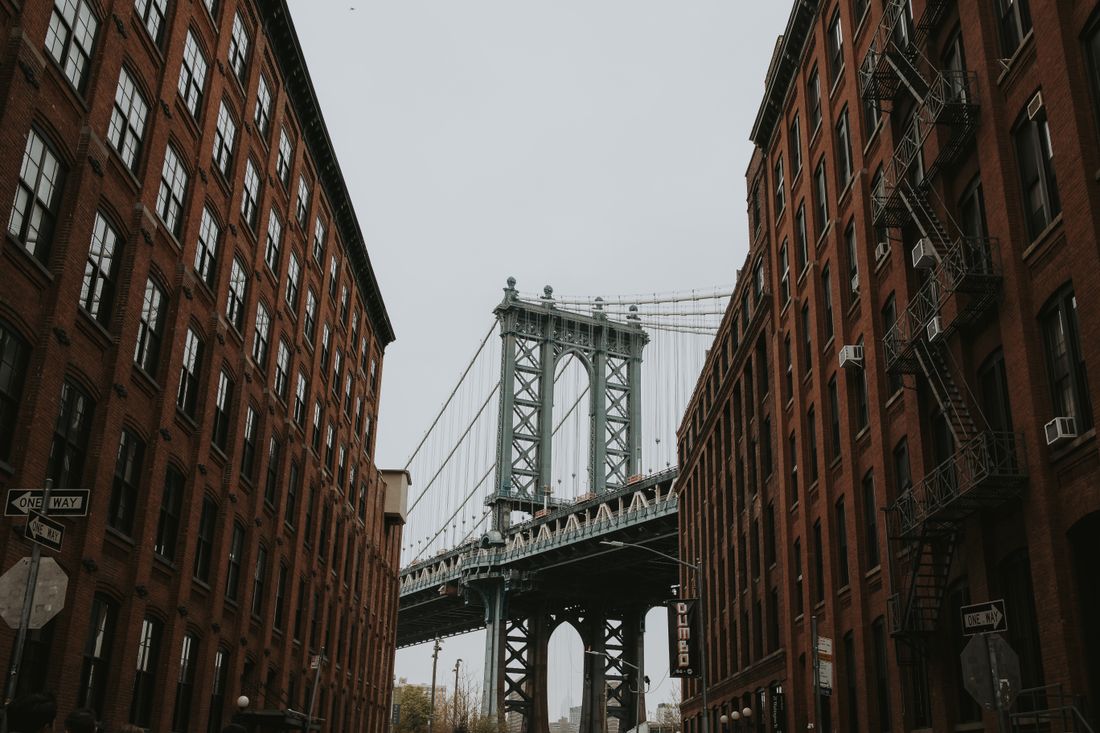
A landmark backdrop (the Manhattan Bridge from Dumbo, the Flatiron, the Wall Street bull) gives a photo instant geographic credibility, which is genuinely useful when "based in New York" is part of the pitch. The cost is that the same landmark shows up behind thousands of other founders and consultants, so a highly recognizable spot can also read as a checked box rather than a real choice.
There's a second cost that shows up later: a very specific, trend-adjacent backdrop can date a photo faster than a plain one. A location tied to a particular moment (a pop-up mural, a storefront that closes, scaffolding that eventually comes down) pins the image to a period in a way a plain brick wall or a clean office window never does. Photos meant to last years benefit from settings that don't announce a specific summer.
The practical middle ground is a location with real neighborhood character but not the single most photographed corner in it (a side street in Dumbo instead of the exact bridge-frame shot, a Soho block with the same cast-iron detailing one street over from the crowds). You keep the connotation without renting the cliché.
Crowds Change What's Actually Possible to Shoot, Not Just How It Feels
Tourist-heavy blocks (Dumbo's bridge corner, most of Soho on a weekend, anywhere near a major landmark) don't just feel busier. They change what a shoot can actually produce, because a clean background take needs a gap in foot traffic long enough to run it, and those gaps get shorter the more popular the spot is. Expect more takes, more waiting between them, and more people asking what you're shooting.
This is a scheduling problem as much as a patience problem. A weekday morning on a popular Dumbo or Soho block behaves completely differently from a Saturday afternoon on the same corner, sometimes by an order of magnitude in usable minutes per hour. A quieter industrial stretch of Long Island City, or a Financial District side street away from the main plazas, gives you far more control over the frame without needing to fight for a five-second gap in the crowd.
None of this rules out the busy, iconic block. It just means the busy block needs a realistic time window built into the plan, not an assumption that any hour will work the same as any other.
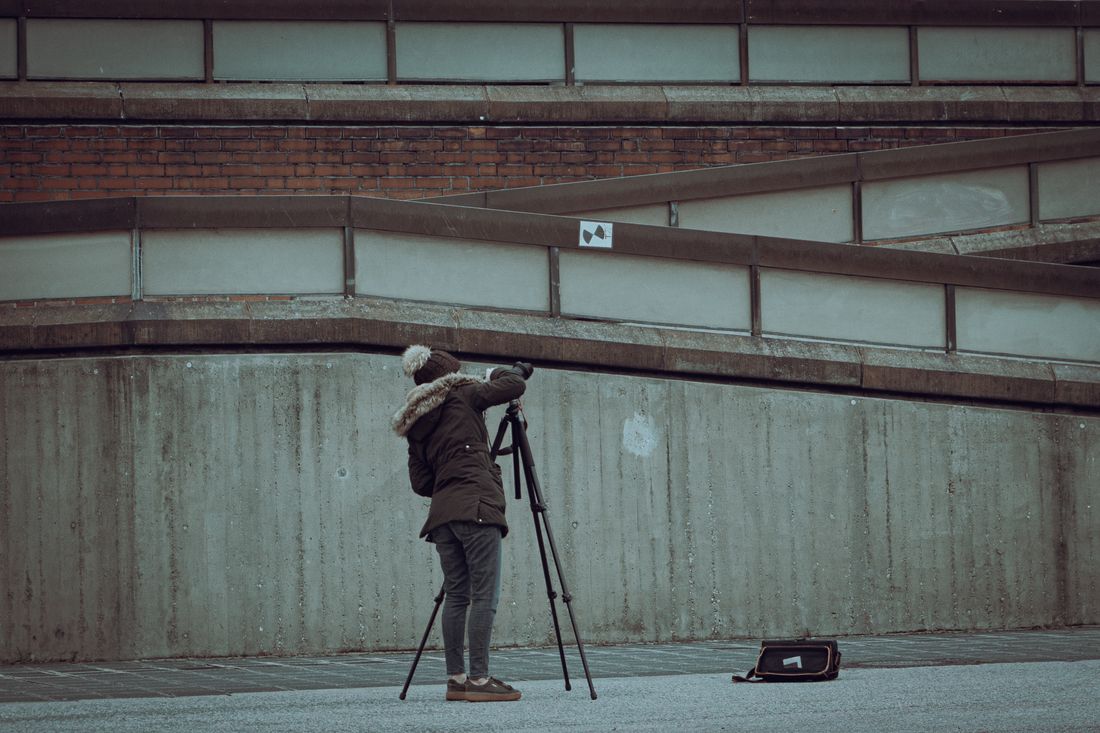
Photo by There on Saturn via Pexels.
Permitting Expectations Shift With Crew Size and Gear. Confirm Before You Book
A single person shooting handheld on a public sidewalk is generally treated very differently than a crew setting up a tripod, lighting, or reflectors, and that distinction matters for planning a shoot day around a specific NYC block. The expectations around what's allowed without paperwork, and what requires a permit, depend on crew size, equipment, and the specific location, and those expectations can change.
This is exactly the kind of detail we won't state as settled fact here, because permit rules are a city policy matter, not a photography opinion, and getting it wrong creates real exposure for whoever's holding the camera. If a shoot involves more than a handheld setup (a tripod, lighting stands, a small crew, or anything that occupies public space for an extended stretch), confirm current requirements directly with NYC's film office before the day, not after a location scout falls in love with a spot.
Building that confirmation into the timeline early is cheaper than discovering a problem on the actual shoot morning. Treat it as a standard step for any exterior brand shoot with more than one person and a camera, the same way you'd confirm building access or a backup location.
The Hours You Can Actually Shoot Depend on Which Block You Picked
Every neighborhood has its own light schedule, set by how tall the surrounding buildings are and which way the street runs, and that schedule can matter more than the calendar date. Financial District streets sit in deep canyons between towers, so direct sun on the sidewalk can be limited to a narrow midday window even on a clear day. Golden hour there often means shade, not warm light. Lower, more open blocks in Dumbo or Long Island City hold usable light for a longer stretch of the afternoon.
This is worth scouting at the actual time you plan to shoot, not just checking the address. A block that looks perfect on a map or in someone else's photo taken at a different hour can be fully shadowed by 2pm depending on orientation and building height. What looks like a lighting problem on the day is usually a location problem discovered too late.
The fix is simple but easy to skip: visit the block, or at least check it, around the actual hour of the planned shoot before locking the date. A ten-minute scout at the right hour prevents a much bigger scramble later.
Noise Is the Cost a Video Shoot Pays That a Photo Shoot Doesn't
A loud block is a minor annoyance for a photo shoot and a real production problem for a video shoot with dialogue, because a camera doesn't need silence but a shotgun mic or lav absolutely does. Trains on the raised tracks near parts of Long Island City, dense traffic on Financial District avenues, and general street noise on any busy Soho or Dumbo corner can all sit under a good picture without hurting it, while quietly wrecking usable audio.
This is a reason the same block can be a great choice for stills and a frustrating one for talking-head video. A location scout for a photo-only shoot doesn't need to think hard about ambient sound. The same scout for a video shoot with sync dialogue needs to actually stand there and listen for a few minutes (trains, construction, delivery trucks, HVAC units) before committing.
When the two conflict, the honest answer is often to split the difference: shoot stills on the more atmospheric, louder block, and move a video setup with dialogue to a quieter spot nearby, or plan around dead time between trains and trucks rather than fighting the noise directly.
Planning the Shoot Day Around the Block You Actually Picked
Once a neighborhood is chosen for the right reason (it matches the positioning, not just the schedule), the remaining work is building a shoot day around that specific block's real conditions instead of a generic checklist. That means the light window you scouted, the crowd pattern for that day of the week, and whatever permitting confirmation the crew size required.
A backup location within a few minutes' walk is worth having for any exterior shoot, because weather, an unexpected street closure, or a block that turns out louder or busier than the scout suggested can derail a plan built around one single spot. The backup doesn't need to be as ideal. It needs to exist and roughly match the same visual register, so a forced pivot doesn't also mean an off-brand backdrop.
The neighborhood decision and the logistics decision aren't really two separate steps. A perfect-fit block that's impossible to shoot at the hour you have is the wrong choice for that day, even if it would have been the right choice with more flexible timing.
Frequently Asked Questions
Does the neighborhood in a personal brand photo actually matter, or is that overthinking it?
It matters because a backdrop reads as a claim before anyone processes your expression or wardrobe. Marble and glass signal institutional trust; exposed brick signals creative independence; a warehouse street signals hands-on and startup energy. A mismatch between that visual claim and your actual positioning creates friction most viewers register as a vague sense of "off," even if they can't name why. Matching the block to what you're selling is a real strategic choice, not aesthetic overthinking.
Is it better to shoot at a recognizable NYC landmark or a less obvious block?
Both have real tradeoffs. A recognizable spot like the Manhattan Bridge view from Dumbo gives instant geographic credibility, but it also appears behind thousands of other subjects and can date a photo to a specific trend or moment. A less iconic block with the same neighborhood character (one street over from the famous corner) keeps the connotation without the cliché, and tends to age better since it isn't tied to one exact, widely photographed frame.
How much do crowds actually affect a brand photo shoot in busy NYC neighborhoods?
More than most people expect. Popular blocks in Dumbo or Soho need real gaps in foot traffic for a clean take, and those gaps shrink as the crowd grows, meaning more takes and more waiting. A weekday morning on the same corner behaves very differently than a weekend afternoon. A quieter side street or an industrial stretch of Long Island City gives far more control over the frame without needing to fight for a usable pause in the crowd.
Do I need a permit to shoot a personal brand video on an NYC street?
It depends on crew size and equipment, and the expectations differ for a single person shooting handheld versus a crew with tripods and lighting occupying public space. Rather than guess, confirm current requirements with NYC's film office before booking the day, especially for anything beyond a one-person handheld setup. Building that confirmation into the timeline early is far cheaper than discovering a problem on the actual shoot morning.
Why would the same block work for photos but not for video with dialogue?
Because cameras tolerate ambient noise that microphones don't. A busy Soho corner or a Long Island City block near the raised train tracks can sit under a great still photo without hurting it, while quietly ruining usable dialogue audio. A location scout for stills doesn't need to think hard about sound; the same scout for talking-head video needs to actually stand there and listen for trains, traffic, and construction before locking the spot.
Related Reading
Working on founder content or a launch and not sure what to shoot?
Tell us where the content needs to live (site, LinkedIn, press, or a launch page) and we'll come back with the scope and a fixed price before anything gets booked.
See Personal Branding & Launches