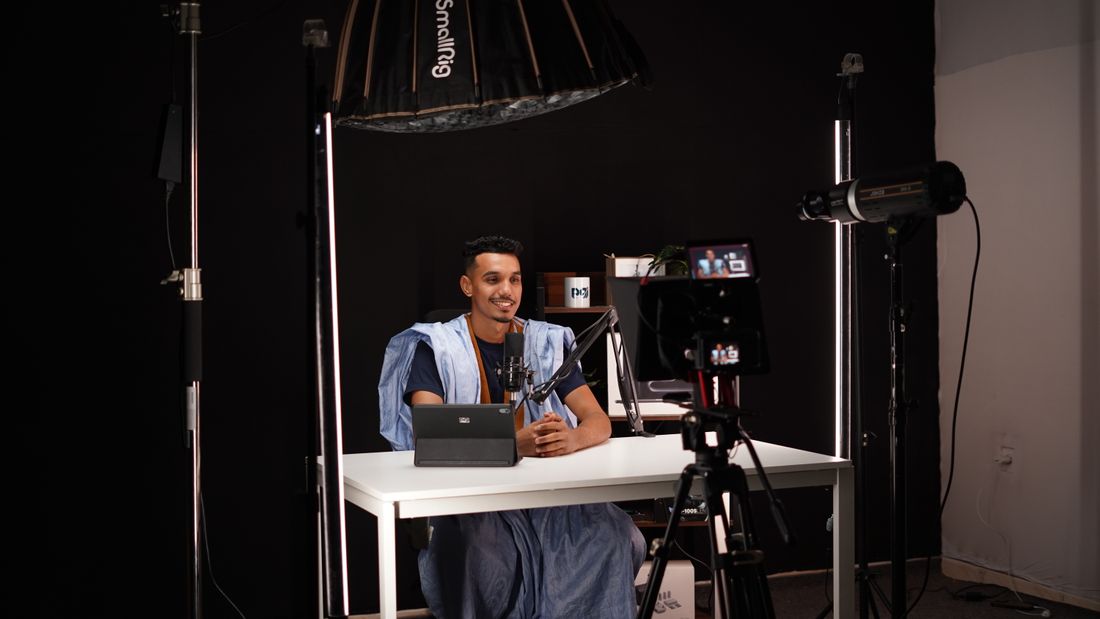
Photo: Core Visuals NYC
Most people who ask about a thought-leadership video already have a series in mind (a monthly cadence, a real production line, a dozen episodes sketched out before the first one is even shot). That's usually the wrong order. A single clip answers questions a series commitment just assumes: whether this person actually reads well on camera, whether the audience cares about the argument, and whether video was ever the right format for the message. Start with one, test it honestly, and let the result (not the enthusiasm in the planning call) decide whether a series is worth building.
A thought-leadership video series is a bet made in advance on three things: whether this person reads well on camera, whether the audience cares about the argument, and whether video is the right format. One well-made clip tests all three before you commit to more, the better reason to start with one, not a series.
Table of Contents
- Why do thought leadership video series usually stall after two or three episodes?
- What does one thought leadership video actually prove before you commit to a series?
- How do you know if someone actually reads well on camera before building a series around them?
- How do you know if the audience actually cares about the argument, not just the production value?
- How do you know if a talking-head video is even the right format for this message?
- What makes a single proof clip strong enough to actually count as a test?
- How do you decide, after that one clip, whether a series is actually warranted?
- What's the actual production cost difference between one video and a committed cadence?
Why do thought leadership video series usually stall after two or three episodes?
A monthly thought-leadership series usually stalls around episode three because the commitment got made before anyone tested whether the format actually worked, for this person, this argument, this audience. The initial enthusiasm carries the first couple of episodes, then there's no evidence the series is doing anything, and it quietly stops.
The pattern is predictable. Someone gets excited about building a personal brand on video, commits to a monthly cadence in a planning conversation, and the first episode ships on energy alone. The second one ships because the first one is already public and stopping right away would look bad.
Episode three is where the math catches up. There's no topic queued, no read on whether anyone's watching past the first ten seconds, and no real signal the time is worth spending. A series that was never tested against a real audience has nothing to point to once the enthusiasm runs out, exactly the moment a single proven clip would have given it something to stand on.
What does one thought leadership video actually prove before you commit to a series?
One well-made clip tests three separate things at once: whether this person reads as credible and comfortable on camera, whether the audience actually cares about the argument being made, and whether a talking-head video is even the right format for the message. A series answers none of those questions in advance. It just assumes yes to all three.
Those are three different failure points, and they rarely fail together. Someone can be a sharp, credible speaker and still pick an argument nobody outside their own head finds interesting. Someone can have a genuinely useful point of view and freeze up on camera in a way that undercuts it every time.
A single clip puts all three variables in front of you at once, with real footage and a real response instead of a guess made in a planning meeting. That's the actual case for starting small: not caution for its own sake, but getting real data before agreeing to a dozen more of these.
How do you know if someone actually reads well on camera before building a series around them?
You know by watching the actual footage back, not by how confident someone sounds describing themselves as camera-ready in a planning call. On camera, some people relax the longer they talk; others tense up and get more guarded, and that only shows up once the camera is rolling and the lights are actually on.
This isn't about polish. A rough, slightly nervous first take that loosens up by minute two is a good sign. It tells you the person gets more natural with practice, which a series would only build on. A stiff delivery that doesn't move at all across a five-minute take is a different, harder signal.
The only reliable way to find out is to shoot the thing and watch it, not to ask someone to self-assess their own comfort in front of a camera. Most people are bad judges of how they come across on screen, which is exactly why the single clip has to happen before the series gets scheduled, not the other way around.
How do you know if the audience actually cares about the argument, not just the production value?
You separate the two by watching how people respond to the substance of the clip, not the lighting or the edit, a well-shot video can still fall flat if the argument doesn't land, and a rougher one can hold attention if the point is sharp. Production quality and audience interest are different variables, and a series conflates them.
It's easy to mistake a compliment about the visuals for proof the message worked. "That looked great" is not the same feedback as someone engaging with what was said, sharing it because they agreed or disagreed, or bringing it up later unprompted. One clip lets you watch for the second kind of response before assuming the first kind means anything.
A series built on an argument nobody actually engages with just repeats the miss a dozen times with better production each time. Testing the argument itself, on one clip, before scaling it is the difference between finding that out once and finding it out slowly, over months, in a format that was never the actual problem.
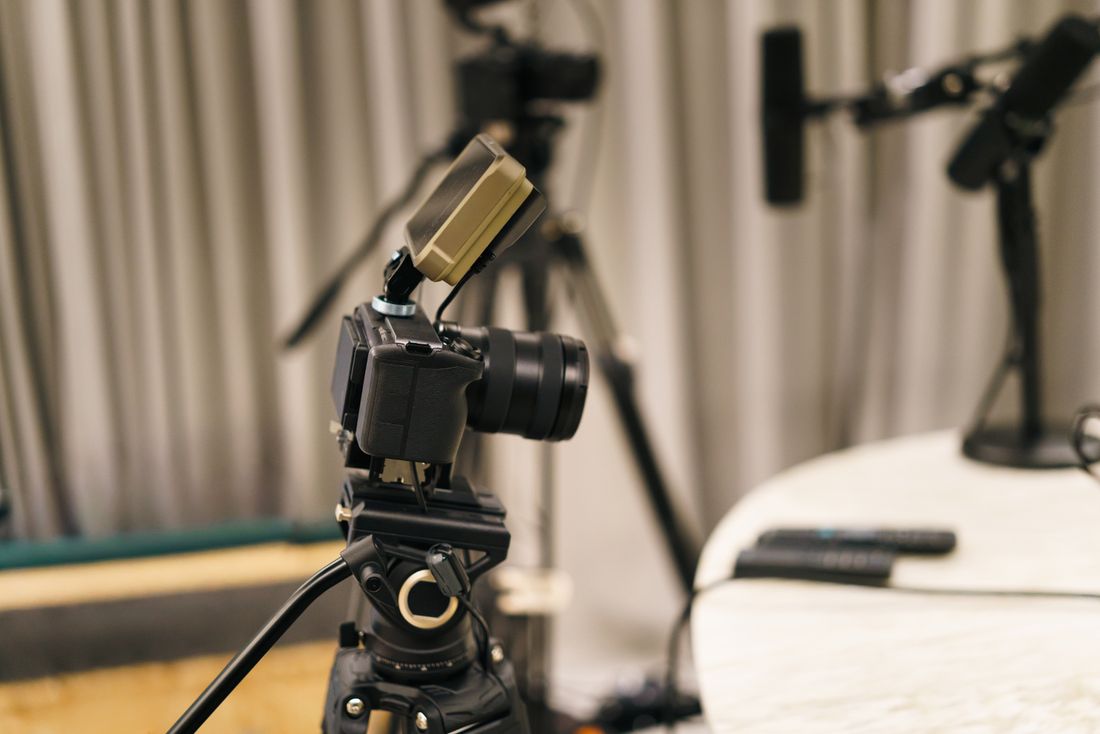
Photo by Jakub Zerdzicki via Pexels.
How do you know if a talking-head video is even the right format for this message?
You test it by comparing what the one clip delivered against what the message needed, some arguments genuinely need a person on camera, and others land just as well as a written post or a slide. One video tells you which case you're in before committing a format to a whole series.
Video is the right format when the argument benefits from tone, pacing, and a real person standing behind it (a contrarian take, a hard-won opinion, something that needs to feel like it's coming from someone specific). It's the wrong format when the message is really a list, a stat, or something that reads faster than it plays.
That distinction is easy to skip when video already feels like the default choice for personal branding. A single test clip forces the question instead of assuming the answer: does this particular message actually need a face and a voice, or was video just the format everyone reaches for first?
A concrete case: announcing a product update is listing facts, and a written post gets that across faster than a talking-head clip does.
What makes a single proof clip strong enough to actually count as a test?
A proof clip only counts as a real test if it's made with the same care a real episode would get (a considered topic, a real setup, a proper edit), not a thrown-together phone video shot in five minutes. A weak test tells you nothing about whether the format works; it only tells you the rushed version didn't.
This is the part that's easy to shortcut. Treating the first video as disposable (low effort because "it's just a test") makes the test unreliable in both directions. It can fail for reasons that have nothing to do with the person or the argument, or it can pass on production polish alone and hide a weak message underneath.
We treat a proof clip as a real production: real lighting, a real question worth answering, a real edit, the same bar as an ongoing series, just one episode instead of a dozen. That's what makes the result trustworthy enough to actually decide something from, instead of a test that only proves the rushed version didn't work.
How do you decide, after that one clip, whether a series is actually warranted?
You decide by looking at what the clip showed on three tests (comfort on camera, real audience engagement, and fit between message and format), not by how the process felt to make. A clip that clears all three is a real case for a series; one that stumbles is a signal to adjust first.
This is where it helps to separate "I enjoyed making this" from "this actually worked." Plenty of founders like being on camera and want to keep going regardless of what the one clip showed. That's a fine reason to make more video, but it's a different decision than committing to a monthly cadence built around thought leadership specifically.
If the clip cleared the bar, the next step is usually a short run (three or four episodes) rather than jumping straight to an open-ended monthly commitment. That gives the format one more real test at a slightly larger scale before it becomes a standing production line.
What's the actual production cost difference between one video and a committed cadence?
A single proof clip is typically a fixed, one-time production cost (one shoot, one edit, one deliverable) while a committed cadence is a recurring cost that repeats every month whether or not each episode is working. The real difference isn't the price of any one video; it's that a series turns a one-time decision into an ongoing one.
That distinction matters more than the per-episode number. One clip is a bounded, known cost you can evaluate against a bounded result. A monthly series is an open-ended commitment (planning time, shoot days, editing, and the founder's own recurring time on camera) that keeps running until someone actively decides to stop it.
We scope a single proof clip as its own fixed-price project, separate from a series commitment, specifically so a client isn't pricing out a year of production before they know the format works. Once the test clip earns it, moving into a cadence is a straightforward next conversation, not a sunk cost anyone has to justify.
Frequently Asked Questions
Should I start with one thought leadership video or commit to a series right away?
Start with one. A single clip tests whether you read well on camera, whether the audience actually cares about the argument, and whether video is even the right format for the message, before you commit to a monthly cadence. Committing to a series first means betting on all three at once, which is a real reason so many thought-leadership series quietly stop after two or three episodes instead of building into something real.
How many episodes does it take before a thought leadership series is actually proven?
One clip proves whether the format is worth pursuing at all. If it clears the bar (a good on-camera read, real audience engagement, the right format for the message), a short run of three or four episodes is a reasonable next test before treating it as an open-ended monthly commitment. Jumping straight from zero to an ongoing series skips the step that tells you whether it was ever going to work.
What if the single test video doesn't perform well? Does that mean video isn't the right format?
Not automatically. A weak result can mean the person needs more camera time to loosen up, the argument wasn't sharp enough, or the format genuinely doesn't fit the message, three different problems with three different fixes. The value of testing with one clip is finding out which of those it actually is, rather than guessing and scaling the wrong fix across an entire series.
Does a proof-of-concept video need to be produced at full quality, or can it be rougher?
It needs the same real care a full episode would get (a considered topic, proper lighting, a real edit) even though it's only one video. A rushed, low-effort test can fail for reasons that have nothing to do with whether the format actually works, which makes the result useless for deciding anything. Treat the test like a real episode; just make one instead of a dozen.
Is a one-off thought leadership video more expensive per video than committing to a series?
Per-video cost isn't really the comparison that matters. A single clip is a fixed, one-time cost tied to a bounded decision, while a series is a recurring monthly commitment that keeps running until someone stops it. The real difference is that one video lets you evaluate the format before spending on a dozen; a series asks you to spend on a dozen before you know if even one was worth it.
Related Reading
Planning founder content or a launch and unsure what to actually shoot?
Tell us where the images or video will run, site, LinkedIn, press, or a launch page, and we'll scope it with a fixed price before you book anything.
See Personal Branding & Launches