NYC has no shortage of rooftop venues, and clients book them specifically for the skyline view, which means the photography and video coverage plan carries more weight than usual to actually deliver on that view. An indoor ballroom's lighting is basically the same at 6pm and 9pm. A rooftop's light is not, and that difference has to be planned for, not discovered on site.
Rooftop and outdoor NYC events change the coverage plan mainly around timing, weather contingency, and equipment: the light shifts meaningfully as the sun sets, wind affects both gear and how people look in frame, and a backup indoor location needs to be confirmed before the event, not scrambled for if weather turns. None of this is complicated. It just has to be planned rather than improvised.
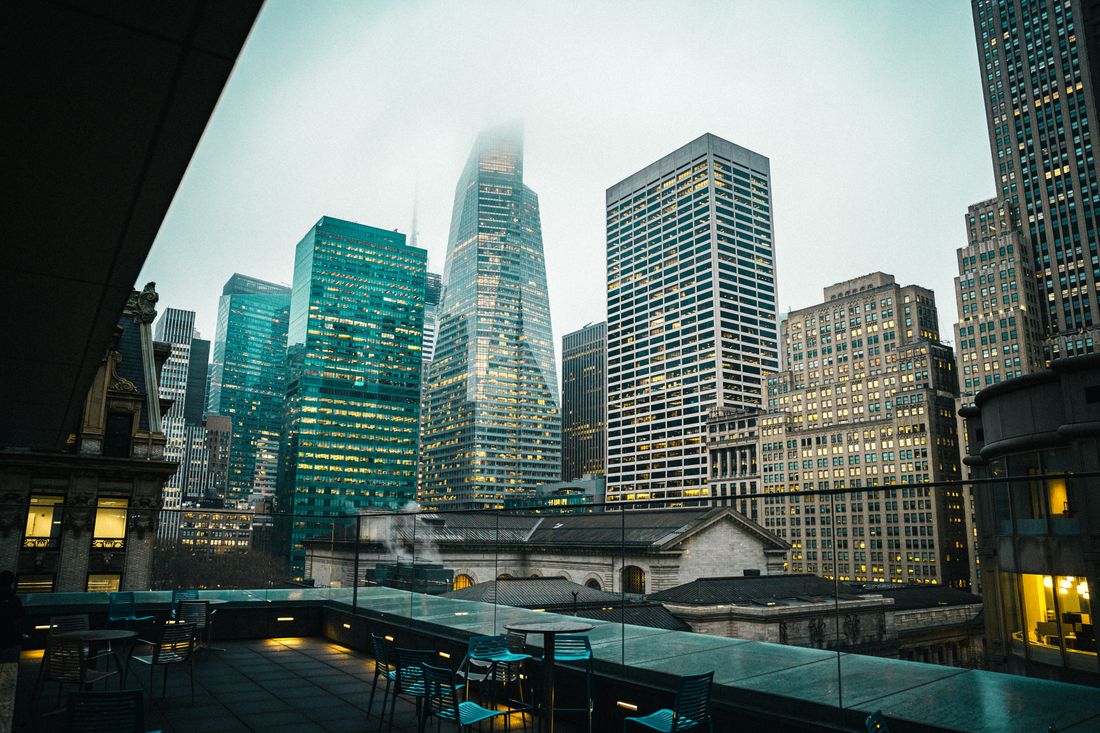
Photo: Core Visuals NYC
Table of Contents
The light changes while the event is happening
An outdoor or rooftop event that runs from early evening into night moves through several distinct lighting conditions (bright daylight, golden hour, blue hour, and full dark) often within a single coverage window. Indoor venues don't present this problem; the room looks basically the same all night under consistent artificial light.
Planning for this means knowing the event's start time relative to sunset and adjusting the shot priorities accordingly, getting skyline and establishing shots during the most flattering light window, and shifting toward more artificially-lit portrait and detail work once the sky goes fully dark. A coverage plan that treats the whole event as one static lighting condition usually misses the best light entirely.
Weather backup, confirmed before the day
Every outdoor or rooftop event needs a confirmed indoor backup space and a clear understanding of when the weather call gets made. Some venues decide hours ahead, others make a game-time call as guests are already arriving. Knowing this in advance lets us plan lighting and framing for both scenarios rather than improvising a fallback on the fly if rain moves the event indoors.
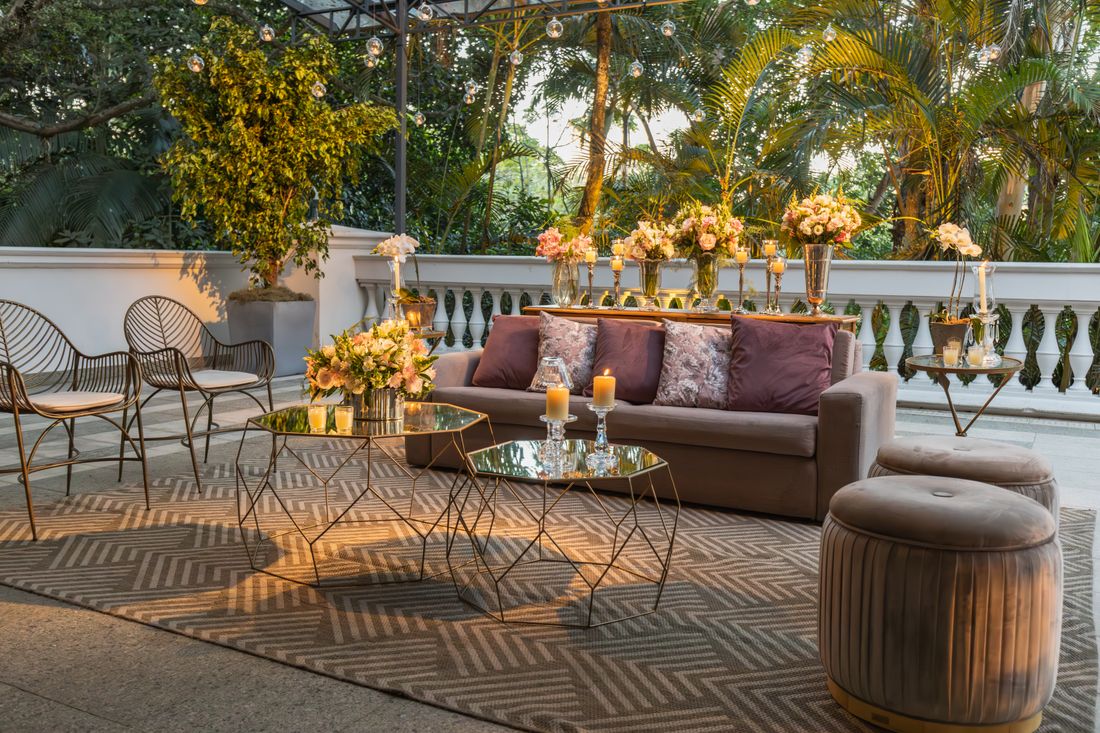
Photo by Matheus Bertelli via Pexels.
Worth asking the venue directly: what indoor space becomes the backup, whether it has the same capacity, and how much notice guests and vendors typically get before a weather call. A venue that hasn't clearly answered this before the event is a bigger risk than the weather itself.
What changes about the equipment
Wind affects lightweight lighting modifiers and stands more than most clients expect. A softbox or umbrella that's perfectly stable indoors can become a hazard on an open rooftop without weighted stands and wind-resistant setups. Direct sun also changes lighting needs in the opposite direction from what people assume: bright daylight often still requires diffusion or fill light to avoid harsh shadows on faces, rather than being "enough light" on its own.
None of this changes the pricing structure, but it does change the gear list and setup time, which is part of why confirming the venue type and general layout ahead of the shoot matters more for outdoor events than indoor ones.
Battery and equipment care also gets more attention outdoors than in a climate-controlled ballroom. Direct sun and heat affect battery life differently than an air-conditioned indoor venue, and equipment left in direct sunlight between uses can genuinely overheat during a long summer event. A few extra minutes of shade planning for the gear itself, not just for guests, is a small detail that prevents a bigger problem mid-shoot.
Camera gear itself needs a lighter touch of attention too. Lens changes in windy, open-air conditions carry more dust and debris risk than a controlled indoor room, so minimizing gear swaps and keeping equipment covered between uses when not actively shooting helps avoid a problem mid-event rather than discovering it in post-production.
Why golden hour timing matters so much
Golden hour (roughly the final hour of daylight before sunset) produces the warmest, most flattering light for outdoor event photography, especially with a skyline in the background. Events that are scheduled to start well before sunset and run through it get the benefit of this window naturally; events that start after dark miss it entirely, which is worth knowing when planning event timing if photos are a priority.
We generally recommend clients check sunset time for their event date when booking a rooftop venue specifically for photos, since NYC's sunset shifts by roughly four hours across the calendar year, a 7pm rooftop event in June still has daylight to work with; the same start time in December is already well into darkness.
This is a genuinely easy thing to check before locking in an event time, and it's a detail that's easy to overlook when the venue and catering logistics are taking up most of the planning attention. A five-minute sunset lookup during the scheduling stage can be the difference between a rooftop event that gets its skyline shot and one that doesn't.
What this looks like in a coverage package
Rooftop and outdoor event coverage fits our standard event coverage tiers with no automatic surcharge. The Essential package covers up to 5 hours at $3,500. The main difference from an indoor booking is the planning conversation: weather contingency, sunset timing, and backup location get discussed upfront in a way that doesn't come up for a ballroom or office event.
How the season changes the plan
NYC's rooftop event season effectively runs spring through early fall, and the planning conversation shifts depending on where in that window an event falls. Late spring and early fall bring shorter windows of comfortable outdoor temperature and earlier sunsets, which compresses the usable golden-hour timing described above. Peak summer offers the longest daylight but also the highest heat, which can affect both guest comfort and how long equipment can reasonably stay set up in direct sun.
Booking a rooftop venue in shoulder-season months (April, May, September, October) often means a tighter but more predictable light window, since sunset timing swings less dramatically week to week than it does around the summer solstice. We factor the event's actual month into the light and timing plan rather than applying one generic rooftop playbook year-round.
Early spring and late fall bookings deserve one more consideration beyond light and temperature: wind. Rooftop venues catch more wind than street-level locations, and a genuinely blustery evening in April or October can affect everything from hair and clothing in portraits to the equipment stability concerns discussed above. It's worth asking the venue about typical evening conditions for the specific month, not just checking a general weather forecast a few days out.
Booking a rooftop or outdoor NYC event?
Tell us the venue and start time, and we'll build a coverage plan around the light and the weather backup before the day arrives.
See Event Coverage PackagesFrequently Asked Questions
What changes about photography and video coverage for a rooftop event?
Rooftop events add golden-hour timing pressure, changing light conditions as the sun sets, wind that affects both equipment and hair/clothing in shots, and often a smaller physical footprint than an indoor venue. The coverage plan has to account for the light changing meaningfully over just a few hours.
Do you need a weather backup plan for outdoor NYC events?
Yes, always. Confirming the venue's indoor backup space and at what point a weather call gets made (a few hours before, or a game-time decision) should happen during planning, not on the event day itself. Knowing the backup location in advance lets us plan lighting and framing for both scenarios.
Does equipment need to change for rooftop or outdoor shoots?
Yes. Wind affects lightweight modifiers and stands more than most clients expect, so rooftop shoots often call for weighted stands and wind-resistant lighting setups. Direct sun also changes lighting needs compared to a controlled indoor room, sometimes requiring diffusion or fill light even in bright conditions.
What time of day is best for rooftop event photography in NYC?
Golden hour (roughly the hour before sunset) produces the most flattering, dramatic light for rooftop event photos, especially with a skyline in frame. Events that start well before sunset and run through it benefit from a coverage plan that accounts for the light shifting significantly during the event itself.
How much does rooftop or outdoor event coverage cost in NYC?
It fits our standard event coverage tiers. The Essential package covers up to 5 hours at $3,500. Outdoor and rooftop events don't carry an automatic surcharge, but the planning conversation includes weather contingency and timing in a way an indoor venue booking usually doesn't.