Photo by Mike van Schoonderwalt via Pexels.
A building launch has a date on the calendar. The developer's credibility doesn't get to wait for it. Buyers evaluating a pre-construction purchase are trusting a person as much as a set of floor plans, someone who delivers on schedule, handles problems honestly, and stands behind the project after closing. That trust is either already established by the time leasing or sales open, or it's being built from zero in the middle of a launch, which is a much harder position. The building has a construction schedule. The developer's own visibility needs one too, running well ahead of it.
A real estate developer's personal visibility is a sales asset with a deadline attached, built over roughly twelve to eighteen months so it's already in place by the time leasing or sales open. The asset set is a current portrait, a site walkthrough, a short explainer of why the building exists, and progress footage, not a single shoot near ribbon-cutting.
Table of Contents
- Why Does a Developer's Own Face Matter When Buyers Are Choosing a Building?
- What's the Actual Lead Time, and Why Does Starting at Ribbon-Cutting Fail?
- What Does the Actual Content Set Look Like Before a Launch?
- What Does Photographing on an Active Construction Site Actually Constrain?
- What's the Difference Between Marketing the Building and Building the Developer's Name?
- Why Do Community and Civic Audiences Matter If They're Not Buying Units?
- What Carries Forward to the Next Development, and What Doesn't?
- Who Should Actually Manage This Timeline: the Developer, Marketing, or the Broker?
Why Does a Developer's Own Face Matter When Buyers Are Choosing a Building?
Buying into a building that isn't finished means trusting the person building it. The buyer is underwriting a promise: that the developer delivers on schedule, handles problems honestly, and stands behind the building once it's occupied. A corporate name on a permit doesn't answer that. A known, visible developer does.
In most categories, the finished product does the convincing. In ground-up development, a meaningful share of the decision happens before there's a finished product to see, based on renderings, a sales deck, and whatever reputation the developer already carries into the room. Buyers are pricing in the builder's track record whether anyone says so out loud or not.
A developer who stays invisible until the sales office opens is asking a stranger to make a large, binding decision based on a floor plan and a logo. Visibility built ahead of that moment doesn't replace due diligence, but it does some of the convincing before the sales conversation starts, which is a different position than starting from zero.
What's the Actual Lead Time, and Why Does Starting at Ribbon-Cutting Fail?
A developer's visibility needs roughly twelve to eighteen months to build before leasing or sales open, because credibility doesn't compress into a launch week. Content started at topping-out or later arrives too late to do its job, introducing the developer right when the audience is being asked to trust them with a decision.
The building has a construction schedule with fixed milestones: site prep, foundation, topping-out, façade, interior fit-out. A developer's content timeline needs its own schedule running alongside it, starting well before the building is recognizable, so there's already a body of material, and a familiar face, by the time leasing or sales actually open.
Waiting until the building looks impressive enough to photograph is a common instinct, and it's the wrong one. By the time a building is dramatic on camera, the launch is usually close, and there's no runway left to build a developer's presence gradually. The presence has to already exist before the deadline, not start on it.
What Does the Actual Content Set Look Like Before a Launch?
The core set covers four things: a current portrait of the developer, a site walkthrough that shows the project taking shape, a short piece where the developer explains in their own words why this particular building exists, and periodic progress footage that runs across the lead-up period rather than one single shoot.
The portrait does the basic job any founder's portrait does, giving press, brokers, and prospective buyers a current, recognizable face instead of a decade-old headshot or no photo at all. The walkthrough and progress footage do something a portrait can't: they show momentum, proof that the project is real and moving, not a rendering and a promise.
The short explainer piece is the one people skip most often, and it's often the most persuasive of the four. A developer saying plainly why this site, why this design, why now, in their own words, does more to build trust with a skeptical audience than another rendering ever will. It's also the piece most likely to still work after the building opens.
What Does Photographing on an Active Construction Site Actually Constrain?
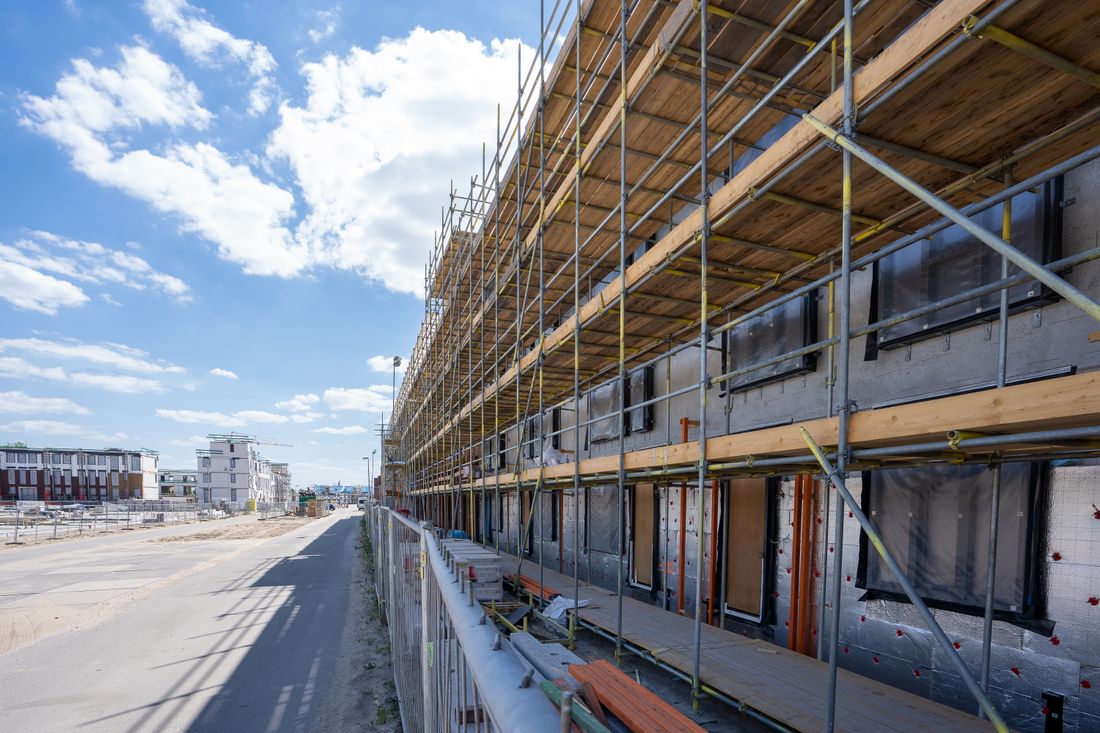
An active site limits what's possible before the schedule does anything else: safety gear and site access rules, unpredictable weather and dust, a moving crew that can't pause for a shot, and long stretches where the building simply doesn't look like anything yet. Planning around those limits matters more than planning around a shot list.
Access has to be coordinated with whoever runs the site, not treated as a given. Hard hats, vests, and escort requirements are normal, and a shoot that shows up without clearing them with the site superintendent tends to get turned away or rushed. Timing also has to bend around construction activity, not the other way around.
Early-phase footage is honestly less visually interesting than most developers want it to be; foundation work and steel don't read as dramatic on camera the way a finished façade does. The value at that stage isn't drama, it's proof of progress and a consistent record the later, more polished footage can be cut against.

Photo by Frasier Thomas via Pexels.
What's the Difference Between Marketing the Building and Building the Developer's Name?
Marketing a building sells one property to one audience for one launch window, and most of it stops being useful once the units are sold or leased. Building the developer's name is a longer asset: a reputation and a visible track record that carries into the next site, the next launch, and the next round of buyers.
A building's marketing content is, by design, specific to that address: renderings, floor plans, a launch date, pricing language tied to that project. None of it transfers cleanly to a different site with a different design and a different neighborhood. A developer's own presence, how they talk about their work, what they've delivered before, travels with them project to project.
The two aren't in competition, and most launches need both. But a developer who only ever invests in building-specific marketing starts every new project from zero credibility, rebuilding trust each time instead of compounding it. Content built around the developer, not just the address, is what actually accumulates.
Why Do Community and Civic Audiences Matter If They're Not Buying Units?
Neighbors, community boards, local officials, and civic groups aren't buyers, but they shape whether the next approval, the next permit, or the next community meeting goes smoothly. A developer with no public presence beyond a permit filing reads as an outside interest. One with a visible, accountable face reads as someone the neighborhood can actually deal with.
This audience forms an opinion of the developer well before a single unit sells, often based on nothing more than construction noise, site fencing, and whatever gets said at a community board meeting. A developer who's already established as a real, visible person, not just a company name, walks into those rooms with something to draw on besides the plans themselves.
None of this is about winning over every objection, and it isn't a substitute for handling the actual planning and approval process well. But a developer people have seen and heard from before tends to get a more patient hearing than one who shows up as a stranger only when there's a problem to resolve.
What Carries Forward to the Next Development, and What Doesn't?
The portrait, the developer's own explanation of how they think about a project, and the pattern of showing progress honestly all carry forward to the next site. The building-specific material, renderings, unit photography, that address's launch messaging, mostly dies with this project once it's sold out or fully leased.
This is worth planning for deliberately, because the two get shot and used together on the same site visits, and it's easy to treat them as one undifferentiated asset instead of two with very different shelf lives. A portrait that leans too hard on this specific building in the background, or a video framed entirely around one project's story, doesn't transfer cleanly to the next launch a year or two later, even if the developer themselves looks exactly the same.
The material worth protecting is whatever establishes the developer as a person with a consistent way of working and a track record, independent of any single address. That's the piece that keeps paying off launch after launch, while the property-specific content resets to zero every time a new site breaks ground and a new sales office opens.
Who Should Actually Manage This Timeline: the Developer, Marketing, or the Broker?
Whoever runs sales and marketing for the launch should own the content timeline, since they understand how the portrait, walkthrough, and explainer piece will actually get used across the sales office, the listing, and press. The developer should have real input on tone and access. A listing broker's job starts later and shouldn't set the schedule.
In practice, this tends to fall through the cracks because a launch has a hundred other logistics competing for attention, and content feels like something that can happen later, closer to the actual sales date. By the time someone notices there's no usable footage of the developer or the site, the twelve-to-eighteen-month runway is already gone.
The more reliable pattern treats developer content the way a good marketing team treats any other pre-launch logistic: booked against the construction schedule as soon as it's set, not against the sales date. That's a planning discipline, not a creative one, and it's usually the difference between a developer who's already known by launch day and one who's introducing themselves for the first time.
Frequently Asked Questions
Does a real estate developer really need personal content, or is marketing the building enough?
Building marketing sells the units, but it doesn't build the developer's reputation, and reputation is what carries into the next project. Buyers evaluating a pre-construction purchase are also weighing whether the developer delivers on schedule and handles problems fairly. A visible, credible developer supports that judgment before the sales conversation even starts. Marketing the building alone leaves that trust question unanswered, and unanswered trust questions slow down large purchase decisions.
How far before a leasing or sales launch should this content start?
Roughly twelve to eighteen months ahead, timed against the construction schedule rather than the sales date. That gives enough runway for a portrait, a site walkthrough, and progress footage to build up gradually, so there's already a visible track record by the time buyers start looking. Starting at topping-out or later means arriving with a rushed, thin presence right when credibility matters most to the audience.
Is it realistic to photograph a developer on an active construction site?
It can be done, but access has to be coordinated with the site superintendent, not assumed. Hard hats, vests, and an escort are standard, and timing needs to work around active construction rather than the other way around. Early-phase visits are less visually dramatic than later ones, which is fine, since the goal at that stage is proof of progress, not a polished hero shot.
Does this personal-brand content still matter once the building is fully sold or leased?
The building-specific material mostly stops being useful once the units are gone. What keeps working is the developer's portrait, their own explanation of how they approach a project, and the visible pattern of delivering on schedule. That material carries into the next site's launch, where it does real work again instead of sitting unused. Planning for that split early is what makes it reusable later on.
Do community and civic audiences actually matter if they aren't purchasing anything?
They matter because they influence whether the next approval, permit, or community meeting goes smoothly, even though they aren't buyers. A developer who's a known, visible person tends to get a more patient hearing from neighbors and local officials than one who's only a company name on a filing. It isn't a substitute for handling the approval process well, but it changes the developer's starting position.
Related Reading
Have a launch or brand project where scale is actually the story?
Tell us what the aerial shot needs to show, and we'll scope it alongside the ground coverage from the start, permits included.
See Personal Branding & Launches