Photo by Sergei Starostin via Pexels.
A topping-out ceremony doesn't happen on an empty lot, and it doesn't happen in a finished lobby. It happens somewhere in between, on an active construction site, months after the shovels and months before the ribbon — and almost nobody plans the coverage for it like the distinct milestone it actually is.
A topping-out ceremony marks the completion of a building's structural frame, celebrated by signing the final beam before it's hoisted into place. It sits between groundbreaking and the ribbon cutting, on a live construction site with structural steel, PPE requirements, and both crew and executives in frame — a different shot list from either bookend milestone.
Table of Contents
- The Milestone Between the Shovel and the Ribbon
- The Beam-Signing Tradition, and Why It's the Center of the Shot List
- What's Actually in Frame: A Live Construction Site, Not a Lot or a Lobby
- PPE and Site Access Change the Logistics Before the Camera Comes Out
- Two Audiences in One Frame: Crew and Executives, Together
- The Beam Lift and the Evergreen-Tree Tradition
- The Topping-Out Shot List, Start to Finish
- Scheduling a Topping-Out Shoot Around an Active Job Site
The Milestone Between the Shovel and the Ribbon
A topping-out ceremony marks the moment a building's structural frame is complete — the final beam or slab set in place — which sits months or years after groundbreaking and months or years before a ribbon cutting. It photographs nothing like either one: no dirt, no shovels, no finished lobby, no ribbon.
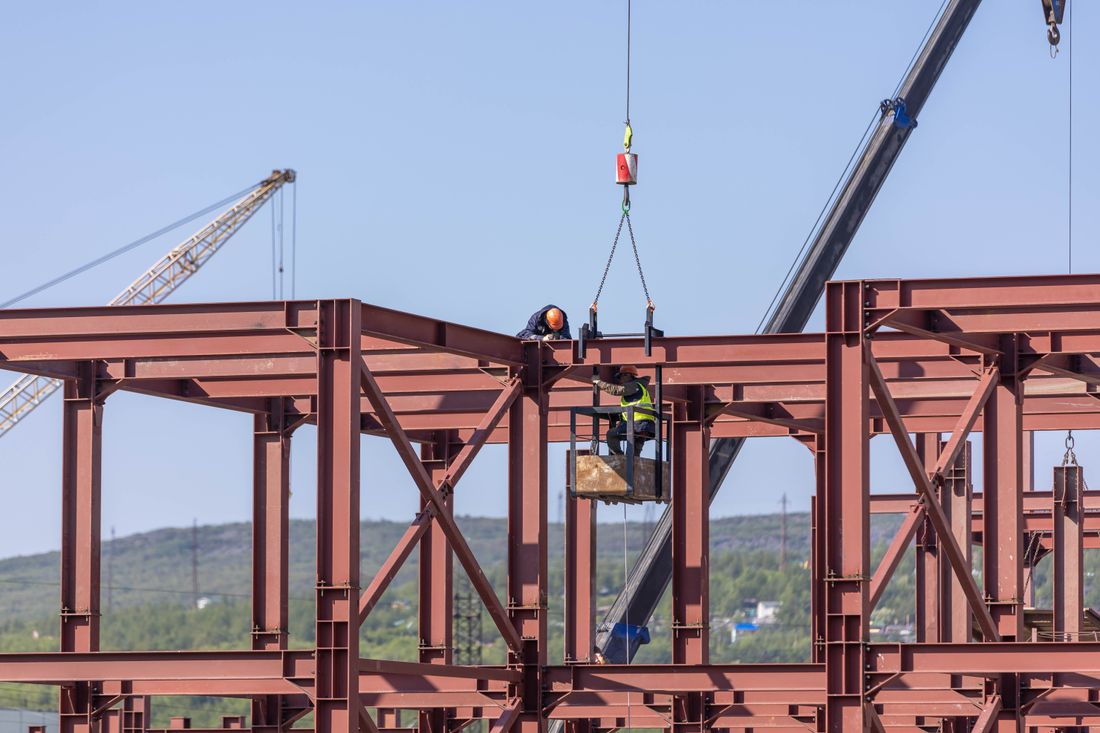
Groundbreaking photography works with an empty lot and a few shovels in clean suits. Ribbon-cutting photography works with a finished, staged building and oversized scissors. Topping out sits in the middle — an active job site with structural steel overhead, a crane still running, and people in hard hats standing next to people in suits. None of that shorthand applies here: no dirt to stage a shovel in, no finished storefront to frame a ribbon against.
That gap is why treating this ceremony like a smaller ribbon cutting is a mistake. The shot list, the site logistics, and the mix of people involved are different enough that planning for it the way you'd plan a groundbreaking or a ribbon cutting produces coverage that misses the point: a building mid-transformation, with the people who built it standing inside the structure itself.
The Beam-Signing Tradition, and Why It's the Center of the Shot List
The beam-signing tradition is the actual center of a topping-out ceremony: the final structural beam, often painted white, gets signed by the construction crew, project executives, and sometimes investors or officials before it's hoisted into position. That signed beam, and the people gathered around it holding markers, is the one shot this milestone has that no other ceremony has.
Nothing about a beam-signing table looks like a photo op built for cameras — usually a flat surface near the site office, a beam laid across sawhorses, and a scrum of people waiting their turn with a marker. That's the point. The value comes from it being an actual working moment, not a staged one, which means getting there early enough to catch the first signature and staying through the last one matters more than any single hero frame.
A tight shot of a name being signed, a wide shot of the crowd around the beam, and a detail shot once it's fully covered in signatures each do different work afterward — one for a press release, one for a company newsletter, one for the crew who might never see the finished building from the inside.
What's Actually in Frame: A Live Construction Site, Not a Lot or a Lobby
The backdrop at a topping-out ceremony is an active, unfinished construction site: exposed structural steel or concrete, open floor plates with no walls, temporary lighting, and often a crane still in operation overhead. There's no landscaping to frame and no finished lobby to shoot into — the building itself is the subject, mid-assembly.
That changes what actually reads as a good frame. A groundbreaking photo leans on clean, empty space — dirt, sky, a row of shovels. A ribbon-cutting photo leans on a finished, styled interior or exterior. A topping-out photo has to find order inside visible construction: rebar, temporary decking, exposed columns, stacked material, safety netting. None of that is a flaw to shoot around — it's evidence the project is real and moving, which is often exactly what a developer or investor wants documented at this stage.
Framing decisions matter more here than at either bookend milestone. A wide shot needs enough structural detail to read as "under construction" rather than cluttered, and a tighter shot needs to isolate people from the visual noise of an active site without losing the context that makes this photo different from one taken in a finished space.
PPE and Site Access Change the Logistics Before the Camera Comes Out
Photographing on an active structural site means hard hats, safety vests, and closed-toe boots are standard site-access requirements, not optional gear — getting cleared onto the floor usually means checking in with the general contractor's site office first. This is a production and logistics fact, not safety guidance; the general contractor sets and enforces the actual rules.
That access requirement shapes the shoot before a single frame gets taken. Camera bags, extra lenses, and lighting gear all move through the same access process as a person, which means confirming ahead of time what's allowed on an active floor and what has to stay on the ground level. A site visit or a call with the GC's team a few days out, not the morning of, is what turns this from a scramble into a known plan.
It also means the photographer is visibly part of the same PPE-compliant group as everyone else in the shot, worth planning for rather than treating as an afterthought: hard hats and vests photograph very differently depending on color, branding, and whether they're worn correctly, and that's true for the crew, the executives, and the person behind the camera.
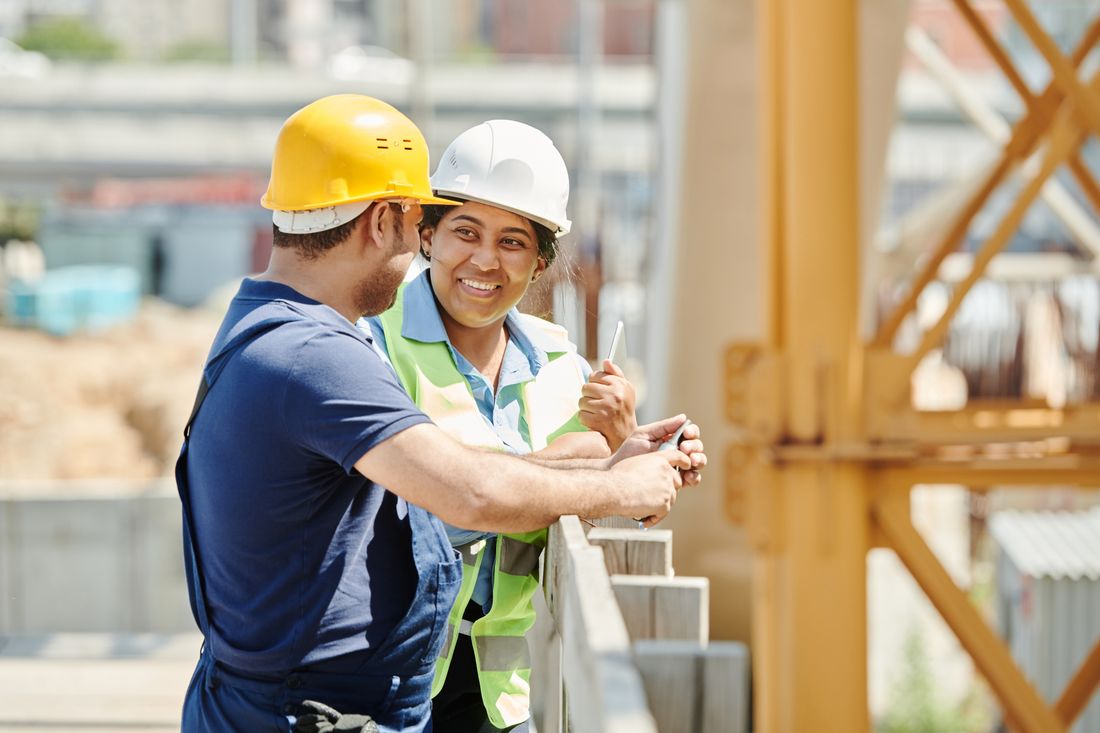
Photo by Mikael Blomkvist via Pexels.
Two Audiences in One Frame: Crew and Executives, Together
A topping-out ceremony puts the construction crew who built the structure and the executives or investors who financed it in the same frame, often the only time in the whole build. That mix — hard hats and vests next to suits and visitor gear — is a defining visual feature no other milestone reliably produces.
A groundbreaking crowd is mostly leadership and officials in clean clothes on dirt that hasn't been touched. A ribbon cutting is mostly leadership, tenants, and guests in a finished space the crew has usually already left. Topping out is the one ceremony where the people who poured the concrete and welded the steel are standing next to the people who signed off on the budget, on the same floor.
That mix is worth treating as the actual story of the coverage, not a logistics complication to frame around. A group photo that separates crew from executives into two rows loses the thing that makes this milestone specific — it's the one moment the whole project team, top to bottom, occupies the same physical space.
The Beam Lift and the Evergreen-Tree Tradition
Once the final beam is signed, many topping-out ceremonies include the crane lifting that beam into its final position, sometimes with an evergreen tree or a flag attached — an old construction tradition marking the structure's completion. That lift is a separate shot from the signing itself, and it happens fast, on the crane's schedule rather than the ceremony's.
The lift moment rewards a wide angle that includes the crane, the beam, and enough of the building's frame to show scale — this is the shot that communicates "the structure is finished" without a single person in frame. If a tree or flag is part of the tradition at a given site, it's worth confirming with the GC ahead of time whether it's happening at all, since not every project follows the custom, and when it gets attached.
Because the crane runs on its own operational timeline, not a photographer's, this shot benefits from being positioned and ready before the lift starts rather than reacting to it. Missing the beam actually leaving the ground means missing the one moment in the whole ceremony that can't be restaged.
The Topping-Out Shot List, Start to Finish
A topping-out ceremony's shot list runs in a fixed sequence: the signing table as people arrive and sign the beam, close-up detail shots of signatures, the crane lift of the finished beam, a wide site shot showing structural progress, and a group photo mixing crew and executives together. That order roughly follows how the ceremony actually unfolds on site.
Unlike a ribbon cutting's five-shot list, built around a single staged moment, a topping-out shot list spans a longer, looser window — signing can take twenty minutes or more depending on how many people are involved, and the lift itself might happen well before or after the signing wraps depending on the crane's schedule that day. That means the coverage plan has to hold multiple moments loosely rather than counting down to one cued instant.
The group photo works best gathered right after the lift, while people are still on-site and before crew members head back to active work — waiting too long after the ceremonial part ends usually means losing half the group back to the job at hand, since the site doesn't actually stop running for the ceremony.
Scheduling a Topping-Out Shoot Around an Active Job Site
A topping-out ceremony gets scheduled around the construction site's own operational needs — crane availability, weather, and the general contractor's daily schedule — not around a photographer's or a marketing team's preferred date, which means the shoot date often gets confirmed or shifted with less lead time than a groundbreaking or ribbon cutting typically allows.
That's a real difference from the other two milestones. A groundbreaking or ribbon cutting can usually be locked to a date months out, because an empty lot or a finished building doesn't have an active crane schedule to work around. A topping-out ceremony depends on the actual construction sequence being at the right point and the crane being free for the lift, which can move for reasons that have nothing to do with the ceremony itself — weather, material delivery, another trade needing the crane that day.
The practical response is staying in contact with the GC's team in the week leading up to the likely date rather than treating an early-booked date as fixed, and building in enough flexibility on the coverage end that a date shift doesn't turn into a scramble.
Frequently Asked Questions
What is a topping-out ceremony?
A topping-out ceremony marks the point when a building's structural frame is complete, usually celebrated by signing the final beam or slab before it's set into place on top of the structure. It falls between groundbreaking and the ribbon cutting, on an active construction site rather than an empty lot or a finished building, and typically involves both the construction crew and the project's executives or investors, standing together on the unfinished floor.
How is a topping-out ceremony different from a groundbreaking or a ribbon cutting?
A groundbreaking happens on an empty lot with shovels and clean suits; a ribbon cutting happens in a finished, styled space with scissors and a staged backdrop. A topping-out ceremony happens on an active job site with exposed structural steel, a working crane, and a beam-signing tradition unique to this milestone. The people, the backdrop, and the shot list are all different from either bookend event.
What is the beam-signing tradition at a topping-out ceremony?
The beam-signing tradition involves the final structural beam, often painted white, being signed by the construction crew and project stakeholders before it's hoisted into position on the building. It's an informal, working moment near the site office rather than a staged photo op, and it's the one shot at a topping-out ceremony that doesn't appear at a groundbreaking or a ribbon cutting, often ending up in a company newsletter or on the project's own social channels afterward.
What PPE is needed to photograph a topping-out ceremony?
Active construction sites generally require a hard hat, safety vest, and closed-toe boots for anyone on the floor, including a photographer, and access typically runs through the general contractor's site office and an orientation or escort process. This is a production and access fact set by the general contractor, not safety advice — every site's specific PPE and access requirements should be confirmed directly with the GC's team beforehand.
Who typically attends a topping-out ceremony?
Topping-out ceremonies usually bring together the construction crew who built the structure and the executives, investors, or officials connected to the project, often in the same space for the only time in the entire build. That mix of hard hats and business attire, working and standing together on an active floor, is one of the more distinctive parts of this milestone, and it's worth planning the group photo around rather than treating it as an afterthought.
Related Reading
Not sure if hourly or a package makes more sense for your event?
Tell us the expected length, and we'll run the actual numbers before you book.
See Event Coverage Packages