
Most professional speakers commission one video, use it for two years, and never notice the footage stopped matching the talk. A brand video built to actually work has to hold up across every stage of the career it's promoting, not just the night it was filmed, which means planning it as a standing sales asset rather than a souvenir of one good performance.
A professional speaker's brand video should be planned as a standing sales asset, not a one-time recording. It needs footage that explains the argument, not just proof a room reacted, and a refresh cadence tied to how the keynote evolves so bureaus and buyers always see the current version.
Table of Contents
- What a Professional Speaker's Video Actually Has to Do
- Who Actually Watches This Before Booking a Speaker
- Why Commissioning Original Footage Is a Different Project Than Cutting a Reel
- Why a Speaker's Video Has a Shorter Shelf Life Than It Looks Like
- What an Original Shoot Actually Captures
- Treating the Video as a Standing Program, Not a One-Time Deliverable
- Where This Video Actually Does Its Job
- Planning a Shoot That Works This Way
What a Professional Speaker's Video Actually Has to Do
A professional speaker's brand video has to sell the next booking, not document the last one. It shows a bureau, event committee, or corporate buyer what the speaker actually argues, how they hold a room, and why that argument fits their event, before anyone commits to a date.
That's a different job than a highlight reel from a single talk. A reel proves the room reacted. A brand video has to prove something harder: that the speaker has a point of view worth paying for, clear enough that a buyer who never sat in that room can tell whether it fits their audience.
Speakers who treat the video as a recording of one good night end up with something that ages the moment the talk changes. Speakers who treat it as a sales asset built around the argument end up with something a bureau can submit for a year without apologizing for an outdated reference.
That distinction sounds small until you see how the two get used. A recording gets forwarded once to close a date, then sits untouched. A sales asset gets pulled up repeatedly, dropped into new submissions, referenced by people who never saw the talk.
Who Actually Watches This Before Booking a Speaker
Speaker bureaus, corporate meeting planners, and association event committees are the three buyers who watch this footage closely, usually before the first call. They're screening for whether the speaker can hold an unfamiliar room and whether the message maps onto their own audience, not just whether the speaker looks polished.
A bureau rep is often submitting the speaker to a client who has never heard of them. The video is doing the pitch the bureau can't do in a two-line email. If it opens with three minutes of an emcee introduction and applause before the speaker says anything substantive, most buyers stop watching before the point ever lands.
Corporate buyers watch differently. They're picturing this person on their own stage, in front of their own employees or clients, and they're listening for whether the argument would survive being dropped into a different industry. A video built for one very specific audience can read as a poor fit even when the speaker is strong, which is exactly why the footage has to do more than capture a single crowd's reaction.
Why Commissioning Original Footage Is a Different Project Than Cutting a Reel
Commissioning original video means planning a shoot around the argument the speaker wants to make, not waiting for a good talk to happen and cutting a reel from whatever a venue's house camera captured. The two produce different footage because they start from different questions.
A reel cut from event footage answers: did this room respond? It's built from angles a house crew chose for a different purpose, usually a wide stage shot and maybe one slide camera, with audio mixed for the room instead of for a laptop speaker. It can be genuinely effective proof that the speaker performs live.
A commissioned shoot answers a different question: what does this speaker actually argue, and can a stranger follow it in ninety seconds? That means planning coverage in advance, choosing what gets filmed close and what gets filmed wide, and treating the speaker's point of view as the thing the camera is there to explain, not a byproduct of recording an event that was happening anyway.
Neither approach is wrong alone, but a full-time speaking business built entirely on whatever a venue happened to record eventually runs out of usable footage, since none of it was planned around the argument.
Why a Speaker's Video Has a Shorter Shelf Life Than It Looks Like
A keynote evolves. The speaker sharpens the opening, drops the reference that stopped landing, adds a new example after a year of new stages. The video, if nobody plans for this, stays frozen on whatever the talk sounded like the day it was filmed, quietly drifting out of sync with what the speaker actually says now.
This matters more for a full-time speaker than it does for most other professionals with a promo video, because the video is doing sales work on a message that is supposed to keep improving. A static video paired with a moving keynote eventually undersells the current version of the talk, or worse, sets an expectation the live version no longer matches.
The fix isn't dramatic. It's treating the footage as something with a known expiration, checking it against the current keynote on a schedule rather than waiting for a bureau or planner to notice the gap first. A video built to be refreshed holds its value; a video built to be permanent quietly stops being accurate.
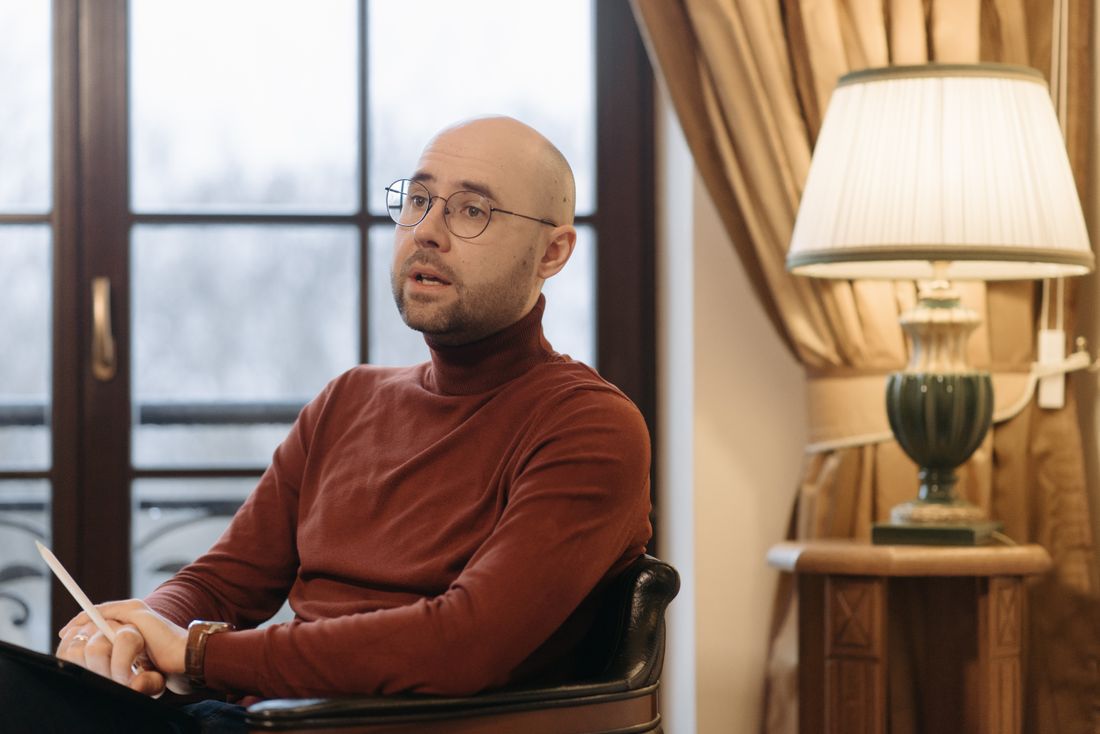
Photo by Pavel Danilyuk via Pexels.
What an Original Shoot Actually Captures
A brand video built for a professional speaker usually pairs two kinds of footage: staged delivery that shows the speaker working an audience, and a controlled interview segment that lets them explain the argument directly, without needing a live crowd to justify the shot.
The delivery footage puts the speaker mid-talk, gesturing, moving, reading the room, shot from where an audience member would actually be sitting rather than from a house camera bolted to the back wall. It has to look like a real room without leaning on anything from that specific event that would date the clip in six months.
The interview segment does the explaining work the delivery footage can't. Seated, lit for a calm, composed setup, the speaker can lay out the argument in plain language, the kind of clear framing a bureau rep can quote in a submission. Together, the two pieces cover both jobs: proving the speaker performs, and explaining what they actually argue.
Neither piece substitutes for the other. Delivery footage without explanation leaves a buyer guessing at the point. An interview alone leaves them wondering if the speaker can hold a live room.
Treating the Video as a Standing Program, Not a One-Time Deliverable
A full-time speaker's video works best as a standing content program with a shoot cadence built around the career, not a single deliverable checked off once and revisited only when it looks embarrassingly dated. The cadence should track the keynote's evolution, not the calendar for its own sake.
In practice that means planning for a refresh whenever the talk changes meaningfully, not on a fixed annual schedule regardless of what actually shifted. A speaker who adds a new closing story or retires an old example has changed the product being sold. The footage should catch up before a bureau submits an outdated version to a client.
We build this the way we'd build any recurring engagement: same person shooting each round so the look stays consistent across updates, planned in advance rather than scrambled together before a big submission deadline. A speaker who treats the video as ongoing work, not a finished asset, ends up with material that keeps matching what they're actually selling.
Where This Video Actually Does Its Job
This footage earns its keep on the speaker's own website, in bureau submission packages, and inside the proposal materials sent directly to a corporate buyer considering a booking. Each of those placements gets watched by someone deciding whether to spend money on a date that hasn't happened yet.
A bureau submission usually has seconds to make its case before the reviewer moves to the next candidate. The interview segment, cut short, can carry that first impression on its own, while the full video sits on the website for a buyer doing deeper research after the bureau's first pass already worked.
A direct corporate pitch is a slower read. The buyer is picturing this person in their own room, which is why the delivery footage matters there in a way it doesn't for a five-second bureau scroll. Planning the shoot with all three placements in mind, rather than defaulting to whatever format the last event happened to produce, is what makes one shoot cover all three jobs well.
Planning a Shoot That Works This Way
Planning starts with the talk itself, not the camera. We ask what the speaker actually argues, where the talk is headed over the next year, and which moments genuinely need a live room versus which ones are better explained sitting still. That conversation shapes the shot list before anyone picks a location.
I've found the speakers who get the most out of this are the ones who come in with a clear sense of their own argument, not just a request for "a promo video." The clearer the speaker is about what they're actually selling, the easier it is to plan footage that explains it instead of just decorating it.
We handle this the same way we handle any recurring engagement: one point of contact, a plan set before the shoot day instead of figured out on location, and a clear sense of what happens when the keynote changes enough to need a refresh. The goal is footage the speaker can keep using, not a single video they eventually have to explain away.
Frequently Asked Questions
How is a professional speaker's brand video different from an event highlight reel?
A highlight reel is cut from footage of one talk and proves a room responded to that specific performance. A brand video is planned in advance around the speaker's actual argument, so it can explain the message to a buyer who wasn't in the room, and it keeps working after that particular talk is no longer the current version of the keynote. Both can be useful, but they answer different questions for a buyer deciding whether to book.
How often should a professional speaker refresh their brand video?
Refresh it when the keynote changes meaningfully, not on a fixed calendar. A new closing story, a retired example, or a shift in the core argument means the video no longer matches what's actually being sold. Checking it against the current talk on a regular schedule catches the drift before a bureau submits an outdated version to a client who then hears something different live.
What footage does a speaker brand video shoot actually need to capture?
Two kinds: staged delivery footage showing the speaker working a room, shot from an audience vantage point, and a seated interview segment where the speaker explains the argument directly. The first proves they perform live and can hold an unfamiliar crowd. The second explains what they actually argue, which delivery footage alone usually can't do for a buyer who wasn't in the room and has no other way to judge the message itself.
Who actually watches a speaker's brand video before booking?
Speaker bureaus screening submissions, association event committees vetting a shortlist, and corporate meeting planners picturing the speaker on their own stage. Each is checking whether the argument fits their specific audience, not just whether the speaker looks confident on camera, so the video has to explain the message clearly to someone who has never heard the talk before and has no other context for it going in.
Should a professional speaker treat their brand video as a one-time project?
No. A full-time speaking business benefits from treating the video as a standing asset with a planned shoot cadence tied to how the keynote evolves, rather than a single deliverable revisited only when it looks visibly dated. That keeps the footage matching the current version of the talk instead of an old one that has quietly stopped representing what the speaker actually delivers on stage.
Related Reading
Have a launch or brand project where scale is actually the story?
Tell us what the aerial shot needs to show, and we'll scope it alongside the ground coverage from the start, permits included.
See Personal Branding & Launches