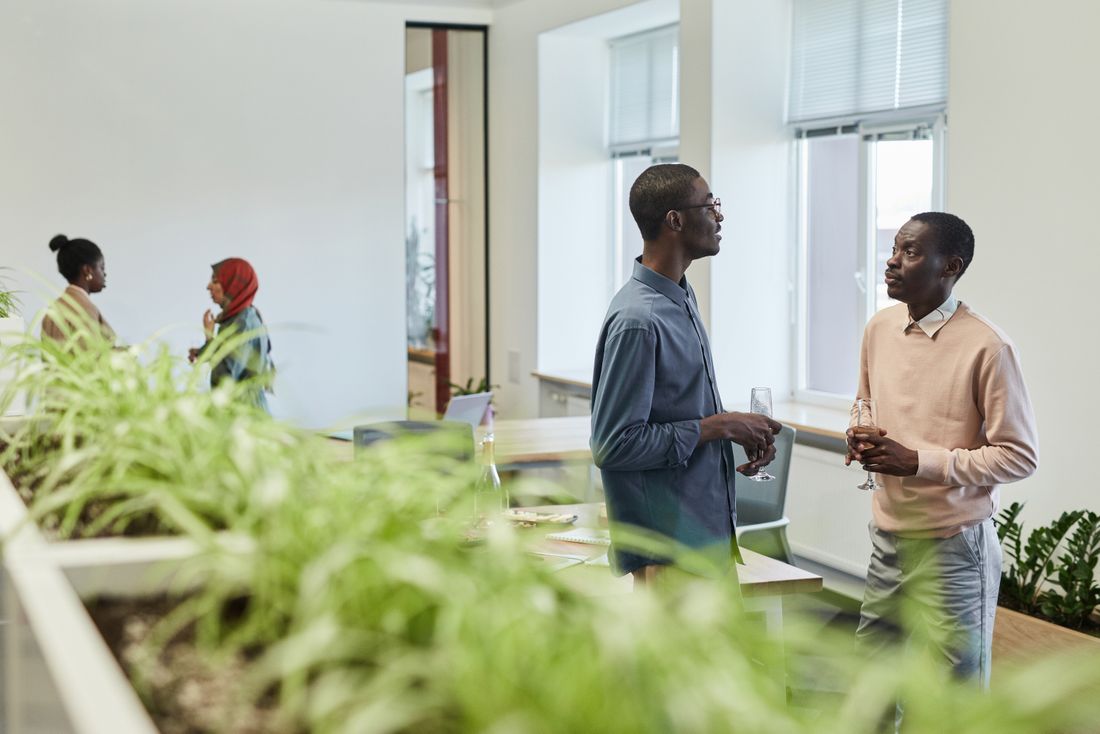
Photo by Edmond Dantès via Pexels.
A company celebrating a new NYC office almost always books one thing: photography for the party. What gets missed is that the party and the empty, finished space behind it are two separate photography assignments with two different audiences, and the order they get shot in matters more than most companies realize until the invoices for a second shoot show up months later.
Office opening celebration coverage needs two passes: an architectural shoot of the clean, empty finished space before anyone arrives, and candid event coverage of the party itself. Shoot the empty space first, the people second. Reverse that order and the room is no longer clean enough to photograph on its own.
Table of Contents
- Why an Office Opening Produces Two Different Shoots
- Who Actually Uses These Photos Months Later
- The Sequencing Argument: Clean Space First, People Second
- What “Clean Empty Space” Actually Takes to Produce
- What the Party Itself Needs From Coverage
- Scheduling Both Shoots Around One Event Day
- The Deliverable Gap When Clients Skip the Empty-Space Pass
- Organizing the Final Deliverable Set for Multiple Audiences
Why an Office Opening Produces Two Different Shoots
A new-office celebration is really two photography assignments sharing one date on the calendar: candid coverage of the party, and a separate architectural pass of the empty finished space. One documents people and culture. The other documents the room. Treated as a single shot list, both come out thinner than they should.
The two modes are genuinely different disciplines, not just different subjects. Event coverage is fast and reactive: wide apertures for low light, following movement, catching a toast before it ends. Architectural photography is slow and deliberate: a tripod, even light, straight lines, and no one walking through the frame. Switching between them mid-party means switching gear, pace, and attention at the same time a room full of guests is arriving, which is the wrong moment to be making that switch.
Nobody puts “photograph the empty room” on an event invitation, so that half of the day gets planned around the party's schedule instead of its own. The deliverable set a company actually needs later depends on both existing, planned as two shoots rather than assumed as one.
Who Actually Uses These Photos Months Later
Office opening photography ends up serving five different audiences: recruiting and the careers page, prospective clients evaluating the company, press covering the move, the landlord or leasing broker marketing the building, and the internal team documenting its own relocation. None of them want the same image.
Recruiting wants candid shots of people in the space, because culture is the actual sell on a careers page, not square footage. Clients and press want a clean, professional read of the finished office, something that signals stability and investment without a party in the frame. A landlord or broker often asks for interior shots for their own leasing materials, since a well-designed, occupied suite is proof the building attracts good tenants, and that photo has to be usable without guests or décor dating it. Internal teams want both, for an intranet post or an investor update marking the move.
One shoot, one shot list, and one deliverable set cannot honestly serve all five. That's the practical reason the two passes exist as separate briefs, not a stylistic preference.
The Sequencing Argument: Clean Space First, People Second
The empty space gets shot before the party starts, not after it ends. Once catering arrives, chairs get pulled into conversation clusters, and eighty people occupy the room, the architecture is no longer in a state worth photographing on its own, and there is no clean version left to go back to that same day.
Reversing the order is the mistake companies make when they assume shooting the empty space after guests leave is more efficient, same crew, same visit. In practice the room is holding cups on desks, chairs pushed at odd angles, decorations still taped up, and a cleanup crew that needs hours before the space resets, hours a venue rarely has before the next morning's workday. What gets photographed at that point isn't the new office, it's party aftermath with better lighting.
The whole value of an empty-space photo is that it shows the office as it exists on an ordinary day, not the one day it hosted a hundred people. Shooting it first is what makes that claim true. Shooting it last turns the same photo into a document of a different, less useful thing.
What “Clean Empty Space” Actually Takes to Produce
A usable architectural pass needs furniture in its final position, no personal items like bags, coats, or lunch containers sitting on desks yet, and consistent lighting across the space, ideally shot before staff have had time to settle in and clutter their own workstations with daily life.
In practice that means shooting early on the event day itself, before the party's setup crew arrives with balloons, bar stations, and AV gear, or the evening before if the buildout is already finished and furniture is placed. A short walkthrough with whoever manages the space, five or ten minutes to flag what needs to be tucked away or straightened, saves far more time than a reshoot later would cost.
This isn't a bigger production than the party itself, it's a discipline problem more than an equipment one. Someone has to own the decision that the room stays untouched until after the empty-space photos are done, and that decision has to be made before the first box of decorations gets carried in.
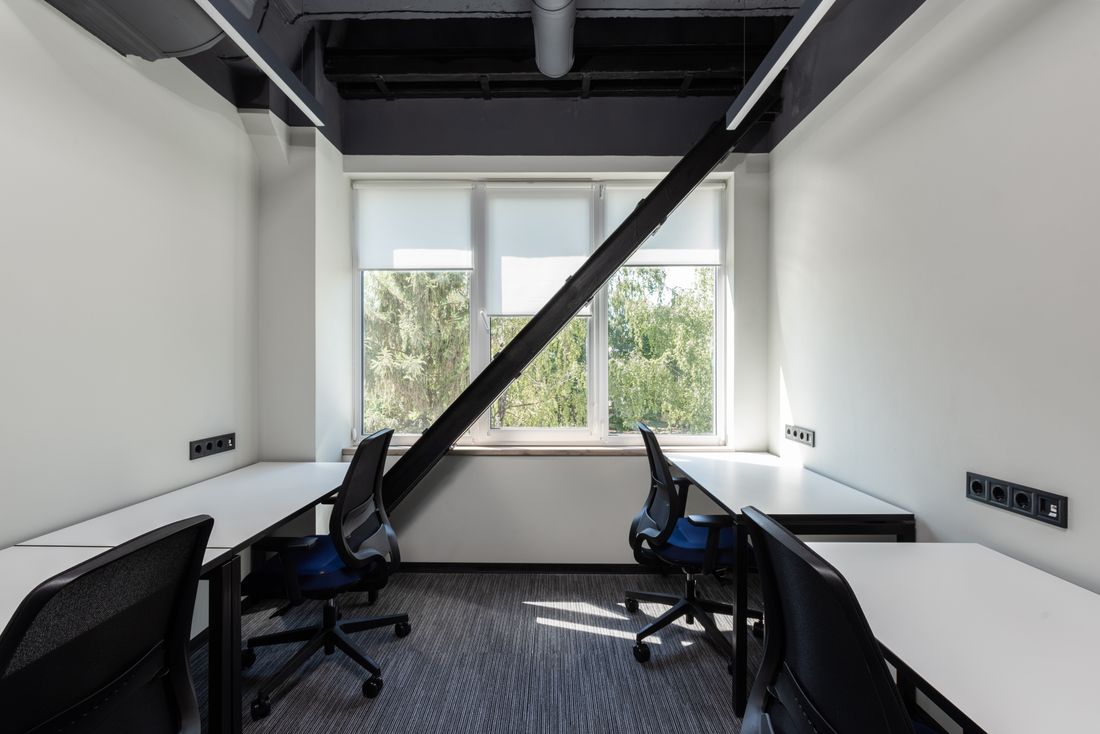
Photo by Max Vakhtbovych via Pexels.
What the Party Itself Needs From Coverage
Event coverage for an office opening means candid documentation of people mingling, leadership remarks, and informal groups, catching a genuine cross-section of employees and guests rather than posed lineups that read as staged the moment someone scrolls past them on a careers page.
The moments worth prioritizing are the ones with real content behind them: whoever's speaking at the toast, the arrival flow as people first see the finished space, and natural mingling shots that don't look arranged. Group photos by team or department are worth catching if the client plans to reuse them for recruiting content later, but they shouldn't crowd out the candid work, which is what actually reads as authentic.
Lighting changes the brief depending on the hour. A daytime open house has large windows doing most of the work, while an evening reception mixes whatever daylight is left with artificial light, and the plan has to account for that shift rather than treat the whole event as one lighting condition.
Scheduling Both Shoots Around One Event Day
The empty-space pass has a narrow window: after the buildout and furniture are finished but before caterers, AV, and decor teams start setting up for the party, which is often the same morning as the event itself. Missing that window means missing the shoot entirely, not just doing it later.
The practical options are early morning access on the event day, if the space is already furnished and finished, or a visit the evening before if the schedule allows it. Either way it takes coordinating with whoever actually holds keys or building access, the office manager, the general contractor, or the client's operations lead, to get in ahead of the party crew rather than negotiating access on the day itself.
If same-day genuinely doesn't work, the fallback is a separate short visit before or after the event date, planned on purpose rather than squeezed into whatever gap opens up. A deliberate second visit beats an improvised ten minutes between decorators leaving and guests arriving.
The Deliverable Gap When Clients Skip the Empty-Space Pass
The common mistake is booking only event coverage, because the party is the thing on the calendar, then discovering months later there's no clean photo of the finished office for a careers page, a press mention, or a landlord's marketing materials. By then the space looks nothing like it did on day one.
The workarounds people improvise rarely hold up. Cropping guests out of party photos still leaves a room dressed for an event, tables, décor, the wrong lighting for a quiet, ordinary-day feel. Using an old rendering or floor plan instead of a real photo undercuts the credibility a real photo was supposed to add. Scheduling a rushed separate shoot weeks later means the space is already lived-in, personal items on desks, whiteboards mid-project, the “brand new” quality gone for good.
None of those substitute for photographing the room in its intended clean state on the day it was actually new, which is a day that doesn't come around twice. Planned into the original booking, an early-morning window costs nothing extra. Left out, it becomes an avoidable second shoot later.
Organizing the Final Deliverable Set for Multiple Audiences
Because the two shoots serve different audiences, the deliverables should be organized by intended use, not by chronological shoot order. Event photos go toward internal comms and social. Empty-space photos go toward the careers page, a press kit, or landlord materials, and mixing the two sets together just means someone has to sort them again later.
A simple folder split, event and space, handled at delivery removes a real practical friction too: a photo with an identifiable guest's face generally shouldn't land on a careers page without that person's consent, so having a genuinely people-free empty-space set avoids that problem entirely rather than requiring someone to check every image before it gets reused.
The empty-space images also tend to get reused far longer. Party photos age out fast, dated décor, specific guests, a specific season. The finished-space photos stay usable until the next renovation or move, which is usually the better return on the harder-to-schedule half of the day, and the part most worth protecting when the schedule gets tight.
Frequently Asked Questions
Do we need to hire a photographer twice, once for the party and once for the empty office?
Not necessarily two separate bookings, but two clearly scheduled shoot windows on the same day, usually handled by one photographer or team. The empty-space photos need to happen before setup crews and guests arrive, and event coverage starts once the party begins. One combined booking with two defined passes is simpler to coordinate than two separate vendors, and it avoids paying for duplicate travel and setup.
When exactly should the empty-space photos be taken?
Ideally after the buildout and furniture placement are finished but before caterers, AV, decor, and guests arrive, which usually means early morning on the event day itself or the evening before if access allows it. The goal is capturing the office the way it actually looks on an ordinary workday, not compressed into a rushed gap between decorators leaving and doors opening for the party.
What happens if we only book photography for the party and skip the empty-space shoot?
The celebration gets documented, but there's no clean, professional photo of the finished office itself for a careers page, a press mention, or landlord marketing. Cropping guests out of party photos rarely works, since the room is dressed for an event, not daily use. Most companies end up scheduling a second, separate shoot weeks or months later, once the space already looks lived-in and less new.
Who actually uses the empty-space architectural photos later?
Recruiting and careers pages use them to show the workspace without needing consent for identifiable guest faces. Landlords or leasing brokers often request them for their own building marketing. Press uses them for an office feature. Internal teams use them for an investor update or intranet post. All of these need a clean, people-free room, which only exists if it's photographed before the party changes it.
Can the same photographer shoot both the empty space and the event coverage?
Yes, and it usually works better that way, since one team already knows the room's layout and lighting before the event starts. The two passes use different techniques, a slower tripod-based approach for the empty space and a faster, reactive approach for candid coverage, so budgeting enough time for both matters more than whether the same person holds the camera for each part of the day.
Related Reading
Booking a photographer for an event and still weighing hourly versus a package?
Send over the run of show and we'll price both options out before you commit to either.
See Event Coverage Packages