
Photo: Core Visuals NYC
Here's something that gets missed on almost every nonprofit communications plan: the board chair and the executive director are not the same visual job, even though they often end up photographed on the same day with the same setup. The ED's credibility comes from proximity to the mission, being in the field, with staff, in the work. The chair's credibility comes from something else entirely: fiduciary seriousness, peer standing among other major donors and board prospects, and the quiet assurance that the organization is well governed. That difference should change the wardrobe, the setting, the expression, the formats, and even where the assets get used. It rarely does, mostly because nobody stops to separate the two briefs before the shoot day arrives.
A nonprofit board chair's personal brand should project fiduciary seriousness and governance credibility rather than operational warmth: formal dress, a plain setting, a composed expression, and a small, deliberately simple set of assets built for a fixed term, not the field-facing, in-the-work visual language that suits an executive director.
Table of Contents
- Why a Board Chair's Public Content Isn't the Executive Director's Job
- Who Actually Looks at a Board Chair's Photo or Video
- Why the Photo That Works for the Executive Director Reads Wrong for the Chair
- Working Around a Volunteer's Calendar and a Demanding Day Job
- The Two-Hat Problem: A Chair Has a Professional Identity Somewhere Else
- The Formats That Actually Get Used: Portrait, Short Video, Print Set
- How a Chair's Assets Sit Alongside the Full Board and the ED
- Planning for Turnover: What to Settle Before Booking the Shoot
Why a Board Chair's Public Content Isn't the Executive Director's Job
A nonprofit board chair's public content needs to prove fiduciary seriousness and governance credibility, not operational energy. The executive director's photos and video demonstrate that the organization does real work in the field; the chair's assets demonstrate that the organization is well run, financially sound, and trusted by people who write large gifts or sit on other boards.
Those are genuinely different jobs, and treating them as one photo shoot with two subjects usually undersells both. An executive director's credibility comes from proximity to the work: program sites, staff, the people the organization actually serves. A chair's credibility comes from distance and judgment, the sense that someone with real standing elsewhere chose to steward this organization's money and mission. That distinction should show up before a single frame gets shot, in the wardrobe, the setting, and the expression each person is asked to hold. A development or communications lead planning a shoot around an upcoming board meeting or gala should treat the chair's portion as its own short brief, not an afterthought tacked onto the ED's existing session.
Who Actually Looks at a Board Chair's Photo or Video
A board chair's assets are seen mostly by major donors doing diligence before a significant gift, prospective board members deciding whether to join, institutional funders reviewing leadership before a grant, peer organizations sizing up governance, and occasionally press covering a capital campaign or leadership transition.
That audience is narrower and more scrutinizing than the general public an ED's content often reaches through program updates or social posts. A donor considering a major gift looks at a chair's photo the way they'd look at a board slide in a prospectus: one data point in a larger judgment about whether the organization is trustworthy with money. A peer institution's chair or executive sizing up a potential partnership does something similar. None of these viewers are looking for warmth or approachability first. They're looking for evidence that the person overseeing the board takes the role seriously and that the organization has assembled a credible group of stewards around it. That's a narrower brief than most nonprofit photography gets, and it should be treated as one.
Why the Photo That Works for the Executive Director Reads Wrong for the Chair
A program-site photo of an executive director, sleeves rolled up, standing among clients or staff, works because it proves proximity to the mission. The same setting on a board chair reads as confused or overreaching, because a chair's job isn't to be in the program, it's to oversee the organization that runs it.
Viewers who understand how nonprofits work, and major donors usually do, can tell the difference between a chair who happens to appear in a program photo for an annual report and a chair whose actual visual identity is built around program proximity. The second reading suggests either a misunderstanding of the governance role or an attempt to borrow credibility that belongs to staff and the ED. The fix isn't complicated: formal business dress rather than the casual, in-the-field look that suits program staff, a plain setting rather than an active one, and an expression that reads composed and serious rather than warm and approachable. None of that makes the chair seem cold. It matches the actual job, which is oversight and judgment, not delivery.
Working Around a Volunteer's Calendar and a Demanding Day Job
Most board chairs are unpaid volunteers with a full-time job elsewhere, so dedicated shoot time is scarce and hard to schedule on its own. The practical answer is piggybacking a short, focused session onto a date the chair is already committing to, like a board meeting or the annual gala, rather than asking for a separate block of their calendar.
That constraint should shape the plan from the start rather than get discovered the week before. A useful session for a chair rarely needs more than twenty or thirty focused minutes: a portrait setup and a short remarks or welcome video, captured in a quiet room adjacent to wherever the meeting or event is already happening. Trying to build an elaborate multi-location day around a volunteer's schedule usually fails, because the chair's actual job doesn't leave room for it, and asking repeatedly starts to feel like an imposition. A plain, unbranded meeting room with good available light is often enough, and it has the advantage of being available on the same day the chair is already in the building anyway.
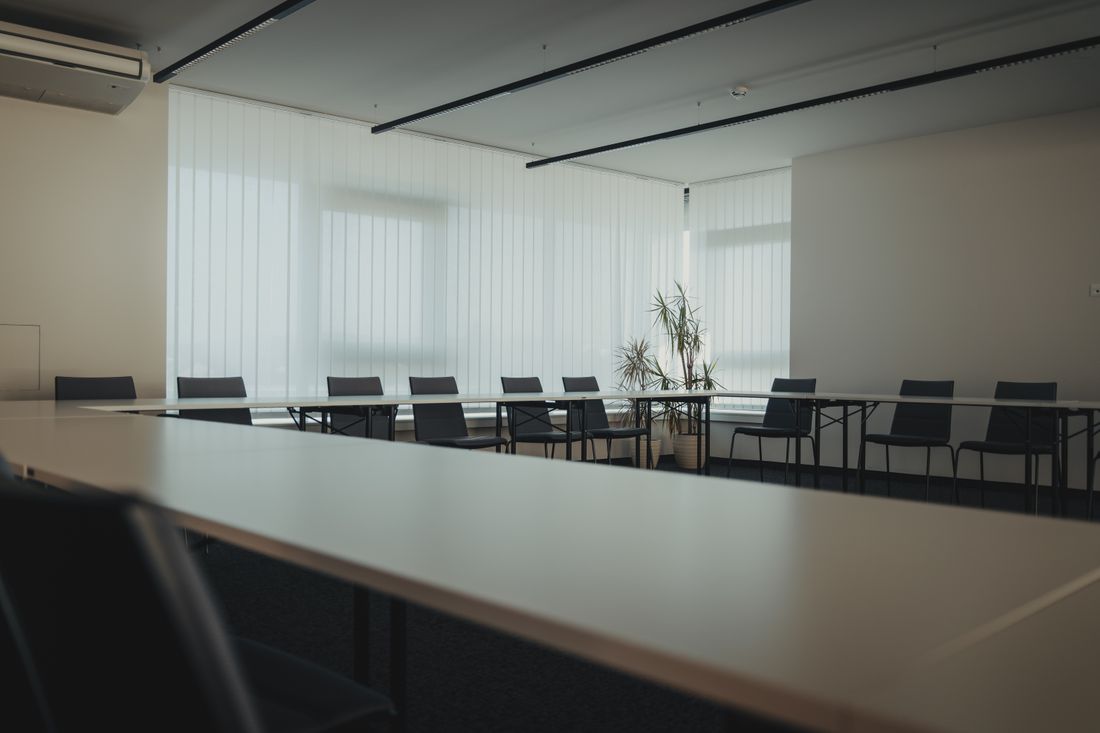
Photo by Michael Pointner via Pexels.
The Two-Hat Problem: A Chair Has a Professional Identity Somewhere Else
A board chair usually has a full career and public identity outside the nonprofit, often a senior role at a company or firm, and the nonprofit's assets have to work without confusing that identity with the organization's. A photo or bio line that reads like it's promoting the chair's day job undermines both the chair and the organization.
This shows up in small choices that are easy to get wrong: a bio that leads with the chair's company title before their board role, wardrobe that reads like a corporate annual report rather than a nonprofit's, or a setting that could be mistaken for the chair's actual employer. The goal is a set of assets clearly identified as the chair's nonprofit role, distinct enough from their professional headshot elsewhere that a viewer never wonders which organization is speaking. Any question about what a chair can or should say publicly that touches the organization's finances or governance belongs with the organization's own counsel or governance committee, not with a production plan, but the visual and identity separation itself is a communications decision worth settling before the shoot.
The Formats That Actually Get Used: Portrait, Short Video, Print Set
Three formats cover almost everything a board chair's content gets used for: a formal portrait for the website and annual report, a short remarks or welcome video under two minutes for a gala or campaign launch, and a small print-ready set sized for annual-report layouts and campaign materials. Anything more elaborate usually goes unused.
Chasing a bigger production for a role that gets this little visual real estate wastes the volunteer's scarce time and the organization's budget. A single well-lit portrait, shot once and reused across the website, annual report, and press kit, covers most needs on its own. A short video works best as a brief, direct address, welcoming a donor cohort or opening a campaign, rather than a longer documentary-style piece that competes with the ED's own video content. The print set matters more than it might seem: annual reports and campaign leave-behinds are often the one place a chair's photo appears prominently, so it needs to be shot with print reproduction in mind, not just a web thumbnail.
How a Chair's Assets Sit Alongside the Full Board and the ED
A chair's portrait needs to match the full board's photos closely enough to sit on the same page, while reading as the chair through framing, prominence, or a caption, not through a different lighting setup or backdrop. A full board's group portraits are their own separate session; this is one person's asset set built to slot into that larger page.
That's a different job than photographing the ED, whose assets typically stand alone across program pages, video, and press rather than sitting inside a grid of peers. A practical approach reuses the same backdrop, lighting style, and crop as the board's group session where possible, so the chair's portrait reads as part of the same governance page rather than a mismatched addition shot on a different day under different light. Where the chair's role needs more prominence, that's usually handled through placement, a larger frame, or a caption naming the role, not through a visually different treatment that risks looking like the chair is competing with either the board or the ED for visual authority.
Planning for Turnover: What to Settle Before Booking the Shoot
Board chairs rotate on a term, so a chair's asset set should be built to be swapped out cleanly, not treated as a permanent fixture of the organization's visual identity. A development or communications lead should settle wardrobe guidance, the backdrop and setting, and where the assets will live before booking, so replacing them later is straightforward.
Building for permanence is the wrong instinct here; building for a clean handoff is the right one. That means keeping the setup simple enough to repeat exactly for the next chair: the same backdrop, the same framing, the same plain setting, so a successor's portrait slots into the same page without a visible seam. It also means deciding in advance which pieces are chair-specific, like a welcome video tied to a particular campaign, and pruning those from the website and materials once the term ends rather than leaving an outgoing chair's face attached to current fundraising. Settling these questions before the first shoot, rather than after a transition catches everyone off guard, is what keeps the page current instead of quietly out of date.
Frequently Asked Questions
Does a nonprofit board chair need separate photos from the executive director?
Yes. The two roles answer different questions: the executive director's content proves the organization does real work, while the chair's proves it's well governed and trusted by serious donors and peer institutions. Treating them as one shoot usually produces a portrait that borrows the ED's casual, program-facing look for a role that needs formal, governance-facing framing instead. A short, separate brief for the chair produces better results than an afterthought tacked onto the ED's session.
What should a board chair wear for their nonprofit photos?
Formal business dress works better than the casual, in-the-field wardrobe that suits an executive director or program staff, because a chair's credibility comes from fiduciary seriousness rather than operational proximity. A plain, unbranded setting and a composed, serious expression reinforce the same idea. The goal isn't to look cold, it's to match the actual job: a chair oversees governance and stewardship, not day-to-day delivery, and the wardrobe and setting should read that way to donors evaluating the organization.
How much time should a board chair set aside for this?
Usually not much. Twenty to thirty focused minutes is enough for a portrait and a short remarks or welcome video, since most chairs are volunteers with a demanding day job elsewhere. The practical approach is piggybacking that short session onto a date the chair is already committing to, like a board meeting or the annual gala, in a quiet room nearby, rather than asking for a separate block of a volunteer's limited calendar.
What happens to a chair's photos and video when their term ends?
They should be retired or updated, not left in place indefinitely. Because chairs serve a fixed term, their asset set should be built for an easy handoff from the start: the same backdrop, framing, and plain setting reused for the next chair so a successor's portrait slots in without a visible seam. Campaign-specific pieces, like a welcome video tied to one fundraising push, should come down once that chair's term ends, rather than staying attached to current materials.
Can a chair reuse their existing professional headshot from their day job?
Generally, no, and doing so creates the two-hat problem this role runs into: a headshot built for a chair's company or firm can make it unclear which organization is actually speaking. A nonprofit-specific portrait, shot separately even if styled simply, keeps the chair's governance role visually distinct from their outside career. It also gives the organization a portrait it actually controls for its own annual report, website, and campaign materials rather than borrowing an asset that belongs somewhere else.
Related Reading
Working on founder content or a launch and not sure what to shoot?
Tell us where the content needs to live (site, LinkedIn, press, or a launch page) and we'll come back with the scope and a fixed price before anything gets booked.
See Personal Branding & Launches