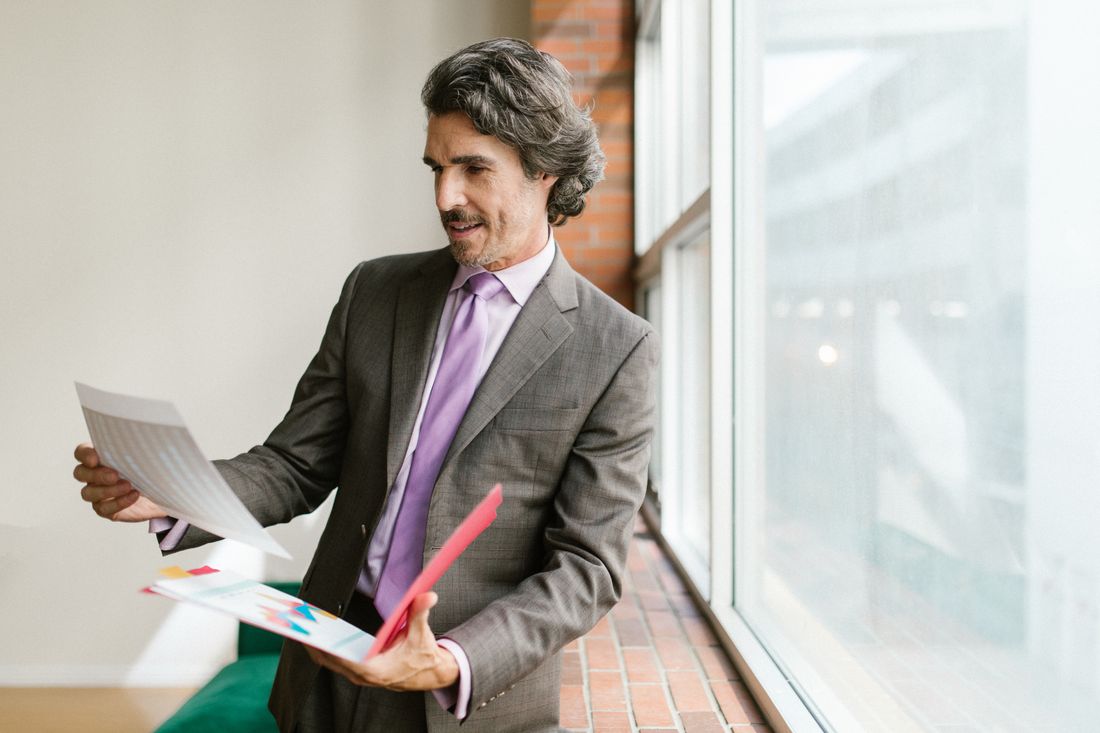
Photo by RDNE Stock project via Pexels.
Fifteen years into a career, the reputation is already real. What's usually missing is anything current that shows it — and the first personal brand shoot for someone at this stage is a different job than a founder's or a new executive's.
A mid-career professional's first personal brand shoot isn't an origin story or an announcement — it's closing the gap between a reputation that already exists and a visual record that hasn't caught up, with a mix of formal, environmental, and candid content built to hold up for a year.
Table of Contents
- The Problem This Shoot Actually Solves
- Why This Isn't a Founder's Origin-Story Shoot
- Why This Isn't a New Executive's Introduction Either
- What 'No Visual Record' Actually Looks Like on Camera
- The Asset Mix a Real Work Life Actually Needs
- Building Range Without Inventing a Narrative
- Making One Shoot Day Cover the Next Year
- What a Finished First Set Actually Includes
The Problem This Shoot Actually Solves
A professional fifteen years into a career usually already has the reputation: real references, a track record, people who vouch for them without hesitation. What they often don't have is a single recent photo or clip that shows any of it. The image on file is old, taken at a different job, sometimes under a different job title.
That gap isn't vanity. It's the byproduct of a working life spent proving competence in rooms, not in front of a camera. Nobody books a shoot for doing the job well. The need shows up sideways — a conference asks for a bio photo, a reporter wants a headshot for a quote, and the only file on hand is a badge scan or a crop from a group photo three roles ago.
Closing that gap isn't a rebrand. It's aligning what people already believe about this person with what a quick search can actually show them. That's a narrower job than most personal-branding conversations assume, and it changes what the shoot is actually for before a single frame gets taken.
Why This Isn't a Founder's Origin-Story Shoot
Founder content usually gets built around a story: the idea, the risk, the pivot, the reason the company exists. A professional fifteen years into an established career doesn't need that treatment. The origin already happened, it isn't the point of this shoot, and re-staging it for a camera would read as manufactured rather than earned.
That's the biggest structural difference between the two shoots. A founder's first content set has to introduce a whole premise — why this company, why now, why this person is the right one to bet on. A mid-career professional isn't asking anyone to bet on a premise. They're asking for the visual record to catch up with a decision that already got made a long time ago.
So the shoot skips narrative-building entirely. There's no reenactment of a founding moment, no voiceover about a turning point. What replaces it is proof of current standing: the room this person is actually in now, the work they're actually doing now, shot the way it happens rather than staged as a memory.
Why This Isn't a New Executive's Introduction Either
A new hire's first shoot functions like an announcement — a headshot for the press release, intro photos for the team page, something that tells an unfamiliar audience who this person is. A fifteen-year professional isn't being introduced to anyone. Internally and often externally, they're already known. The content doesn't need to explain them at all.
That changes the brief. An announcement shoot is built to answer "who is this." This one is built to answer a quieter question: does the version of this person online match the version everyone in the room already knows. Most of the time it doesn't, not because anything changed about the person, just because nobody ever updated the file.
The practical result is less posed introduction, more documented reality — working, presenting, in conversation, in the kind of setting where this person actually spends their day. It reads as confirmation, not as onboarding, and that's a meaningfully different shoot to plan, to shot-list, and to sit for.
What 'No Visual Record' Actually Looks Like on Camera
In practice, it looks like someone completely fluent in their field freezing the moment a camera points at them. The stiffness isn't a personality problem — it's a rep problem. A person who has presented to a room hundreds of times may have been photographed, deliberately, maybe twice in fifteen years, and both times in a stiff studio setup.
The job isn't to coach charisma from nothing. It's to let someone who is already good at the work look like they're doing it, instead of asking them to perform a version of themselves they've never had to perform on camera. Movement helps more than posing does — walking, gesturing mid-sentence, looking at something real instead of a lens.
Video especially exposes this gap. A person can be an excellent, natural speaker in a room and go flat the moment they're asked to talk to a camera with no audience. Giving them something real to react to, or someone to talk to just off-lens, usually solves that faster than direction alone ever does.
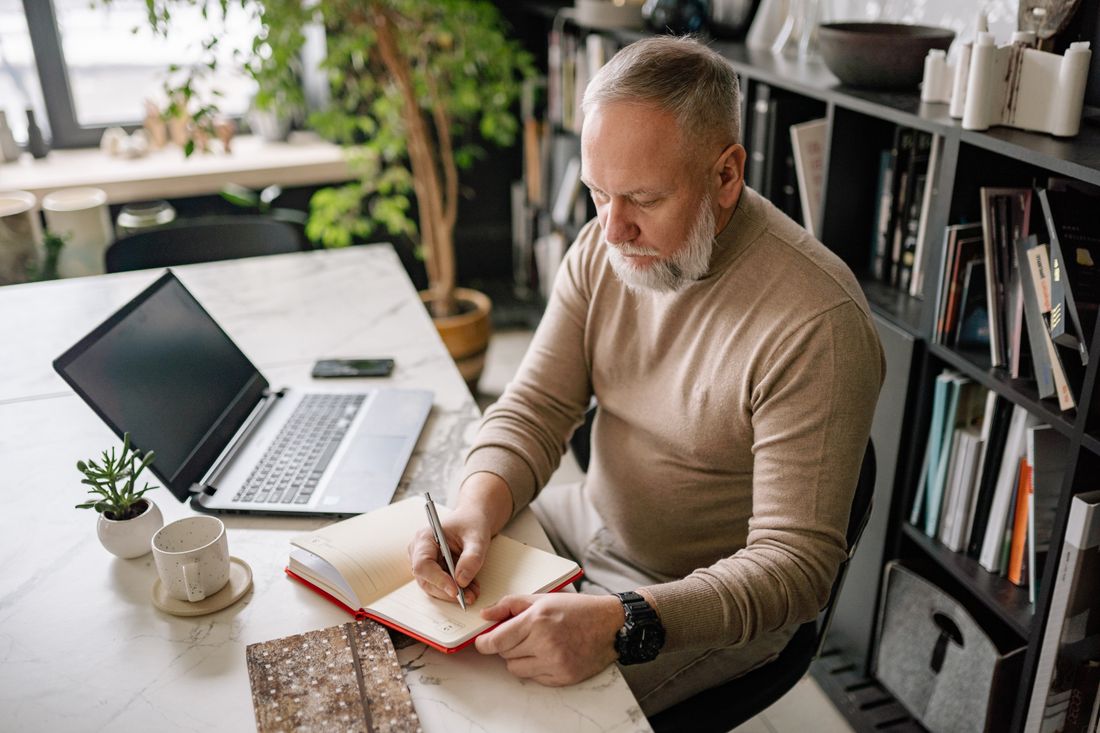
Photo by Yan Krukau via Pexels.
The Asset Mix a Real Work Life Actually Needs
A single headshot doesn't cover what this stage of career actually requires. A useful first set includes a formal portrait or two, several environmental shots in the settings this person actually works in, and a handful of candid, in-motion frames — presenting, in conversation, walking through a space. Short video clips round it out for platforms a still can't serve.
The environmental shots do the most work here. A desk, a whiteboard, a hallway, a conference room — wherever this person's actual job happens — reads as more credible than a plain backdrop, because it looks like a place rather than a studio. It also gives every future use case, from a speaker page to a press bio, something that doesn't look interchangeable with everyone else's headshot.
None of this requires a large production. It requires planning the mix before the day starts, so time on set gets split deliberately across formal, environmental, and candid frames rather than defaulting to an hour of the same pose against the same wall.
Building Range Without Inventing a Narrative
Range comes from real settings and real activity, not invented scenes. A person can be photographed at their actual desk, in an actual meeting room, and walking an actual hallway in one afternoon — that's already several distinct looks. None of it requires staging a "day in the life" that never happened or dramatizing a routine Tuesday into a story that isn't true.
The line matters. A generic staged meeting with people who aren't real colleagues, or a shot styled to imply a specific deal or client relationship that doesn't exist, crosses from documentation into fiction. It also tends to look fake in a way a real workspace, even an unglamorous one, doesn't.
The honest version is almost always more useful anyway. A real office, a real notebook, a real half-finished coffee — these read as credible precisely because they aren't trying to sell anything beyond the person standing in the frame, which is the whole point of this kind of content in the first place.
Making One Shoot Day Cover the Next Year
One well-planned day can supply a professional's photo and video needs for the better part of a year, if the day is built around variety rather than volume. That means multiple outfits, multiple settings within the same location, and a shot list that separates formal deliverables from the casual, reusable frames that carry a LinkedIn presence week to week, month to month.
The planning happens before the shoot, not during it. Deciding in advance which settings cover which future use — press bio, speaker page, weekly posting, a slide deck headshot — means nobody is improvising a new backdrop three months later because the original set only covered one register.
This is also where the gap between a founder's shoot and this one shows up again: a founder often needs recurring content because the story keeps developing. A mid-career professional mostly needs a library that holds up, gets reused often, and doesn't need revisiting until something real actually changes about the role.
What a Finished First Set Actually Includes
A finished set for this stage of career typically includes a primary headshot, a small number of environmental portraits, a handful of candid working shots, and short video clips formatted for the platforms this person actually uses. Everything gets delivered in the crops a professional life actually needs — square and vertical for social, horizontal for a bio page or press kit.
What it doesn't include matters just as much: no manufactured backstory, no invented case study standing in for fifteen years of real work, no promise that a single day of photos will change how anyone perceives this person's judgment. The photos aren't doing the persuading — the track record already did that. The photos just need to stop undercutting it.
As a custom project, the scope gets built around whatever this specific person's next year actually calls for, rather than a fixed package designed for someone starting from zero. That's the whole point of treating it as a custom project instead of a standard headshot booking.
Frequently Asked Questions
How is this different from a standard headshot session?
A standard headshot session produces one asset: a single portrait, usually against a plain background, meant to cover a LinkedIn photo and not much else. This is broader by design — a mix of formal portraits, environmental shots in real working settings, candid in-motion frames, and short video, planned to cover a year of actual use across a bio page, a speaker profile, and ongoing social content, not just one profile photo.
I haven't done much on-camera work before — will that be a problem?
No, and it's the normal starting point at this career stage, not an exception. The direction on set accounts for it: less posing, more movement, real activity to react to instead of a lens to perform for. Someone who is fluent in their field usually looks most natural doing something real — presenting, gesturing, mid-conversation — rather than standing still and smiling on command for a stranger.
Do I need a personal narrative or story angle for this to work?
No. A defined narrative helps a founder's content, where the story is the point, but it isn't required here at all. This shoot documents current, real working life rather than building a story around it. What matters is planning real settings and real activity in advance, not scripting a theme or a narrative arc for the day, since the actual point of this particular shoot is proof, not plot.
How many images and video clips should I expect to walk away with?
It depends on the scope agreed on for the project, since this is quoted and planned as a custom shoot rather than sold as a fixed package. In practice, a well-planned day covering formal portraits, environmental shots, candid frames, and short video clips across a few settings and outfits produces enough real variety to cover a full year of regular, ongoing use without repeating the same frame twice.
Once this first set is done, how often do I need to redo it?
There's no fixed timer. A well-planned first set holds up until something real changes — a new role, a visibly different look, or simply running out of unused variety after heavy, regular posting. For most people at this stage, that's closer to a year or more than a quarterly refresh, since the whole point of the mix was to avoid needing to revisit it constantly.
Related Reading
Have a launch or brand project where scale is actually the story?
Tell us what the aerial shot needs to show, and we'll scope it alongside the ground coverage from the start — permits included.
See Personal Branding & Launches