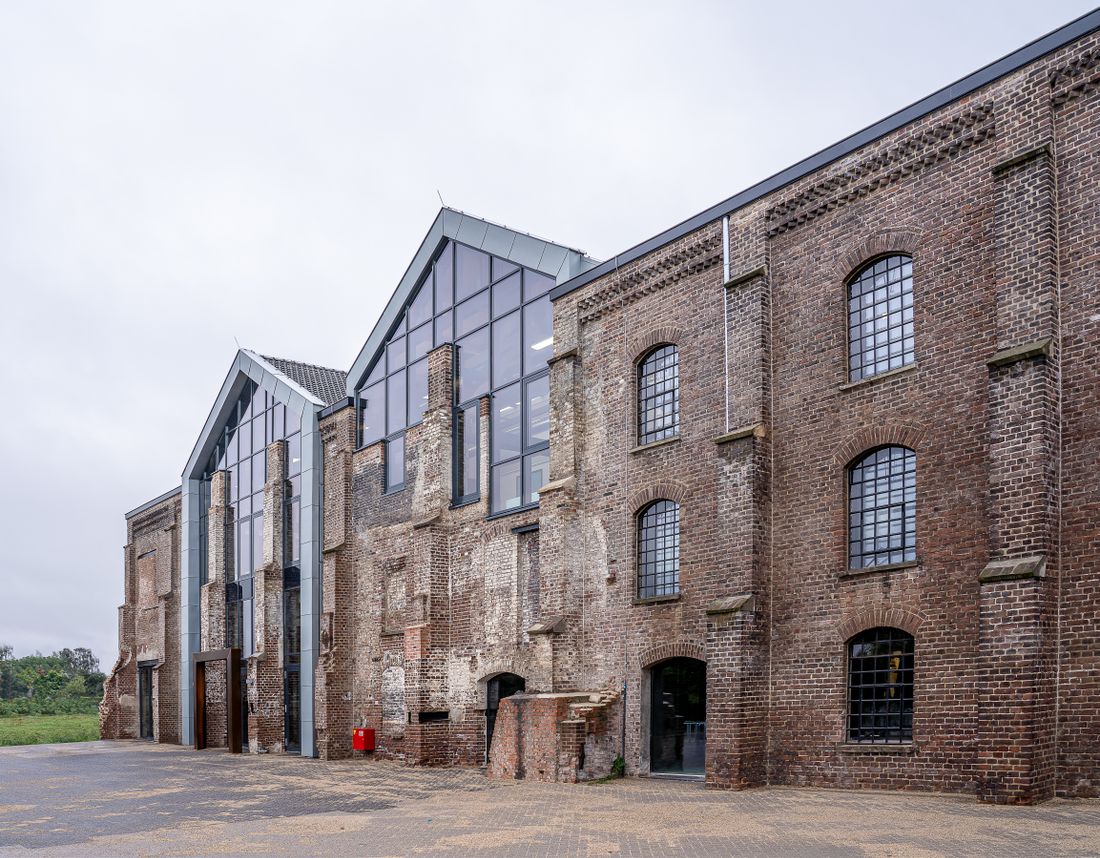
Photo by Mike van Schoonderwalt via Pexels.
Say the company is headquartered in Stamford, or Princeton, or a converted mill outside Philadelphia, and the audience it's trying to reach is national. That gap creates a real content problem before a single frame gets shot: a suburban office park reads as regional to anyone who's never been there, and the wrong instinct is to shoot around that instead of deciding what the building is actually for. This piece works through the honest choices for the backdrop, why a travel day changes the shoot-day economics in the founder's favor, and how to structure a single stacked day so it holds up.
A headquarters outside Manhattan creates a content problem: a suburban office park reads as regional to a national audience, while the actual building might be the strongest asset available. The fix is deciding in advance whether to lean into the real place or remove place from the frame entirely, then building a single stacked shoot day around that choice.
Table of Contents
- What Does a Suburban Headquarters Actually Say to a National Audience?
- Lean In or Clear Out: The Two Honest Choices for the Backdrop
- When the Office Is Genuinely the Strongest Asset You Have
- When the Office Is the Weakest Asset You Have
- Why the Travel Day Works in the Founder's Favor
- The Order of Operations That Keeps a Stacked Day From Collapsing
- Wardrobe Changes as the Day's Natural Dividers
- The Case for a Second Location in the Same Day
What Does a Suburban Headquarters Actually Say to a National Audience?
A suburban office park reads as regional to a viewer who's never set foot there — generic glass, a generic parking lot, a company that could be anywhere. The honest fix isn't better lighting. It's deciding, before the crew arrives, whether the building is an asset worth showing or a variable worth removing.
That decision gets skipped more often than it should, usually because the building is just what's on the calendar rather than something anyone chose on purpose. A founder based in Stamford, or Princeton, or a converted mill outside Philadelphia has a real headquarters to work with, and the instinct is often to point a camera at the front door and call the job done. An anonymous facade shot straight-on doesn't read as headquarters — it reads as stock footage with a logo attached, and a national audience clocks that difference fast, before a single word of the message lands. The building isn't neutral scenery behind a founder's message. It's either working for the brand or working quietly against it, and which one depends on a choice, not an accident.
Lean In or Clear Out: The Two Honest Choices for the Backdrop
There are two honest choices for a headquarters outside Manhattan: lean all the way into the actual place, or remove place from the frame entirely. The wrong move is the one most shoots default to without deciding — a beige conference room with a laptop and a plant, which reads as nowhere rather than somewhere specific.
Leaning into place means shooting the real facility: a working lab, a production floor with product moving through it, a loading dock, a town with visible character outside. Removing place means the opposite — clean portraits against a controlled interior, simple backgrounds, nothing in frame that could locate the company on a map. Both are legitimate, finished-looking outcomes, and both require the same amount of planning to pull off well. Neither is a compromise. What's not legitimate is the accidental middle: a hallway, a whiteboard nobody's using, fluorescent light nobody chose on purpose. That setting signals "we didn't think about this" more clearly than any backdrop would, no matter how good the crew is that day. Pick a lane before anyone shows up, not once everyone's already standing in the room.
When the Office Is Genuinely the Strongest Asset You Have
The office is genuinely the strongest asset in the room when it shows something a viewer can't picture without seeing it — a working lab, a production floor with real product moving across it, or a converted mill with architecture that took decades to earn. That's footage a stock library and a competitor's office park simply can't produce.
A pharma R&D floor outside Princeton, a manufacturing line in a converted Philadelphia mill, a trading floor in Fairfield County — these are visually specific in a way a generic glass lobby never is. They tell a national viewer something true about scale and capability that a portrait alone can't carry, and they photograph as evidence, not decoration. The mill's exposed brick and factory-scale windows aren't a design choice a stylist made; they're the actual building, which is exactly why they hold up on camera. The test is simple: if a viewer would say "I didn't expect that," it's an asset worth building the day around.
When the Office Is the Weakest Asset You Have
The office is the weakest asset when there's nothing distinctive to point a camera at — a leased floor in a mid-rise, drop ceilings, the same modular furniture found in ten thousand other buildings. Forcing that space into frame subtracts credibility, because "generic" is exactly the read a founder shooting national content is trying to avoid.
In that case, the better move is removing place from the equation rather than fighting it. A clean, controlled portrait setup — one wall, one light, one clear background — puts the founder's face and message in front of the room instead of the room itself, and it travels better across every platform, from a keynote deck to a LinkedIn post to a press kit that outlives the current office lease entirely. Nobody watching a founder-to-camera piece is disappointed the office wasn't the star. This isn't a downgrade from the "lean in" approach in the previous section — it's the correct call for a specific kind of space, made honestly instead of by default, and it holds up exactly as well over time.
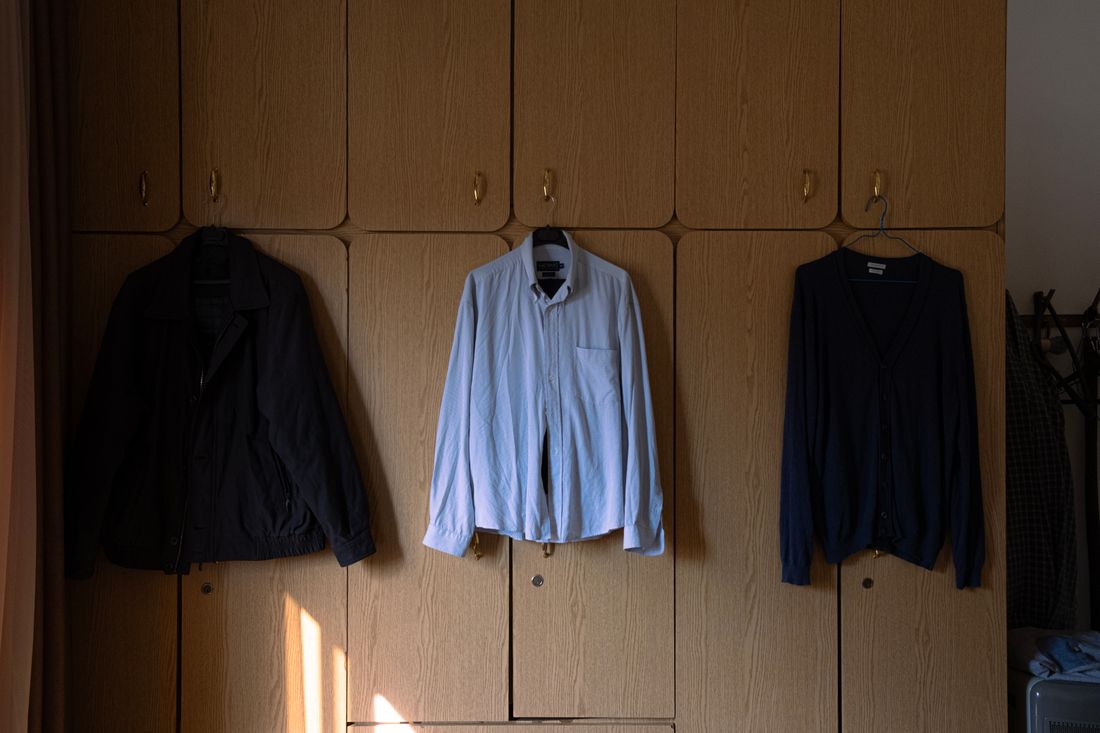
Photo by Plastic Lines via Pexels.
Why the Travel Day Works in the Founder's Favor
A travel day works in the founder's favor, not against it, because the crew is already making the trip regardless of how much gets shot once it's there. The inefficient version books three separate half-days over a season. The efficient version stacks everything into one day while the crew and location are already there.
One stacked day at a Stamford, Princeton, or Philadelphia-area headquarters can reasonably cover portraits, a founder-to-camera set for pieces that need direct address, team and facility coverage for the visuals nobody plans ahead but always needs, and the loose B-roll that ends up carrying a year of LinkedIn posts nobody scripted in advance. That last category is usually the first one cut from a rushed schedule and the one most missed six months later, once the content calendar is running dry and there's nothing left to cut down. The travel minimum that exists for work outside the NYC metro is built around exactly this math — it makes a full day the sensible unit, not a discouragement from booking one at all.
The Order of Operations That Keeps a Stacked Day From Collapsing
A stacked shoot day collapses when the order of operations isn't decided in advance, because a loose schedule always drifts toward whatever's easiest to set up, not whatever matters most. The fix is a hard, written order: the founder-to-camera piece goes first, while energy is real, then portraits, then team and facility coverage, then B-roll last.
B-roll goes last on purpose — it doesn't need the founder fresh, it can run in the gaps while other setups happen, and a tired crew can still shoot a hallway or a production line competently. A founder reading unscripted talking points on camera for the sixth hour of a long day cannot fake the same presence they had in hour one, no matter how good the lighting is by then. Wardrobe changes double as the day's natural dividers, but the sequencing rule underneath all of it stays the same: protect the thing that depends on a person's energy, and treat everything else as flexible around it.
Wardrobe Changes as the Day's Natural Dividers
Wardrobe changes work best as the structural markers of a stacked shoot day, not an afterthought squeezed in between setups. Two or three planned looks give the day natural breakpoints that double as change-of-scene cues later, without adding real time to a schedule that's already tight.
The practical version is simple: hang the looks in order, in one spot near the first setup, so a change takes minutes rather than becoming its own production with its own delay. Plan the changes around the content type, not the clock — the founder-to-camera segment gets the sharpest look, since it's the piece most likely to run standalone, while team coverage can be the most relaxed, since it's usually cut into shorter pieces where wardrobe reads less. Done this way, wardrobe stops being a styling decision made on the fly and becomes part of the schedule itself — each change signals a new segment starting, which keeps everyone on set oriented without a producer re-explaining the plan after every single setup.
The Case for a Second Location in the Same Day
A second location in the same day makes sense when it adds a different visual register — a city office, a customer site, a nearby exterior with real character — and the travel between the two doesn't eat more time than the footage is worth. Staying put makes sense when the headquarters alone covers the range the content needs.
The case for moving is strongest when the headquarters is the "removed place" kind of space from earlier in this piece — a clean interior that covers portraits and founder-to-camera work fine but leaves nothing distinctive for B-roll. A nearby exterior, a customer site that shows the product in actual use, or a satellite city office can supply the variety the main building can't, without adding a second travel day. The case against moving is just as real: a genuinely strong facility or production floor can carry an entire day on its own, and a second location risks turning a focused shoot into a rushed one. The right answer is exactly as many locations as the content needs.
Frequently Asked Questions
Should a company shoot founder content at its actual headquarters, or somewhere else entirely?
It depends on what the building actually looks like. A distinctive facility — a working lab, a production floor, a converted mill with real architecture — is worth building the day around, because it shows a national audience something a portrait can't. A generic leased floor with drop ceilings and modular furniture is better removed from frame entirely, in favor of a clean, controlled portrait setup. The wrong answer is a half-measure: a beige conference room that reads as nowhere.
What's the biggest content mistake companies make shooting at a suburban headquarters?
The most common mistake is the accidental middle — landing in a beige conference room or a hallway under fluorescent light nobody chose on purpose, instead of deciding whether to lean into the real place or remove place from the frame entirely. That undecided setting reads as generic to a national viewer, which is the exact impression founder content is trying to avoid. The fix is choosing a lane before the crew arrives, not once everyone's already in the room.
Is it worth bringing a crew out for just one type of content?
Usually not, and that's the point. Since the crew is already making the trip, the efficient approach stacks portraits, a founder-to-camera piece, team and facility coverage, and B-roll into one day rather than three separate half-days spread across a season. The travel minimum that applies to work outside the NYC metro is built around that math — it's an incentive to plan a fuller day, not a reason to book a single narrow session and skip everything else.
How should a company plan a shoot day that covers portraits, video, and B-roll all at once?
Set a hard order of operations before the day starts. Shoot the founder-to-camera piece first, while energy and focus are highest, then portraits, then team and facility coverage, then B-roll last, since it can run in the gaps and doesn't need anyone fresh. Use two or three planned wardrobe changes as the natural dividers between segments, hung in order near the first setup, so a look change takes minutes instead of derailing the rest of the schedule.
Should a shoot day cover more than one location, like a headquarters and a nearby city office?
Add a second location only when it supplies something the first one can't — a different visual register like a customer site, a nearby exterior, or a city office — and the travel between them won't outweigh the footage gained. If the headquarters already covers the visual range the content needs on its own, staying put keeps the day focused instead of rushed. More locations isn't automatically better — the right number is whatever the content actually needs.
Related Reading
Have a launch or brand project where scale is actually the story?
Tell us what the aerial shot needs to show, and we'll scope it alongside the ground coverage from the start, permits included.
See Personal Branding & Launches