Photo by Kyle Loftus via Pexels.
A shoot forty-five minutes from Manhattan doesn't cost the same as one in it, and the reason has nothing to do with the venue being fancier or the client being farther from home. It comes down to a handful of ordinary logistics — how gear gets there, where it parks, when the crew has to leave — that Manhattan quietly solves for free and everywhere else does not. This is what actually changes the price, and how the honest vendors structure it.
Booking outside Manhattan changes the price because travel there isn't free the way it functionally is inside the city — gear has to move by car instead of subway, parking and load-in eat real time, and crew call times stretch to cover the drive. Vendors bill that either as added time or a flat zone fee, not as a markup for distance itself.
Table of Contents
- Why a shoot outside Manhattan doesn't price like one in it
- Gear transport when there's no subway to lean on
- Parking and load-in time nobody puts on the invoice line
- Crew call times and the math of the actual workday
- Whether travel gets billed as time or as a flat zone
- When a flat travel fee is the better structure, and when it isn't
- When a local shooter beats bringing the team that knows your brand
- How to ask for a travel-clear quote before you book
Why a shoot outside Manhattan doesn't price like one in it
A shoot in Westchester, New Jersey, or Long Island doesn't price like one in Midtown because the built-in assumptions behind an NYC quote stop applying the moment the venue is a car ride away. Gear moves by vehicle instead of subway, parking becomes a real variable, and the crew day usually starts earlier — all before anyone picks up a camera.
In Manhattan, a lot of the logistics that cost time elsewhere are already solved. The subway gets a shooter and a rolling case within a few blocks of most venues, parking is someone else's problem because there usually isn't any to find, and a second location later in the day is a fifteen-minute ride, not a highway merge. None of that holds once the address has a driveway.
We're not saying travel automatically means a higher number — plenty of nearby jobs in Westchester or northern New Jersey land close to what an equivalent Manhattan booking would run. What changes is which line items are doing the work. In the city, the quote is almost entirely coverage time. Outside it, coverage time is still the biggest piece, but transport, parking, and call-time math start pulling their own weight.
Gear transport when there's no subway to lean on
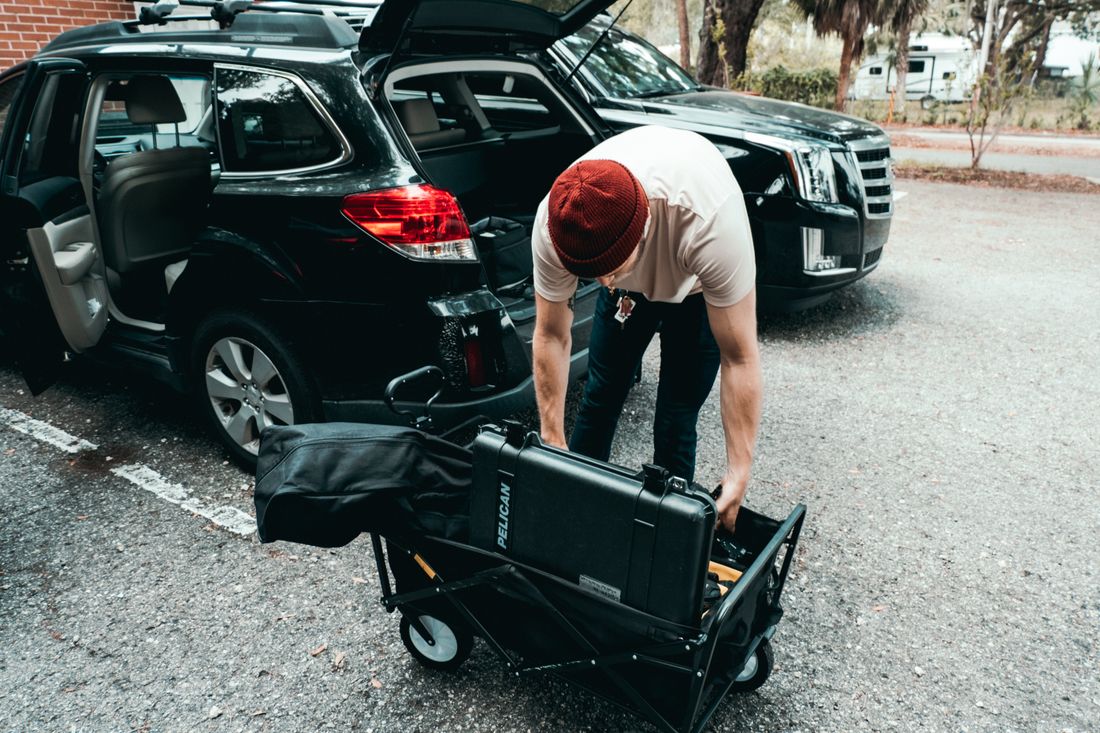
Inside Manhattan, a shooter can carry two bodies, a bag of lenses, and a light kit onto the subway or into a cab and be at the venue in twenty minutes. Outside the city, that same kit has to go by car, which means someone drives, gear gets packed and unpacked at both ends, and the trip becomes a scheduled part of the day instead of a rounding error.
This matters more for video than photo. A two-person video crew with a slider, an audio kit, and backup lighting is a real amount of equipment to load, secure, and unload — and it happens twice, once leaving and once arriving, sometimes at both a home base and a second stop. A photographer with one bag has an easier version of the same problem, but it's still the same problem.
None of this is exotic. It's the ordinary math of moving equipment by car instead of on foot or by train. Every project has a transport cost somewhere. In Manhattan it's mostly invisible because transit absorbs it. Outside Manhattan it becomes visible, which is exactly why it shows up as its own line when a job gets scoped.
Parking and load-in time nobody puts on the invoice line
Load-in in Manhattan usually means a freight elevator, a loading dock, or a short walk from wherever the car could double-park. Outside the city, load-in more often means finding an actual parking spot, walking gear across a lot, and navigating a building that wasn't designed around a crew moving equipment in and out all day.
Office parks in Westchester or on Long Island are built for commuters parking once and staying put, not for a crew making multiple trips to the car for cases, stands, and backup gear. That first ten or fifteen minutes at a new venue — find the lot, find the door, find whoever has the key to the loading entrance — doesn't show up as its own fee anywhere, but it's real time the crew spends before coverage starts.
Same goes for the reverse at day's end. A gala in a Manhattan hotel ballroom hands gear back through the same door it came in. A corporate event in a suburban conference center means walking cases across a dark lot in whatever weather showed up. It's a small thing per job — across a full calendar of outside-Manhattan bookings, it's something a scope has to account for.
Crew call times and the math of the actual workday
Crew call times shift outside Manhattan because drive time has to happen before coverage starts and after it ends, which pushes the total day longer even when the booked coverage hours stay identical. A shooter based in the city needs real travel time built into the schedule before an early call in Westchester actually works.
This is where "the same three hours of coverage" quietly stops meaning the same thing. Three hours in a Midtown office might be a five-hour day door to door for the crew. Three hours in Stamford or on Long Island can be a seven- or eight-hour day once drive time on both ends gets added in, especially with rush-hour traffic working against an early call or a late wrap.
That extra time isn't wasted — it's the crew getting to the venue with gear intact and getting home afterward — but it's still time. A studio scoping the job has to decide whether that stretch counts as billable, gets folded into a flat rate, or gets treated as the cost of doing business. Any of those is a legitimate answer. What matters is that the client hears which one it is before the invoice, not after.
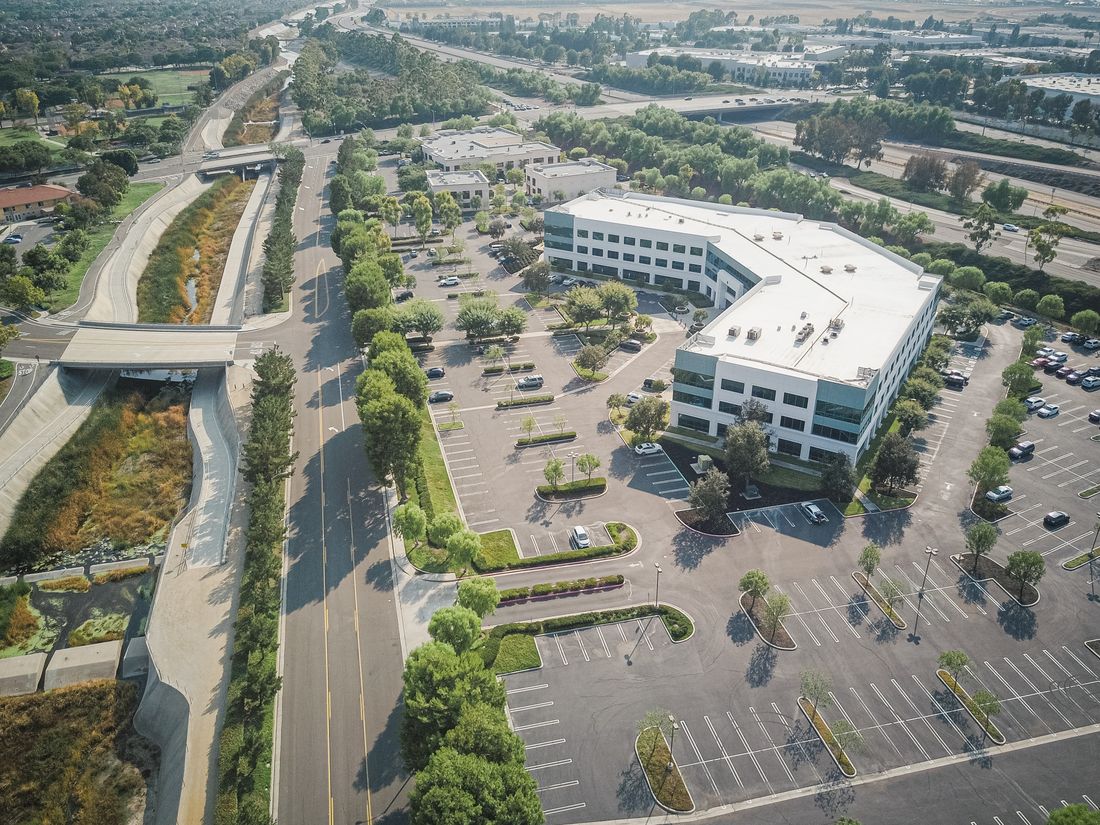
Photo by Kindel Media via Pexels.
Whether travel gets billed as time or as a flat zone
Vendors generally structure travel one of two ways: billing the actual hours a trip adds to the day, or a flat add-on tied to a general distance band. Both are legitimate — time-based billing tracks the real cost more precisely, while a flat structure trades some precision for a number the client can plan around before booking.
Time-based travel billing charges for the hours a trip adds beyond a comparable in-city job — the extra drive time on both ends, roughly. It scales naturally: a short hop into lower Westchester costs less than a trip further out on Long Island, since the actual time difference is smaller. The tradeoff is that the final number depends on traffic and route, which is honest but less predictable going in.
A flat zone structure instead sets one add-on for a defined area — everything inside a set radius or group of counties gets the same travel line, regardless of exactly where in that zone the venue sits. That's simpler to quote, at the cost of being slightly less precise at the zone's edges. What matters is knowing which structure you're getting before you book, since it changes what a farther-than-expected venue does to the number.
When a flat travel fee is the better structure, and when it isn't
A flat travel fee works best when the destination is predictable — a company with one Westchester office, a venue a studio has shot before, a recurring shoot at the same address. It works less well for a one-off booking at a venue nobody on the team has driven to, where the real time cost is still a guess until the day happens.
The predictability cuts both ways. A flat number protects the client from a travel line creeping past expectations if traffic runs long. It only holds up for the studio if it's set wide enough to cover the worst realistic version of that drive, not the best one — which is why one blanket number for the whole tri-state area tends to run overpriced for close jobs or a loss leader for far ones.
The workable middle ground most vendors land on is a flat fee scoped to a specific, named zone rather than a blanket one — inner Westchester priced differently than eastern Long Island, because the actual drive times are genuinely different. That's not a trick to charge more; it's the same honesty a time-based structure has, just quoted in advance instead of tracked after the fact.
When a local shooter beats bringing the team that knows your brand
A local photographer or videographer based near the venue is often the cheaper and faster call for a single, standalone shoot with no history to protect — no travel line, no drive-time call adjustment, and someone who already knows the room. Bringing an out-of-area team makes more sense when consistency across shoots, brand familiarity, or coordination with other NYC-based work matters more than saving the travel line.
The honest version of this is saying so out loud. If a one-off headshot session in a Westchester office is small enough that a good local photographer can deliver comparable quality for less, that's the better call for the client — and a studio should say so rather than stretch a booking that doesn't need them.
Bringing the regular team earns its keep where continuity matters — a New York office and a satellite office needing matching headshots, a brand video project spanning multiple locations, or a client whose team has already trained a specific crew on how their leadership likes to be shot. Paying a travel line to keep one crew, one style, and one point of contact across every location is a real trade, not a markup.
How to ask for a travel-clear quote before you book
Getting a clean quote outside Manhattan starts with giving the exact address, not just the town or county — a Westchester zip code fifteen minutes from the city line prices differently than one an hour out, and "Long Island" alone covers a huge range of actual drive times. Specifics upfront prevent a revised number later.
Ask directly whether travel is billed as added time, a flat add-on, or already built into the package, and ask what happens if the day runs long — does travel time get re-billed, or was it already padded into the original number. A vendor with a clear, one-sentence answer to that question has actually thought through their own structure. One who hedges hasn't.
It's also worth asking what the travel fee covers beyond the drive itself — does it include the crew's load-in time at an unfamiliar venue, or is that folded into coverage hours instead. None of this requires distrust of the vendor; it's the same kind of scoping question a client would ask about any other line item. A studio that's comfortable answering it in plain language before the contract is signed is the one worth booking.
Frequently Asked Questions
Does a shoot in Westchester, New Jersey, or Long Island always cost more than one in Manhattan?
Not automatically. Distance is one factor among several, and a short trip into lower Westchester can land close to a comparable Manhattan booking. What usually adds cost is a longer drive, an early call time that needs extra buffer, or a venue with real load-in time. The honest way to think about it: travel is a separate line item because it's a separate real cost, not because outside-Manhattan work is inherently pricier per hour.
What's the difference between travel billed as time versus a flat travel fee?
Time-based billing charges for the actual extra hours a trip adds beyond a comparable in-city job, so it scales with real distance but depends somewhat on traffic. A flat fee sets one add-on for a defined zone regardless of exactly where in that zone the venue sits, trading some precision for a number you can budget against before booking. Neither is more honest — the value is in knowing which one you're being quoted upfront.
Why does crew call time change for a shoot outside Manhattan?
Drive time has to happen before coverage starts and after it ends, which lengthens the total day even if the booked coverage hours stay the same. Three hours of coverage in Midtown might be a five-hour day door to door; the same three hours in Westchester or on Long Island can run seven or eight once travel on both ends is added, especially around rush hour. That extra time gets accounted for somewhere in the scope.
Is it cheaper to hire a local photographer instead of a Manhattan-based team?
For a single, standalone shoot at a venue with no history to protect, a local shooter is often genuinely the better and cheaper call — no travel line, no drive-time buffer, someone who already knows the room. Bringing an out-of-area team earns its cost when consistency matters more: matching headshots across offices, a multi-location brand video, or a client whose team has already trained a specific crew on how they like to be shot.
What should I ask a vendor before booking a shoot outside Manhattan?
Give the exact address rather than just the town, since drive time inside one county can vary by an hour. Then ask directly whether travel is billed as added time, a flat add-on, or already built into the package, and what happens if the day runs long. Also ask whether the travel fee covers load-in time at an unfamiliar venue or if that's separate. A vendor with clear, plain-language answers has actually thought through their pricing structure.
Related Reading
Have a launch or brand project where scale is actually the story?
Tell us what the aerial shot needs to show, and we'll scope it alongside the ground coverage from the start, permits included.
See Personal Branding & Launches