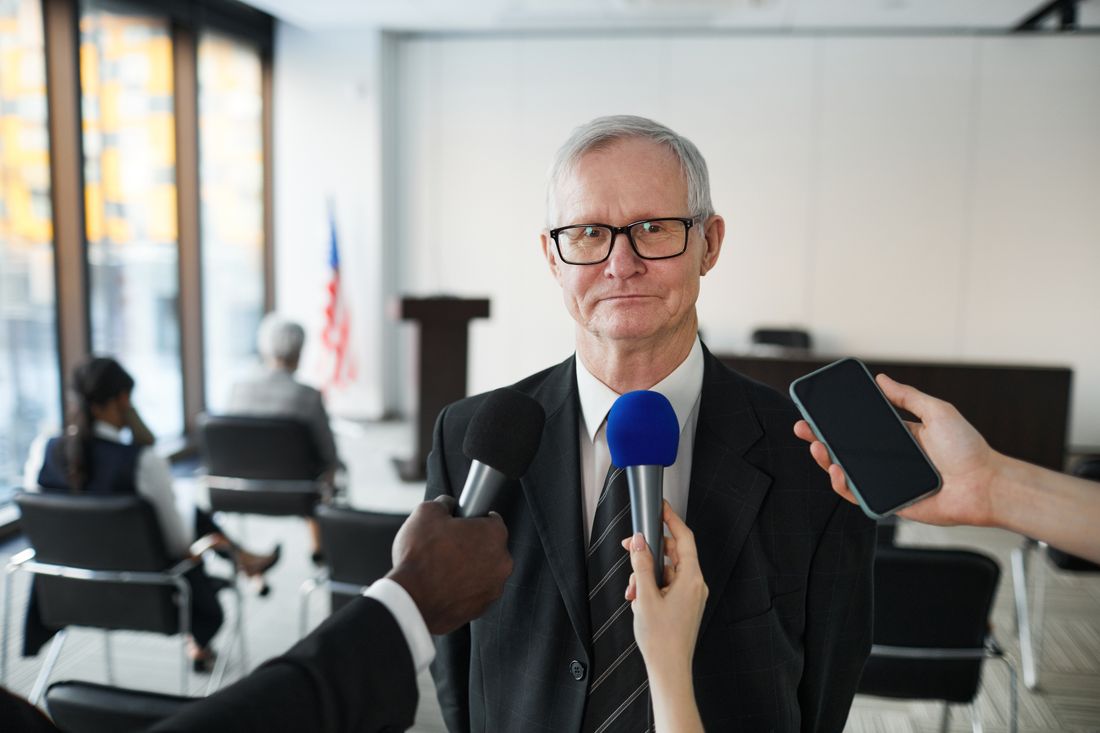
Photo: Core Visuals NYC
A funding round closes and the audience looking at your company changes overnight (press, job candidates, customers, other investors, most of them paying attention for the first time). The instinct is to plan something big: a produced highlight video nobody actually asked for. What that moment calls for is a short, specific list of current visuals, finished before a fixed announcement date that isn't moving for anyone's shoot schedule.
After a funding round closes, most founders need three things: a current portrait for press and LinkedIn, a short to-camera statement video, and team content if the raise is driving active hiring. Skip the produced "we made it" highlight reel. It's rarely what a press kit, careers page, or investor's quick look actually needs.
Table of Contents
- What Changes the Day a Funding Round Closes
- Updating the Founder Portrait for a Wider Audience
- Team Content Once You're Actually Hiring Against the News
- The "We Made It" Video Nobody Actually Asked For
- What a Scoped Announcement Video Actually Covers
- The Fixed Date Problem: Working Backward From Announcement Day
- Where This Content Actually Gets Used After Close
- Scoping One Session to Cover the Post-Close List
What Changes the Day a Funding Round Closes
The day a funding round closes, the audience looking at your company changes overnight. Press may cover the news, candidates check LinkedIn before applying, existing customers ask if anything's different, and other investors take a first look before deciding whether to follow. That's a wider, faster-moving audience than you had the week before.
None of those people were paying close attention last month. A candidate weighing an offer now searches your name and finds whatever photo and video already exists, current or not. A reporter working on a quick piece needs a usable headshot on short notice, not a request to schedule a shoot next month. Content that was fine for a small, familiar audience suddenly gets tested by people meeting you for the first time.
None of this is a reason to overhaul everything. It's a reason to check a short list of specific assets against a bigger audience than they were built for, and fix what's actually out of date before the attention arrives, not after.
Updating the Founder Portrait for a Wider Audience
A founder portrait needs updating after a raise when it's about to appear in press coverage, a wave of LinkedIn views, and outreach from candidates and investors within weeks, not because the round itself demands a new look. Update it if it's more than a year or two old, or doesn't match how you look on a call.
Treat this as a refresh, not a rebrand. The goal is a photo that looks like you right now, in a setting that still reads as accurate, not a fully restyled shoot to mark the occasion. A dated photo next to a current LinkedIn headline is a small inconsistency, but it's the kind of detail a sharp candidate or reporter notices in the first ten seconds of research, and that gap gets noticed fastest by people meeting you for the first time.
We treat this the same way we treat any founder portrait update: current likeness, a setting that matches where you actually work, delivered in formats that hold up in a press kit, a deck, and a website bio at the same time.
Team Content Once You're Actually Hiring Against the News
Team content becomes worth producing once a raise turns into an active hiring push, because candidates researching the company want some sense of who they'd actually be joining, and a careers page with no faces on it reads thinner than it needs to right when applications start picking up. Before hiring accelerates, this content is usually premature.
The useful version isn't a formal group photo lined up against a wall. It's a handful of images and short clips that show the team actually working (people at their desks, in a real meeting, using the product) dropped onto a careers page or a recruiting post. That reads as more credible to a candidate deciding where to apply than a shot that looks staged for the announcement itself.
Scope this to where hiring actually is. A five-person team doesn't need a full session; a team about to double over the next few months benefits from having current, honest photos ready before job postings go up, not scrambled together after candidates start asking why the team page looks empty.
The "We Made It" Video Nobody Actually Asked For
The riskiest piece of post-close content is a produced "we made it" video (a highlight reel with music, motion graphics, and a triumphant tone) because almost nobody asked for it, and it reads as a company celebrating itself instead of one that's gotten back to work.
It's the easiest way to overspend on content this specific moment doesn't call for. The instinct makes sense. A round closing feels like a milestone worth marking with something big, and a polished video seems like the obvious way to mark it. But the audience actually watching (press, candidates, customers, other investors) isn't looking for a celebration. They're looking for basic, current information: what the company does, who's running it, whether it looks legitimate under a quick look.
A video built around celebrating the raise itself also ages badly. Six months later it reads as dated self-congratulation sitting on a website that's supposed to look current. The content this moment actually calls for is smaller, plainer, and useful for longer than a highlight reel ever is.

Photo by Christina Morillo via Pexels.
What a Scoped Announcement Video Actually Covers
A scoped announcement video is a short, plain piece of footage (you explaining what the company does and what's next, in your own words, without a highlight-reel treatment) built to sit on a website, a LinkedIn post, or a follow-up email the day the news goes public. It's a statement, not a celebration.
Keep the content itself neutral and practical: what the company does, what changes for customers or candidates, delivered plainly to camera. That's a different job than marking the achievement, and it's the version that still looks reasonable to watch a year from now, once the news itself isn't news anymore.
This is usually one setup, not several. A single clean location, natural light or a simple lighting kit, one clear take of you talking, that covers a website embed, a social cut, and a link to drop into outreach. Anything more elaborate than that is solving a problem this specific moment doesn't actually have.
The Fixed Date Problem: Working Backward From Announcement Day
The announcement date for a closed round is usually fixed well before the content is ready, set by press coordination or an investor's own announcement, and it doesn't move to accommodate a shoot schedule. That leaves a short, non-negotiable window to get portraits, video, and any team content actually finished, not just planned.
This is the opposite of the flexible timeline a general brand refresh gets. There's no "shoot it when the light's good next month." The date is set, and everything (booking a session, shooting it, editing, delivering final files in the right formats) has to fit backward from that day, often with only a couple of weeks of real notice once the date is confirmed internally.
The practical fix is treating the content list as fixed and small the moment the date is known: portrait, a short statement video, team content if hiring is active. A short list that actually gets finished beats an ambitious one that's still in edit the morning of the announcement.
Where This Content Actually Gets Used After Close
Post-close content gets used in a specific handful of places: a press kit reporters pull from directly, a LinkedIn announcement post, a careers page candidates check before applying, and sometimes a short note to existing customers. Each of those has different technical needs, worth planning for before the shoot, not after.
A press kit needs a high-resolution portrait and a short bio, formatted the way an editor can drop straight into a piece without asking for a different crop. A careers page wants team content that looks like an honest snapshot of the workplace. A customer note might only need a still frame or a short clip, not a full video embed. One shoot day can usually cover all of it if the deliverables are scoped up front.
This is also where over-producing shows its cost most clearly. A press kit doesn't need a cinematic video; a careers page doesn't need broadcast-quality color grading. Matching the format to where it's actually going to run saves both budget and turnaround time.
Scoping One Session to Cover the Post-Close List
Most of the post-close list (an updated founder portrait, a short statement video, team content if hiring is active) fits into a single half-day session rather than several separate bookings, since the setup cost of lighting and location is the same whether you're shooting one deliverable or four. One scoped session is usually enough.
The order that tends to work: portrait first, while everyone's fresh and the light is at its best; the statement video next, while the setup is still in place and there's no rushing between locations; team content last, since it can be looser and doesn't need the same tight framing as a portrait or a to-camera video.
Send over the fixed announcement date and the actual list of deliverables (press kit, careers page, LinkedIn, customer note) before the session, not during it. That's what keeps a tight timeline from turning into a second shoot day nobody budgeted for once the date was already set in stone.
Frequently Asked Questions
What content does a founder need right after closing a funding round?
Most founders need three things: a current portrait for press and LinkedIn, a short statement video explaining what the company does and what's next, and team content if the raise is fueling active hiring. That's a scoped list, not a full production. The point is having current, accurate material ready for people who are suddenly looking closely (reporters, candidates, customers, and other investors), not producing something elaborate to mark the moment itself.
Do I need a brand-new founder portrait after raising a round?
Not necessarily a new shoot from scratch. A refresh. If your current portrait still looks like you and matches how you appear on video calls, it may hold up. If it's more than a year or two old, or the setting no longer matches where you actually work, update it before the announcement. The goal is accuracy, not a styled reinvention; a portrait that still looks like you next year is more useful than one that photographs well today.
Should a company make an announcement video after closing a round?
A short one, yes, not a produced highlight reel. A plain, to-camera statement explaining what the company does and what's changing works better than a celebratory video with music and motion graphics, which reads as self-congratulation to an audience mostly looking for basic information. Keep it to one clean setup and one clear take; that version stays useful on a website or in outreach long after the announcement itself stops being news.
How much lead time is actually needed before an announcement date?
As much as possible once the date is confirmed, since announcement dates are usually fixed by press or investor coordination and don't move for a shoot schedule. In practice that's often just a couple of weeks. Booking the session as soon as the date is known, and keeping the deliverable list short (portrait, statement video, team content if relevant), is what makes a tight window workable instead of a scramble the morning of.
Do we need new team photos immediately after a raise?
Only if the raise is turning into active hiring. Team content matters most once candidates are actually researching the company before applying, and a careers page with no current faces on it reads thin at exactly that moment. If hiring isn't accelerating yet, team photos can wait. Scope the content to where hiring actually is, not to how big the team might look after a future round.
Related Reading
Planning founder content or a launch and unsure what to actually shoot?
Tell us where the images or video will run, site, LinkedIn, press, or a launch page, and we'll scope it with a fixed price before you book anything.
See Personal Branding & Launches