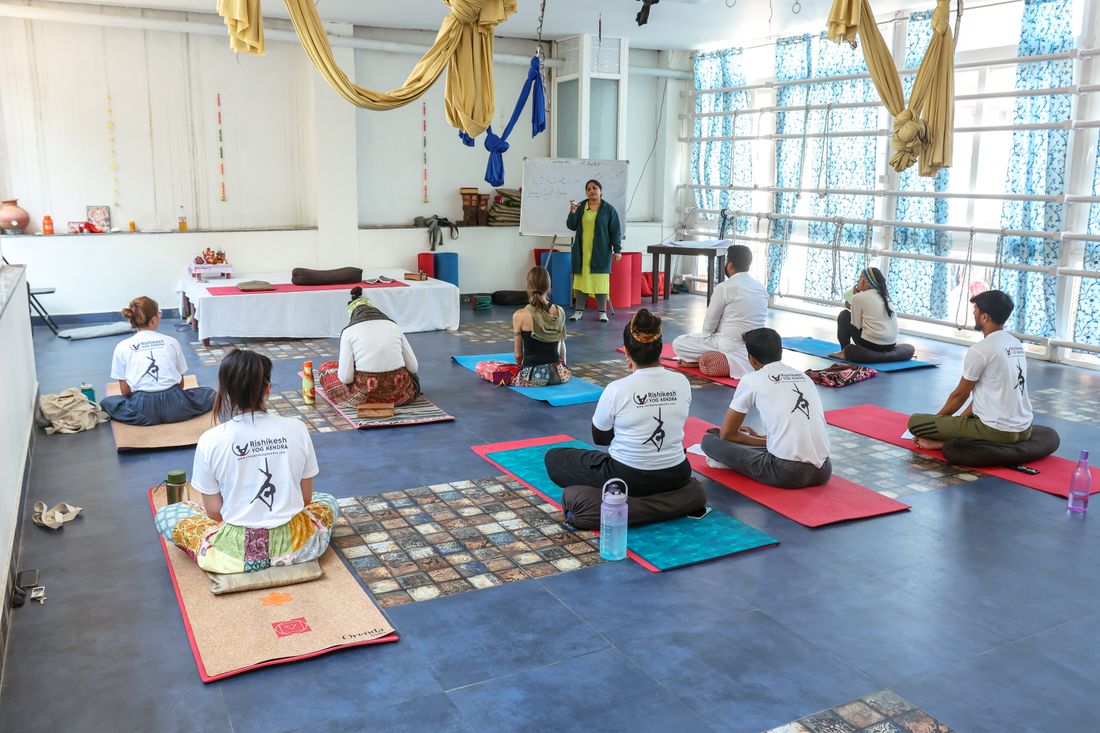
Photo by Rishikesh Yog Kendra via Pexels.
A fitness or wellness studio's own feed can be full of class schedules, group-workout shots, and promo graphics, and still never actually introduce the person who built the place. Founder-facing content is a narrower, different assignment: it has to show who's running the studio, what they know, and why someone should trust them with an hour of their week. That's not what a facility tour or a booking graphic is built to do.
Founder-facing content for a fitness or wellness studio is different from class-schedule or facility marketing: it centers the person leading the studio, showing their coaching style, credibility, and day-to-day energy instead of the room or the class roster. The goal is trust in the founder, not just awareness of the studio.
Table of Contents
- What founder-facing content means for a fitness or wellness studio
- Why a founder's personal brand matters beyond the studio's own account
- What day-in-the-life content should actually show for a fitness founder
- How energy and physical presence read differently in fitness photography
- Building credibility content around certifications and specialties
- Video that captures coaching voice, not just class highlights
- Where founder content actually gets used once it exists
- How Core Visuals scopes a personal-brand project for a fitness or wellness founder
What founder-facing content means for a fitness or wellness studio
Founder-facing content is photography and video built around the person running the studio, not the studio itself. It covers portraits, coaching moments, and short video that show how the founder actually teaches, distinct from class-schedule photos, facility tours, or generic group-workout shots aimed at getting someone to book a session.
Class-schedule and facility content answers a booking question: what does a session look like, when does it happen, is the room clean and well-equipped. Founder content answers a different question entirely: why should someone trust this specific person with their training, their recovery, or their time. Those two jobs get blended constantly, usually because a studio only budgets for one shoot and tries to make it cover everything.
The result is a founder who's technically visible on the website but never actually introduced. A headshot buried on an About page isn't founder content. Neither is a wide shot of a packed class where the founder happens to be somewhere in frame. Founder-facing work treats the person as the subject on purpose, rather than as a byproduct of documenting the room.
Why a founder's personal brand matters beyond the studio's own account
A studio's business account builds awareness of the brand. A founder's personal brand builds trust in a specific person, and that trust is what actually gets someone to commit to regular sessions, a membership, or a program led by that individual. Prospective clients increasingly look for the person before they look at the room.
Many fitness and wellness decisions are relationship decisions before they're facility decisions. Someone choosing a strength coach, a Pilates instructor, or a wellness practitioner is often choosing based on whether they trust that person's judgment, not the equipment inventory. A studio account can showcase the space and the schedule, but it rarely gives a prospective client a real sense of who's actually coaching them.
This matters even more once a founder starts getting outside opportunities: a podcast interview, a press mention, a guest spot at another studio, a partnership pitch. Those moments need a visual identity that already exists rather than a scramble for a usable photo. A founder with personal-brand content ready walks into that opportunity with material in hand, instead of sending over a blurry phone photo from a class three years ago.
What day-in-the-life content should actually show for a fitness founder
The useful version of a fitness founder's day-in-the-life content shows the specific, physical parts of running a studio: setting up equipment, correcting someone's form, checking in between sessions, closing up after the last class. Generic desk-and-laptop footage borrowed from office-based founder content undersells what actually makes the role distinct.
A studio founder's day looks different from most founders' days, and the content should reflect that difference instead of defaulting to email-and-coffee shots. The physical, hands-on parts of the job, the equipment resets, the spotting, the quick form corrections between reps, are the parts that actually communicate expertise on camera.
This is also where energy becomes visible in a way it can't in a static portrait. A founder mid-correction, gesturing through a movement pattern, or resetting a room between sessions reads as someone genuinely doing the work, not staging a photo of the work. The goal isn't a highlight reel of a single class. It's a handful of specific, physical moments that only make sense in a fitness or wellness setting.
How energy and physical presence read differently in fitness photography
Fitness and wellness photography benefits from movement and physical engagement in a way corporate portraiture doesn't: a founder captured mid-demonstration or mid-correction reads as more credible than the same founder standing still against a wall. Physicality is the actual proof of expertise in this category.
A corporate headshot works because stillness reads as authority in a boardroom context. That same stillness undersells a fitness or wellness founder, where the whole value proposition is physical competence. Photographing a founder in motion, adjusting someone's stance or demonstrating a movement, does more to establish credibility than a posed studio portrait ever could.
That doesn't mean every image needs to be a blur of action. A few well-timed, in-motion frames mixed with calmer moments, a founder talking through a plan with a client, checking a form on a clipboard, cover both registers: the physical competence and the coaching judgment behind it. The mix matters more than any single shot.
Lighting and framing follow the same logic. A wide, well-lit shot of a founder mid-movement reads as confident and in control. A tight, dim shot of the same moment can read as chaotic instead, even with identical action.
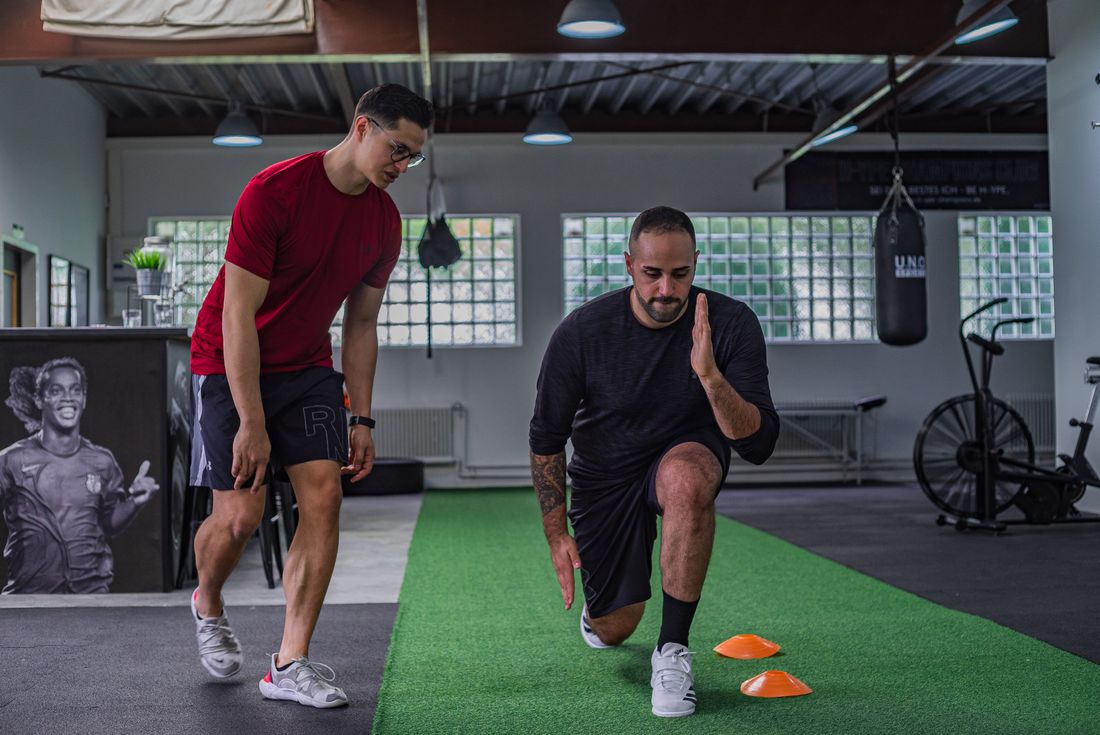
Photo by Justin L U C K via Pexels.
Building credibility content around certifications and specialties
Credibility content translates a founder's certifications, training background, and specialties into something visual: teaching moments, close work with a client, equipment specific to their specialty. A list of credentials on a bio page proves far less than a photo of the founder actually using that expertise.
Certifications matter to a fitness or wellness client, but a certification badge on a website does the least persuasive work available. What actually moves someone is seeing the founder apply that training: a specific cueing style, a piece of specialty equipment, a hands-on correction that only someone with that background would catch.
This is where a founder's actual specialty should drive the shot list. A strength coach's credibility content looks different from a Pilates instructor's, which looks different from a wellness practitioner running breathwork or recovery sessions. Photographing the specific, distinguishing part of the practice, not a generic gym scene, is what separates one founder's credibility content from another's.
In practice, this means planning the shot list around what the founder does differently from anyone else teaching a similar class. A generic dumbbell shot could belong to any trainer. A shot of one specific correction technique belongs to that founder alone.
Video that captures coaching voice, not just class highlights
The most useful founder video isn't a class highlight reel. It's short video of the founder actually coaching, explaining a concept, or talking through their approach in their own words. That's what lets a prospective client hear the coaching voice before ever booking a session.
A highlight reel of a packed class communicates energy, but it doesn't tell a prospective client anything about how the founder actually teaches. A short clip, thirty to sixty seconds of a founder explaining why they cue a movement a certain way, or how they think about a client's first week, does more to build trust than another montage of high-fives and burpees.
This kind of video also travels well. It works on a website bio, in a social post, in an email to a prospective client who's still deciding. The founder doesn't need a script. The most useful version usually sounds like a real answer to a real question, not a rehearsed pitch.
A short list of real questions works better than an open-ended "say something about yourself" prompt on the day. Founders talk best about their work when they're responding to something specific, not performing to an empty room.
Where founder content actually gets used once it exists
Founder-facing photo and video shows up in more places than a studio's own feed: a website bio, a press or podcast request, a partnership pitch to another business, a guest post on someone else's platform. Each of those moments needs different material than a class-schedule photo can provide.
A studio's own channels are only one destination for this content. A founder who gets invited onto a podcast, approached for a local press mention, or asked to guest-teach at another studio needs a portrait and a short bio-ready clip on hand, not a request that sends them scrambling for whatever photo already exists.
Treating founder content as reusable material, rather than a one-time shoot for the About page, changes how it should be planned from the start. A few strong portraits, a short coaching clip, and an in-motion image cover most of these situations without needing a new shoot every time an opportunity comes up.
It's worth building this library before the opportunity shows up, not after. A press request usually comes with a short deadline, and a founder who already has usable material on hand can respond the same day instead of losing the window to a scramble.
How Core Visuals scopes a personal-brand project for a fitness or wellness founder
We scope a fitness or wellness founder's personal-brand project the same way we scope any personal branding and launch project: fixed pricing set before production starts, built around the deliverables actually needed rather than a generic package. Most projects run in the $2,500 to $15,000 range depending on scope.
A founder who needs a half-day of portraits and a short coaching clip is a different project than one building an ongoing library of content for press, partnerships, and social use. We build the scope around what's actually needed instead of forcing every studio into the same package, and the price follows from coverage time, deliverables, and whether the project needs photography, video, or both.
The process itself stays simple: a founder describes what the content needs to do, we return a proposal with scope and fixed pricing within 24 to 48 hours, then we shoot and deliver on schedule. Editing, delivery, and usage rights are included in the quote, so there's no separate negotiation once production starts.
Frequently Asked Questions
What's the difference between fitness studio founder photography and class-schedule marketing content?
Class-schedule and facility content documents the room, the schedule, and what a session looks like, answering a booking question. Founder photography and video centers the person leading the studio: their coaching style, credibility, and day-to-day energy. The goals differ too. Facility content builds awareness of the studio; founder content builds trust in the specific person a client would train with, which matters for individual and group coaching decisions alike.
How much does personal branding photography cost for a fitness or wellness founder?
Core Visuals prices personal branding and launch projects on a fixed basis, set before production starts. Most projects for founders, including fitness and wellness founders, run $2,500 to $15,000 depending on coverage time, deliverables, location count, crew size, and whether the project needs photography, video, or both. A half-day portrait session with a short coaching clip sits toward the lower end; an ongoing content library for press and partnerships runs higher.
Should a fitness or wellness studio founder appear on camera themselves?
Yes, when the goal is building trust in the founder specifically. Clients choosing a coach, instructor, or practitioner are often making a relationship decision, not just a facility decision, and a studio's business account rarely shows who's actually leading a session. A founder who invests in personal-brand photography and short video gives prospective clients a real sense of their coaching style before booking, which class-schedule photos alone can't provide.
What should a wellness or fitness founder wear for a personal branding shoot?
Whatever they'd actually coach or teach in, plus one slightly more polished option for portraits meant for a website bio or press use. Consistency with a founder's real teaching wardrobe matters more than dressing up, since the goal is recognizability: a client should see the same person in the photo they'd meet in a session. Core Visuals discusses wardrobe and setups as part of scoping the shoot, not left to guesswork on the day.
How long does a personal-brand session take for a studio founder?
It depends on the deliverables. A founder needing a set of portraits and a short coaching clip can typically be covered in a half-day session, similar in scope to an executive portrait session. Larger projects, like an ongoing content library covering multiple specialties and press-ready portraits, run longer and are scoped as a custom project. Core Visuals sets the specific timeline and fixed price in the proposal before production starts, not after.
Related Reading
Have a launch or brand project where scale is actually the story?
Tell us what the aerial shot needs to show, and we'll scope it alongside the ground coverage from the start — permits included.
See Personal Branding & Launches