
Photo by Edmond Dantès via Pexels.
Someone who spent years building a visible career and then stepped away for a while comes back to find their entire photo library out of date — the headshot on the old bio page, the panel shot from three jobs ago, the LinkedIn photo nobody's updated since. None of that has to be explained. It just has to be replaced, with a set built for wherever the return shows up first.
Content for an executive returning to public life after time away means replacing every dated image and building a small, flexible set — an updated headshot, environmental portraits, and a few working shots — that's ready before the announcement goes public and still holds up long after it.
Table of Contents
- What Coming Back Actually Requires From Your Visuals
- Why the Old Headshot Doesn't Hold Up Anymore
- Why We Don't Ask Why You Were Away
- Shooting Before the Positioning Is Fully Decided
- What a Full Return Content Set Actually Includes
- Timing the Shoot Around the Announcement
- How the Photos Support the Written Story, Not Replace It
- Building a Set That Still Works a Year Later
What Coming Back Actually Requires From Your Visuals
An executive returning to public life after time away needs a photo and content set that replaces every dated image still circulating — the old headshot, the outdated bio photo, the shot from three roles ago — with something current and built for wherever the return shows up first: LinkedIn, a press release, or a new company site.
The gap itself is not the story. What matters for planning purposes is that the visual record froze at whatever point the executive stepped back, and nothing since has been documented — no new title, no new company context, no current sense of how they present now. A comeback rarely gets to lean on file photos; too much has changed, and using an old image reads as an unwillingness to show up for the return.
We treat this as a standard personal-brand refresh with one added constraint: the timeline has a real event on it — an announcement, a launch, a first public appearance — and the images need to exist before that date, not after it. That changes how far in advance the shoot has to happen.
Why the Old Headshot Doesn't Hold Up Anymore
The old headshot stops working because it was taken for a different role, a different company, and often a visibly different point in the executive's life — and reusing it signals that nothing has changed since, which undercuts the exact message a return is supposed to send.
Style, lighting, and even office backgrounds date fast — a headshot that looked current five years ago now reads as five years old the moment someone clicks through to a bio page. For an executive stepping back into view, that gap is more visible than it would be for someone who never left, because the audience is actively comparing what they remember to what's in front of them now.
It's not only the headshot. Old event photography, old panel shots, old team pages all carry the same problem: they document a version of the person's professional life that isn't current anymore. We usually recommend replacing the full set at once rather than patching a bio photo and leaving everything else stale, since a return only reads as deliberate when the whole visual footprint updates together.
Why We Don't Ask Why You Were Away
The reason an executive stepped back isn't something we ask about, speculate on, or need to know to do the work — it never appears in the images or the brief; our job starts at the visual problem in front of us, not the story behind the gap.
This matters more than it sounds like it should. A returning executive is often fielding enough questions about the gap already, and the last thing a photo shoot should do is turn into another place where that question gets asked, even implicitly through a mood board or a "tell us your story" intake form. We plan the shoot around the role and the audience it needs to reach, full stop.
What we do ask about is current and forward-looking: the title, the company or project, who's likely to see the images first, and what tone the return is aiming for — confident and low-key, high-visibility and press-facing, or somewhere in between. Those answers shape the shoot. The absence itself doesn't need a caption.
Shooting Before the Positioning Is Fully Decided
It's common for the images to need to exist before the executive has fully settled on how they want to be positioned — the new role, company, or platform is still taking shape — and a content shoot can be planned to support more than one likely direction instead of locking in too early.
This is different from a founder building a personal brand from scratch, who at least starts with a mostly blank slate. A returning executive already has a public identity that's partly out of date and partly still in progress, and the new positioning — advisor, board member, operator again, something else entirely — may not be locked when the shoot gets booked.
We handle this by shooting a set that reads well across a few plausible directions rather than one narrow angle: a clean environmental portrait that works for a bio page regardless of title, a few looser frames that suit a more personal LinkedIn post, and a formal option held in reserve for press. The goal is coverage, not a bet on one outcome.
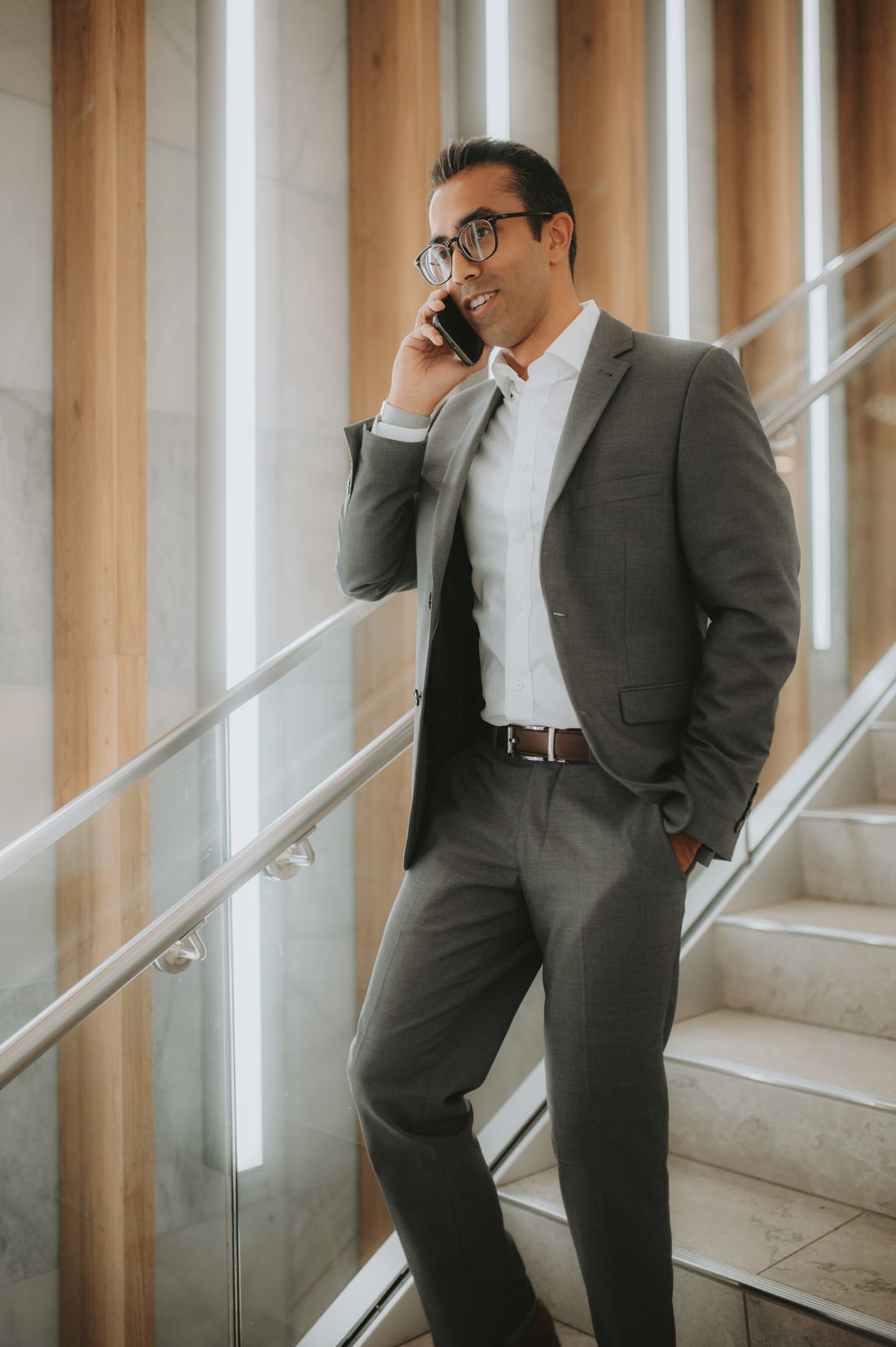
Photo by Luke Miller via Pexels.
What a Full Return Content Set Actually Includes
A return content set typically includes an updated headshot for bios and press, a small run of environmental portraits that show current context, and a few candid or working shots that read as natural rather than staged — enough variety to cover a bio page, a LinkedIn profile, and a press ask without another shoot.
The headshot still anchors the set — it's what everything else gets cropped from. Beyond it, environmental portraits in a real setting do more work than a second headshot variant: they show where the person operates now, which is often the actual news in a comeback, more than the face itself.
We also build in a handful of frames that aren't formal portraits at all — mid-conversation, working at a desk, walking into a room — because press and platform use often calls for something less posed than a headshot. That's the same territory we cover under Personal Branding & Launches, and video is worth planning for at the same time if the return includes any kind of announcement or interview.
Timing the Shoot Around the Announcement
The shoot needs to happen before the return is public, not after — images have to be ready the moment a press release, LinkedIn post, or new bio page goes live, which usually means booking two to three weeks ahead of the planned announcement, not the week of it.
Editing and delivery take time on top of the shoot day itself, and a return announcement is rarely a single asset — it's a headshot for the release, a different crop for LinkedIn, maybe a portrait for a bio page that ships separately. Building in a buffer avoids the scramble of a same-week request.
If the announcement date is still moving, we'd rather shoot early and hold the files than wait for a fixed date and compress everything into a rush turnaround. A finished, unreleased set costs nothing to sit in a folder for a few extra weeks; a missed announcement date because photos weren't ready is a much harder problem to fix after the fact.
How the Photos Support the Written Story, Not Replace It
Photos don't tell the return story on their own — a bio, a press quote, or a LinkedIn post carries the narrative, and the images exist to support whatever that copy says, which means the visual tone has to match the announcement's tone before either one gets finalized.
We don't write the bio or the press language — that's for the executive, their team, or a communications partner. But we do ask what the copy is likely to say before the shoot, because a quietly confident return needs a different set of images than a high-visibility one, and it's much easier to shoot for the right tone than to re-crop the wrong one into working.
A mismatch is easy to spot: formal, corporate portraits paired with a warm, personal-essay-style announcement, or loose candid shots sitting next to a press release. Neither is wrong on its own — they just have to agree with each other, and that alignment is worth a short conversation before the shoot day rather than a reshoot after.
Building a Set That Still Works a Year Later
A good return set is built to last well past the initial announcement — varied enough to cover a bio update, a speaking page, and a year or two of LinkedIn posts — so the executive isn't back in front of a camera every time a new platform or opportunity comes up.
This is where a comeback shoot benefits from a bit more range than a routine headshot refresh: a few different backgrounds, a mix of close and wider frames, and enough variety in wardrobe and setting that the set doesn't look like it was all shot in the same ten minutes, even though it usually was.
We also flag which images work best for which use so nothing gets picked at random later — a tighter crop for a directory photo, a wider environmental frame for a feature story, a more relaxed option for social. That planning up front means the set holds up as the return moves from announcement into whatever comes next, without another shoot booked just to catch up.
Frequently Asked Questions
Do I need to explain why I was away before booking a shoot?
No. We don't ask about the reason for the gap, and it has no bearing on how we plan or shoot the content. What we need instead is forward-looking: the new title or role, who's likely to see the images first, and the tone the return is aiming for. The absence itself never comes up in the brief, the shoot, or the images themselves. That's true whether the reason is public knowledge or entirely private.
How far in advance should I book if there's a public announcement date?
Book two to three weeks ahead of the announcement whenever possible. Editing and delivering a full set takes time, and most returns need more than one asset — a headshot for the release, a different crop for LinkedIn, maybe a portrait for a bio page. If the announcement date is still moving, shooting early and holding the finished files is safer than compressing everything into a same-week rush later.
What's different about a return shoot compared to a regular headshot update?
A return shoot usually needs more range than a routine refresh: an updated headshot, a set of environmental portraits, and a few looser working shots, because the images have to cover a bio page, LinkedIn, and possibly press at once. It's also planned against a real date — the announcement — rather than scheduled whenever it's convenient, which changes how far ahead the booking happens. It's still the same crew, just a wider brief.
Can the shoot happen before I've finalized my new title or role?
Yes, and it often has to. We plan for that by shooting a set that reads well across a few plausible directions instead of locking into one — a clean portrait that works regardless of title, a few relaxed frames for a personal post, and a formal option held in reserve for press. Nothing in the shoot itself requires the positioning to be finished. The set gets locked to a use once the positioning is.
Should video be part of a return content set?
It's worth planning for if the return includes any interview, panel, or announcement video, even a short one. Booking photo and video together in the same session is more efficient than adding a second shoot once the announcement is already public, and it means the visual tone stays consistent across every format instead of drifting between two separately booked sessions. It doesn't have to be a full production, just planned upfront.
Related Reading
Have a launch or brand project where scale is actually the story?
Tell us what the aerial shot needs to show, and we'll scope it alongside the ground coverage from the start — permits included.
See Personal Branding & Launches